
You’ve probably heard that induction stoves are the future of cooking, a sleek, energy-efficient marvel that heats your pans in seconds. You might even be eyeing one for your kitchen renovation. But before you dive in, you need to understand a crucial point: your existing aluminum cookware might not be compatible with this high-tech stovetop. This isn’t just a minor inconvenience; it’s a fundamental property of how induction works, and understanding it will save you frustration and potentially damaged cookware.
To grasp why aluminum and induction stoves can be a mismatch, you first need to appreciate the science behind induction cooking. It’s a far cry from the radiant heat of an electric coil or the open flame of a gas burner. Induction is all about magnetism.
Electromagnetic Fields: The Invisible Force
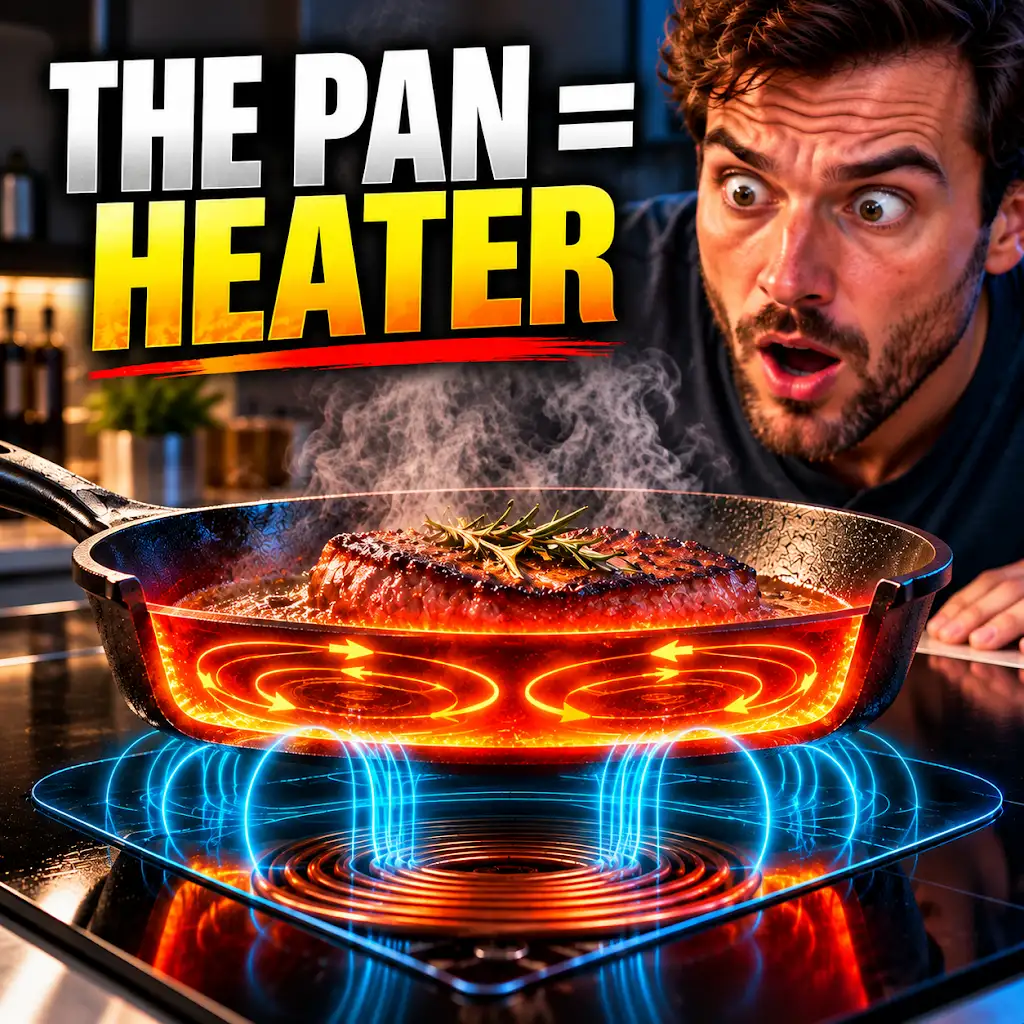
At the heart of your induction stove is an electromagnet. When you turn the stove on, an alternating electric current is sent through a coil of copper wire beneath the ceramic glass surface. This creates a rapidly oscillating magnetic field. Think of it like a very fast-paced, invisible force field emanating from the stovetop.
Eddy Currents: The Heat Generation
This magnetic field doesn’t directly heat the cooktop; instead, it interacts with your cookware. For this to happen, your cookware must be made of a ferromagnetic material. When the oscillating magnetic field from the stove encounters a ferromagnetic pot or pan, it induces electrical currents within the base of the cookware. These currents are known as “eddy currents.”
Resistance and Friction: The Birth of Heat
These eddy currents, however, don’t flow unimpeded. The metal in the cookware has electrical resistance. As the eddy currents try to flow through this resistant material, they encounter friction. This friction, due to the rapid movement of electrons, generates heat. This heat is produced directly within the base of your cookware, making induction incredibly efficient. It’s like the stovetop is “talking” to your pan and telling it to get hot, rather than passively transferring heat.
Direct Heat Transfer: The Advantage
The beauty of this process lies in its directness. The heat is generated precisely where it’s needed – in the bottom of your pan. This means minimal wasted energy lost to the surrounding air or the stovetop itself. You’ll notice your pans heat up almost instantly, and temperature adjustments are incredibly responsive. This efficiency and control are what make induction stoves so appealing.
Induction stoves operate using electromagnetic fields to heat cookware directly, which means that not all materials are suitable for use on these appliances. Aluminum, for instance, does not work on some induction stoves because it is not ferromagnetic, meaning it cannot generate the necessary magnetic field required for induction heating. For a deeper understanding of this topic, you can read more in the related article found here: Why Aluminum Does Not Work on Some Induction Stoves.
Aluminum’s Magnetic Enigma: Why It Often Doesn’t Play Nice
Now, let’s address the star of our incompatibility story: aluminum. You likely have a good amount of aluminum cookware. It’s popular for a reason: it’s lightweight, conducts heat exceptionally well, and is relatively affordable. However, when it comes to induction, aluminum’s fundamental properties become its Achilles’ heel.
Ferromagnetism: The Key Requirement
As we discussed, induction stoves rely on the interaction between their magnetic field and a ferromagnetic material in your cookware. Ferromagnetic materials are those that can be strongly attracted by a magnet and can themselves be magnetized. Common examples include iron and steel.
Aluminum: Not Ferromagnetic
The critical issue is that pure aluminum and most aluminum alloys are not ferromagnetic. They are paramagnetic, meaning they are weakly attracted to a magnetic field, but not strongly enough for the eddy current generation necessary for induction heating. Imagine trying to push a heavy door open with a gentle nudge – it’s not going to budge effectively.
The Weak Interaction
When you place a non-ferromagnetic aluminum pan on an induction cooktop, the oscillating magnetic field from the stove will still penetrate the aluminum. However, the induced eddy currents will be very weak. Because the currents are weak, the frictional heating within the aluminum will be negligible. In essence, the stovetop will try to induce heat, but the aluminum simply won’t cooperate effectively.
The Consequence: No Heat (or Very Little)
The most common outcome when you try to use incompatible aluminum cookware on an induction stove is simply that it won’t heat up. You’ll turn on the burner, place your aluminum pot, and nothing will happen. The stovetop might detect the presence of a pan, but it won’t be able to generate enough heat to cook your food. This can be incredibly frustrating, especially if you’re expecting that signature induction speed.
Identifying Compatible Cookware: The Magnet Test and Beyond
So, how do you ensure your cookware will work with your new induction stove? Don’t despair; not all hope is lost for your aluminum pans, and there are other materials that are perfectly suited. The key is understanding what to look for.
The Simple Magnet Test: Your First Line of Defense
The easiest and most definitive way to check for induction compatibility is the magnet test. Grab a common magnet – the kind you might have on your refrigerator.
Applying the Magnet: A Practical Demonstration
Place the magnet firmly on the bottom of your cookware.
- If the magnet sticks strongly: Congratulations! Your cookware is likely made of a ferromagnetic material and will work on your induction stove. This is typically the case for cast iron and most stainless steel cookware.
- If the magnet sticks weakly or not at all: Your cookware is likely made of aluminum, copper, glass, or a non-ferromagnetic stainless steel. These materials will generally not work with induction.
This test is quick, easy, and can be done in your own kitchen before you even bring your new stove home.
Looking for Induction-Ready Symbols: Manufacturer Clues
Manufacturers are aware of the compatibility issue and often make it easy for consumers to identify suitable cookware.
The Universal Induction Symbol
Many brands will include a specific symbol on their packaging or directly on the cookware itself to indicate induction compatibility. This symbol often resembles a series of curved lines or loops, sometimes with a small “i” within them, suggesting magnetic induction. Familiarize yourself with this symbol, and look for it when purchasing new cookware.
Material Specifications: Reading the Fine Print
If you’re unsure, always check the material specifications provided by the manufacturer. They will usually clearly state whether the cookware is suitable for induction stovetops. For example, it might say “induction compatible” or “works with all stovetops, including induction.”
Beyond Aluminum: Understanding Other Compatible Materials
While many aluminum pans won’t work, several other materials are excellent choices for induction cooking.
Cast Iron: The Classic Performer
Cast iron cookware is inherently ferromagnetic. It’s a fantastic option for induction stoves, providing excellent heat retention and distribution. Just be aware that cast iron is heavy and requires proper seasoning and care.
Stainless Steel: The Versatile Choice
Many types of stainless steel are ferromagnetic and thus induction-compatible. However, not all stainless steel is created equal.
Multi-Ply Construction: The Secret to Success
Look for stainless steel cookware with a multi-ply construction, particularly those with a magnetic core layer sandwiched between non-magnetic layers. This often involves a layer of aluminum or copper for superior heat conduction, but with a ferromagnetic material (like steel) as the base that interacts with the induction field. Cookware described as “sandwich bottom” or “clad” often features this construction.
Ferromagnetic Stainless Steel
Some stainless steel alloys are naturally ferromagnetic. If the manufacturer specifies that the stainless steel is induction-compatible, it usually means it contains enough ferromagnetic material.
Enameled Cast Iron: The Best of Both Worlds
Enameled cast iron, like the popular Le Creuset or Staub brands, combines the ferromagnetic properties of cast iron with a smooth, non-reactive enamel coating. These are excellent for induction cooking.
The “Induction Disc” or “Adapter Plate”: A Workaround
If you have a beloved set of aluminum cookware that you absolutely don’t want to part with, there is a workaround: an induction disc or adapter plate.
How Adapter Plates Work
These are flat, circular discs made of ferromagnetic material (typically stainless steel). You place the adapter plate directly on the induction cooktop, and then you place your non-compatible aluminum pan on top of the adapter plate.
The Mechanism of Heat Transfer
The induction stovetop’s magnetic field will interact with the adapter plate, inducing eddy currents and generating heat within the plate. This heat is then transferred to your aluminum pan through conduction.
Limitations of Adapter Plates
While adapter plates can be a solution, they come with caveats:
- Reduced Efficiency: They introduce an extra layer, meaning some heat will be lost in the transfer, making the cooking process less efficient than direct induction.
- Slower Heating: The heating process will be slower as the heat has to travel through the adapter plate first.
- Potential for Stovetop Damage: Some manufacturers warn against using adapter plates as they can cause uneven heating on the glass surface, potentially leading to cracks or other damage. Always check your stove’s manual for their stance on adapter plates.
- Slightly Less Responsive Control: The responsiveness of temperature control might be slightly diminished compared to direct induction.
Aluminum Cookware Solutions: When and How to Use It
While pure aluminum often doesn’t cut it, there are ways aluminum can still be part of your induction cooking experience.
Aluminum with a Ferromagnetic Base: The Hybrid Approach
Many cookware manufacturers have recognized the need to combine the benefits of aluminum with induction compatibility.
Clad Cookware with Aluminum Core
This is where multi-ply construction shines. Many high-quality stainless steel pots and pans feature a core of aluminum (for excellent heat conduction) sandwiched between layers of ferromagnetic stainless steel. The outer stainless steel layers are what interact with the induction field, while the aluminum core ensures even heat distribution throughout the pan.
Pans with a Steel Plate Attached
Some aluminum pans might have a separate, thin ferromagnetic steel plate permanently attached or riveted to the base. This plate acts as the interface for the induction stove, allowing the pan to heat up.
What to Look For on the Packaging
When purchasing new cookware that includes aluminum, always look for explicit statements of induction compatibility.
“Induction Compatible” is Key
Don’t assume. If the packaging or product description doesn’t clearly state “induction compatible,” it’s best to assume it’s not. This applies even if the pan appears to be made of aluminum.
Material Descriptions to Trust
Look for descriptions like:
- “Induction Ready”
- “Works on all stovetops, including induction”
- “Magnetic base”
When to Consider Replacing Your Aluminum Cookware
If your current aluminum cookware is purely aluminum with no ferromagnetic additions, and you’ve confirmed it doesn’t work with your induction stove, it’s probably time to consider a replacement for your induction cooking needs.
The Benefits of Induction-Compatible Cookware
Investing in cookware specifically designed for induction offers several advantages:
- Optimal Performance: You’ll experience the full speed, efficiency, and precise control that induction stoves are known for.
- Even Heating: Well-designed induction-compatible cookware, often featuring multi-ply construction, ensures even heat distribution, preventing hot spots and burnt food.
- Durability: High-quality induction cookware is built to last and withstand the demands of regular use.
- Long-Term Investment: While it might seem like an added expense, investing in the right cookware will enhance your cooking experience and prevent frustration.
Induction stoves operate using electromagnetic fields to directly heat pots and pans, which means that the cookware must be made of ferromagnetic materials to work effectively. This is why aluminum, which is non-magnetic, does not function well on some induction stoves. For a deeper understanding of the science behind this phenomenon, you can explore a related article that discusses the principles of induction cooking and the materials that are compatible with it. To read more, visit this informative article.
The Future of Your Cookware: Embracing Induction-Friendly Options
| Factor | Description | Impact on Aluminum Cookware | Reason |
|---|---|---|---|
| Magnetic Properties | Induction stoves require cookware to be magnetic | Aluminum is non-magnetic | Induction heating relies on magnetic fields to generate heat; aluminum does not respond to magnetic fields |
| Electrical Conductivity | Aluminum has high electrical conductivity | Induces eddy currents but not effective heating | High conductivity causes currents to flow but insufficient magnetic resistance to generate heat |
| Cookware Base Material | Some aluminum pans have non-magnetic bases | Does not activate induction stove | Without a magnetic base layer, induction stove cannot detect or heat the pan |
| Cookware Thickness | Thin aluminum pans have less magnetic interaction | Reduced or no heating on induction | Thin base reduces magnetic coupling and heat generation |
| Induction Stove Sensor | Some induction stoves require minimum magnetic mass | Aluminum pans may not trigger sensor | Sensor fails to detect non-magnetic or low-mass cookware |
You’re likely invested in your current cookware, and the idea of replacing it can be daunting. However, the transition to an induction stove offers a fantastic opportunity to upgrade your kitchen arsenal and embrace the benefits of this modern cooking technology.
A Gradual Transition: Not an All-Or-Nothing Approach
You don’t have to replace all your cookware overnight. You can start by investing in a few essential pieces that are induction-compatible.
Key Pieces to Start With
Consider replacing items you use most frequently first, such as:
- A good quality frying pan
- A medium-sized saucepan
- A larger stockpot
Gradually Building Your Collection
As your budget allows and as your old cookware wears out, you can gradually build a complete set of induction-friendly pots and pans. This makes the transition less of a financial shock.
Exploring New Materials and Technologies
The world of cookware is constantly evolving. You’ll find a wide array of materials and constructions designed to work seamlessly with induction.
Innovative Designs for Enhanced Performance
Manufacturers are now creating cookware with specialized ferromagnetic bases and improved heat distribution technologies, specifically for induction.
Considering Different Brands and Price Points
There’s a vast range of cookware available, from budget-friendly options to high-end professional-grade sets. Research different brands and read reviews to find cookware that suits your needs and budget.
The Satisfaction of Optimal Cooking
Ultimately, using cookware that is compatible with your induction stove will lead to a more satisfying and efficient cooking experience. You’ll notice the difference in how quickly your food cooks, how evenly it heats, and how easily you can control the temperature.
Embracing the Efficiency
Induction’s inherent efficiency will translate into quicker meal preparation and potentially lower energy bills.
The Joy of Precision
The precise temperature control offered by induction, when paired with the right cookware, allows for a greater level of culinary mastery. You can simmer delicate sauces without scorching, sear meats to perfection, and execute complex recipes with confidence.
A Final Note on Compatibility
Remember, the core principle for induction compatibility is ferromagnetism. If your cookware material can be strongly attracted to a magnet, it will likely work. If it isn’t, you’ll need an alternative solution. Don’t let the initial hurdle of aluminum incompatibility deter you from the many advantages that induction cooking offers. With a little knowledge and the right choices, you can transform your kitchen and enjoy the future of cooking.
The Pan Is the Heater: How Induction Cooking Really Works
FAQs
1. Why does aluminum not work on some induction stoves?
Aluminum is not magnetic, so it does not generate heat when placed on an induction stove, which relies on magnetic fields to heat cookware.
2. Can aluminum cookware work on all induction stoves?
No, not all aluminum cookware is compatible with induction stoves. Only aluminum cookware with a magnetic base or a layer of magnetic material added to the bottom will work on induction stoves.
3. How can I tell if my aluminum cookware is compatible with an induction stove?
To check if your aluminum cookware is compatible with an induction stove, try using a magnet on the bottom of the cookware. If the magnet sticks, it should work on an induction stove.
4. Are there any safety concerns with using aluminum cookware on induction stoves?
There are no safety concerns with using aluminum cookware on induction stoves as long as the cookware is compatible and does not have any non-magnetic parts that could potentially cause damage to the stove.
5. What are some alternatives to aluminum cookware for induction stoves?
Stainless steel, cast iron, and enameled cast iron cookware are all compatible with induction stoves and are good alternatives to aluminum cookware.