The abyssal plains, the hadal trenches, and the hydrothermal vents – these are the frontiers of Earth’s exploration, realms where sunlight dares not penetrate and pressures would crush a human body like a tin can. Yet, life not only survives but thrives in these extreme environments, presenting a breathtaking array of creatures that appear as if plucked from the pages of science fiction. The alien-like appearance of deep-sea animals is not a product of mere chance, but rather a testament to the extraordinary adaptations forged by eons of evolution in some of the planet’s most challenging conditions. These otherworldly features are a direct response to the unique pressures, lack of light, and scarcity of resources that define life in the deep sea.
The most striking characteristic that contributes to the alien-like appearance of many deep-sea creatures is their mastery of darkness. In the absence of sunlight, which filters out completely beyond a few hundred meters, vision as we understand it becomes largely irrelevant. Yet, the deep sea is far from a silent, unseeing void. Instead, it pulsates with light, generated by the organisms themselves, and is navigated by senses far beyond human comprehension.
Living Lanterns: The Ubiquitous Glow of Bioluminescence
Bioluminescence, the production and emission of light by living organisms, is an evolutionary masterpiece in the deep sea. It serves a multitude of purposes, from attracting prey and mates to evading predators and communicating in the perpetual twilight. The diversity of bioluminescent displays is staggering, painting the dark canvas of the abyss with an array of colors and patterns.
Attracting Prey: Lures in the Darkness
Many predatory deep-sea dwellers have evolved specialized bioluminescent organs, or photophores, designed to entice unsuspecting prey. The anglerfish, perhaps the most iconic example, possesses a modified dorsal fin spine that dangles a bioluminescent lure in front of its gaping maw. This pulsating light mimics small organisms, drawing in smaller fish and crustaceans that become easy targets. Other species might have photophores along their bodies that flash rhythmically, or even mimic the light patterns of other creatures to lure their victims closer. The sheer ingenuity of these biological bait systems is a testament to the selective pressures of a food-scarce environment.
Courtship and Communication: A Lighted Language
Beyond predation, bioluminescence plays a crucial role in reproduction and communication. In the vast, dark expanse, finding a mate can be a monumental task. Many species have evolved specific bioluminescent patterns or flashes that are unique to their species, acting as a beacon for potential partners. Some may even synchronize their flashes to create a collective display, increasing their chances of being noticed. The complex choreography of these light shows suggests a sophisticated system of communication, a silent language spoken in the darkness.
Defense Mechanisms: Blinding and Camouflage
Bioluminescence is also employed as a defensive strategy. Some creatures, when threatened, can release clouds of bioluminescent particles to startle or distract predators, allowing them to escape. Others possess counter-illumination, where photophores on their undersides emit a faint glow that matches the dim light filtering from above, effectively camouflaging them against predators looking up from below. This ability to blend into the background, even in the absence of ambient light, is a remarkable adaptation.
Eyes for the Abyss: Beyond Human Perception
While many deep-sea creatures rely on bioluminescence, some have developed extraordinary eyes adapted to capture the faintest traces of light or to detect specific wavelengths. These eyes are often larger than expected for their body size, or possess unique structures that enhance their light-gathering capabilities.
Sensitive Sight: Maximizing Light Capture
Species living in the mesopelagic zone (the twilight zone) often have large, tubular eyes that are highly sensitive to blue and green light, the wavelengths that penetrate deepest into the ocean. These eyes are positioned to provide a wide field of vision, maximizing their chances of spotting prey or predators. Some even have a tapetum lucidum, a reflective layer behind the retina that bounces light back through the photoreceptors, effectively giving the eye a second chance to capture photons.
Specialized Vision: Detecting Bioluminescence
For creatures living in deeper waters, where even faint bioluminescence is a rarity, their eyes are often specialized to detect specific wavelengths emitted by their own species or their prey. This allows them to “see” the light displays of others, effectively navigating a world of bioluminescent signals. Some may have lost the ability to perceive color altogether, prioritizing sensitivity to faint light over visual acuity.
The fascinating appearance of deep sea animals often leads to comparisons with extraterrestrial beings, as their unique adaptations to extreme environments result in bizarre shapes and bioluminescent features. For a deeper understanding of this phenomenon, you can explore the article on Freaky Science that delves into the evolutionary processes that shape these alien-like creatures. To read more about it, visit Freaky Science.
Built for Pressure: Anatomical Marvels of the Abyssal Realm
The sheer crushing weight of the water column in the deep sea is an environment few terrestrial organisms could withstand. Pressures can exceed 1,000 times that at sea level. Deep-sea animals have evolved a suite of anatomical and physiological adaptations that allow them to thrive under these immense forces.
Gelatinous Forms: Reducing Density and Maintaining Integrity
Many deep-sea inhabitants possess soft, gelatinous bodies composed of a high percentage of water. This reduces their overall density, making them more neutrally buoyant and less susceptible to the compressive forces of the deep. Their tissues are also less rigid, allowing them to deform and adapt to the surrounding pressure rather than resist it.
The Advantage of Soft Tissues
The lack of rigid skeletons or exoskeletons, which are common in shallow-water species, is a significant advantage. Bones and shells are prone to collapse under extreme pressure. Instead, deep-sea creatures often have cartilaginous structures or lack them entirely. Their muscles are also less dense, composed of watery cytoplasm rather than dense protein. This gelatinous nature, while appearing delicate, is actually a perfect adaptation for the high-pressure environment.
Cellular Resilience: Maintaining Function Under Stress
At a cellular level, deep-sea organisms have developed remarkable mechanisms to maintain the integrity and function of their cellular components under extreme pressure.
Piezolytes: Molecular Stabilizers
One key adaptation involves the production of specialized molecules known as piezolytes. These are small organic compounds that accumulate within cells and help to stabilize proteins and other cellular structures, preventing them from being denatured or damaged by the immense pressure. Without these molecular guardians, the machinery of life would grind to a halt.
Membrane Fluidity: Adapting to Pressure Changes
Cell membranes also undergo adaptations to maintain their fluidity and function under pressure. The composition of the lipids within the cell membrane can change, increasing the proportion of unsaturated fatty acids. This makes the membrane more flexible and less likely to solidify under pressure, ensuring that essential cellular processes can continue unimpeded.
Resourceful Foragers: Ingenious Strategies for Scarcity
Food in the deep sea is a precious commodity. What little organic matter reaches the ocean floor often comes in the form of “marine snow” – decaying plankton and other debris that drifts down from the upper layers. Deep-sea animals have developed a range of ingenious strategies to find, capture, and conserve this limited food supply.
Specialized Feeding Apparatuses: Tools for the Trench
The morphology of deep-sea creatures often reflects their specific dietary needs and hunting strategies. Jaws can be disproportionately large, equipped with needle-like teeth designed to ensnare slippery prey. Some have expandable stomachs, allowing them to consume meals that are significantly larger than themselves, a crucial adaptation for opportunistic feeding.
The Gulper Eel’s Infinity Mouth
The gulper eel, for instance, possesses an enormous, distensible mouth that can engulf prey many times its own size. Its body is also relatively small, allowing it to conserve energy while waiting for a rare meal. Once prey is captured, its elastic jaws and stomach can expand to accommodate it, ensuring that no opportunity is wasted.
The Viperfish’s Fangs
Similarly, the viperfish is renowned for its impossibly long, retractable fangs, which are longer than its own body. These formidable teeth are designed not to chew, but to pierce and hold onto prey, preventing escape in the dark depths.
Metabolism and Energy Conservation: The Art of Slowing Down
In an environment where food is scarce and energy expenditure must be minimized, many deep-sea animals have evolved incredibly slow metabolisms. They move slowly, digest food over long periods, and can survive for extended durations without feeding.
The Longevity of the Deep
This slow metabolic rate also often translates to incredible longevity. Some deep-sea species are among the longest-living animals on Earth, with some estimates for certain sharks and corals reaching hundreds or even thousands of years. This extended lifespan is a direct consequence of their reduced metabolic demands.
Efficient Digestion and Nutrient Absorption
Furthermore, their digestive systems are highly efficient, extracting every last bit of nourishment from their meager meals. This ensures that the energy they do consume is utilized to its fullest potential.
Alien Aesthetics: Features That Defy Earthly Norms
Beyond the functional adaptations, the deep sea has fostered a unique aesthetic, a collection of traits that contribute to the perception of these creatures as truly alien. These are features that, to our terrestrial sensibilities, seem bizarre, even grotesque, yet are perfectly suited to their environment.
Transparent and Translucent Bodies: Blending with the Void
Many deep-sea animals have evolved transparent or translucent bodies. This remarkable adaptation serves as a form of camouflage, rendering them nearly invisible in the dimly lit or completely dark waters.
The Phantom Jellyfish
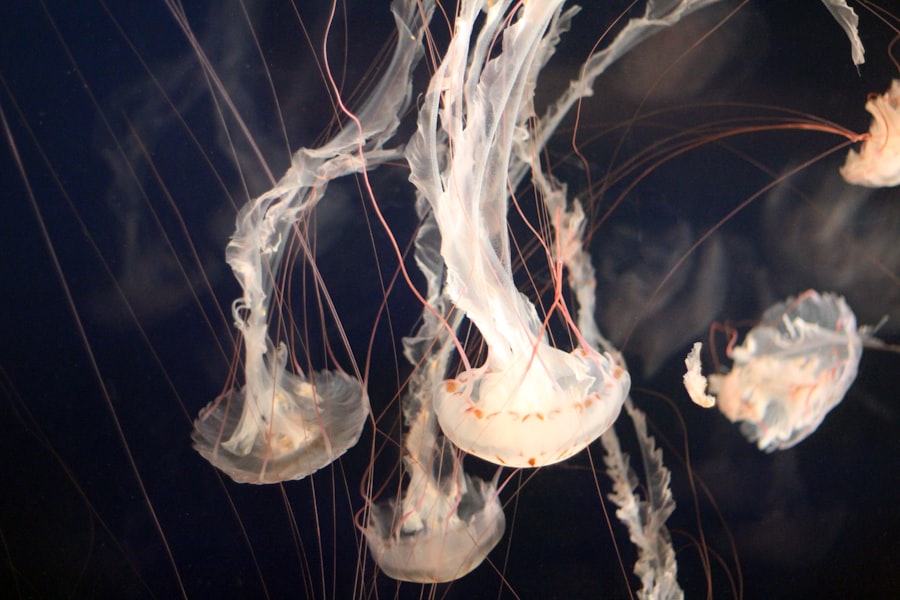
The Atolla jellyfish, for example, possesses a bell that is almost completely transparent, making it incredibly difficult for predators to spot. When disturbed, it can emit a brilliant blue light display, a startling defense mechanism that draws the attention of larger predators towards its attacker.
The Barreleye Fish’s Periscope Eyes
The barreleye fish, with its transparent head and upward-facing, tubular eyes, is a prime example. Its ocular organs are so sensitive that they can look through its own skull to spot prey silhouetted against the faint light from above. This transparency is crucial for a creature that relies on stealth.
Unconventional Body Plans: Beyond Bilateral Symmetry
While bilateral symmetry is dominant in many shallower marine environments, the deep sea exhibits a greater diversity of body plans. Some creatures may be elongated, flattened, or even spherical, each shape optimized for a specific niche in the abyssal ecosystem.
The Blobfish’s Melancholy Visage
The blobfish, often cited for its “sad” appearance, is a perfect example of adaptation to extreme pressure. In its natural habitat, the immense pressure keeps its gelatinous body together, giving it a more conventional fish-like form. When brought to the surface, the lack of pressure causes its tissues to lose their structure, resulting in its famous drooping, gelatinous appearance. This is not a deformity, but a physical manifestation of its extreme environmental adaptation.
The Vampire Squid’s Cloak
The vampire squid, despite its name, is not a true squid. It has a unique body plan with a cloak-like webbing between its arms, which it can invert to engulf prey or to defend itself. Its red eyes and the bioluminescent organs that cover its body contribute to its otherworldly allure.
The fascinating appearance of deep sea animals often leads to comparisons with alien life forms, a topic explored in depth in a related article. These creatures have evolved in extreme environments, resulting in unique adaptations that can seem otherworldly. For instance, their bioluminescent features and unusual body shapes serve crucial survival functions in the dark depths of the ocean. To learn more about the strange and captivating characteristics of these deep sea inhabitants, you can read the article here.
The Future of Discovery: Unveiling More Deep-Sea Wonders
| Reason | Description |
|---|---|
| Bioluminescence | Many deep sea animals produce their own light through bioluminescence, making them appear otherworldly. |
| Strange body shapes | Deep sea animals have evolved to survive in extreme pressure and darkness, resulting in unusual body shapes and features. |
| Gigantism | Some deep sea animals have grown to enormous sizes due to the lack of predators and abundant food sources in the deep ocean. |
| Translucent bodies | Many deep sea animals have translucent or transparent bodies, giving them an ethereal appearance. |
| Bizarre adaptations | Deep sea animals have developed unique adaptations, such as elongated jaws or bioluminescent lures, to survive in their extreme environment. |
The deep sea remains one of the last unexplored frontiers on Earth. Our understanding of its inhabitants and their extraordinary adaptations is still in its nascent stages. As technology advances, allowing us to delve deeper and observe these creatures in their natural habitats with greater fidelity, we are continually discovering new species and marveling at the ingenuity of evolution.
Technological Frontiers: Pushing the Boundaries of Exploration
Submersibles, remotely operated vehicles (ROVs), and autonomous underwater vehicles (AUVs) are instrumental in our exploration of the deep sea. These sophisticated tools allow scientists to collect data, capture images and videos, and even bring samples back to the surface for study, all while operating under extreme conditions.
The Challenge of Observation
Observing deep-sea animals in their natural environment presents significant challenges. The extreme pressures, lack of light, and vastness of the ocean make direct observation difficult and expensive. However, each mission pushes the boundaries of what is possible, revealing new insights into the lives of these fascinating creatures.
Unanswered Questions and Emerging Theories
Despite our progress, countless questions about deep-sea life remain unanswered. How do these creatures reproduce in such vast, dark expanses? What are the complex ecological interactions that govern these communities? How do they contribute to global biogeochemical cycles? The study of deep-sea animals offers a unique opportunity to test fundamental biological theories and to understand the limits of life itself.
The Importance of Conservation
As we continue to explore and understand these alien worlds, it is crucial to recognize the importance of conserving these fragile ecosystems. The deep sea, once thought to be barren, is teeming with life and harbors an incredible diversity of species. Protecting these unique environments from human impact, such as deep-sea mining and pollution, is paramount to preserving this invaluable natural heritage for future generations. The alien-like appearance of deep-sea animals is not just a curiosity; it is a powerful reminder of the resilience and adaptability of life, and the vast, unexplored wonders that our planet still holds.

The Deeper You Go, the Less Life Looks Like Life
FAQs
1. What are some characteristics of deep sea animals that make them look alien?
Deep sea animals often have unusual body shapes, bioluminescent features, and strange appendages that make them appear otherworldly. Their adaptations to extreme pressure, darkness, and cold temperatures contribute to their alien-like appearance.
2. How do deep sea animals survive in such extreme environments?
Deep sea animals have evolved unique adaptations to survive in the extreme conditions of the deep ocean, such as bioluminescence for communication and camouflage, specialized sensory organs for detecting prey in the dark, and the ability to withstand high pressure and low temperatures.
3. What are some examples of deep sea animals that look particularly alien?
Examples of deep sea animals that look alien include the anglerfish with its bioluminescent lure, the gulper eel with its large mouth and elongated body, and the vampire squid with its red eyes and webbed arms. These creatures have evolved to thrive in the deep sea environment, giving them a truly otherworldly appearance.
4. Why do deep sea animals look so different from those in shallower waters?
The deep sea environment presents unique challenges, such as extreme pressure, darkness, and limited food sources, which have led to the evolution of distinct adaptations in deep sea animals. These adaptations result in their strikingly different appearance compared to animals in shallower waters.
5. What can studying deep sea animals teach us about life on Earth and beyond?
Studying deep sea animals can provide valuable insights into the diversity of life on Earth and the potential for life in extreme environments beyond our planet. Their unique adaptations and survival strategies may offer clues about the limits of life and the potential for extraterrestrial life in the universe.