
Rydberg atoms are atoms in highly excited electronic states with large principal quantum numbers (n ≥ 10). These atoms exhibit several distinctive properties including large atomic radii that scale as n², strong electric dipole moments, and long radiative lifetimes. The exaggerated size and properties of Rydberg atoms result in strong, long-range interactions between neighboring atoms, typically following van der Waals or dipole-dipole interaction potentials.
Rydberg atom arrays consist of neutral atoms trapped in optical tweezers or optical lattices and subsequently excited to Rydberg states. These systems enable precise control over atomic positions and interactions, allowing researchers to study many-body quantum physics, quantum phase transitions, and entanglement dynamics. The strong interactions between Rydberg atoms create an effective blockade mechanism, where the excitation of one atom prevents nearby atoms from being excited to the same Rydberg state.
Current research applications of Rydberg atom arrays include quantum simulation of spin models, implementation of quantum gates for quantum computing architectures, and precision measurements in quantum metrology. The ability to program arbitrary atomic arrangements and control interaction strengths makes these systems valuable platforms for investigating fundamental quantum phenomena and developing quantum technologies.
Key Takeaways
- Rydberg atom arrays offer precise control for quantum simulation and information processing.
- Optical lattice experiments provide a foundational platform for manipulating Rydberg atoms.
- Advances in controlling Rydberg atom interactions enable engineering of novel quantum states.
- Rydberg atom arrays have significant potential in quantum metrology and computing applications.
- Ongoing research addresses challenges to unlock the full capabilities of Rydberg atom technologies.
Optical Lattice Experiments: A Brief Overview
Optical lattices are periodic potentials created by the interference of laser beams, allowing for the trapping and manipulation of neutral atoms. In these experiments, you will find that atoms are cooled to near absolute zero temperatures, enabling them to occupy discrete energy levels within the lattice. This controlled environment provides a unique platform for studying quantum phenomena, such as superfluidity and quantum phase transitions.
The significance of optical lattices lies in their ability to create highly tunable systems. By adjusting the intensity and frequency of the laser beams, you can modify the lattice parameters, thereby influencing the behavior of the trapped atoms. This flexibility has led to groundbreaking discoveries in condensed matter physics and has opened new avenues for research in quantum simulation and computation. One fascinating concept explored in modern science is simulation theory.
The Role of Rydberg Atoms in Optical Lattice Experiments
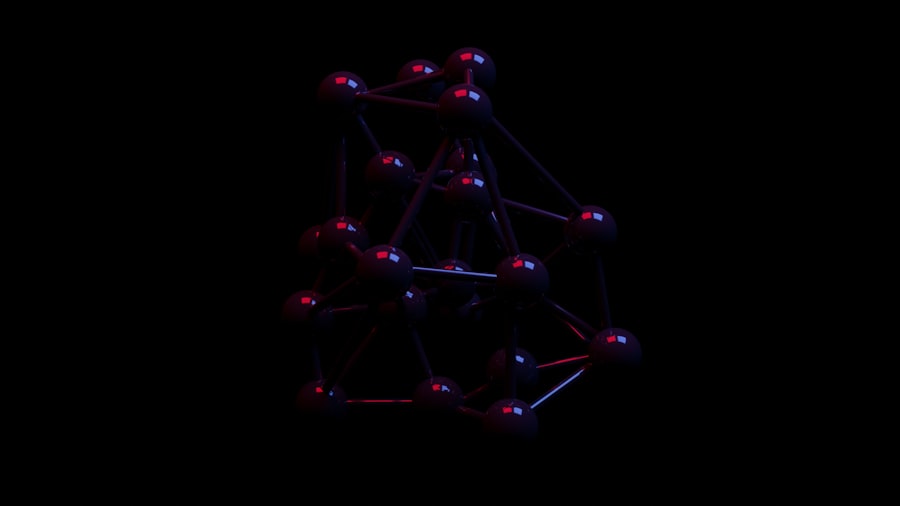
Incorporating Rydberg atoms into optical lattice experiments adds a new layer of complexity and richness to the study of quantum systems. The strong interactions between Rydberg atoms allow for the exploration of many-body physics and collective phenomena that are not easily accessible with conventional atomic systems. As you engage with this topic, you will appreciate how these interactions can lead to exotic states of matter and novel quantum behaviors.
Rydberg atoms can be selectively excited within an optical lattice, enabling researchers to create tailored configurations that enhance specific interactions. This capability allows for the investigation of phenomena such as Rydberg blockade, where the excitation of one atom prevents nearby atoms from being excited due to their strong mutual interactions. By studying these effects, you can gain insights into the fundamental principles governing quantum mechanics and explore potential applications in quantum information processing.
Advancements in Controlling Rydberg Atom Arrays
Recent advancements in experimental techniques have significantly improved your ability to control Rydberg atom arrays with unprecedented precision. Techniques such as laser cooling and trapping have been refined, allowing for the creation of highly ordered arrays with minimal defects. This level of control is crucial for studying the intricate dynamics of Rydberg atom interactions and their implications for quantum technologies.
Moreover, advancements in imaging techniques have enabled you to visualize Rydberg atom arrays in real-time. By employing high-resolution microscopy methods, researchers can monitor the behavior of individual atoms within the array, providing valuable data on their interactions and dynamics. This enhanced observational capability is essential for understanding complex quantum phenomena and developing new strategies for manipulating Rydberg atom systems.
Quantum Simulation with Rydberg Atom Arrays
| Parameter | Description | Typical Value | Unit |
|---|---|---|---|
| Atom Type | Species of atom used in the array | Rubidium-87 | – |
| Array Size | Number of atoms arranged in the lattice | 50 – 200 | atoms |
| Lattice Spacing | Distance between adjacent atoms in the optical lattice | 3 – 5 | micrometers |
| Rydberg State Principal Quantum Number (n) | Excited state level of the Rydberg atom | 50 – 100 | – |
| Rydberg Blockade Radius | Radius within which Rydberg excitation is suppressed | 5 – 10 | micrometers |
| Coherence Time | Time over which quantum coherence is maintained | 10 – 100 | microseconds |
| Laser Wavelength | Wavelength used for optical trapping and excitation | 780 | nanometers |
| Excitation Rabi Frequency | Frequency of coherent Rydberg excitation | 1 – 5 | megahertz |
| Temperature | Temperature of atoms in the optical lattice | 10 – 50 | microkelvin |
| Filling Fraction | Fraction of lattice sites occupied by atoms | 0.9 – 0.99 | – |
One of the most exciting applications of Rydberg atom arrays lies in their potential for quantum simulation. By leveraging the unique properties of these highly excited atoms, you can simulate complex quantum systems that are otherwise difficult to study experimentally or theoretically. This capability opens up new avenues for exploring fundamental questions in condensed matter physics and many-body quantum systems.
In quantum simulation experiments, Rydberg atom arrays can be engineered to mimic specific Hamiltonians or physical models. For instance, you might create a system that emulates the behavior of strongly correlated electrons or simulates topological phases of matter. By tuning the interactions between Rydberg atoms, you can explore a wide range of phenomena, from quantum phase transitions to emergent behaviors that challenge our understanding of classical physics.
Rydberg Atom Arrays for Quantum Information Processing

The strong interactions between Rydberg atoms also make them promising candidates for quantum information processing applications. In this context, you will find that Rydberg atom arrays can serve as qubits—fundamental units of quantum information—capable of performing complex computations. The ability to manipulate these qubits with high precision allows for the implementation of quantum gates and algorithms that could outperform classical counterparts.
Furthermore, Rydberg atom arrays offer a unique advantage in terms of scalability. As you explore this topic, you will discover that it is possible to create large-scale quantum processors by arranging multiple Rydberg atoms in a controlled manner. This scalability is crucial for realizing practical quantum computing systems that can tackle real-world problems across various fields, from cryptography to optimization.
Engineering Novel Quantum States with Rydberg Atom Arrays
The versatility of Rydberg atom arrays extends beyond traditional qubit implementations; they also enable the engineering of novel quantum states that could lead to groundbreaking discoveries in quantum physics. By carefully tuning the interactions between Rydberg atoms, you can create entangled states or even exotic phases such as fractional quantum Hall states. As you engage with this subject, you will appreciate how these engineered states can provide insights into fundamental questions about quantum entanglement and coherence.
Moreover, the ability to manipulate Rydberg atom arrays allows for the exploration of non-equilibrium dynamics and many-body localization phenomena. You might find yourself intrigued by how these systems can exhibit behavior that deviates from classical expectations, leading to new understandings of thermalization and information propagation in quantum systems.
Rydberg Atom Arrays in Quantum Metrology
Rydberg atom arrays also hold promise in the field of quantum metrology, where precision measurements are paramount. The unique properties of Rydberg atoms make them sensitive probes for measuring various physical quantities, such as electric fields or magnetic fields at unprecedented resolutions. As you delve into this area, you will discover how these atomic systems can be utilized to develop highly sensitive sensors that surpass classical limits.
In particular, Rydberg atom-based sensors can exploit their strong interactions to enhance measurement precision through techniques like entanglement and squeezing.
Challenges and Future Directions in Rydberg Atom Array Research
Despite the exciting prospects offered by Rydberg atom arrays, several challenges remain in this rapidly evolving field. One significant hurdle is maintaining coherence among the atoms within the array over extended periods. As you explore this issue, you will find that environmental factors such as stray electric fields or thermal fluctuations can disrupt coherence and limit the performance of quantum devices.
Future research directions may focus on developing techniques to mitigate these challenges, such as improving isolation from environmental noise or employing error-correction protocols. Additionally, exploring new materials or hybrid systems that combine Rydberg atoms with other quantum technologies could lead to innovative solutions and enhance the capabilities of Rydberg atom arrays.
Applications of Rydberg Atom Arrays in Quantum Computing
The potential applications of Rydberg atom arrays in quantum computing are vast and varied. From implementing scalable qubit architectures to simulating complex quantum systems, these atomic configurations offer a wealth of opportunities for advancing computational capabilities. As you consider these applications, it becomes clear that Rydberg atom arrays could play a pivotal role in realizing practical quantum computers capable of solving problems beyond the reach of classical machines.
Moreover, ongoing research into integrating Rydberg atom arrays with other quantum technologies—such as superconducting qubits or photonic systems—could lead to hybrid architectures that leverage the strengths of each platform. This interdisciplinary approach may pave the way for more robust and versatile quantum computing solutions.
The Promising Future of Rydberg Atom Arrays
In conclusion, Rydberg atom arrays represent a frontier in quantum research with immense potential across various domains. From their role in optical lattice experiments to their applications in quantum information processing and metrology, these highly excited atomic systems are poised to revolutionize our understanding of quantum mechanics and its practical applications. As you reflect on this journey through the world of Rydberg atoms, it becomes evident that continued exploration and innovation in this field will unlock new possibilities for technology and science alike.
The future holds great promise for Rydberg atom arrays as researchers continue to push the boundaries of what is possible within this fascinating realm. With ongoing advancements in control techniques and experimental methodologies, you can anticipate exciting developments that will further illuminate the intricate dance of atoms at their most fundamental level—ultimately shaping the next generation of quantum technologies.
Recent experiments with Rydberg atom arrays in optical lattices have opened new avenues for exploring quantum many-body physics. These experiments leverage the unique properties of Rydberg atoms, such as their strong interactions and long-range entanglement, to create highly controllable quantum systems. For a deeper understanding of the implications of these experiments, you can read more in the article available at Freaky Science.
WATCH THIS!🤯 SHOCKING: The Simulation Theory Proof They Don’t Want You To See
FAQs
What are Rydberg atom arrays?
Rydberg atom arrays are systems composed of neutral atoms that are excited to high-energy Rydberg states. These atoms are arranged in precise spatial configurations, often using optical tweezers or optical lattices, allowing researchers to study quantum phenomena and simulate complex many-body systems.
What is an optical lattice in the context of Rydberg atom experiments?
An optical lattice is a periodic potential created by the interference of counter-propagating laser beams. It forms a grid-like structure of light that can trap and hold neutral atoms at the nodes or antinodes of the standing wave, enabling precise control over the position of atoms in Rydberg atom array experiments.
How are Rydberg atoms excited in these experiments?
Atoms are typically excited to Rydberg states using laser pulses tuned to specific atomic transitions. This excitation involves promoting an electron to a very high principal quantum number, resulting in atoms with exaggerated properties such as large dipole moments and strong interactions.
What are the main applications of Rydberg atom arrays in optical lattice experiments?
Rydberg atom arrays are used for quantum simulation of many-body physics, quantum information processing, studying quantum phase transitions, and exploring exotic states of matter. Their strong, tunable interactions make them ideal for implementing quantum gates and simulating complex quantum systems.
What advantages do Rydberg atom arrays offer over other quantum systems?
Rydberg atom arrays provide high spatial resolution, strong and controllable interactions, and scalability. They allow for flexible geometry arrangements and can be manipulated with high precision using optical techniques, making them powerful platforms for quantum computing and simulation.
What challenges are associated with Rydberg atom array optical lattice experiments?
Challenges include maintaining coherence over long timescales, controlling atomic motion and temperature, minimizing decoherence from environmental noise, and achieving high-fidelity state preparation and measurement. Technical complexities in laser stabilization and atom trapping also present difficulties.
How is the interaction between Rydberg atoms controlled?
Interactions are controlled by adjusting the distance between atoms in the array, the principal quantum number of the Rydberg state, and the laser parameters used for excitation. These factors influence the strength and nature (e.g., van der Waals or dipole-dipole) of the interactions.
What role do Rydberg blockade effects play in these experiments?
The Rydberg blockade effect prevents multiple nearby atoms from being excited to Rydberg states simultaneously due to strong interactions. This phenomenon is crucial for implementing quantum gates and creating entangled states in Rydberg atom arrays.
Can Rydberg atom arrays be used for quantum computing?
Yes, Rydberg atom arrays are promising candidates for quantum computing. Their strong, controllable interactions enable the implementation of multi-qubit gates, and their scalability allows for the construction of larger quantum processors.
What experimental techniques are commonly used to detect and measure Rydberg atom states?
Common techniques include fluorescence imaging, state-selective field ionization, and microwave spectroscopy. These methods allow researchers to determine the position, state, and coherence properties of atoms within the array.