
Quantum computing represents a computational paradigm that utilizes quantum mechanical principles to process information. This technology differs fundamentally from classical computing through its use of quantum bits (qubits) instead of classical bits. While classical bits exist in definite states of either 0 or 1, qubits can exist in superposition, meaning they can simultaneously represent multiple states.
This quantum property enables quantum computers to perform certain calculations exponentially faster than classical computers for specific problem types, with applications in cryptography, optimization algorithms, and machine learning. Current quantum computing research focuses on several qubit implementation methods, with neutral atoms and superconducting qubits representing two leading technological approaches. Neutral atom systems use laser-cooled atoms trapped in optical lattices or magnetic fields as qubits, offering advantages in scalability and connectivity.
Superconducting qubits employ Josephson junctions operating at millikelvin temperatures, providing fast gate operations and established fabrication techniques. Each approach presents distinct technical challenges regarding coherence times, error rates, and scalability requirements that influence the development trajectory of quantum computing systems.
Key Takeaways
- Neutral atoms and superconducting qubits are two leading technologies for building quantum computers, each with unique strengths and challenges.
- Neutral atoms offer advantages like scalability and long coherence times but face difficulties in precise control and error rates.
- Superconducting qubits benefit from fast gate speeds and established fabrication techniques but struggle with shorter coherence times and noise.
- Recent advancements have improved both neutral atom and superconducting qubit systems, pushing the boundaries of quantum computing capabilities.
- The future of quantum computing may involve hybrid approaches leveraging the complementary advantages of neutral atoms and superconducting qubits for diverse applications.
Neutral Atoms as Quantum Bits
Neutral atoms are gaining traction as a promising platform for quantum computing due to their inherent stability and scalability. In this approach, individual atoms are manipulated using laser light to create qubits. The energy levels of these atoms can be precisely controlled, allowing them to exist in superposition states.
This manipulation is achieved through techniques such as optical trapping and cooling, which enable researchers to isolate and control the behavior of individual atoms with remarkable precision. One of the most appealing aspects of using neutral atoms as qubits is their ability to interact with one another through long-range forces. This interaction can facilitate the creation of entangled states, which are essential for many quantum algorithms.
As you explore this technology further, you will find that neutral atoms can be arranged in two-dimensional or three-dimensional lattices, providing a versatile architecture for building scalable quantum processors. The ability to create large arrays of qubits using neutral atoms positions this approach as a strong contender in the race toward practical quantum computing. One fascinating concept explored in modern science is simulation theory.
Superconducting Qubits: A Brief Overview
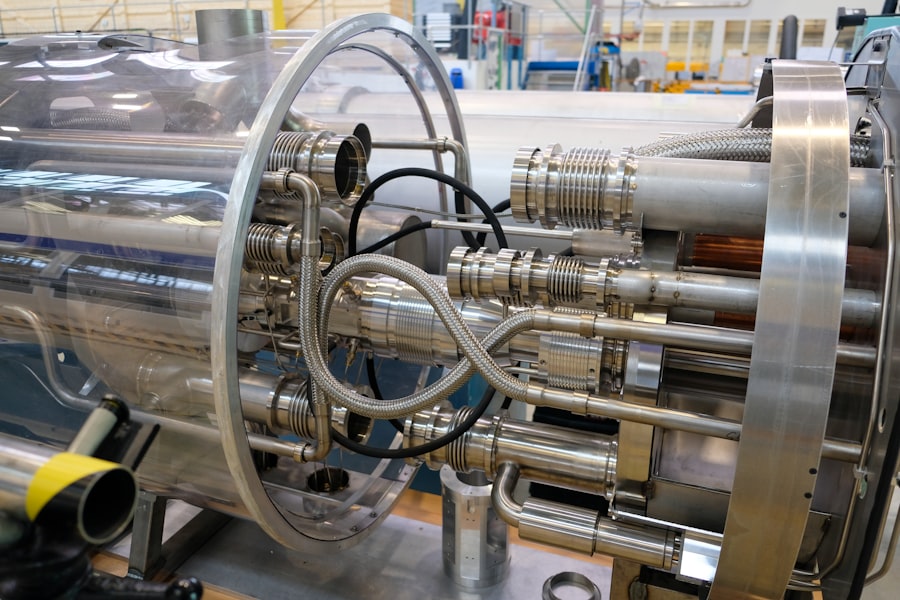
Superconducting qubits represent another leading approach in the field of quantum computing. These qubits are constructed using superconducting materials that exhibit zero electrical resistance at very low temperatures. By exploiting the properties of superconductivity, researchers can create qubits that are highly tunable and capable of operating at microwave frequencies.
This tunability allows for precise control over the qubit states, making superconducting qubits an attractive option for building quantum processors. The architecture of superconducting qubits typically involves Josephson junctions, which are thin insulating barriers between two superconductors. These junctions enable the creation of non-linear energy levels that can be manipulated to represent qubit states.
As you learn more about this technology, you will appreciate how superconducting qubits have already demonstrated impressive coherence times and gate fidelities, making them a leading candidate for near-term quantum applications.
Advantages and Challenges of Neutral Atoms in Quantum Computing
The advantages of using neutral atoms as qubits are manifold. One significant benefit is their long coherence times, which allow for more extended computations without losing information due to decoherence. This stability is crucial for performing complex quantum algorithms that require multiple operations over time.
Additionally, the scalability of neutral atom systems is promising; researchers can create large arrays of qubits with relative ease, paving the way for more powerful quantum processors. However, challenges remain in the development of neutral atom quantum computing. One major hurdle is achieving precise control over the interactions between qubits.
While long-range interactions are advantageous, they can also lead to unwanted coupling between qubits, complicating the implementation of quantum gates. Furthermore, creating and maintaining the necessary conditions for trapping and cooling atoms can be technically demanding and resource-intensive. As you consider these challenges, it becomes clear that while neutral atoms hold great promise, significant research and innovation are still required to realize their full potential in quantum computing.
Advantages and Challenges of Superconducting Qubits in Quantum Computing
| Metric | Neutral Atoms | Superconducting Qubits |
|---|---|---|
| Qubit Type | Neutral atoms trapped by optical tweezers or lattices | Superconducting circuits (Josephson junctions) |
| Typical Coherence Time | Milliseconds to seconds | 10 to 100 microseconds |
| Gate Fidelity | Above 99% (single-qubit), ~97-99% (two-qubit) | Above 99.9% (single-qubit), ~99% (two-qubit) |
| Scalability | Hundreds to thousands of qubits demonstrated in arrays | Up to 100+ qubits in current devices |
| Operating Temperature | Room temperature to microkelvin (laser cooling) | Millikelvin (dilution refrigerators) |
| Readout Method | Fluorescence imaging of atomic states | Dispersive readout via microwave resonators |
| Typical Gate Speed | Microseconds to milliseconds | 10s to 100s of nanoseconds |
| Noise Sources | Laser fluctuations, magnetic field noise | Charge noise, flux noise, quasiparticles |
| Current Challenges | Improving two-qubit gate fidelity and speed | Reducing decoherence and scaling control electronics |
Superconducting qubits come with their own set of advantages that make them appealing for quantum computing applications. One notable benefit is their relatively fast gate operation times, which allow for rapid execution of quantum algorithms. This speed is essential for achieving high throughput in quantum computations and is one reason why superconducting qubits have been at the forefront of experimental demonstrations in recent years.
Additionally, the established fabrication techniques from classical electronics provide a pathway for scaling up superconducting qubit systems. Despite these advantages, superconducting qubits face challenges that must be addressed for practical implementation. One significant issue is their susceptibility to noise and decoherence caused by environmental factors such as electromagnetic radiation and thermal fluctuations.
These factors can lead to errors in computations and limit the overall performance of superconducting qubit systems. Moreover, achieving high fidelity in gate operations remains a critical area of research, as even small errors can compound over multiple operations in a quantum algorithm. As you explore these challenges, you will gain insight into the ongoing efforts to enhance the reliability and robustness of superconducting qubit technology.
Recent Developments in Neutral Atom Quantum Computing
Recent advancements in neutral atom quantum computing have showcased the potential of this approach to revolutionize the field. Researchers have made significant strides in developing techniques for trapping and manipulating neutral atoms with unprecedented precision. For instance, innovations in optical tweezers have enabled scientists to create highly controlled arrays of neutral atoms that can be used as qubits.
These advancements not only enhance the scalability of neutral atom systems but also improve the fidelity of quantum operations. Moreover, recent experiments have demonstrated the successful implementation of entanglement protocols using neutral atoms. By leveraging laser interactions, researchers have been able to create entangled states among multiple atoms, a crucial requirement for many quantum algorithms.
As you follow these developments, you will see how they contribute to building more complex quantum circuits and pave the way for practical applications in quantum computing.
Recent Developments in Superconducting Qubits Quantum Computing
In parallel with advancements in neutral atom systems, significant progress has also been made in superconducting qubit technology. Researchers have been working diligently to improve coherence times and gate fidelities through various techniques such as error correction codes and improved materials. Recent breakthroughs have led to superconducting qubits achieving coherence times that were previously thought unattainable, allowing for more complex computations without losing information.
Additionally, there has been a surge in interest surrounding hybrid systems that combine superconducting qubits with other technologies, such as photonic systems or topological qubits. These hybrid approaches aim to leverage the strengths of different platforms while mitigating their weaknesses. As you explore these developments further, you will find that they represent a promising direction for enhancing the capabilities and performance of superconducting qubit-based quantum computers.
Comparing Neutral Atom and Superconducting Qubits Quantum Computing
When comparing neutral atom and superconducting qubit technologies, it becomes evident that each approach has its unique strengths and weaknesses. Neutral atoms excel in terms of scalability and long coherence times, making them suitable for large-scale quantum processors that require extended computation periods without error accumulation. Their ability to create entangled states through long-range interactions also positions them favorably for certain types of quantum algorithms.
On the other hand, superconducting qubits offer rapid gate operation times and established fabrication techniques that facilitate integration with existing technologies. Their fast processing capabilities make them ideal candidates for near-term applications where speed is critical. However, their susceptibility to noise and decoherence presents challenges that researchers must overcome to ensure reliable performance over extended computations.
Potential Applications of Quantum Computing with Neutral Atoms
The potential applications of quantum computing utilizing neutral atoms are vast and varied. One promising area is in simulating complex quantum systems, such as those found in materials science or chemistry. By leveraging the unique properties of neutral atoms, researchers can model interactions at a level of detail that classical computers struggle to achieve.
This capability could lead to breakthroughs in drug discovery or the development of new materials with tailored properties. Another exciting application lies in optimization problems across various industries, including logistics and finance. Neutral atom-based quantum computers could efficiently solve complex optimization tasks by exploring multiple solutions simultaneously through superposition and entanglement.
As you consider these applications, it becomes clear that neutral atom technology holds significant promise for addressing some of the most challenging problems facing society today.
Potential Applications of Quantum Computing with Superconducting Qubits
Superconducting qubits also present a wealth of potential applications that could transform industries ranging from cryptography to artificial intelligence. One notable application is in secure communication through quantum key distribution (QKD).
Additionally, superconducting qubits are well-suited for machine learning applications where large datasets need to be processed rapidly. Their fast gate operation times enable efficient training of machine learning models on quantum data structures, potentially leading to advancements in AI capabilities. As you explore these applications further, you will see how superconducting qubit technology could play a pivotal role in shaping the future landscape of various fields.
As you look ahead to the future of quantum computing, it is clear that both neutral atoms and superconducting qubits will play significant roles in advancing this transformative technology. The choice between these two approaches may ultimately depend on specific application requirements and technological advancements over time. Neutral atoms may emerge as leaders in large-scale simulations and optimization tasks due to their scalability and coherence properties.
Conversely, superconducting qubits may dominate near-term applications requiring rapid processing speeds and integration with existing technologies.
In conclusion, as you navigate through the evolving landscape of quantum computing, understanding the nuances between neutral atom and superconducting qubit technologies will be essential for appreciating their respective contributions to this groundbreaking field.
The future holds immense promise as researchers continue to push boundaries and unlock new possibilities within the realm of quantum computing.
Quantum computing is rapidly evolving, with various approaches being explored to enhance computational power and efficiency. One promising avenue involves the use of neutral atoms and superconducting qubits, which offer unique advantages in terms of scalability and coherence times. For a deeper understanding of the latest advancements in this field, you can read more in this related article on quantum computing at Freaky Science.
WATCH THIS!🤯 SHOCKING: The Simulation Theory Proof They Don’t Want You To See
FAQs
What is quantum computing?
Quantum computing is a type of computing that uses quantum bits, or qubits, which can exist in multiple states simultaneously, enabling the processing of complex calculations much faster than classical computers.
What are neutral atoms in quantum computing?
Neutral atoms are atoms with no net electric charge used as qubits in quantum computing. They are trapped and manipulated using lasers and magnetic fields to perform quantum operations.
What are superconducting qubits?
Superconducting qubits are quantum bits made from superconducting circuits that exhibit quantum behavior at very low temperatures. They are one of the leading technologies for building quantum computers.
How do neutral atom qubits differ from superconducting qubits?
Neutral atom qubits use individual atoms trapped by lasers, offering long coherence times and scalability, while superconducting qubits rely on electrical circuits cooled to near absolute zero, providing fast gate speeds and strong interactions.
What are the advantages of using neutral atoms for quantum computing?
Neutral atoms offer advantages such as long coherence times, the ability to arrange atoms in flexible geometries, and relatively low error rates due to weak interactions with the environment.
What are the benefits of superconducting qubits?
Superconducting qubits benefit from fast gate operations, well-developed fabrication techniques, and strong coupling to microwave photons, which facilitates quantum information processing.
What challenges do neutral atom quantum computers face?
Challenges include precise control and measurement of individual atoms, maintaining stable trapping conditions, and scaling up the number of qubits while minimizing errors.
What are the main challenges for superconducting qubit systems?
Superconducting qubits face challenges such as short coherence times compared to other qubit types, fabrication variability, and the need for ultra-low temperature environments.
Can neutral atoms and superconducting qubits be combined in quantum computing?
Research is ongoing into hybrid quantum systems that combine neutral atoms and superconducting qubits to leverage the strengths of both technologies, potentially improving performance and scalability.
What is the current state of quantum computing with neutral atoms and superconducting qubits?
Both neutral atom and superconducting qubit technologies are actively being developed, with prototypes demonstrating quantum algorithms and error correction, but large-scale, fault-tolerant quantum computers are still under development.