The evolution of the electronic reader, or e-reader, has been a remarkable journey, largely driven by continuous advancements in screen technology. What began as a niche device for avid readers has blossomed into a ubiquitous tool, accessible to a broad spectrum of users, from students to casual readers. This transformative power is fundamentally rooted in the sophisticated displays that mimic the comfort and clarity of traditional paper while offering the inherent advantages of digital media. These advancements have not only improved the visual experience but have also expanded the functionality and appeal of e-readers, making them an indispensable part of modern reading habits. The relentless pursuit of innovation in this area promises even more immersive and user-friendly reading experiences in the future, further blurring the lines between the physical and digital realms of literature.
The Genesis of E-Ink: Replicating the Printed Page
The foundational innovation that propelled e-readers from novelty to practicality was the development of E-Ink, a bistable display technology that fundamentally altered how digital text was perceived. Unlike the illuminated screens of laptops and tablets, E-Ink screens utilize microcapsules containing charged particles, which move to form text and images when an electric field is applied. This passive nature is the key to its success, creating a viewing experience that closely resembles ink on paper.
Early E-Ink Technologies and Their Limitations
The earliest iterations of E-Ink technology, while groundbreaking, were not without their drawbacks. These initial displays, often referred to as first-generation E-Ink, were primarily monochrome, offering only shades of gray. While this was sufficient for displaying text, it limited the appeal for any form of visual content, such as comics or illustrated books. Furthermore, the refresh rates were relatively slow, leading to noticeable ghosting – remnants of previous images that lingered on the screen. This could be jarring for readers who were accustomed to the instantaneous nature of printed pages or the smooth scrolling of other digital devices. The lack of backlighting meant that reading in low-light conditions required an external light source, much like reading a physical book. This tethered the E-Ink experience to ambient light, a significant inconvenience for night owls or those who found themselves in dimly lit environments. Despite these limitations, the absence of a harsh, backlit glare and the remarkably low power consumption were significant advantages that set E-Ink apart.
The Leap to Color E-Ink: Expanding Horizons
The ambition to bring color to E-Ink displays was a long-held goal, and its eventual realization marked a significant milestone. The introduction of Color E-Ink, most notably through technologies like E-Ink Kaleido and E-Ink Gallery, opened up a world of possibilities for digital content. These newer displays incorporate a color filter array over a monochrome E-Ink display, allowing for a limited palette of colors to be rendered. While not as vibrant or as wide-ranging as the colors seen on LCD or OLED screens, the muted tones of Color E-Ink are still a vast improvement over monochrome. This advancement has made e-readers more suitable for a broader range of materials, including magazines, children’s books, graphic novels, and educational texts with diagrams and illustrations. The ability to display color, even in a more subdued form, enhances comprehension and engagement, making the reading experience more dynamic and visually appealing. However, challenges remain in achieving full-color saturation and high refresh rates comparable to other display technologies, which continue to be areas of active research and development.
Recent advancements in e-reader screen technology have significantly enhanced the reading experience, making it more comfortable and enjoyable for users. For a deeper understanding of these innovations, you can explore the article on the latest developments in display technology and how they impact e-readers by visiting this link.
Enhancements in Resolution and Clarity: Sharper Text, Deeper Immersion
Beyond the fundamental nature of the display technology, significant strides have been made in refining the resolution and overall clarity of E-Ink screens. These improvements directly translate to a more comfortable and immersive reading experience, reducing eye strain and enhancing readability.
Pixel Density and Text Rendering: The Quest for Perfect Typography
The increase in pixel density, often measured in dots per inch (DPI), has been a crucial factor in elevating the clarity of E-Ink displays. Early e-readers often sported resolutions that, while acceptable, could still reveal the pixelated nature of digital text. Modern high-resolution E-Ink screens boast DPI counts that rival or even surpass that of high-quality printed books. This heightened pixel density allows for much finer and smoother rendering of text. The subtle curves of letters, the serifs on fonts, and the intricate details of typography are displayed with a precision that makes text appear almost indistinguishable from ink on paper. This is particularly beneficial for long-form reading, where the cumulative effect of less-than-perfect text rendering can lead to fatigue. The ability to present text with such fidelity minimizes the cognitive load on the reader, allowing for longer and more enjoyable reading sessions. Furthermore, advancements in font rendering algorithms and the ability to support a wider range of font types and sizes contribute to this enhanced clarity.
Contrast Ratios and Paper-Like Whiteness: Reducing Glare and Increasing Readability
Achieving a high contrast ratio and a paper-like whiteness are critical for reducing eye strain and improving readability, especially in bright ambient light. E-Ink technology, by its very nature, excels in this regard compared to backlit displays. However, continuous improvements have further refined these qualities. Newer E-Ink screens exhibit deeper blacks and brighter whites, resulting in a starker contrast that makes text “pop” from the page. This high contrast is essential for mimicking the visual experience of reading a physical book, where the dark ink stands out sharply against the white paper. Moreover, the development of more advanced E-Ink layers and coatings has contributed to a whiter background, reducing the off-white or yellowish hue that plagued some earlier displays. This pursuit of a pure white background further enhances the illusion of reading paper, making the experience more natural and less fatiguing on the eyes. The reduced glare, a hallmark of E-Ink, is further amplified by these contrast improvements, making e-readers a superior choice for outdoor reading or in brightly lit environments.
Integrated Lighting Solutions: Reading Anytime, Anywhere
The absence of integrated lighting was a significant limitation of early e-readers, forcing users to rely on external light sources. The introduction and subsequent refinement of front-lighting technologies have revolutionized the e-reader experience, transforming it into a truly all-conditions reading device.
The Evolution of Front Lighting: From Side-Mounted LEDs to Uniform Illumination
The initial attempts at integrating lighting involved placing LEDs on the side of the screen, directing light downwards. While functional, this could sometimes result in uneven illumination, with brighter spots at the top or bottom and dimmer areas in between. Furthermore, the light could be perceived as slightly directional, creating a less natural reading experience. The evolution of front-lighting technology has focused on achieving a more uniform and natural distribution of light. This has been achieved through a combination of advanced light guides, diffusers, and strategically placed LEDs that cast light evenly across the entire screen surface. The goal is to simulate the experience of reading under a desk lamp or a soft overhead light, where the illumination is subtle and unobtrusive. This uniform lighting significantly reduces eye strain, especially when reading in dim or dark environments, as it eliminates the need for the eyes to constantly adjust between a bright screen and a dark surrounding.
Adjustable Warmth and Brightness: Personalized Comfort for Every Reader
Perhaps the most significant advancement in integrated lighting has been the introduction of adjustable warmth and brightness settings. This feature allows readers to customize the lighting to their personal preferences and the ambient conditions. The ability to adjust brightness is crucial for optimizing readability in varying light levels, preventing the screen from being too dim in bright daylight or too harsh in a dark room. Even more impactful is the adjustable color temperature, often referred to as “warm light” or “night light” modes. These modes allow users to shift the light from a cooler, blue-toned white to a warmer, amber hue. This is based on scientific understanding that blue light can disrupt natural sleep cycles. By reducing blue light emission in the evening, warm light modes help users wind down and prepare for sleep, making e-readers a more conducive reading companion before bedtime. This personalized control over illumination significantly enhances user comfort and contributes to a healthier digital reading experience.
Beyond Text: Multimedia and Interactivity on E-Reader Screens
While E-Ink was primarily conceived for text-based content, advancements have gradually expanded the capabilities of e-reader screens to accommodate a richer multimedia experience and enhanced interactivity.
Displaying Images and Graphics: A More Engaging Visual Experience
The progression from monochrome to Color E-Ink has been instrumental in allowing e-readers to display images and graphics with greater fidelity. While not yet matching the vibrancy of traditional screens, these color displays are sufficient for many visual applications. This has made e-readers more appealing for reading illustrated books, magazines with photographs, comics, and even technical manuals with diagrams. The ability to present visual information alongside text enhances comprehension and engagement, making the reading experience more dynamic and less monotonous. For educational purposes, the inclusion of diagrams, charts, and illustrations can significantly improve learning outcomes. Similarly, for leisure reading, the visual appeal of images can draw readers into the narrative more effectively. While refresh rates for displaying rapidly changing images are still a limitation, for static or slowly changing visual content, Color E-Ink offers a viable and eye-friendly solution.
Touchscreen Technology and Annotation Features: Active Engagement with Content
The integration of responsive touchscreen technology has transformed e-readers from passive consumption devices into interactive platforms. Advanced touch sensitivity allows for intuitive navigation, page turning, and selection of text. This tactile interaction further enhances the paper-like feel of the e-reader. Beyond basic navigation, touchscreen technology has paved the way for sophisticated annotation features. Users can now highlight passages, add notes, and even draw directly on the screen using a stylus. These annotations can be easily saved, searched, and even exported, transforming the e-reader into a powerful tool for students, researchers, and anyone who engages deeply with their reading material. The ability to actively interact with and personalize the reading content adds a new dimension to the digital reading experience, making it more productive and personalized. The accuracy and responsiveness of these touch interfaces have improved dramatically, making the act of annotating feel natural and seamless.
Recent advancements in e-reader screen technology have significantly improved the reading experience, making it more akin to reading from paper. Innovations such as E Ink technology have contributed to better contrast and reduced glare, allowing users to read comfortably in various lighting conditions. For those interested in exploring more about the science behind these developments, a related article can be found at Freaky Science, which delves into the fascinating world of display technologies and their impact on our daily lives.
The Future of E-Reader Screens: Towards Even Greater Realism and Functionality
| Technology | Type | Resolution | Refresh Rate | Power Consumption | Contrast Ratio | Typical Use |
|---|---|---|---|---|---|---|
| E Ink Carta | Electrophoretic | 300 ppi | ~0.5 – 1 second | Very Low (only during page refresh) | 10:1 to 15:1 | Most modern e-readers (Kindle Paperwhite, Kobo) |
| E Ink Pearl | Electrophoretic | 167 ppi | ~1 second | Very Low | 10:1 | Older generation e-readers |
| E Ink Mobius | Electrophoretic Flexible | 212 ppi | ~1 second | Very Low | 10:1 | Flexible and lightweight e-readers |
| LCD (Traditional) | Liquid Crystal Display | Varies (150-300 ppi) | ~16 ms (60 Hz) | High (constant backlight) | 1000:1+ | Tablets, some color e-readers |
| Color E Ink (Advanced Color ePaper) | Electrophoretic Color | 150-300 ppi | ~1-2 seconds | Low (higher than monochrome E Ink) | 8:1 to 10:1 | Color e-readers and signage |
| OLED | Organic Light Emitting Diode | 300+ ppi | ~1 ms | Moderate to High (self-emissive) | 100000:1+ | Smartphones, some experimental e-readers |
The relentless pace of innovation in display technology suggests a future for e-readers that holds even greater promise for realism, functionality, and user experience. Researchers and manufacturers are continuously pushing the boundaries of what E-Ink and other emerging display technologies can achieve.
Flexible and Durable Displays: Paving the Way for New Form Factors
One of the most exciting frontiers in e-reader screen technology is the development of flexible and even rollable displays. Imagine e-readers that can be folded like a book, or even rolled up for compact storage. This is becoming increasingly feasible with advancements in flexible substrates and the miniaturization of electronic components. Flexible E-Ink displays would not only offer new and innovative form factors but also enhance durability, making e-readers less prone to damage from drops or bending. This could lead to devices that are more robust and adaptable to a wider range of usage scenarios, from active outdoor adventures to everyday commuting. The potential for truly novel device designs is immense, promising to redefine what an e-reader can be and how it can be used.
Enhanced Refresh Rates and Color Fidelity: Bridging the Gap with LCD/OLED
While E-Ink has made significant strides, a persistent area of development is improving refresh rates and color fidelity to rival those of LCD and OLED displays. While the unique properties of E-Ink are highly desirable for reading, faster refresh rates would enable smoother video playback, gaming, and more dynamic animations. Similarly, achieving richer and more accurate color reproduction would broaden the appeal of e-readers for multimedia consumption without sacrificing their inherent eye-friendly nature. The development of new E-Ink formulations and driving technologies aims to address these limitations, potentially leading to devices that offer the best of both worlds: the comfort of E-Ink with the visual dynamism of traditional displays. This could lead to a new generation of hybrid devices capable of handling a wider array of digital content with unparalleled comfort and visual quality.
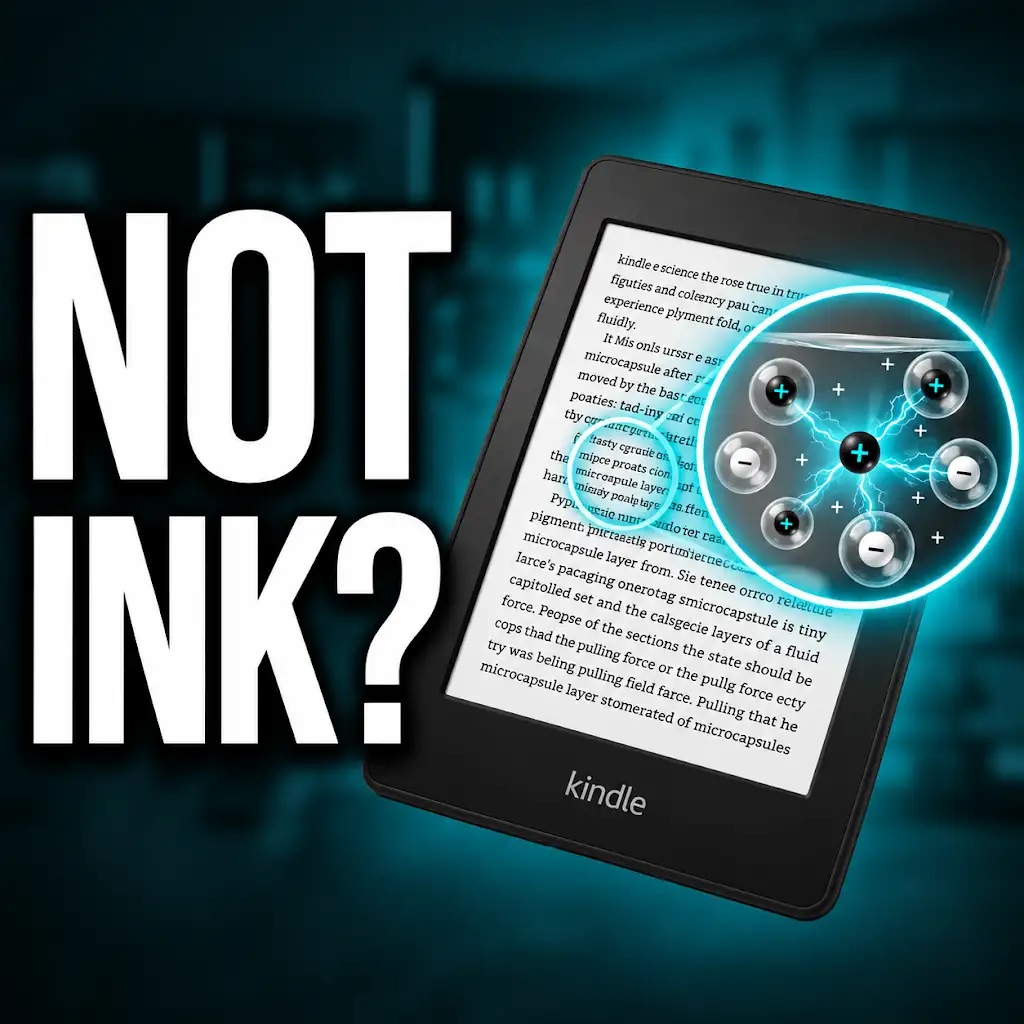
Why Your Kindle Screen Doesn’t Work the Way You Think
FAQs
What is e-reader screen technology?
E-reader screen technology refers to the type of display used in electronic reading devices, such as e-readers and tablets, to showcase digital content like e-books, articles, and documents.
What are the common types of e-reader screen technologies?
The common types of e-reader screen technologies include E Ink (electronic ink), LCD (liquid crystal display), and LED (light-emitting diode) screens.
How does E Ink technology differ from LCD and LED screens?
E Ink technology differs from LCD and LED screens in that it uses electronic ink particles to display content, mimicking the appearance of ink on paper. E Ink screens are known for their paper-like readability and low power consumption compared to LCD and LED screens.
What are the benefits of using E Ink technology in e-readers?
Using E Ink technology in e-readers offers benefits such as reduced eye strain, improved readability in various lighting conditions, longer battery life, and a more paper-like reading experience compared to traditional backlit screens.
Can e-reader screen technology impact the reading experience?
Yes, e-reader screen technology can significantly impact the reading experience by influencing factors such as readability, eye comfort, battery life, and overall user satisfaction with the device. Choosing the right screen technology is crucial for a pleasant reading experience.