
The Evolving Canvas: Understanding E Ink Pixel Control
E Ink, the revolutionary display technology synonymous with e-readers and digital signage, has long captivated audiences with its paper-like aesthetic and remarkable power efficiency. At its core, E Ink’s magic lies in the intricate dance of microscopic charged particles within a fluid encapsulated between two sheets of plastic. Traditionally, the control over these particles has been a nuanced art, balancing refresh rates, contrast, and the iconic ghosting effect that sometimes accompanies image transitions. However, recent advancements in E Ink pixel control are pushing the boundaries of what this versatile technology can achieve, promising displays that are not only more visually appealing but also capable of a wider range of applications. This evolution in pixel management is not merely an incremental improvement; it is a fundamental reimagining of how E Ink displays can render information, interact with users, and integrate into our increasingly digital lives. The journey from basic text rendering to dynamic, high-fidelity imagery is a testament to the ingenuity of material science and electrical engineering working in concert.
Foundations of E Ink Display Technology
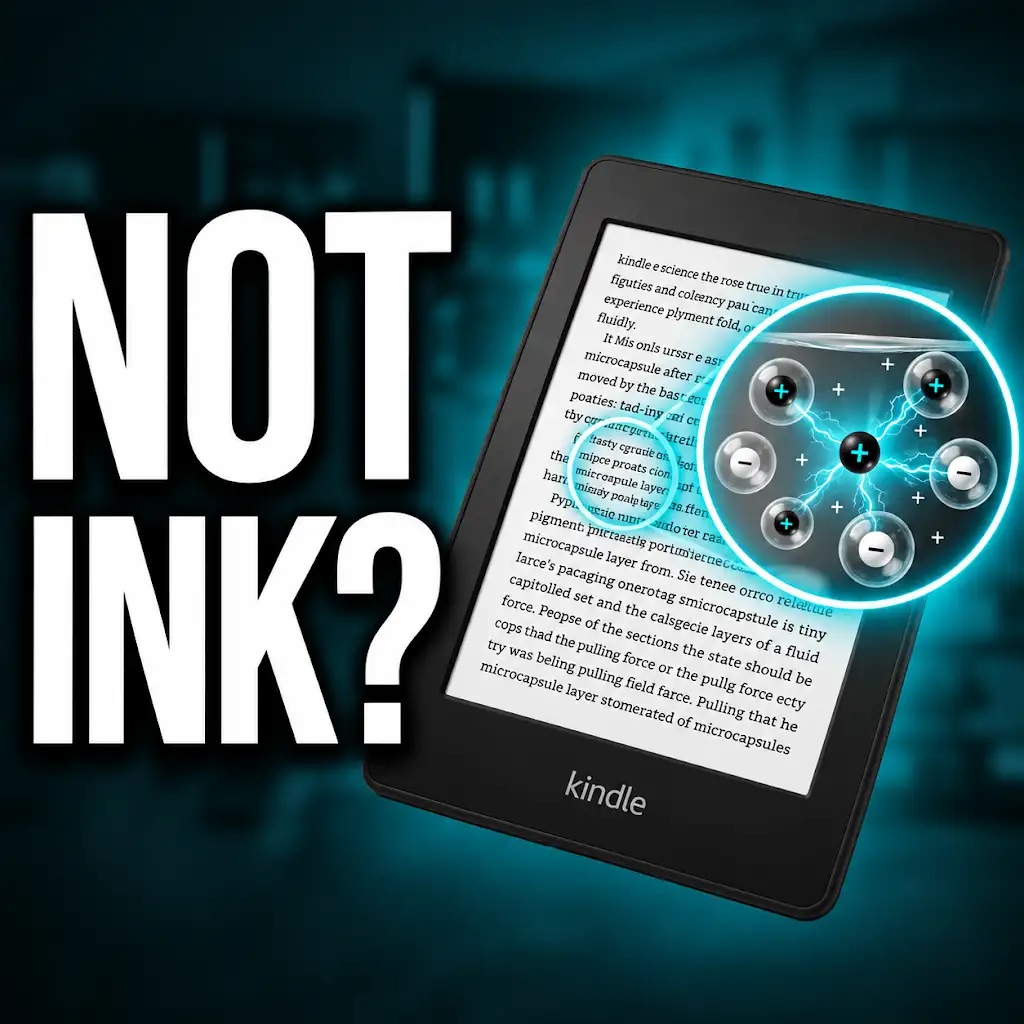
To appreciate the advancements, a foundational understanding of E Ink’s operation is essential. E Ink displays, often referred to as electrophoretic displays (EPDs), consist of millions of microcapsules, each containing positively and negatively charged pigment particles suspended in a clear fluid. Above these microcapsules lies a grid of electrodes, meticulously arranged to address individual pixels. By applying specific voltages to these electrodes, the charged particles within each microcapsule are directed to move, accumulating at the top or bottom of the capsule. This movement dictates the perceived color of the pixel. For example, black particles moving to the top create a dark pixel, while white particles moving to the top create a bright pixel. The bistable nature of E Ink means that once an image is set, it requires no power to maintain, contributing to its exceptional energy efficiency. This fundamental mechanism, while elegant in its simplicity, presents inherent challenges in achieving rapid image changes and high levels of contrast simultaneously.
The Microcapsule and Pigment Dynamics
The physical characteristics of the microcapsules and the pigments within them are crucial to the display’s performance. The size of the microcapsules, the charge of the pigment particles, and the viscosity of the fluid all play a role in how quickly and effectively the particles can be moved by the electric field. Earlier E Ink generations often featured larger microcapsules and less refined pigment formulations, leading to slower refresh rates and a tendency for residual images, or “ghosting,” to linger after a screen update. The development of smaller, more uniform microcapsules, coupled with optimized pigment formulations, has been a key area of research. This allows for finer control over particle movement, enabling sharper image rendering and reduced ghosting. The precise interplay between particle size, charge density, and fluid properties dictates the achievable grayscale levels and the overall vibrancy of the display.
Electrode Architecture and Voltage Control
The electrode structure beneath the microcapsules is the mechanism by which individual pixels are addressed and controlled. This grid of electrodes, often a thin-film transistor (TFT) backplane, allows for precise application of voltages to each pixel. The complexity of the driving electronics and the algorithms used to generate these voltage waveforms are central to pixel control. Advanced control schemes involve nuanced voltage sequencing, often referred to as “driving waveforms,” designed to manipulate the pigment particles efficiently and effectively. These waveforms are not simply on/off signals; they are carefully crafted sequences of positive and negative pulses of varying durations and magnitudes. The goal is to guide the particles to their desired positions with minimal overshoot or undershoot, thereby minimizing ghosting and maximizing contrast.
E-ink technology has revolutionized the way we interact with digital displays, particularly in e-readers and other devices that require low power consumption and high readability. For a deeper understanding of how pixel control in e-ink displays works, you can explore a related article that delves into the intricacies of this technology and its applications. To read more, visit Freaky Science.
Innovations in Driving Waveforms for Enhanced Clarity

The most significant strides in E Ink pixel control have undoubtedly been in the sophistication of the driving waveforms. These intricate sequences of electrical pulses are the “brains” behind each pixel’s transformation, dictating the speed, accuracy, and fidelity of the image update. By meticulously tuning these waveforms, manufacturers are achieving unprecedented levels of performance, overcoming some of the technology’s historical limitations. This focus on waveform engineering has unlocked new possibilities for E Ink, transforming it from a niche technology for static content into a more dynamic and versatile display solution. The development of these waveforms is an iterative process, involving extensive simulation, empirical testing, and a deep understanding of the underlying physics of electrophoretic motion.
Optimizing Particle Movement for Speed and Stability
Traditional driving waveforms often prioritized stability, leading to slower refresh rates. The challenge has been to accelerate particle movement without sacrificing image quality or introducing excessive ghosting. Advanced waveforms achieve this by employing multi-stage pulsing strategies. These can involve initial strong pulses to quickly move particles to their general vicinity, followed by gentler, more precise pulses to fine-tune their position. This two-pronged approach allows for significantly faster screen updates. Furthermore, the concept of “settling time” – the period required for particles to fully stabilize – is now actively managed within the waveform design. By carefully controlling the duration and polarity of the final pulses, the system can encourage rapid settling, minimizing residual image artifacts.
Adaptive Waveform Generation for Dynamic Content
A breakthrough in this area is the development of adaptive waveform generation. Instead of relying on a single, static waveform for all image transitions, these advanced systems can dynamically adjust the driving sequence based on the content being displayed and the desired outcome. For instance, when transitioning between two similar images, a less aggressive waveform might be used to conserve power and minimize disturbance. Conversely, for a rapid animation or a full screen update, a more robust waveform can be deployed. This adaptability is crucial for applications requiring frequent content changes, such as digital signage or interactive displays, where a smooth and immediate visual experience is paramount. The system analyzes the pixel data and the nature of the change to select or generate the optimal waveform in real-time.
Reducing Ghosting Through Advanced Pixel Refresh Techniques
Ghosting, the faint afterimage of previously displayed content, has long been a bane of E Ink displays. However, sophisticated pixel refresh techniques are now significantly mitigating this issue. Beyond simply updating pixels, these techniques involve proactive measures to “clean” the display before rendering new information. This can involve a rapid “flashing” of the entire screen to a neutral state (often black or white) to reset all pigment particles before the new image is drawn. More advanced methods involve targeted “pixel purging” or “cycle correction,” where specific pixels or regions that are prone to ghosting are subjected to a unique, pre-programmed sequence of pulses designed to fully clear any residual pigment.
Pre-visualization and Predictive Algorithms in Waveform Design
The concept of pre-visualization and predictive algorithms further enhances ghosting reduction. Before an image is fully displayed, the system can analyze the incoming data and predict potential ghosting issues. Based on this analysis, it can preemptively adjust the driving waveform or execute a specific refresh sequence on the affected pixels. This proactive approach is far more effective than reactive ghosting correction. For example, if the system detects a large area of white pixels being replaced by black, it might implement a more thorough clearing cycle for those specific pixels to ensure a clean transition. This level of intelligence in waveform design is what allows for the seamless rendering of complex images and animations on E Ink.
Enabling New Applications with Enhanced Pixel Performance
The improvements in E Ink pixel control are not just about making existing applications look better; they are fundamentally enabling new use cases that were previously unimaginable for this technology. The ability to render images with higher fidelity, faster refresh rates, and reduced ghosting opens doors for applications that demand more dynamic and interactive visual experiences. This expansion of E Ink’s capabilities positions it as a compelling alternative to traditional LCD and OLED displays in a growing number of scenarios, particularly where power efficiency and readability are paramount. The development of more sophisticated control over individual pixels is driving innovation across a broad spectrum of industries.
Color E Ink and Dynamic Content Rendering
The advent and ongoing refinement of color E Ink technology have been significantly bolstered by advanced pixel control. While early color E Ink displays were often muted in their hues and slow to update, improved driving waveforms are now unlocking their true potential. By precisely controlling the movement of multiple color pigment layers (e.g., Cyan, Magenta, Yellow, Black – CMYK) or advanced multicolor solutions, these displays can achieve richer colors and more fluid transitions. This enables a wider range of applications, from full-color electronic books and magazines to vibrant digital signage that can showcase dynamic advertisements and rich media content. The challenge in color E Ink lies in orchestrating the precise layering and movement of different colored particles to create accurate and appealing hues.
High-Refresh Rate Color E Ink for Dynamic Information Display
The ability to achieve higher refresh rates in color E Ink is a game-changer for dynamic information display. Imagine public transport schedules that update in real-time with vibrant clarity, or retail price tags that can dynamically change throughout the day to reflect promotions. Previously, such applications were limited by the slow refresh rates and color limitations of earlier color E Ink. With enhanced pixel control, these displays can now handle more frequent updates and richer color palettes, making them ideal for environments where information needs to be constantly current and visually engaging. This bridges the gap between static signage and the more power-hungry dynamic displays.
Interactive Devices and Enhanced User Experiences
The advancements in pixel control are also transforming interactive E Ink devices. Electronic shelf labels that can respond to customer queries, interactive whiteboards that offer a natural writing experience, and sophisticated e-readers with richer multimedia capabilities are all becoming a reality. The ability for pixels to update quickly and accurately allows for more responsive user interfaces, enabling gestures, animations, and richer visual feedback. This leads to a more intuitive and engaging user experience, making E Ink devices feel more alive and less like static displays. The speed at which pixels can be manipulated directly translates to the perceived responsiveness of the device.
Real-time Data Visualization on Low-Power Devices
The combination of E Ink’s low power consumption and enhanced pixel control makes it an ideal platform for real-time data visualization on devices that need to operate for extended periods without frequent recharging. Think of industrial sensors displaying real-time environmental data, wearable devices providing immediate health metrics, or even smart home control panels that offer instant visual feedback on device status. The ability to refresh these displays quickly and efficiently ensures that users are always presented with the most up-to-date information, all while minimizing the drain on battery life. This is particularly valuable in IoT (Internet of Things) applications where power constraints are often a significant consideration.
The Future Horizon: Towards Next-Generation E Ink Displays
The trajectory of E Ink pixel control suggests a future where these displays are not only more sophisticated but also more integrated into our daily lives. The ongoing research and development are focused on pushing the boundaries even further, exploring new materials, advanced control algorithms, and novel applications that leverage the unique strengths of E Ink. The pursuit of higher resolutions, faster refresh rates, and more vibrant color reproduction, all while maintaining power efficiency, remains a central theme. The evolution of pixel control is intrinsically linked to the evolution of E Ink as a display technology, promising a future filled with innovative and sustainable visual interfaces.
Exploring New Pigment Technologies and Microcapsule Designs
Future advancements may lie in the development of entirely new pigment technologies. Researchers are exploring electrochromic materials that offer even faster response times and potentially brighter, more saturated colors. Similarly, advancements in microcapsule design, perhaps involving different fluid dynamics or encapsulated particles with modified electrical properties, could lead to further improvements in speed and image quality. The fundamental physics of particle movement within the microcapsules presents opportunities for innovation, and ongoing research is constantly seeking to optimize these microscopic interactions for macroscopic display performance. The exploration of multi-layered microcapsules for enhanced color mixing is also a promising avenue.
Towards True Motion and Enhanced Grayscale Capabilities
The ultimate goal for many applications is to achieve “true motion” – the ability to display smooth, continuous video playback. While E Ink is unlikely to compete with OLED in this regard for high-frame-rate video, advancements in pixel control are steadily closing the gap for specific types of motion, such as subtle animations or scrolling text. Furthermore, the continuous refinement of grayscale capabilities, allowing for more nuanced transitions between black and white, will lead to richer image rendering and a more sophisticated visual experience. This will enable E Ink displays to capture more subtle details in images and graphics, moving beyond simple text and icons. The ongoing development of more precise electrical control over particle positioning is key to achieving these goals.
Integration with AI and Machine Learning for Smarter Displays
The integration of Artificial Intelligence (AI) and Machine Learning (ML) with E Ink pixel control represents a significant frontier. AI algorithms can be trained to optimize driving waveforms in real-time, not only for speed and clarity but also for power consumption based on user interaction and ambient conditions. ML can be used to predict user behavior and pre-render content, further enhancing the responsiveness and perceived smoothness of the display. For example, an AI could learn your reading habits and intelligently adjust screen refreshes to minimize eye strain or maximize battery life during specific reading sessions. This intelligent automation of display management promises to make E Ink devices even more user-centric and efficient.
Context-Aware Display Adjustments for Optimal Viewing
Future E Ink displays might become context-aware, adapting their visual properties based on their surroundings and the content being displayed. An AI could analyze ambient light conditions and adjust the contrast and brightness of the display to ensure optimal readability, mimicking how our eyes adjust to different lighting environments. Similarly, if the display is used for reading in a dimly lit room, the AI could suggest warmer color temperatures or a gentler refresh rate. This level of intelligent adaptation, driven by sophisticated pixel control and AI, will further blur the lines between digital displays and natural viewing experiences, solidifying E Ink’s position as a uniquely advantageous display technology.
E-ink technology has revolutionized the way we interact with digital displays, particularly in e-readers and other portable devices. For those interested in understanding the intricacies of e-ink pixel control, a related article can provide valuable insights into the mechanisms behind this innovative technology. You can explore more about this topic in the article on Freaky Science, which delves into the various methods of optimizing pixel performance and enhancing the overall user experience.
The Impact of Advanced Pixel Control on the Display Ecosystem
| Metric | Description | Typical Value | Unit |
|---|---|---|---|
| Pixel Size | Dimension of a single e-ink pixel | 50-100 | micrometers |
| Refresh Rate | Time taken to update the entire display | 0.5-2 | seconds |
| Contrast Ratio | Ratio of reflectance between black and white states | 10:1 to 15:1 | ratio |
| Power Consumption | Energy used during pixel state change | 0.1-0.5 | mW/cm² |
| Gray Levels | Number of distinguishable shades per pixel | 16-256 | levels |
| Pixel Control Voltage | Voltage applied to switch pixel states | 15-30 | Volts |
| Response Time | Time for a pixel to change state | 100-300 | milliseconds |
The significant advancements in E Ink pixel control are not happening in a vacuum. They have a profound impact on the broader display ecosystem, challenging traditional assumptions and creating new opportunities for innovation. As E Ink displays become more capable, they are increasingly competing with established technologies like LCD and OLED in various market segments. This competition, driven by the unique advantages of E Ink – namely its power efficiency and paper-like readability – is fostering a dynamic landscape where different display technologies are being pushed to evolve and differentiate themselves further. The success of improved E Ink pixel control is a testament to the ongoing pursuit of more sustainable and user-friendly display solutions.
Redefining Power Efficiency in the Age of Smart Devices
The inherent power efficiency of E Ink, once a primary differentiator for basic applications like e-readers, is now becoming even more critical in an era dominated by battery-powered smart devices. With enhanced pixel control, E Ink can now deliver more dynamic and visually rich experiences without significantly compromising this core advantage. This makes it an increasingly attractive option for a wide range of connected devices, from smartwatches and fitness trackers to industrial sensors and IoT devices, where battery life is a paramount concern. The ability to display information vividly and update it rapidly, all while consuming minimal power, represents a significant leap forward for power-conscious device design.
Sustainable Display Solutions and Reduced Environmental Footprint
The ongoing advancements in E Ink pixel control also contribute to the development of more sustainable display solutions. The minimal power consumption translates directly to reduced energy usage, which in turn lowers the environmental footprint of electronic devices. Furthermore, the often more robust and durable nature of E Ink displays, compared to some fragile glass-based technologies, can lead to longer product lifecycles and reduced electronic waste. As the world increasingly focuses on sustainability, E Ink, empowered by its sophisticated pixel control, is poised to play a significant role in offering greener alternatives for visual interfaces across numerous applications. This focus on longevity and reduced energy consumption aligns with global efforts towards a more circular economy for electronics.
The Growing Competition and Convergence of Display Technologies
The improving capabilities of E Ink, particularly in areas like color reproduction and refresh rates, are intensifying competition with other display technologies. While LCD and OLED excel in certain areas, such as fast motion video playback and extremely high contrast, E Ink is carving out significant niches where its unique advantages are paramount. This competition is not necessarily about E Ink replacing other technologies entirely, but rather about a convergence where each technology finds its optimal application. For instance, hybrid devices might incorporate E Ink for static information display and power saving, while utilizing a more traditional display for multimedia content. This healthy competition drives innovation across the board, pushing all display manufacturers to refine their offerings and explore new frontiers.
Opportunities for E Ink in Emerging Markets and Niche Applications
The enhanced pixel control opens up a plethora of opportunities for E Ink in emerging markets and niche applications that were previously underserved. Consider the potential in developing regions where access to reliable power might be limited, making E Ink’s low-power characteristics invaluable. In specialized industrial or medical settings, where readability in bright sunlight or reduced eye strain is crucial, E Ink is becoming a compelling choice. Furthermore, the aesthetic appeal of E Ink, with its resemblance to paper, is finding traction in areas like luxury goods, architectural design, and art installations, where visual texture and a calming presence are desired. The ongoing advancements in pixel control ensure that E Ink remains a versatile and adaptable technology for a diverse range of future applications.
Why Your Kindle Screen Doesn’t Work the Way You Think
FAQs
What is e ink pixel control?
E ink pixel control refers to the technology used to manipulate individual pixels on an e ink display, allowing for precise control over the appearance of text and images.
How does e ink pixel control contribute to energy efficiency?
E ink pixel control enables only the pixels that need to change to be powered, resulting in lower energy consumption compared to traditional displays that require constant power to maintain an image.
Can e ink pixel control be used to create dynamic content on e ink displays?
Yes, e ink pixel control can be utilized to create dynamic content by selectively activating and deactivating pixels to show animations, videos, or changing text on e ink screens.
What are the advantages of using e ink pixel control in e readers and electronic shelf labels?
Using e ink pixel control in e readers and electronic shelf labels allows for high contrast, low power consumption, and improved readability even in direct sunlight, making them ideal for long-term reading and display applications.
Is e ink pixel control a common feature in modern e ink devices?
Yes, e ink pixel control is a standard feature in most modern e ink devices, providing users with a more customizable and energy-efficient viewing experience compared to traditional LCD screens.