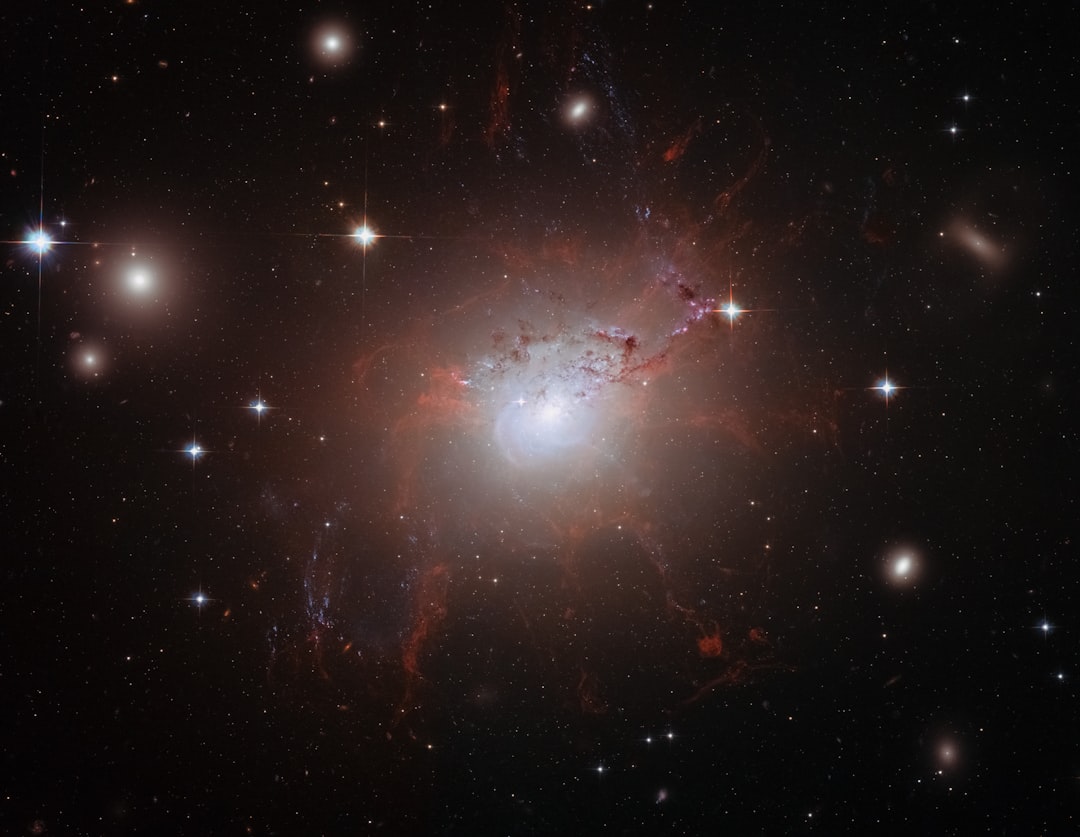
The vast cosmic ocean is not a uniform expanse of stars and gas; instead, it is structured like a colossal, three-dimensional web. This cosmic web, the largest known structure in the universe, is comprised of galaxy filaments and the enigmatic dark matter halos that anchor them. While luminous galaxies, the celestial cities we can observe, trace out the threads of this web, the scaffolding that supports and shapes them remains largely invisible. This article delves into the profound mysteries surrounding these cosmic structures, exploring their formation, their composition, and the crucial role they play in the evolution of the universe.
Imagine the universe not as a speck of dust, but as a gigantic, interconnected net. This is the essence of the cosmic web, a hierarchical arrangement of matter where galaxies are not randomly scattered but collected into clusters and superclusters, linked by long, tenuous filaments. These filaments are the highways of the cosmos, channeling matter and gas across immense distances.
Distribution of Galaxies: More Than Random Chance
From early cosmological surveys, it became apparent that galaxies are not distributed uniformly throughout space. Instead, they exhibit a clustered behavior, forming complex patterns that resemble foam or sponge-like structures. This non-random distribution is a direct consequence of the gravitational influence of underlying dark matter.
Filaments: The Threads of the Cosmic Web
Galaxy filaments are the most prominent features of the cosmic web, appearing as immense, thread-like structures that stretch for hundreds of millions of light-years. They are not static entities but dynamic conduits along which galaxies migrate and merge. Gas and dark matter are densest along these filaments, acting as gravitational attractors.
Voids: The Expanses Between the Threads
In stark contrast to the dense filaments are the vast, underdense regions known as cosmic voids. These are the silent, empty spaces between the intricate network of cosmic threads. While largely devoid of visible matter, they are not entirely empty, containing a diffuse sprinkle of dark matter and a scarcity of galaxies.
Recent research has shed light on the intricate relationship between galaxy filaments and dark matter halos, revealing how these massive structures influence the formation and distribution of galaxies in the universe. For a deeper understanding of this fascinating topic, you can explore the article available at Freaky Science, which discusses the role of dark matter in shaping cosmic structures and the implications for our understanding of the universe’s evolution.
Anatomy of a Filament: Beyond the Visible Light
When astronomers observe galaxy filaments, they are essentially seeing the luminous passengers on a much grander, invisible vehicle. The visible galaxies, the stars, gas, and dust that emit light, are merely the tip of a much larger iceberg, with the bulk of the structure being composed of mysterious dark matter.
Dark Matter: The Invisible Scaffolding
The concept of dark matter is one of the most significant enigmas in modern astrophysics. This non-luminous substance does not interact with light, making it invisible to telescopes. Its presence is inferred solely through its gravitational effects on visible matter. Simulations of the universe’s large-scale structure consistently require the existence of a substantial amount of dark matter to reproduce the observed distribution of galaxies.
Haloes: Gravitational Anchors of Galaxies
At the heart of each galaxy filament, and indeed enfolding individual galaxies and clusters, lie dark matter halos. These are roughly spherical concentrations of dark matter that act as the gravitational anchors of the cosmic web. Galaxies form and reside within these halos, their gravity drawing in gas and dust, which then coalesces into stars.
Baryonic Matter: The Luminous Passengers
Baryonic matter, the stuff that makes up stars, planets, and ourselves, constitutes only a fraction of the total mass in the universe. Within filaments, baryonic matter is drawn to the gravitational potential wells of dark matter halos. It is here that the familiar processes of star formation and galaxy evolution occur.
Formation of the Cosmic Web: A Cosmic Recipe of Gravity and Initial Fluctuations
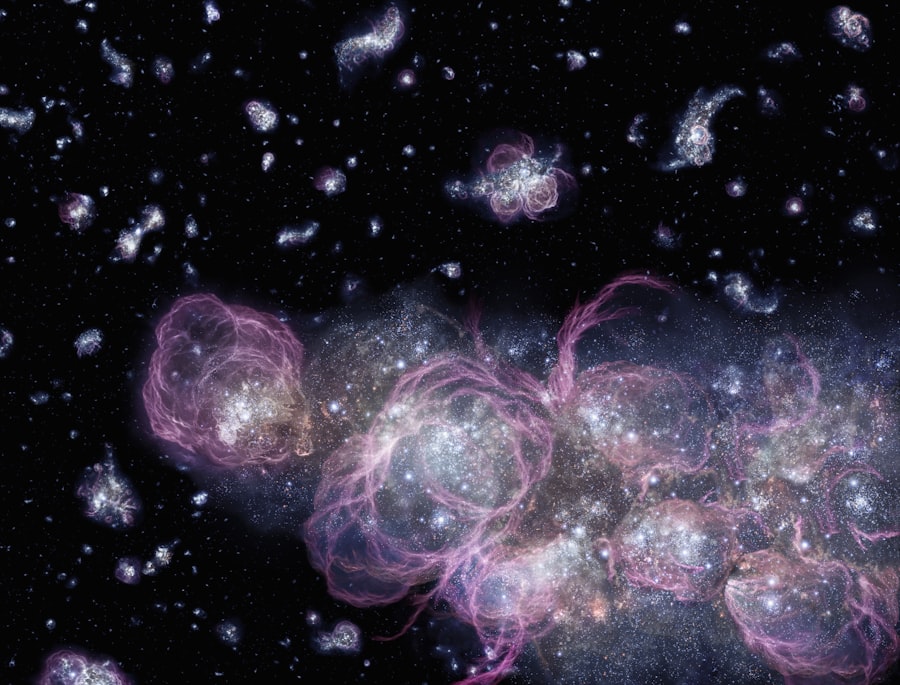
The intricate structure of the cosmic web did not spring into existence fully formed. Its genesis lies in the aftermath of the Big Bang, a period of rapid expansion and subsequent evolution driven by gravity acting on tiny initial density fluctuations.
Primordial Quantum Fluctuations: The Universe’s First Blueprint
The early universe, shortly after the Big Bang, was remarkably smooth but not perfectly uniform. Tiny quantum fluctuations, amplified during cosmic inflation, created regions of slightly higher and lower density. These minuscule variations were the seeds from which the cosmic web would eventually grow.
Gravitational Instability: The Engine of Structure Formation
Over billions of years, gravity acted as the cosmic sculptor, drawing matter towards the slightly denser regions. Denser areas attracted more matter, becoming even denser, while less dense regions became emptier. This process, known as gravitational instability, is the primary driver of structure formation in the universe.
Hierarchical Assembly: From Small to Large
The formation of the cosmic web is a hierarchical process. Small dark matter halos formed first, acting as the gravitational cradles for the first galaxies. These smaller halos then merged and accreted matter to form progressively larger structures, eventually building up the massive filaments and clusters we observe today.
Dark Matter Halos: More Than Just Spheres of Mystery
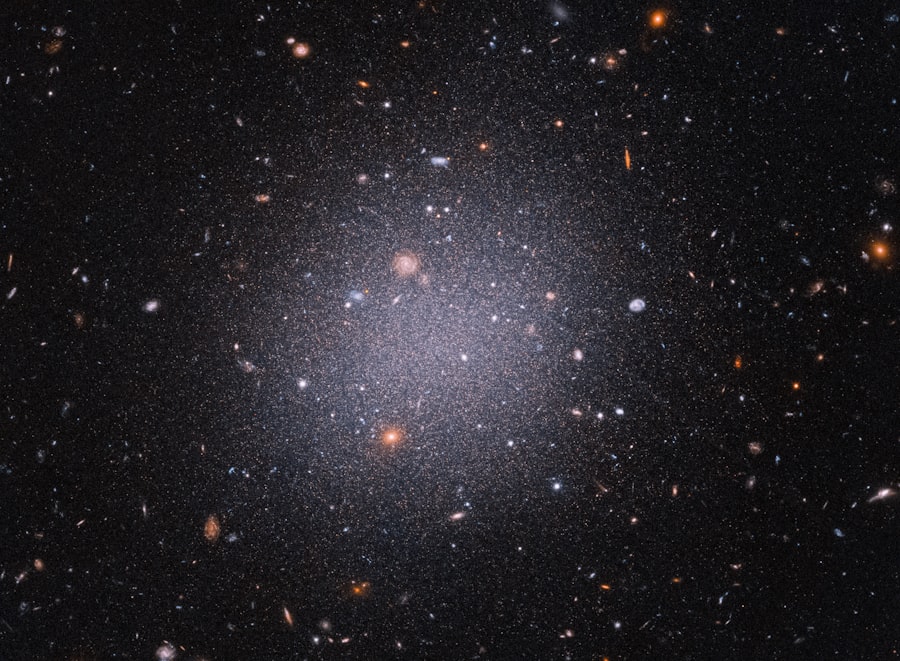
Dark matter halos are not simply passive repositories of dark matter; they are complex, dynamic entities that play a pivotal role in shaping the galaxies within them and the overall cosmic web.
The N-Body Simulation: A Digital Universe
The study of dark matter halos and their formation often relies on sophisticated N-body simulations. These computer models track the gravitational interactions of millions or billions of hypothetical particles representing dark matter. By evolving these simulations over cosmic timescales, astronomers can replicate the formation of the cosmic web with remarkable accuracy.
Substructure within Halos: A Cosmic Family Tree
Dark matter halos are not monolithic structures. They are replete with substructures, smaller halos that have been accreted or are in the process of merging. This substructure is a direct prediction of the hierarchical formation model and provides a “family tree” for the evolution of larger halos and the galaxies they host.
The Concentration Profile: Density Variation
The density of dark matter within a halo is not uniform. It is generally most concentrated at the center and becomes less dense further out, following a specific profile. Understanding this concentration profile is crucial for predicting the rotation curves of galaxies and the gravitational lensing effects they produce.
The Baryonic Contamination: How Galaxies Influence Halos
While dark matter dominates the mass of a halo, baryonic matter, through processes like star formation and supernova explosions, can influence the distribution of dark matter, particularly in the central regions of galaxies. This feedback mechanism is an active area of research.
Recent studies have shed light on the intricate relationship between galaxy filaments and dark matter halos, revealing how these cosmic structures influence the formation and distribution of galaxies. For a deeper understanding of this fascinating topic, you can explore an insightful article that discusses the role of dark matter in shaping the universe’s large-scale structure. This resource provides a comprehensive overview of the current research and theories surrounding these phenomena. To read more, visit this article.
Galaxy Filaments: Connecting the Dots of the Universe
| Metric | Description | Typical Value / Range | Unit |
|---|---|---|---|
| Filament Length | Average length of galaxy filaments connecting clusters | 10 – 100 | Megaparsecs (Mpc) |
| Filament Width | Typical cross-sectional width of filaments | 1 – 5 | Megaparsecs (Mpc) |
| Dark Matter Halo Mass | Mass of dark matter halos hosting galaxies | 10^10 – 10^15 | Solar Masses (M☉) |
| Halo Concentration Parameter | Measure of density profile concentration of halos | 5 – 15 | Dimensionless |
| Filament Density Contrast | Density ratio of filament to average cosmic density | 5 – 20 | Dimensionless |
| Galaxy Number Density in Filaments | Number of galaxies per unit volume within filaments | 0.01 – 0.1 | Galaxies per cubic Megaparsec |
| Velocity Dispersion in Halos | Typical velocity spread of galaxies within halos | 100 – 1000 | km/s |
| Filament Temperature | Temperature of gas in galaxy filaments | 10^5 – 10^7 | Kelvin (K) |
Galaxy filaments are the cosmic highways that connect the gravitational potential wells of dark matter halos. They are not just passive channels but active participants in galaxy evolution, influencing their growth and mergers.
The Role of Gas: Fueling Galaxy Growth
The dense gas that permeates galaxy filaments is the fuel for star formation. As galaxies move along these filaments, they accrete this gas, triggering the birth of new stars and contributing to their growth over time.
Galaxy Mergers: Cosmic Collisions
Filaments are also sites of frequent galaxy mergers. As galaxies are drawn together by gravity along these cosmic threads, they eventually collide and merge into larger galaxies. These mergers are a significant driver of galaxy evolution, leading to the formation of elliptical galaxies and fueling supermassive black holes at their centers.
The Vince Effect: Tracing Filaments with Galaxies
The “Vince Effect,” named after astronomer Richard Vince, describes the observed alignment of galaxies within filaments. Galaxies tend to be oriented along the direction of the filament, suggesting that their motion and formation are influenced by the large-scale gravitational pull of the filamentary structure.
Observing Filaments: Beyond Optical Telescopes
Observing galaxy filaments requires a multifaceted approach. While optical telescopes can reveal the luminous galaxies that trace the filaments, radio telescopes are crucial for detecting the vast clouds of cold gas that often reside within them. Gravitational lensing, the bending of light by massive objects, also provides indirect evidence of the dark matter distribution that forms these structures.
Understanding the intricate interplay between galaxy filaments and dark matter halos is akin to understanding the nervous system of the universe. These unseen structures provide the framework upon which the dazzling display of galaxies and stars unfolds. As our observational capabilities and theoretical models continue to advance, the mysteries surrounding these cosmic threads and their invisible anchors are steadily being unraveled, offering increasingly profound insights into our place within the grand cosmic tapestry.

WATCH NOW ▶️ Our Galaxy Is Sliding Toward a Cosmic Drain
FAQs
What are galaxy filaments?
Galaxy filaments are massive, thread-like structures composed of galaxies, gas, and dark matter that form the largest known cosmic web in the universe. They connect clusters and superclusters of galaxies, creating a vast network spanning hundreds of millions of light-years.
How do dark matter halos relate to galaxy filaments?
Dark matter halos are dense regions of dark matter that surround galaxies and galaxy clusters. These halos are believed to form along galaxy filaments, providing the gravitational framework that helps shape the large-scale structure of the universe and influences galaxy formation within the filaments.
Why is dark matter important in the study of galaxy filaments?
Dark matter is crucial because it makes up most of the mass in galaxy filaments and drives their formation through gravitational attraction. Since dark matter does not emit light, its presence is inferred from its gravitational effects on visible matter, helping scientists understand the distribution and evolution of cosmic structures.
How are galaxy filaments detected and studied?
Galaxy filaments are detected through large-scale galaxy surveys that map the positions of millions of galaxies. Observations using telescopes across different wavelengths, combined with computer simulations, help researchers study the distribution of galaxies and dark matter, revealing the filamentary structure of the cosmic web.
What role do galaxy filaments and dark matter halos play in galaxy formation?
Galaxy filaments act as channels funneling gas and matter into dark matter halos, where galaxies form and evolve. The gravitational pull of dark matter halos within filaments influences the growth and clustering of galaxies, making these structures fundamental to understanding the formation and evolution of galaxies in the universe.