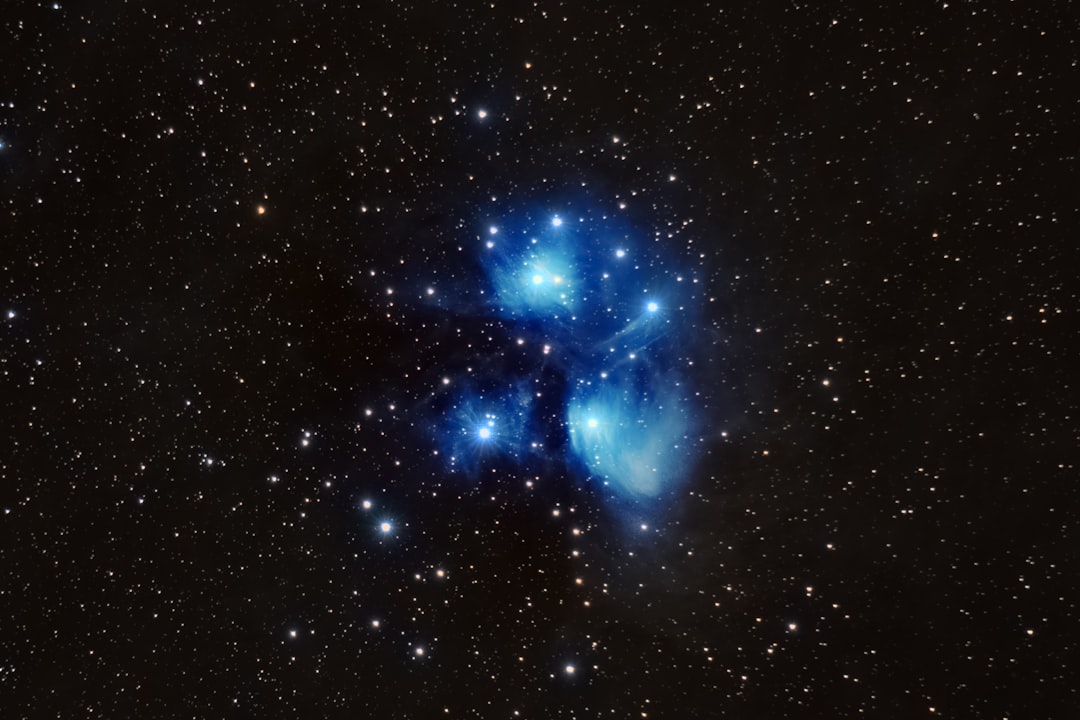
As the 21st century progresses, scientific research continues to address fundamental questions about the nature of reality. The year 2026 represents a significant period for scientific advancement, characterized by new discoveries and ongoing investigations across multiple fields of study. Key areas of current research include dark matter and dark energy, brain function and neuroscience, and other complex phenomena.
Scientists across various disciplines are actively working to expand our understanding of these subjects. Scientific inquiry into these topics serves both academic and public purposes. Researchers are investigating questions that have remained unanswered for extended periods, while simultaneously engaging broader society in scientific thinking.
The research priorities of 2026 address fundamental questions about life, consciousness, and the structure of the universe. This article examines several significant areas of scientific investigation that demonstrate humanity’s systematic effort to understand the natural world and our place within it.
Key Takeaways
- Dark matter and dark energy remain key unknowns driving modern astrophysics research.
- Scientists are actively exploring how life originated beyond Earth to understand universal biology.
- Quantum properties of space and time challenge classical physics and open new theoretical frontiers.
- The human brain’s complexities continue to puzzle researchers aiming to decode consciousness.
- Phenomena like fast radio bursts, black holes, and potential parallel universes represent major scientific mysteries for 2026.
The Search for Dark Matter and Dark Energy
At the forefront of contemporary astrophysics lies the enigmatic duo of dark matter and dark energy, which together constitute approximately 95% of the universe’s total mass-energy content. Despite their overwhelming presence, these phenomena remain largely invisible and undetectable through conventional means. Dark matter, theorized to account for the gravitational effects observed in galaxies and galaxy clusters, eludes direct observation, leading scientists to infer its existence through indirect evidence.
Meanwhile, dark energy is posited as the driving force behind the universe’s accelerated expansion, a phenomenon that has puzzled astronomers since its discovery in the late 1990s. In 2026, researchers are employing cutting-edge technologies and innovative methodologies to probe these cosmic mysteries. Advanced telescopes equipped with sophisticated sensors are being deployed to capture faint signals that may provide insights into dark matter’s properties.
Simultaneously, particle physicists are conducting experiments in underground laboratories designed to detect potential dark matter particles. The interplay between theoretical models and experimental data is crucial in refining our understanding of these elusive entities. As scientists inch closer to unveiling the nature of dark matter and dark energy, they stand on the brink of a paradigm shift that could redefine cosmology. One fascinating concept explored in modern science is simulation theory.
Exploring the Origins of Life in the Universe
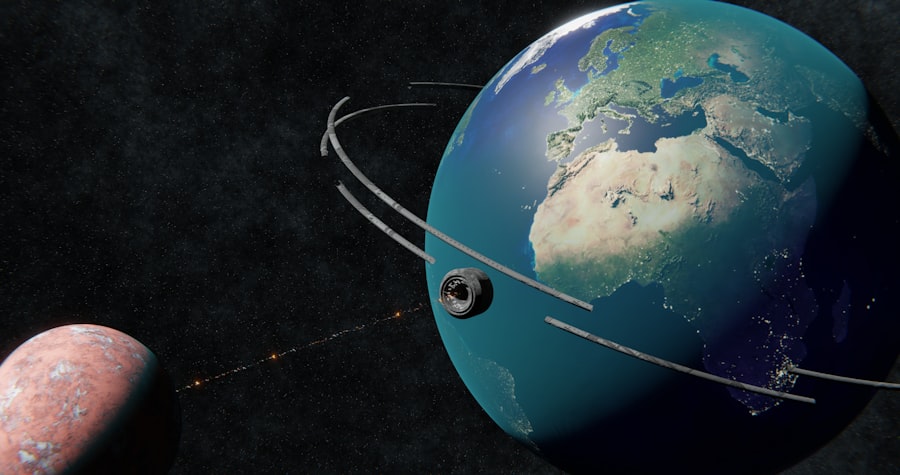
The question of how life originated on Earth has long captivated scientists and philosophers alike. In 2026, this inquiry has expanded beyond our planet, as astrobiologists explore the potential for life elsewhere in the universe. The discovery of extremophiles—organisms that thrive in extreme conditions—has broadened the scope of habitable environments, suggesting that life may exist in places previously deemed inhospitable.
From the icy moons of Jupiter and Saturn to exoplanets orbiting distant stars, researchers are investigating a myriad of locations where life could potentially arise. Astrobiology has become an interdisciplinary field, merging insights from biology, chemistry, geology, and astronomy. In 2026, missions to Mars and Europa are underway, aiming to collect samples and analyze them for signs of past or present life.
The search for biosignatures—chemical indicators of life—has intensified, with scientists developing sophisticated instruments capable of detecting minute traces of organic compounds. As they delve into the origins of life beyond Earth, researchers are not only seeking answers about extraterrestrial existence but also gaining insights into the fundamental processes that led to life on our own planet.
Understanding the Quantum Nature of Space and Time
The realms of quantum mechanics and general relativity have long been viewed as separate domains within physics, each with its own set of principles governing the behavior of matter and energy. However, as scientists delve deeper into the fabric of reality in 2026, they are increasingly recognizing the need for a unified theory that reconciles these two pillars of modern physics. The quest to understand the quantum nature of space and time has become a central focus for theoretical physicists, who are exploring concepts such as quantum entanglement and spacetime geometry.
In this pursuit, researchers are investigating phenomena like black holes and gravitational waves, which challenge conventional notions of causality and locality. The implications of these studies extend beyond theoretical musings; they hold potential applications in fields such as quantum computing and information theory. As scientists grapple with questions about the fundamental structure of reality, they are also exploring philosophical implications regarding determinism and free will.
Uncovering the Secrets of the Human Brain
| Science Mystery | Description | Current Status (2026) | Key Challenges | Potential Impact |
|---|---|---|---|---|
| Dark Matter Composition | Understanding the nature and particles that make up dark matter. | Undetected directly; candidates like WIMPs and axions remain hypothetical. | Extremely weak interaction with normal matter; detection sensitivity limits. | Revolutionize physics and cosmology; explain galaxy formation and universe structure. |
| Dark Energy Origin | Explaining the cause of the accelerated expansion of the universe. | Observed via supernovae and cosmic microwave background; theoretical models vary. | Lack of direct measurement; competing theories like cosmological constant vs quintessence. | Fundamental understanding of universe fate and physics beyond standard model. |
| Consciousness Mechanism | How subjective experience arises from brain activity. | Neuroscience maps brain activity but no consensus on consciousness origin. | Complexity of brain networks; difficulty in defining and measuring consciousness. | Advances in AI, medicine, and philosophy; potential treatments for mental disorders. |
| Origin of Life | How life first emerged from non-living chemical compounds on Earth. | Multiple hypotheses (RNA world, hydrothermal vents) but no definitive proof. | Scarcity of early Earth evidence; complexity of prebiotic chemistry. | Insights into biology, astrobiology, and potential life elsewhere in universe. |
| Quantum Gravity | Unifying general relativity and quantum mechanics into a single theory. | Theories like string theory and loop quantum gravity remain unproven. | Lack of experimental data at Planck scale; mathematical complexity. | Fundamental physics breakthrough; understanding black holes and universe origin. |
The human brain remains one of the most complex and least understood organs in the body. Despite significant advancements in neuroscience over recent decades, many questions about its functioning and capabilities remain unanswered. In 2026, researchers are employing advanced imaging techniques and neurotechnology to probe deeper into the brain’s intricate networks.
The goal is not only to understand how various regions communicate but also to unravel the mysteries behind consciousness, memory, and cognition. One area of focus is neuroplasticity—the brain’s ability to reorganize itself by forming new neural connections throughout life. This phenomenon has profound implications for rehabilitation following injury or stroke, as well as for understanding learning processes.
Additionally, researchers are investigating how external factors such as environment and experience shape brain development. As they uncover more about the brain’s secrets, scientists hope to develop targeted therapies for neurological disorders and enhance cognitive function in healthy individuals.
Solving the Mystery of Fast Radio Bursts

Fast radio bursts (FRBs) have emerged as one of the most intriguing phenomena in astrophysics since their discovery in 2007. These brief but intense bursts of radio waves from distant galaxies have left scientists puzzled regarding their origins and mechanisms. In 2026, ongoing research aims to decipher these enigmatic signals by analyzing their properties and potential sources.
Some theories suggest that FRBs could be linked to catastrophic events such as neutron star collisions or even advanced extraterrestrial technologies. The study of FRBs has gained momentum with advancements in radio telescope technology, allowing astronomers to capture more data than ever before. By pinpointing their locations in space and correlating them with other astronomical events, researchers hope to uncover patterns that could shed light on their origins.
As they delve deeper into this mystery, scientists are not only expanding their understanding of cosmic phenomena but also refining their methods for detecting and analyzing transient signals from across the universe.
Investigating the Existence of Parallel Universes
The concept of parallel universes has long been a staple of science fiction, but recent developments in theoretical physics have brought this idea closer to scientific inquiry. In 2026, researchers are exploring various models that suggest our universe may be just one among many—a multiverse teeming with alternate realities. These theories arise from interpretations of quantum mechanics and cosmological inflation, proposing that different regions of space may evolve independently with distinct physical laws.
Investigating parallel universes poses significant challenges for empirical validation; however, scientists are developing innovative approaches to test these theories indirectly. By examining cosmic microwave background radiation or searching for anomalies in particle physics experiments, researchers hope to find evidence supporting or refuting multiverse hypotheses. The implications of confirming parallel universes would be profound, reshaping our understanding of reality and challenging notions of causality and existence itself.
Deciphering the Enigma of Black Holes
Black holes have captivated both scientists and the public alike due to their mysterious nature and extreme gravitational effects.
The Event Horizon Telescope’s groundbreaking imaging of a black hole’s event horizon marked a significant milestone in this field, providing visual evidence that has spurred further investigation into these cosmic giants.
One area of focus is Hawking radiation—a theoretical prediction by physicist Stephen Hawking suggesting that black holes can emit radiation due to quantum effects near their event horizons. This concept challenges traditional views about black holes as entirely absorbing entities and raises questions about information loss paradoxes associated with black hole evaporation. As researchers continue to probe these enigmatic objects through observational data and theoretical modeling, they inch closer to unraveling some of the universe’s most profound mysteries.
Unraveling the Puzzle of Time Travel
Time travel has long been a tantalizing concept explored in literature and film; however, recent advancements in theoretical physics have brought it into serious scientific discourse. In 2026, physicists are investigating various models that suggest time travel may be theoretically possible under certain conditions—such as through wormholes or via manipulation of spacetime geometry. These explorations challenge conventional notions of causality and raise profound questions about free will and determinism.
While practical time travel remains firmly within the realm of speculation, researchers are examining implications for our understanding of time itself. Concepts such as time dilation—predicted by Einstein’s theory of relativity—demonstrate how time can behave differently under varying gravitational conditions or at high velocities. As scientists delve deeper into these theories, they not only explore potential pathways for time travel but also engage with philosophical inquiries about its implications for human experience.
Probing the Nature of Consciousness
Consciousness remains one of science’s most profound mysteries—a phenomenon that eludes definitive explanation despite extensive research across disciplines such as neuroscience, psychology, and philosophy. In 2026, interdisciplinary efforts are underway to probe the nature of consciousness from multiple angles. Researchers are investigating how neural activity correlates with conscious experience while also exploring subjective aspects through phenomenological approaches.
One area gaining traction is integrated information theory (IIT), which posits that consciousness arises from complex interactions within networks of information processing systems. This theory offers a framework for understanding varying levels of consciousness across different organisms while also raising questions about artificial intelligence’s potential for consciousness-like experiences. As scientists continue to explore this enigmatic phenomenon, they confront fundamental questions about identity, self-awareness, and what it means to be conscious.
The Future of Scientific Inquiry
As humanity navigates through 2026 and beyond, it stands at a crossroads where scientific inquiry holds immense potential for discovery and understanding. The mysteries explored in this article represent just a fraction of what lies ahead; each question invites further exploration and challenges existing paradigms. The pursuit of knowledge is not merely an academic endeavor; it reflects humanity’s innate curiosity about its place in the cosmos.
The future promises exciting developments across various fields as researchers collaborate globally to tackle these profound questions. With advancements in technology enabling unprecedented exploration—from deep space observations to intricate brain mapping—the possibilities for discovery are limitless. As scientists continue their quest for answers, they inspire future generations to engage with science’s wonders while fostering a deeper appreciation for the mysteries that remain unsolved.
Ultimately, it is this spirit of inquiry that propels humanity forward into an ever-expanding universe filled with enigmas waiting to be unraveled.
One of the most intriguing aspects of the ongoing exploration of the universe is the myriad of unsolved science mysteries that continue to baffle researchers. As we look ahead to 2026, the quest to unravel these enigmas remains a focal point for scientists and enthusiasts alike. For a deeper dive into some of these captivating questions, you can check out the article on the biggest science mysteries unsolved in 2026 at Freaky Science. This resource offers insights into the most perplexing phenomena that challenge our understanding of the natural world.
WATCH THIS! EXPOSED: This Quantum Physics Secret Proves Reality Is Not Real 🤯
FAQs
What are some of the biggest science mysteries still unsolved in 2026?
Some of the biggest science mysteries unsolved in 2026 include the nature of dark matter and dark energy, the origin of life on Earth, the true nature of consciousness, the cause of fast radio bursts (FRBs), and the possibility of extraterrestrial life.
Why is dark matter considered a major unsolved mystery?
Dark matter is considered a major unsolved mystery because it makes up about 27% of the universe’s mass-energy content, yet it cannot be directly observed. Scientists know it exists due to its gravitational effects on visible matter, but its exact composition remains unknown.
What challenges do scientists face in understanding consciousness?
Understanding consciousness is challenging because it involves subjective experience, which is difficult to measure or quantify objectively. The brain’s complexity and the lack of a clear definition of consciousness add to the difficulty of unraveling its true nature.
How do fast radio bursts (FRBs) remain a mystery?
Fast radio bursts are intense, brief flashes of radio waves from distant galaxies. Their exact cause is unknown, with theories ranging from neutron star collisions to extraterrestrial signals, but no definitive explanation has been confirmed.
Is the origin of life on Earth fully understood?
No, the origin of life on Earth is not fully understood. While several hypotheses exist, such as the primordial soup theory and hydrothermal vent hypothesis, the exact processes that led to the emergence of life remain unclear.
What progress has been made in the search for extraterrestrial life?
Progress includes the discovery of exoplanets in habitable zones, advancements in astrobiology, and missions to Mars and icy moons like Europa. However, no direct evidence of extraterrestrial life has been found as of 2026.
Why do these science mysteries matter?
These mysteries matter because solving them could revolutionize our understanding of the universe, life, and our place within it. They drive scientific inquiry, technological innovation, and philosophical reflection.