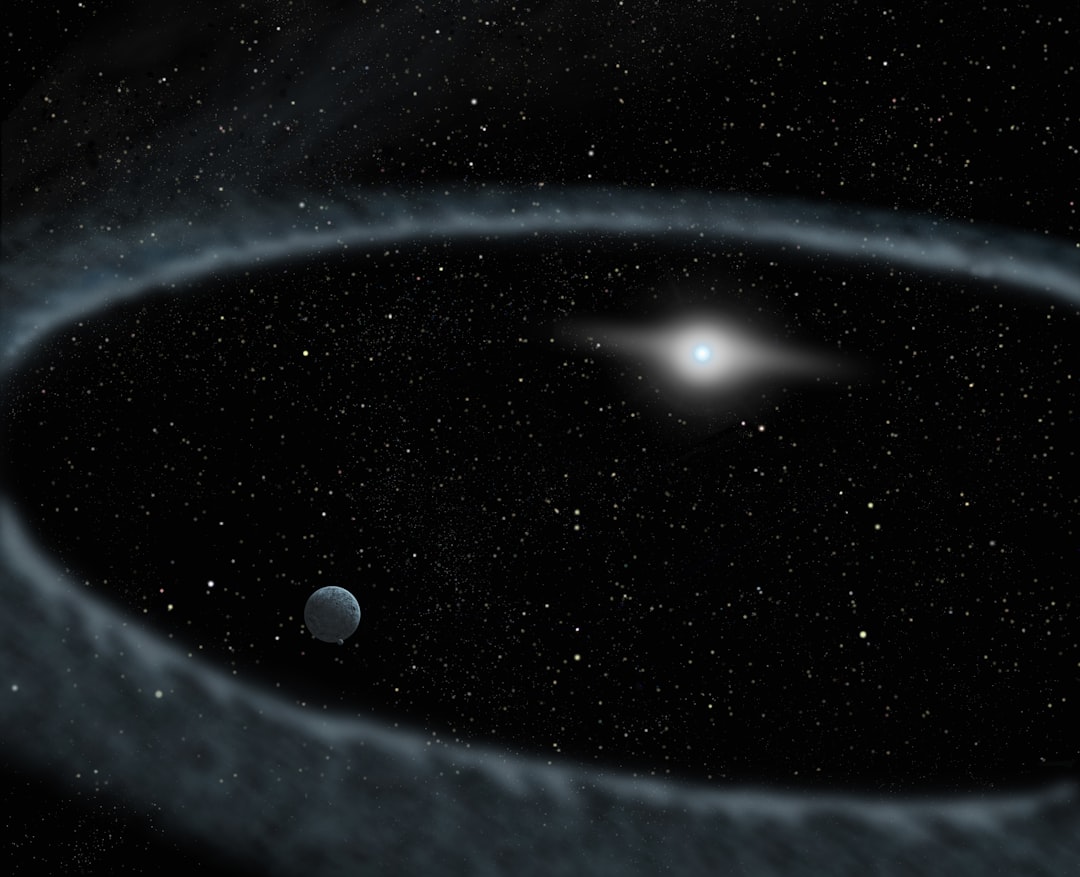
Interstellar travel, the concept of journeying between stars, presents a myriad of challenges that have captivated scientists, engineers, and dreamers alike. The vast distances separating celestial bodies in the universe are staggering; for instance, Proxima Centauri, the closest star to Earth, lies approximately 4.24 light-years away. This distance translates to about 25 trillion miles, a scale that is difficult for the human mind to comprehend.
Current space travel technology, which relies on chemical propulsion systems, is woefully inadequate for such journeys. The limitations of existing spacecraft mean that even reaching the nearest star would take thousands of years, rendering the prospect of interstellar travel impractical with current methods. Moreover, the challenges extend beyond mere distance.
The harsh environment of space poses significant risks to human life and technology. Cosmic radiation, microgravity, and extreme temperatures can have detrimental effects on both biological organisms and mechanical systems. Prolonged exposure to these conditions can lead to health issues for astronauts, including muscle atrophy and radiation sickness.
Additionally, the psychological toll of isolation during long-duration missions cannot be underestimated. As humanity contemplates the possibility of interstellar travel, it must grapple with these formidable challenges that stand in the way of exploring the cosmos.
Key Takeaways
- Interstellar travel faces significant challenges including vast distances and physical limitations.
- Advances in propulsion technology and antimatter could revolutionize space travel speed and efficiency.
- Quantum mechanics and wormholes offer theoretical possibilities for bypassing conventional space constraints.
- Understanding and applying relativity is crucial for managing time and space effects during high-speed travel.
- Overcoming space hazards and harnessing energy effectively are essential for the future success of interstellar missions.
Understanding the Laws of Physics
To embark on interstellar journeys, a profound understanding of the laws of physics is essential. The principles governing motion, energy, and matter dictate what is possible within the universe. Classical mechanics, as formulated by Newton, provides a foundation for understanding how objects move under the influence of forces.
However, as one delves deeper into the realm of high speeds and vast distances, the limitations of classical physics become apparent. Einstein’s theories of relativity revolutionized our comprehension of space and time, revealing that they are interconnected in ways that challenge conventional thinking. The implications of relativity are particularly significant for interstellar travel.
According to Einstein’s theory, as an object approaches the speed of light, time dilation occurs; time slows down for the traveler relative to an outside observer. This phenomenon raises intriguing questions about the nature of time and how it would affect travelers on long journeys across the cosmos. Understanding these principles is crucial for developing technologies that could one day make interstellar travel feasible.
Scientists and engineers must navigate these complex laws to devise innovative solutions that push the boundaries of human exploration.
Harnessing the Power of Energy
Energy is a fundamental requirement for any form of travel, and interstellar missions would demand an unprecedented amount of it. Traditional propulsion systems rely on chemical reactions that produce thrust but are limited in efficiency and output. To achieve interstellar speeds, humanity must explore alternative energy sources that can provide the necessary power for long-duration space travel.
One promising avenue is nuclear propulsion, which harnesses the energy released from nuclear reactions to generate thrust. This method could potentially offer a more efficient means of propulsion compared to conventional rockets. In addition to nuclear energy, researchers are investigating advanced concepts such as solar sails and beamed energy propulsion.
Solar sails utilize the pressure from sunlight to propel spacecraft, while beamed energy propulsion involves transmitting energy from a distant source to a spacecraft in flight. These innovative approaches could revolutionize how humanity approaches interstellar travel by providing sustainable and powerful means of propulsion. As scientists continue to explore these possibilities, they inch closer to unlocking the energy potential required for humanity’s journey among the stars.
Overcoming the Limitations of Speed
One of the most significant barriers to interstellar travel is the limitation imposed by the speed of light. According to Einstein’s theory of relativity, nothing can travel faster than light in a vacuum, which poses a considerable challenge for reaching distant stars within a human lifetime. Current spacecraft travel at a fraction of this speed; for example, the Voyager probes, which have traveled farther than any human-made objects, move at approximately 38,000 miles per hour—far too slow for interstellar journeys.
A warp drive would theoretically create a bubble in spacetime around a spacecraft, allowing it to move faster than light without violating the laws of physics as we understand them.
While these ideas remain speculative and face numerous scientific hurdles, they represent humanity’s relentless pursuit of solutions to one of the most daunting challenges in interstellar exploration.
The Role of Quantum Mechanics
| Metric | Description | Typical Values / Range | Relevance to Interstellar Travel |
|---|---|---|---|
| Speed of Light (c) | Maximum speed at which information or matter can travel | 299,792,458 m/s | Sets ultimate speed limit for spacecraft |
| Time Dilation Factor (γ) | Relativistic factor describing time experienced by travelers vs. observers | 1 (at rest) to ∞ (approaching c) | Impacts aging and mission duration perception |
| Specific Impulse (Isp) | Efficiency of propulsion system, measured in seconds | Chemical rockets: 300-450 s; Ion thrusters: 2000-4000 s | Determines fuel efficiency and mission feasibility |
| Delta-v (Δv) | Change in velocity required for mission maneuvers | Interstellar missions: >0.1c (~30,000 km/s) | Critical for trajectory planning and propulsion requirements |
| Mass-Energy Conversion Efficiency | Fraction of mass converted to usable energy in propulsion | Chemical: ~10^-10; Nuclear fission: ~0.1%; Matter-antimatter: ~100% | Determines energy available for acceleration |
| Interstellar Medium Density | Particle density in space between stars | ~1 atom/cm³ | Affects shielding and propulsion (e.g., ramjet concepts) |
| Radiation Dose Rate | Exposure to cosmic rays and interstellar radiation | ~1-2 mSv/day outside Earth’s magnetosphere | Impacts crew health and shielding requirements |
| Acceleration | Rate of change of velocity, often limited by human tolerance | ~1 g (9.8 m/s²) for crewed missions | Determines travel time and comfort |
Quantum mechanics plays a crucial role in understanding the fundamental nature of reality and could hold keys to advancing interstellar travel technologies. At its core, quantum mechanics describes how particles behave at incredibly small scales, revealing phenomena that defy classical intuition. Concepts such as superposition and entanglement challenge traditional notions of locality and causality, suggesting that information can be transmitted instantaneously across vast distances.
These principles may have implications for communication and navigation in interstellar travel. For instance, quantum entanglement could enable instantaneous communication between distant spacecraft and Earth, overcoming the delays caused by vast distances. Additionally, advancements in quantum computing could lead to breakthroughs in solving complex problems related to spacecraft design and navigation systems.
As researchers continue to unravel the mysteries of quantum mechanics, they may uncover innovative solutions that propel humanity closer to realizing interstellar travel.
Exploring the Possibilities of Wormholes
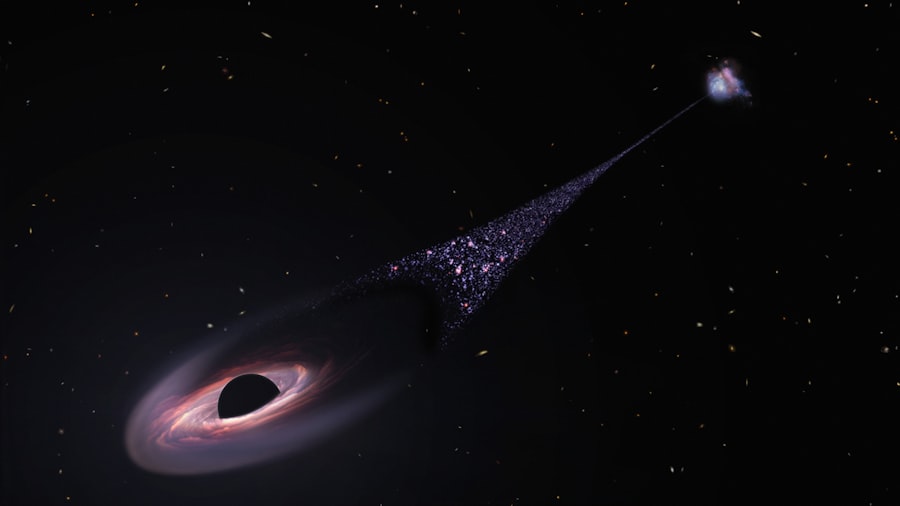
Wormholes are theoretical passages through spacetime that could create shortcuts between distant points in the universe. The concept arises from Einstein’s general theory of relativity and has captured the imagination of scientists and science fiction enthusiasts alike. If wormholes exist and could be stabilized for safe passage, they might offer a means to traverse vast cosmic distances in a fraction of the time it would take using conventional methods.
However, the existence of wormholes remains purely theoretical at this stage. The challenges associated with creating or finding a stable wormhole are immense; they would require exotic matter with negative energy density to keep them open. Despite these hurdles, researchers continue to explore the mathematical frameworks surrounding wormholes and their potential implications for interstellar travel.
If humanity can unlock the secrets of these cosmic shortcuts, it could revolutionize our understanding of space travel and open up new frontiers for exploration.
Utilizing the Concepts of Relativity
The principles of relativity extend beyond just understanding speed limits; they also provide insights into how time and space interact during long journeys through the cosmos. As travelers approach relativistic speeds—those close to the speed of light—they experience time differently than those remaining stationary on Earth. This phenomenon has profound implications for interstellar missions where crew members may age more slowly than their counterparts back home.
Utilizing these concepts effectively could enhance mission planning for future interstellar voyages. By understanding how time dilation affects crew members’ experiences during long journeys, mission planners can devise strategies to mitigate psychological stress and maintain crew morale over extended periods in space. Furthermore, incorporating relativistic effects into navigation systems could improve accuracy when plotting courses through complex gravitational fields or near massive celestial bodies.
The Potential of Antimatter Propulsion
Antimatter propulsion represents one of the most promising avenues for achieving efficient interstellar travel. Antimatter is composed of particles that have opposite charges compared to their matter counterparts; when matter and antimatter collide, they annihilate each other in a burst of energy according to Einstein’s famous equation E=mc². This annihilation releases an extraordinary amount of energy—far more than any chemical reaction could produce.
Harnessing this energy for propulsion could enable spacecraft to reach unprecedented speeds necessary for interstellar journeys. However, producing and storing antimatter remains a significant challenge due to its rarity and instability. Current methods for creating antimatter are inefficient and costly; thus, extensive research is needed before antimatter propulsion becomes a viable option for space exploration.
Nevertheless, scientists remain optimistic about its potential and continue to investigate ways to make antimatter more accessible for future missions.
Navigating the Hazards of Space
Space is fraught with hazards that pose risks to both human life and technology during interstellar travel. Cosmic radiation is one such danger; it originates from various sources including supernovae and solar flares and can have harmful effects on human health over prolonged exposure periods. Additionally, micrometeoroids—tiny particles traveling at high velocities—can damage spacecraft surfaces or pose threats during landing or docking maneuvers.
To navigate these hazards effectively requires advanced shielding technologies capable of protecting astronauts from radiation exposure while also ensuring structural integrity against impacts from micrometeoroids or debris fields encountered en route to distant stars. Developing robust safety protocols will be essential for ensuring crew safety during long-duration missions through hostile environments beyond Earth’s protective atmosphere.
Advancements in Propulsion Technology
The quest for effective propulsion technologies has spurred numerous advancements in recent years that may pave the way for future interstellar travel endeavors. Researchers are exploring various innovative propulsion systems beyond traditional chemical rockets—each offering unique advantages suited for different mission profiles. Among these advancements are ion thrusters which utilize electric fields to accelerate ions and produce thrust efficiently over extended periods—a crucial factor when considering long-distance journeys where fuel efficiency becomes paramount.
Additionally, advancements in solar sail technology have demonstrated promising results by harnessing solar radiation pressure as a means of propulsion without relying on conventional fuel sources. As scientists continue refining these technologies while exploring new concepts like fusion drives or laser propulsion systems capable of propelling spacecraft at unprecedented speeds—the landscape surrounding propulsion technology is rapidly evolving toward making interstellar exploration more feasible than ever before.
The Future of Interstellar Travel
The future of interstellar travel remains an exciting frontier filled with possibilities yet tempered by challenges that require innovative solutions from humanity’s brightest minds. As researchers delve deeper into understanding fundamental physics principles while exploring advanced propulsion technologies—the dream of reaching distant stars inches closer toward reality. While significant hurdles remain—such as overcoming limitations imposed by speed or navigating hazards inherent in space—the collective efforts across disciplines promise breakthroughs that could redefine our relationship with the cosmos itself.
With each advancement made—from harnessing new energy sources to unraveling quantum mysteries—the vision for humanity’s journey among the stars becomes increasingly tangible. Ultimately, interstellar travel represents not just a scientific endeavor but also an expression of humanity’s innate curiosity—a desire to explore beyond our terrestrial confines into realms previously thought unreachable. As we stand on this precipice between possibility and reality—the future beckons with hope—a testament to what lies ahead as we strive toward becoming an interstellar civilization capable of exploring new worlds among distant stars.
Interstellar travel has long been a topic of fascination for scientists and enthusiasts alike, and understanding the physics behind it is crucial for any future endeavors. A related article that delves into the complexities of interstellar travel physics can be found on Freaky Science. This article explores various theoretical concepts, including warp drives and wormholes, which could potentially make interstellar journeys feasible. For more insights, you can read the article [here](https://www.freakyscience.com/sample-page/).
WATCH THIS! 🌌 Where Is Everybody? The Discovery That Would End Civilization 🌌
FAQs
What is interstellar travel?
Interstellar travel refers to the hypothetical journey of spacecraft between stars or planetary systems within a galaxy. It involves traveling distances far greater than those within our solar system.
What are the main challenges of interstellar travel?
The primary challenges include the vast distances involved, requiring travel times of many years or centuries; the need for extremely high speeds; energy requirements; protection from cosmic radiation; and the effects of long-term space travel on human health.
How fast would a spacecraft need to travel for interstellar travel?
To reach even the nearest stars within a human lifetime, spacecraft would need to travel at a significant fraction of the speed of light, typically at least 10% of light speed (about 30,000 kilometers per second).
What propulsion methods are considered for interstellar travel?
Proposed propulsion methods include nuclear fusion or fission engines, antimatter propulsion, light sails pushed by lasers or the Sun’s radiation, and theoretical concepts like the Alcubierre warp drive.
What is the role of relativity in interstellar travel?
According to Einstein’s theory of relativity, as a spacecraft approaches the speed of light, time dilation occurs, meaning time passes slower for travelers compared to observers on Earth. This effect could reduce perceived travel time for astronauts.
Is faster-than-light travel possible according to current physics?
Current physics, based on Einstein’s theory of relativity, prohibits faster-than-light travel for objects with mass. However, theoretical concepts like wormholes or warp drives remain speculative and unproven.
How does cosmic radiation affect interstellar travelers?
Cosmic radiation poses a significant risk to astronauts on long-duration missions, potentially causing damage to DNA and increasing cancer risk. Effective shielding and protective measures are necessary for interstellar voyages.
What is the significance of the nearest star systems for interstellar travel?
The nearest star systems, such as Alpha Centauri, are primary targets for interstellar missions because they are the closest potential destinations outside our solar system, making travel times comparatively shorter.
Are there any current missions or projects aimed at interstellar travel?
While no crewed interstellar missions exist, projects like Breakthrough Starshot aim to send small, laser-propelled probes to nearby stars within decades, demonstrating early steps toward interstellar exploration.
What scientific knowledge can interstellar travel provide?
Interstellar travel could provide insights into the formation and evolution of stars and planetary systems, the potential for extraterrestrial life, and fundamental physics under extreme conditions.