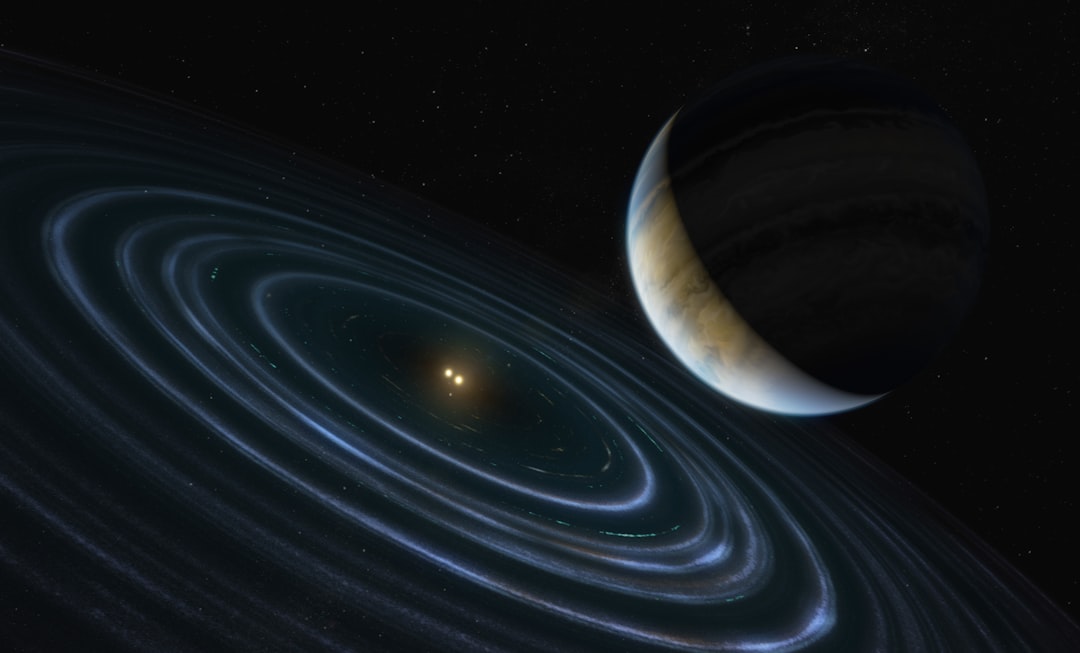
Interstellar travel, the concept of journeying between stars, has long captivated the human imagination. From the pages of science fiction novels to the screens of blockbuster films, the idea of traversing vast cosmic distances has sparked curiosity and wonder. As humanity stands on the brink of significant advancements in space exploration, the dream of reaching other star systems is becoming increasingly plausible.
The allure of discovering new worlds, potentially habitable planets, and extraterrestrial life fuels the desire to push the boundaries of current technological capabilities. The quest for interstellar travel is not merely a fanciful notion; it represents a profound leap in human ambition and scientific inquiry. With advancements in technology and a growing understanding of the universe, scientists and engineers are beginning to explore the feasibility of traveling beyond our solar system.
This exploration is not just about reaching distant stars; it encompasses a broader vision of humanity’s future in the cosmos. As Earth faces numerous challenges, including climate change and resource depletion, the prospect of finding new homes among the stars becomes increasingly relevant.
Key Takeaways
- Interstellar travel faces significant challenges including vast distances, relativistic limits, and energy requirements.
- Advances in quantum mechanics and nuclear fusion are key to developing feasible propulsion systems.
- Concepts like wormholes, warp drives, and exotic matter offer theoretical methods to bypass conventional space travel constraints.
- Effective communication and navigation are critical for successful interstellar missions.
- Ethical and societal impacts must be carefully considered alongside technological advancements in interstellar exploration.
The Challenges of Interstellar Travel
Despite the excitement surrounding interstellar travel, numerous challenges must be addressed before humanity can embark on such journeys. One of the most significant obstacles is the sheer distance involved. The nearest star system, Alpha Centauri, is approximately 4.37 light-years away from Earth.
Current spacecraft technology would take tens of thousands of years to reach even this closest neighbor. The vastness of space presents not only a logistical challenge but also a psychological one, as long-duration missions would require innovative solutions to sustain human life over extended periods. In addition to distance, interstellar travel poses formidable technical challenges.
The energy requirements for such journeys are astronomical, necessitating breakthroughs in propulsion technology. Current propulsion systems, such as chemical rockets, are inadequate for interstellar missions. Furthermore, the harsh environment of space presents risks that must be mitigated, including radiation exposure and micrometeoroid impacts.
Understanding the Physics of Space Travel
To comprehend the intricacies of interstellar travel, one must first grasp the fundamental principles of physics that govern space travel. Newton’s laws of motion provide a foundation for understanding how spacecraft move through space, while Einstein’s theory of relativity introduces complexities related to time dilation and the effects of gravity on space-time. These principles are crucial for calculating trajectories and understanding how to navigate the vast distances between stars.
Moreover, the concept of inertia plays a vital role in space travel. In a vacuum, once an object is set in motion, it continues to move indefinitely unless acted upon by an external force. This characteristic can be advantageous for spacecraft design, as it allows for efficient travel once sufficient velocity is achieved.
However, achieving that initial velocity requires immense energy and advanced propulsion systems capable of overcoming Earth’s gravitational pull and accelerating to speeds that approach a significant fraction of the speed of light.
The Role of Quantum Mechanics in Interstellar Travel
Quantum mechanics, often regarded as one of the most perplexing branches of physics, may hold keys to unlocking new possibilities for interstellar travel. At its core, quantum mechanics describes the behavior of particles at the smallest scales, revealing phenomena that defy classical intuition. Concepts such as superposition and entanglement could potentially be harnessed to develop technologies that facilitate faster-than-light travel or instantaneous communication across vast distances.
One intriguing application of quantum mechanics in interstellar travel is the idea of quantum tunneling.
If harnessed effectively, quantum tunneling could lead to breakthroughs in propulsion systems or even methods for traversing space-time itself.
While these ideas remain largely theoretical at present, ongoing research into quantum technologies may eventually yield practical applications that revolutionize space exploration.
Harnessing the Power of Nuclear Fusion for Propulsion
| Metric | Value/Range | Unit | Description |
|---|---|---|---|
| Speed of Light (c) | 299,792,458 | m/s | Maximum speed limit in vacuum according to relativity |
| Typical Interstellar Distance (Alpha Centauri) | 4.37 | light years | Distance to nearest star system |
| Time Dilation Factor (γ) at 0.9c | 2.29 | dimensionless | Relativistic time dilation at 90% speed of light |
| Energy Required for 1 kg at 0.1c | 4.5 × 10^14 | Joules | Kinetic energy to accelerate 1 kg to 10% speed of light |
| Mass-Energy Equivalence (E=mc²) | 9 × 10^16 | J/kg | Energy equivalent of 1 kg mass |
| Typical Interstellar Medium Density | 1 | atom/cm³ | Average particle density in interstellar space |
| Radiation Exposure Outside Heliosphere | ~500 | mSv/year | Estimated cosmic radiation dose for interstellar travelers |
| Proposed Propulsion: Fusion Drive Specific Impulse | ~10,000 | seconds | Estimated specific impulse for fusion-based engines |
| Proposed Propulsion: Antimatter Efficiency | ~100% | energy conversion | Energy conversion efficiency of matter-antimatter annihilation |
| Relativistic Rocket Equation | Δv = c tanh⁻¹((m₀/m₁) – 1) | formula | Velocity change accounting for relativistic mass effects |
Nuclear fusion, the process that powers stars, presents a promising avenue for propulsion in interstellar travel. Unlike nuclear fission, which splits heavy atomic nuclei to release energy, fusion combines light nuclei—such as hydrogen isotopes—to form heavier elements while releasing vast amounts of energy in the process. The potential for fusion-powered spacecraft lies in their ability to provide continuous thrust over extended periods, enabling faster travel across interstellar distances.
Developing practical fusion propulsion systems poses significant engineering challenges. Achieving and maintaining the conditions necessary for fusion reactions—extreme temperatures and pressures—requires advanced technology and materials capable of withstanding these harsh environments. However, if successful, fusion propulsion could drastically reduce travel times to other star systems while providing a sustainable energy source for long-duration missions.
The pursuit of fusion technology not only holds promise for interstellar travel but also offers potential solutions to Earth’s energy crisis.
Overcoming the Limitations of Relativity

Einstein’s theory of relativity imposes fundamental limitations on space travel, particularly concerning the speed of light as an ultimate barrier. According to relativity, as an object approaches the speed of light, its mass effectively increases, requiring exponentially more energy to continue accelerating. This presents a significant hurdle for interstellar missions aiming to reach distant stars within a human lifetime.
To overcome these limitations, scientists are exploring theoretical concepts that challenge our understanding of physics. One such idea involves manipulating space-time itself rather than propelling a spacecraft through it. By contracting space in front of a vessel and expanding it behind—essentially creating a “warp bubble”—it may be possible to achieve effective faster-than-light travel without violating relativity’s principles.
While these concepts remain speculative and require further research, they represent exciting avenues for future exploration.
The Potential of Wormholes and Warp Drives
Wormholes and warp drives are two theoretical constructs that have captured the imagination of scientists and science fiction enthusiasts alike. Wormholes are hypothetical passages through space-time that could create shortcuts between distant points in the universe. If they exist and could be stabilized for human use, they might allow for instantaneous travel between stars without traversing the intervening space.
Warp drives, on the other hand, involve bending or warping space-time around a spacecraft to achieve faster-than-light travel. The Alcubierre drive is one such theoretical model that proposes creating a bubble of warped space around a ship, allowing it to move through space at superluminal speeds without violating relativity’s constraints. While both concepts face significant scientific and engineering challenges—such as the need for exotic matter or negative energy—their exploration represents humanity’s relentless pursuit of understanding and overcoming the barriers to interstellar travel.
The Search for Exotic Matter and Negative Energy
The realization of advanced concepts like warp drives hinges on the existence of exotic matter and negative energy—two phenomena that remain largely theoretical at this stage. Exotic matter is characterized by properties that differ from those of ordinary matter, such as negative mass or negative energy density. These properties could potentially enable the manipulation of space-time required for warp drives or stable wormholes.
The search for exotic matter is fraught with challenges; current understanding suggests that it may only exist under extreme conditions or in specific theoretical frameworks. However, ongoing research in fields such as particle physics and cosmology continues to explore these possibilities. Discovering or creating exotic matter would not only revolutionize interstellar travel but could also deepen humanity’s understanding of fundamental physics and the nature of the universe itself.
Exploring the Possibilities of Alcubierre-White Warp Drives
The Alcubierre-White warp drive is one of the most discussed theoretical models for faster-than-light travel. Building upon Miguel Alcubierre’s original concept from 1994, this model proposes a method for warping space-time around a spacecraft using negative energy density. The drive would theoretically allow a ship to traverse vast distances by contracting space in front while expanding it behind.
While intriguing, this concept faces significant hurdles before it can become a reality. The requirements for negative energy density are not yet understood or achievable with current technology. Additionally, concerns about causality and potential paradoxes arise when considering faster-than-light travel.
Nevertheless, research into warp drives continues to inspire scientists and engineers alike as they seek innovative solutions to make interstellar travel feasible.
The Importance of Interstellar Communication and Navigation
As humanity contemplates interstellar travel, effective communication and navigation systems become paramount considerations. The vast distances involved mean that traditional methods of communication may prove inadequate; signals sent from distant star systems could take years or even decades to reach Earth or other spacecraft. Developing advanced communication technologies capable of transmitting information across these distances will be essential for coordinating missions and ensuring safety during long journeys.
Navigation also presents unique challenges in interstellar contexts. Current navigation systems rely on celestial bodies within our solar system; however, once beyond this familiar territory, spacecraft will need new methods for determining their position and trajectory among distant stars. Advanced algorithms utilizing artificial intelligence may play a crucial role in developing autonomous navigation systems capable of adapting to unforeseen circumstances during long-duration missions.
Ethical and Societal Considerations of Interstellar Travel
The prospect of interstellar travel raises profound ethical and societal questions that must be addressed as humanity moves closer to realizing this dream. Issues surrounding planetary protection—ensuring that human exploration does not harm potential extraterrestrial ecosystems—are paramount considerations for any future missions beyond our solar system. Additionally, questions about ownership rights over newly discovered worlds and resources must be navigated carefully to avoid conflicts among nations or private entities.
Furthermore, the implications of interstellar colonization extend beyond mere exploration; they touch upon fundamental questions about humanity’s place in the universe and our responsibilities toward other forms of life we may encounter. As scientists work toward making interstellar travel a reality, engaging in thoughtful discussions about these ethical considerations will be essential to ensure that humanity approaches this new frontier with respect and responsibility. In conclusion, interstellar travel represents one of humanity’s most ambitious endeavors—a quest that intertwines science fiction with scientific inquiry and technological innovation.
While numerous challenges remain on this journey toward the stars, ongoing research into propulsion systems, quantum mechanics, and ethical considerations will shape our understanding and capabilities in this exciting field. As humanity stands on the threshold of potential breakthroughs in interstellar exploration, it is essential to approach this endeavor with both curiosity and caution as we seek our place among the stars.
For those interested in the fascinating realm of interstellar travel physics, a related article can be found on Freaky Science, which delves into the theoretical frameworks and technological advancements that could one day make such journeys possible. You can read more about it in their article here: Freaky Science. This resource provides insights into the challenges and potential solutions that scientists are exploring in the quest to traverse the vast distances between stars.
WATCH THIS! 🌌 Where Is Everybody? The Discovery That Would End Civilization 🌌
FAQs
What is interstellar travel?
Interstellar travel refers to the hypothetical journey of spacecraft between stars or planetary systems within a galaxy, beyond our solar system.
What are the main challenges of interstellar travel?
The primary challenges include vast distances between stars, requiring extremely long travel times; the need for advanced propulsion systems; energy requirements; and protection from cosmic radiation and micrometeoroids.
How far is the nearest star from Earth?
The nearest star system to Earth is Alpha Centauri, approximately 4.37 light-years away.
What speeds are necessary for interstellar travel?
To make interstellar travel feasible within a human lifetime, spacecraft would need to travel at a significant fraction of the speed of light, typically at least 10% of light speed (0.1c).
What propulsion methods are considered for interstellar travel?
Proposed propulsion methods include nuclear fusion or fission rockets, antimatter engines, laser sails, and theoretical concepts like the Alcubierre warp drive.
What is the role of relativity in interstellar travel?
According to Einstein’s theory of relativity, as a spacecraft approaches the speed of light, time dilation occurs, meaning time passes slower for travelers compared to observers on Earth, which could affect mission duration and communication.
Can current technology achieve interstellar travel?
Currently, no existing technology can achieve practical interstellar travel within reasonable timeframes; ongoing research aims to develop advanced propulsion and life-support systems.
What is the significance of the speed of light in interstellar travel?
The speed of light (approximately 299,792 kilometers per second) is the universal speed limit according to physics, making it a fundamental constraint on how fast spacecraft can travel.
How does cosmic radiation affect interstellar travel?
Cosmic radiation poses a significant hazard to both spacecraft electronics and human health during long-duration interstellar missions, requiring effective shielding solutions.
Are there any ongoing projects related to interstellar travel?
Projects like Breakthrough Starshot aim to develop small, light-powered spacecraft capable of reaching nearby stars within decades, representing early steps toward interstellar exploration.