You stand at the precipice of a fascinating neurological frontier: the split brain. Imagine your awareness, your very sense of self, as a unified entity. Now, consider what happens when the bridge connecting the two dominant hemispheres of your brain is severed. This is not a thought experiment for science fiction authors; it is a reality for some individuals, and it offers unparalleled insights into the nature of consciousness itself. You are about to embark on a journey that will challenge your preconceived notions of how your mind works, revealing the intricate dance between specialized brain regions and the remarkable capacity of your brain to adapt.
To comprehend split-brain consciousness, you must first understand the structure that is at its heart: the corpus callosum. Think of it as the superhighway of information, a massive bundle of nerve fibers, numbering in the hundreds of millions, that allows the two hemispheres of your brain to communicate seamlessly. You can learn more about split brain consciousness in this informative video.
Anatomical Significance
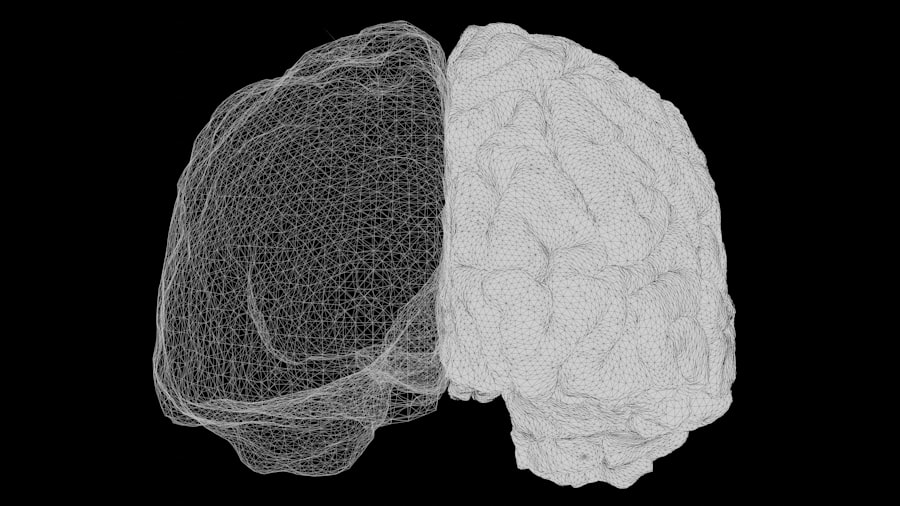
Your brain is broadly divided into two hemispheres: the left and the right. While they appear remarkably similar, they are not mirror images in function. The corpus callosum, a thick, C-shaped nerve bundle located beneath the cerebral cortex, is the largest commissural fiber tract in the brain. It connects corresponding regions of the two hemispheres, enabling them to share information at a rapid pace. Without this connection, the two halves of your brain operate largely independently, like two separate computers running different programs without a network link.
Functional Interconnectivity
The corpus callosum facilitates a constant exchange of sensory, motor, and cognitive information. When you see an apple with your left eye, that visual information initially registers in your right visual cortex. The corpus callosum then relays this information to your left hemisphere, where language centers might identify it as an “apple” and recall memories associated with it. This constant cross-talk is fundamental to your unified perception of the world and your coherent experience of reality. You are, in essence, a symphony conducted by both hemispheres, with the corpus callosum acting as the conductor’s baton, ensuring every instrument plays in harmony.
The concept of split-brain consciousness has intrigued scientists and philosophers alike, shedding light on the complexities of human cognition and perception. For a deeper understanding of this fascinating topic, you can explore a related article that delves into the implications of split-brain research on our understanding of consciousness and identity. To read more, visit this article.
The Surgical Intervention: Callosotomy and Its Purpose
The phenomenon of the split brain is primarily a consequence of a neurosurgical procedure known as a callosotomy or corpus callosotomy. This intervention is reserved for severe, intractable cases of epilepsy.
Refractory Epilepsy
For individuals suffering from epilepsy that does not respond to medication, recurrent seizures can be life-threatening and severely debilitating. These seizures often involve uncontrolled electrical activity that rapidly spreads across both hemispheres of the brain. Imagine a wildfire that starts in one part of a forest and quickly engulfs the entire area.
Interrupting Seizure Propagation
The primary goal of a callosotomy is to prevent the spread of epileptic activity from one hemisphere to the other. By severing the corpus callosum, surgeons essentially create a firebreak. While the seizure may still occur in one hemisphere, its immediate and uncontrolled propagation to the other is significantly reduced or even halted. This localized seizure activity is often less severe and easier to manage, dramatically improving the quality of life for patients who have undergone this procedure. It’s a drastic measure, akin to cutting a bridge to prevent an invading army from crossing, but in cases of severe epilepsy, it can be a life-saving intervention.
Partial vs. Complete Callosotomy
The extent of the callosotomy can vary. In some cases, only a portion of the corpus callosum is cut (partial callosotomy), often the anterior or posterior sections. In other cases, the entire corpus callosum is severed (complete callosotomy). The degree of surgical intervention impacts the resulting neurological deficits and the extent of the “split” in brain function.
Unveiling Hemispheric Specialization: The Glimpse Within
The most profound revelations from split-brain research come from the unique ability to isolate the functions of each hemisphere. For you, the unified reader, this offers a window into the specialized roles your brain regions play.
The Left Hemisphere: The Linguist and the Logician
When you interact with the world, your left hemisphere typically takes the lead in several key domains. It’s the interpreter, the storyteller, and the analytical engine.
Language Dominance
For the vast majority of right-handed individuals, and a significant portion of left-handed individuals, language production and comprehension are largely localized in the left hemisphere. This includes the ability to speak, read, and write. In a split-brain patient, if you present an image to their right visual field (which projects to the left hemisphere), they can verbally identify it. However, if you present the same image to their left visual field (which projects to the right hemisphere), they may be unable to name it verbally, even though they can clearly see it. This is because the visual information from the left visual field cannot cross the severed corpus callosum to reach the language centers in the left hemisphere.
Logical Reasoning and Sequential Processing
The left hemisphere excels at analytical tasks, sequential processing, and logical reasoning. It’s the part of your brain that solves mathematical problems, follows complex instructions, and engages in step-by-step problem-solving. Think of it as a meticulous librarian, categorizing and organizing information with precision.
Detail-Oriented Perception
The left hemisphere tends to focus on details and specific features of objects. It analyzes the individual components rather than the overall Gestalt.
The Right Hemisphere: The Artist and the Intuitive
While often seen as the “silent” hemisphere in verbal communication, the right hemisphere is far from dormant. It possesses its own unique and vital set of strengths.
Spatial Awareness and Non-Verbal Skills
The right hemisphere is a master of spatial reasoning, object recognition, and navigating the world around you. It allows you to understand maps, assemble puzzles, and recognize faces. It’s also crucial for artistic and musical abilities, understanding metaphors, and recognizing emotions in others. Imagine it as a skilled architect, visualizing structures and relationships in three dimensions.
Emotional Processing and Facial Recognition
While both hemispheres contribute to emotional processing, the right hemisphere plays a significant role in understanding and expressing emotions, especially non-verbal cues like facial expressions. Split-brain patients often exhibit difficulty recognizing emotions expressed on faces presented to their left visual field, indicating the right hemisphere’s specialized role in this domain.
Holistic Perception
In contrast to the left hemisphere’s detail-oriented approach, the right hemisphere excels at holistic perception, grasping the “big picture” and understanding context. It’s the part of your brain that recognizes an entire melody, not just individual notes.
The Dual Consciousness Debate: One Mind or Two?
This is where the philosophical implications of split-brain research truly begin to unravel. If the two hemispheres function independently, are there truly two separate streams of consciousness inhabiting a single skull?
The “Left-Brain Interpreter”
Neuroscientist Michael Gazzaniga, a pioneer in split-brain research, proposed the concept of the “left-brain interpreter.” He observed that when split-brain patients were presented with information exclusively to their right hemisphere, and then asked to explain their subsequent actions, the left hemisphere would construct plausible, albeit often incorrect, narratives to explain behaviors it had not directly initiated. For example, if a patient’s right hemisphere was subtly prompted to stand up, and the left hemisphere was then asked why they stood, they might offer a seemingly rational explanation like, “I felt like getting a drink.” This suggests your left hemisphere continually attempts to make sense of the world and your own actions, even when it lacks complete information. It’s as if the left hemisphere is a tireless storyteller, always ready to weave a coherent narrative, even if the plot has holes the size of Texas.
Evidence for Independent Processing
Consider a classic experiment: a split-brain patient is shown an image of a snow scene to their left visual field (right hemisphere) and a picture of a chicken’s claw to their right visual field (left hemisphere). When asked to choose an object related to what they saw, the patient’s left hand (controlled by the right hemisphere) may point to a shovel (related to snow), while their right hand (controlled by the left hemisphere) points to a chicken (related to the claw). If asked to explain their choices verbally, the left hemisphere might say, “The chicken claw goes with the chicken,” but then, referencing the shovel chosen by the right hand, invent an explanation like, “And you need a shovel to clean out the chicken coop.” This compellingly demonstrates the independent processing and decision-making capabilities of each hemisphere.
The Question of Unity
Despite evidence for independent processing, the question of whether split-brain patients possess two entirely separate consciousnesses remains a subject of intense debate. You, as an intact individual, subjectively experience a unified consciousness. Even in split-brain patients, there are often subtle cues that suggest some degree of implicit communication or a single overarching self. However, the explicit, verbalized consciousness often resides primarily with the left hemisphere, which continues to strive for a coherent understanding of the world. It’s like two distinct rivers flowing in the same valley; they may carve their own paths, but they are still part of the same landscape.
The intriguing concept of split-brain consciousness has fascinated researchers for decades, shedding light on how our brain processes information and experiences. For those interested in exploring this topic further, a related article can be found that delves into the complexities of how each hemisphere of the brain can operate independently, influencing our thoughts and behaviors in unexpected ways. You can read more about this fascinating phenomenon in the article on Freaky Science.
Adapting to a Divided Brain: The Long-Term Impact
| Aspect | Description | Key Findings | Implications |
|---|---|---|---|
| Definition | Split brain consciousness refers to the phenomenon observed in patients whose corpus callosum has been severed, leading to two separate streams of consciousness. | Each hemisphere can process information independently. | Challenges the notion of a unified conscious self. |
| Corpus Callosum Role | Connects the left and right cerebral hemispheres, enabling communication between them. | Severing it results in hemispheric isolation. | Demonstrates the importance of inter-hemispheric communication for unified cognition. |
| Left Hemisphere | Typically responsible for language, analytical thinking, and logical reasoning. | Can verbally express thoughts and intentions. | Dominant in conscious verbal reporting. |
| Right Hemisphere | Associated with spatial abilities, facial recognition, and emotional processing. | Can respond non-verbally but struggles with verbal communication. | Shows consciousness can exist without verbal expression. |
| Experimental Evidence | Tests with split brain patients show conflicting responses from each hemisphere. | Example: Left hand (right hemisphere) selects objects unknown to verbal left hemisphere. | Supports the idea of dual consciousness within one brain. |
| Philosophical Implications | Raises questions about the nature of self and personal identity. | Suggests consciousness may not be a singular unified experience. | Influences theories in cognitive science and philosophy of mind. |
Living with a severed corpus callosum presents a unique set of challenges and adaptations. While the initial deficits can be profound, your brain, with its remarkable plasticity, often finds ways to compensate over time.
Initial Deficits
Immediately following a callosotomy, split-brain patients often exhibit a range of neurological deficits, sometimes referred to as “disconnection syndromes.” These can include:
Alien Hand Syndrome
In some cases, one hand, usually the left, might appear to act autonomously, performing actions seemingly against the patient’s will. For example, the left hand might button a shirt while the right hand tries to unbutton it, leading to a frustrating struggle. This vividly illustrates the independent motor control of each hemisphere without the modulating influence of the corpus callosum.
Visual Field Disconnection
As discussed, information presented to one visual field cannot easily cross to the other hemisphere. This can lead to difficulties in tasks that require integrated visual processing across the entire visual field.
Tactile Anomia
If an object is placed in the left hand (right hemisphere), the patient may be able to describe its attributes (e.g., “It’s smooth and round”) but be unable to name it verbally, as the tactile information cannot reach the language centers in the left hemisphere.
Long-Term Compensation and Plasticity
Remarkably, over time, many split-brain patients show a significant reduction in these initial deficits. Your brain is not a static organ; it possesses an incredible capacity for neuroplasticity.
Cross-Cuing Strategies
Patients often develop “cross-cuing” strategies to overcome their disconnection. For instance, if the right hemisphere sees something it cannot verbalize, it might subtly guide the left hand to draw the object, allowing the left hemisphere to then identify it verbally. Or, a facial expression might convey information from the right hemisphere to the left, acting as an internal signal. These are like ingenious workarounds, small bridges built after the main highway has been destroyed.
Ipsilateral Pathways
While the primary pathways cross to the contralateral hemisphere, there are also some ipsilateral (same-side) pathways. These may gradually strengthen over time, providing a limited amount of interhemispheric communication, albeit much slower and less efficient than the corpus callosum.
Training and Rehabilitation
Through dedicated rehabilitation, patients can learn to adapt to their divided brain. This often involves strategies that encourage cooperation between the hemispheres, even if communication is indirect. The brain, confronted with a profound challenge, demonstrates its extraordinary ability to rewire and find new ways to function, highlighting the dynamic and adaptable nature of your neurological architecture.
In conclusion, your exploration of split-brain consciousness has revealed not only the intricate neural architecture that underpins your unified experience but also the profound implications of its disruption. You have seen how the corpus callosum acts as the essential bridge, how its severance can be a life-saving intervention, and how this unique condition unveils the specialized roles of your brain’s hemispheres. The debate over whether there are two minds or one in a split brain continues to fascinate, pushing the boundaries of what you understand about consciousness itself. Ultimately, the study of split-brain patients serves as a powerful testament to the remarkable adaptability of the human brain and the enduring mystery of the mind it generates.
FAQs
What is split brain consciousness?
Split brain consciousness refers to the phenomenon observed in individuals whose corpus callosum—the bundle of nerve fibers connecting the two brain hemispheres—has been surgically severed. This procedure, often done to treat severe epilepsy, results in the two hemispheres operating more independently, which can lead to unique cognitive and perceptual experiences.
Why is the corpus callosum important for consciousness?
The corpus callosum facilitates communication between the left and right hemispheres of the brain. This interhemispheric communication is crucial for integrating sensory information, coordinating motor functions, and creating a unified conscious experience. When this connection is disrupted, as in split brain patients, the unity of consciousness can be affected.
How do split brain patients experience consciousness differently?
Split brain patients may exhibit behaviors indicating that each hemisphere processes information independently. For example, one hand might perform actions that the other hand is unaware of, or the patient might verbally report seeing an object presented to the right visual field (processed by the left hemisphere) but not the left visual field. This suggests that consciousness can be divided between the two hemispheres.
What have split brain studies revealed about the nature of consciousness?
Studies of split brain patients have provided evidence that consciousness is not a singular, unified process but can be divided. These findings support the idea that each hemisphere can possess its own separate awareness and cognitive processes, challenging traditional views of a single, unified conscious self.
Are there any practical implications of understanding split brain consciousness?
Understanding split brain consciousness has implications for neuroscience, psychology, and medicine. It helps in comprehending how brain hemispheres contribute to cognition and behavior, informs treatments for neurological disorders, and advances theories about the neural basis of consciousness and self-awareness.