The intricate relationship between a runway’s designated magnetic heading and its actual, ever-shifting orientation with respect to the Earth’s magnetic poles presents a critical challenge for aviation. This phenomenon, while seemingly subtle, necessitates a deep understanding among pilots, air traffic controllers, and airport planners to ensure the safety and efficiency of air travel. The Earth’s magnetic field is a dynamic entity, constantly in flux, and this dynamism directly impacts how runways are numbered and how aircraft navigate.
The fundamental principle governing runway magnetic heading changes lies within the Earth’s magnetic field itself. Unlike a static, fixed compass, this field is generated by molten iron swirling in the planet’s outer core, creating a vast, invisible shield that extends far into space. This geodynamo, as it is known, is not perfectly stable; its strength and direction are subject to continuous, albeit gradual, variations. You can learn more about the earth’s magnetic field and its effects on our planet.
Geomagnetic North vs. Geographic North
A crucial distinction must be made between geomagnetic north and geographic north. Geographic north refers to the planet’s rotational axis, a fixed point on the globe’s surface. In contrast, geomagnetic north, the point to which a compass needle orients itself, is constantly moving. This distinction is akin to the difference between a celestial pole, a fixed star in the night sky, and a wandering firefly whose light guides your way. The magnetic field’s pole is currently located approximately near Ellesmere Island in Canada but is not static.
Secular Variation and Magnetic Declination
The gradual shift in the Earth’s magnetic field over long periods is termed “secular variation.” This variation leads to changes in “magnetic declination,” which is the angular difference between true north (geographic north) and magnetic north (the direction a compass points). At any given location on Earth, this declination can be westward or eastward, and its magnitude changes over time. Imagine drawing a straight line on a map from your current location directly north. Now, visualize another line extending from your location in the direction your compass points. The angle between these two lines is the magnetic declination.
Short-Term Fluctuations and Magnetic Storms
While secular variation transpires over decades, the Earth’s magnetic field also experiences shorter-term fluctuations. These can be diurnal (daily) variations, caused by the Sun’s radiation affecting the upper atmosphere, or more dramatic events like magnetic storms. Magnetic storms are triggered by solar flares and coronal mass ejections, which send bursts of charged particles towards Earth. These particles interact with the magnetosphere, causing temporary but significant disruptions to the magnetic field. Although these short-term fluctuations can affect compass readings, their impact on runway numbering, which is based on averaged declination over longer periods, is generally negligible.
Runway magnetic heading changes are crucial for pilots and air traffic controllers to ensure safe and efficient navigation. For a deeper understanding of how these changes can impact flight operations, you can explore a related article that discusses the implications of magnetic variation and its effects on aviation. To read more about this topic, visit this article.
Runway Numbering: A Practical Application of Magnetic Heading
Runway numbering is not arbitrary; it is a direct consequence of magnetic heading. Runways are assigned a two-digit number that corresponds to their magnetic alignment, rounded to the nearest ten degrees. This simplifies communication and reduces the cognitive load on pilots during critical phases of flight.
The 360-Degree Compass Rose
To understand runway numbering, one must visualize the 360-degree compass rose. North is 360 (or 000), East is 090, South is 180, and West is 270. A runway aligned precisely with magnetic north would theoretically be designated “36.” However, due to the rounding convention, a runway with a heading between 355 and 004 degrees magnetic would be designated “36.”
Opposite Ends, Reciprocal Headings
Crucially, runways are bidirectional. An aircraft can land or take off from either end. Therefore, each runway actually has two designations, one for each direction, which are 180 degrees apart. For example, a runway designated “09” (meaning its magnetic heading is approximately 090 degrees, or East) will have its opposite end designated “27” (approximately 270 degrees, or West). This reciprocal relationship provides pilots with a clear understanding of their orientation relative to the runway, regardless of their approach direction.
Parallel Runways and Letter Designations
At larger airports with multiple parallel runways, additional letter designations are appended to the runway numbers to differentiate them. For instance, an airport might have runways “09L” (left), “09C” (center), and “09R” (right). These letters refer to the pilot’s perspective when approaching the runway. This system avoids confusion and allows air traffic control to direct aircraft to specific landing or takeoff surfaces with precision.
The Imperative for Runway Renumbering

The dynamic nature of the Earth’s magnetic field necessitates periodic reevaluation and, sometimes, renumbering of runways. This is not a trivial undertaking; it involves significant logistical and financial considerations for airport authorities.
Threshold for Renumbering
Airport authorities and aviation regulatory bodies establish thresholds for when runway renumbering becomes necessary. Typically, if the magnetic declination at an airport changes by more than five degrees (or sometimes even three degrees, depending on local regulations) from the value used to initially number the runways, a renumbering project is initiated. This threshold is pragmatic, acknowledging that minor fluctuations do not warrant expensive and disruptive changes, but significant deviations can impact safety. Imagine a ruler that is subtly expanding or contracting over time. Eventually, the measurements it provides will be sufficiently inaccurate to warrant its replacement.
The Renumbering Process: A Meticulous Undertaking
The process of renumbering runways is comprehensive and involves several key stages:
- Survey and Data Collection: Expert surveyors and aeronautical chart agencies conduct precise measurements of the magnetic declination at the airport. This data is then compared against historical records and current magnetic models.
- Aeronautical Chart Updates: All official aeronautical charts, including VFR (Visual Flight Rules) sectional charts, IFR (Instrument Flight Rules) enroute charts, and airport diagrams, must be updated with the new runway designations. This is a critical step, as pilots rely heavily on these charts for navigation and situational awareness.
- Air Traffic Control System Updates: Air traffic control (ATC) systems, including radar displays and communication systems, need to be reconfigured to reflect the new runway numbers. Air traffic controllers must be thoroughly trained on the changes to maintain seamless operations.
- Airport Signage and Markings: This is perhaps the most visible aspect of renumbering. All runway signs, markings on the asphalt, and associated taxiway signs must be physically altered to display the new numbers. This can be a labor-intensive process, often requiring temporary closures of runways.
- Pilot and Operator Notification: Comprehensive notices to airmen (NOTAMs) and advisory circulars are issued to inform pilots and aircraft operators of the upcoming changes. This ensures that everyone in the aviation community is aware of and prepared for the renumbered runways.
- Training and Familiarization: Pilots, particularly those who regularly operate at the affected airport, must familiarize themselves with the new designations. This might involve reviewing updated charts, using flight simulators, or attending refresher courses.
Historical Examples of Runway Renumbering
Numerous airports worldwide have undergone runway renumbering due to magnetic declination shifts. Notable examples include Tampa International Airport (KTPA) in Florida, which renumbered two runways from 18R/36L and 18L/36R to 19R/1L and 19L/1R in 2011. Similarly, Denver International Airport (KDEN) in Colorado also underwent runway renumbering due to the shifting magnetic pole. These cases underscore that runway renumbering is not an isolated event but a recurring necessity driven by geophysical processes.
Impact on Aviation Operations and Safety
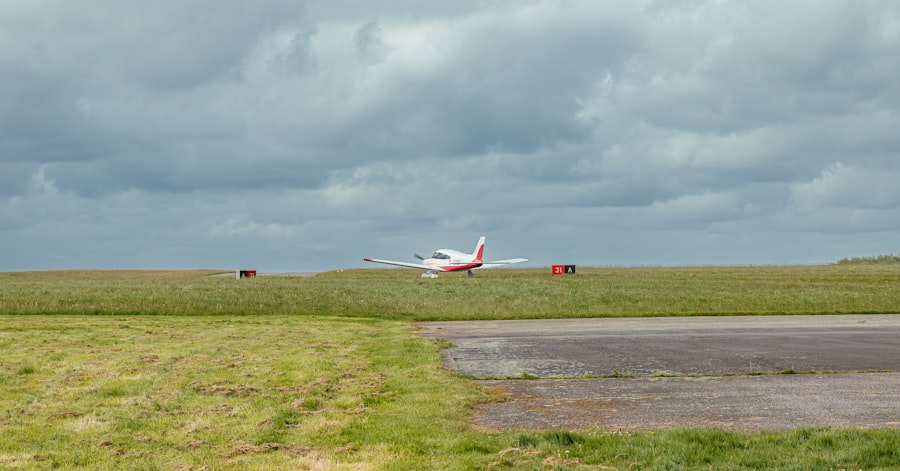
The implications of unaddressed or poorly managed runway magnetic heading changes extend far beyond simple administrative updates; they directly impact aviation safety and operational efficiency.
Pilot Spatial Disorientation
One of the most significant risks associated with outdated runway designations is pilot spatial disorientation. If a pilot is approaching a runway with a given number but their instruments indicate a different magnetic heading for that runway due to an unaddressed declination shift, it can lead to confusion and potentially dangerous errors. Imagine trying to drive using a map where North is inaccurately labeled; your sense of direction would be compromised. In aviation, where precision is paramount, such disorientation can have severe consequences.
Instrument Approaches and Navigation Systems
Modern aircraft rely heavily on instruments for navigation, particularly during instrument approaches in low visibility conditions. These systems often reference magnetic headings. If the magnetic heading used by the aircraft’s navigation system differs significantly from the actual magnetic alignment of the runway, it can lead to inaccurate approach guidance. This “drift” can cause an aircraft to be misaligned with the runway centerline, increasing the risk of a missed approach or a hazardous landing.
Air Traffic Control Procedures
Air traffic controllers use runway numbers as fundamental identifiers when giving instructions to pilots. Miscommunication or confusion arising from outdated runway numbers can disrupt the orderly flow of air traffic. For example, if a controller instructs a pilot to “line up on runway one-eight” but the runway is effectively aligned with magnetic 190 degrees, it creates a potential for misunderstanding and could lead to an aircraft being cleared onto the wrong runway or making an incorrect maneuver.
Financial and Logistical Burdens
As mentioned earlier, runway renumbering incurs substantial financial costs. These can include:
- Labor Costs: For surveyors, airport staff, and contractors involved in updating signage and markings.
- Material Costs: For paint, asphalt, and new signage.
- Operational Disruptions: Runway closures for maintenance and repainting can lead to delays, diversions, and reduced airport capacity, all of which have economic implications for airlines and passengers.
- Administrative Costs: For updating charts, publications, and training materials.
These burdens highlight the trade-offs involved in maintaining accurate runway designations: balancing the costs of renumbering against the critical importance of aviation safety.
Understanding runway magnetic heading changes is crucial for pilots and air traffic controllers alike, as it directly impacts navigation and safety during takeoff and landing. For those interested in exploring this topic further, a related article can be found on Freaky Science, which delves into the intricacies of magnetic declination and its effects on aviation. You can read more about it in this informative piece here.
The Future of Runway Designation: Evolution or Stasis?
| Runway | Original Magnetic Heading (°) | New Magnetic Heading (°) | Change in Heading (°) | Date of Change | Reason for Change |
|---|---|---|---|---|---|
| 09/27 | 092 | 095 | +3 | 2023-04-15 | Magnetic variation adjustment |
| 18/36 | 178 | 180 | +2 | 2022-11-10 | Magnetic declination shift |
| 04/22 | 042 | 040 | -2 | 2024-01-05 | Magnetic pole movement |
| 13/31 | 130 | 132 | +2 | 2023-07-20 | Annual magnetic variation update |
Given the ongoing shifts in the Earth’s magnetic field, questions naturally arise about the future of runway designation. Will we continue with the current system, or are there alternatives that could mitigate the need for repeated renumbering?
Continued Monitoring and Adaptability
For the foreseeable future, the current system of runway numbering based on magnetic heading is likely to persist. Its simplicity and established integration into aviation procedures make a radical overhaul improbable in the short term. Therefore, the continuous monitoring of magnetic declination and the periodic renumbering of runways will remain a necessary aspect of airport management. This ongoing adaptability, akin to adjusting a sensitive instrument to maintain its accuracy, is crucial for aviation safety.
Potential Role of True Heading Reference
One theoretical alternative to the magnetic heading system would be to number runways based on their true (geographic) heading. This would eliminate the need for renumbering due to magnetic shifts, as geographic north is fixed. However, transitioning to such a system presents significant challenges:
- Pilot Familiarity: Pilots are deeply accustomed to using magnetic headings for all phases of flight, from setting course on their instruments to interpreting runway numbers. A switch to true headings would require a massive retraining effort and could introduce confusion during the transition period.
- Instrument Compatibility: Many aircraft instruments, particularly older ones, primarily display magnetic headings. A true heading system would necessitate widespread and costly upgrades to onboard avionics.
- Magnetic Compass Reliance: The magnetic compass, while susceptible to declination, remains a fundamental backup instrument in all aircraft. Its utility is diminished if runways are referenced to true north while the compass points to magnetic north.
While the concept holds an appeal for long-term stability, the practicalities of implementing a true heading system across global aviation are formidable.
Advanced Navigation Technologies
The increasing sophistication of satellite-based navigation systems (like GPS and GLONASS) offers unprecedented precision in determining an aircraft’s position and true heading. These systems are not directly affected by magnetic declination. However, runway numbering remains vital for visual references, air traffic control communication, and for reinforcing spatial awareness, even with advanced navigation tools. While GPS can tell a pilot their precise true heading, the spoken instructions from ATC and the visual cues on the ground still rely on the established magnetic numbering convention.
In conclusion, understanding runway magnetic heading changes is not merely an academic exercise; it is a fundamental pillar of aviation safety. The dynamic nature of the Earth’s magnetic field acts as an unseen force, subtly guiding and sometimes shifting the very infrastructure upon which air travel depends. Through diligent monitoring, meticulous renumbering, and comprehensive training, the aviation industry successfully navigates these geophysical shifts, ensuring that every takeoff and landing occurs with the highest degree of safety and precision. The runway numbers, seemingly static, are in fact a testament to an ongoing scientific and logistical dance with the Earth’s restless core.
WATCH THIS! 🌍 EARTH’S MAGNETIC FIELD IS WEAKENING
FAQs
What is a runway magnetic heading?
A runway magnetic heading is the direction a runway is oriented relative to magnetic north, expressed in degrees. It is used by pilots for navigation and aligning approaches during takeoff and landing.
Why do runway magnetic headings change over time?
Runway magnetic headings change due to the gradual shift in the Earth’s magnetic field, known as magnetic variation or declination. As the magnetic poles move, the magnetic heading of a runway can shift, requiring updates to runway designations.
How often are runway magnetic headings updated?
Runway magnetic headings are reviewed periodically, often every few years or when magnetic variation causes a significant change (usually around 5 degrees) that affects navigation. Updates are made to ensure accuracy in aviation charts and runway markings.
What happens when a runway magnetic heading changes?
When a runway’s magnetic heading changes enough to warrant a new designation, the runway number painted on the surface and published in aviation charts is updated to reflect the new magnetic heading. This helps pilots correctly identify and use the runway.
How are runway numbers determined from magnetic headings?
Runway numbers are derived by rounding the magnetic heading of the runway to the nearest 10 degrees and dropping the last digit. For example, a runway with a magnetic heading of 273 degrees would be numbered 27.
Do runway magnetic heading changes affect flight operations?
Yes, changes in runway magnetic headings can affect flight operations by requiring updates to navigation charts, pilot briefings, and air traffic control procedures to maintain safety and accuracy in aircraft movements.
Are runway true headings also used in aviation?
While true headings (relative to geographic north) are used in some navigation contexts, runway designations and headings are primarily based on magnetic headings because pilots use magnetic compasses for orientation.
Who is responsible for updating runway magnetic headings?
Airport authorities, in coordination with aviation regulatory bodies such as the Federal Aviation Administration (FAA) in the United States, are responsible for monitoring magnetic variation and updating runway headings and markings as needed.