
Time dilation is a fascinating phenomenon that challenges our conventional understanding of time. At its core, time dilation suggests that time is not a constant, but rather a variable that can be influenced by speed and gravity. When you think about it, this concept can be mind-bending.
Imagine traveling at speeds close to the speed of light; time would appear to slow down for you compared to someone who remains stationary. This idea, rooted in Einstein’s theory of relativity, has profound implications not only in astrophysics but also in everyday experiences, such as those encountered during high-stress situations like car crashes. In the context of car crashes, time dilation can manifest in unexpected ways.
When you find yourself in a life-threatening situation, your perception of time may stretch or compress, making it feel as though events are unfolding in slow motion. This altered perception can be attributed to various factors, including the brain’s heightened state of alertness and the physiological responses triggered by stress. Understanding time dilation in this context can provide valuable insights into how we experience and react to traumatic events.
Key Takeaways
- Time dilation is a concept in physics that describes how time can appear to pass differently for different observers.
- In car crashes, the physics behind time dilation can cause time to appear to slow down for the people involved.
- The brain plays a crucial role in perceiving time, and can alter the perception of time during a car crash.
- The brain processes information differently during a car crash, which can affect how time is perceived.
- Stress and adrenaline can impact time perception during a car crash, leading to time dilation effects.
The Physics Behind Time Dilation in Car Crashes
To grasp the physics behind time dilation, it’s essential to consider the principles of relativity.
In the case of a car crash, while you may not be traveling at relativistic speeds, the rapid acceleration and deceleration involved can create a unique experience of time.
As your vehicle collides with another object, the sudden change in speed can lead to a perception of time stretching out, allowing you to process information more slowly than usual. This phenomenon is not merely psychological; it has a basis in the physics of motion. When you are involved in a crash, your body undergoes significant forces that can alter your perception of time.
The brain’s response to these forces can create a sense of heightened awareness, making it feel as though you have more time to react than you actually do. This perception can be crucial in determining how you respond during the critical moments of a crash, influencing your decisions and actions.
The Role of the Brain in Perceiving Time
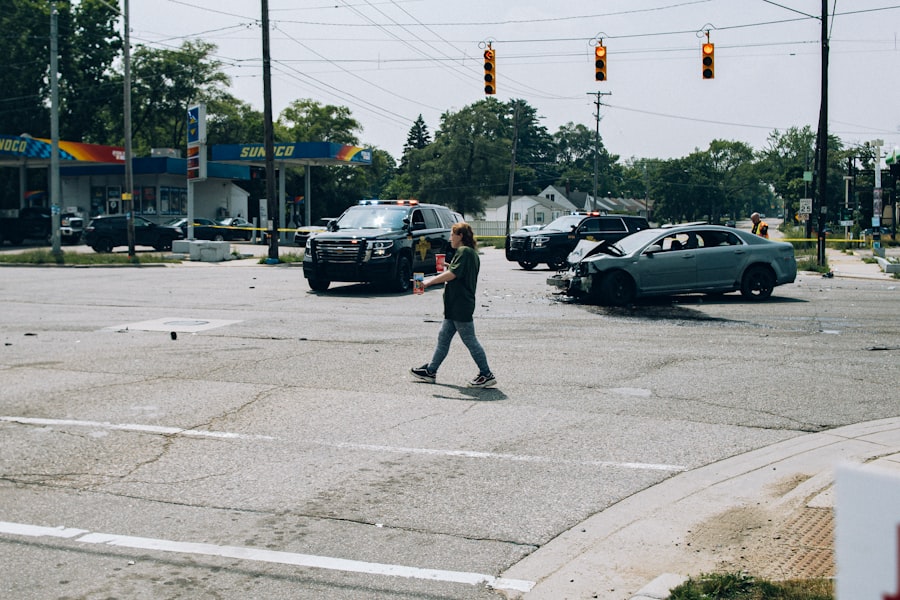
Your brain plays a pivotal role in how you perceive time, especially during high-stress situations like car crashes. The brain’s ability to process sensory information rapidly can create an illusion of time stretching or compressing. When faced with danger, your brain enters a heightened state of alertness, prioritizing survival over other cognitive functions.
This shift can lead to an altered sense of time, where moments feel elongated as your brain works overtime to assess the situation and formulate a response. Neuroscientific research has shown that various regions of the brain are involved in time perception. The amygdala, responsible for processing emotions and fear, becomes particularly active during stressful events.
This heightened activity can lead to an increased awareness of your surroundings and a more acute perception of time passing. As a result, you may find yourself recalling details from the crash with remarkable clarity, even if the event itself lasted only a few seconds.
How the Brain Processes Information During a Car Crash
| Stage of Information Processing | Description |
|---|---|
| Perception | The brain receives sensory input from the environment, such as visual and auditory cues related to the car crash. |
| Attention | The brain focuses on the most relevant information from the crash, filtering out distractions. |
| Encoding | The brain converts the perceived information into neural codes for storage and processing. |
| Storage | The brain retains the encoded information for future retrieval and analysis. |
| Retrieval | The brain recalls the stored information to make sense of the car crash and its aftermath. |
During a car crash, your brain is bombarded with sensory information that it must process quickly and efficiently. The rapid influx of visual and auditory stimuli can overwhelm your cognitive resources, leading to a unique experience of time perception. Your brain prioritizes critical information—such as the position of other vehicles and potential escape routes—over less relevant details.
This selective attention allows you to focus on what matters most in that moment, but it can also distort your perception of time. The brain’s processing speed is influenced by several factors, including adrenaline levels and individual differences in cognitive function. In high-stress situations like car crashes, adrenaline floods your system, enhancing your ability to react quickly.
This surge can sharpen your focus and heighten your awareness, making it feel as though you have more time to make decisions. However, this heightened state can also lead to cognitive overload, where the sheer volume of information makes it difficult to process everything accurately.
The Impact of Stress and Adrenaline on Time Perception
Stress and adrenaline play significant roles in shaping your perception of time during a car crash. When faced with imminent danger, your body enters a fight-or-flight response, releasing adrenaline and other stress hormones that prepare you for action. This physiological response not only heightens your senses but also alters your perception of time.
In moments of extreme stress, such as during a collision, you may experience time as moving more slowly than usual. This phenomenon can be attributed to the brain’s heightened state of alertness during stressful situations. As adrenaline courses through your veins, your body becomes primed for rapid responses.
You may find yourself acutely aware of every detail—the screeching tires, the shattering glass—creating an impression that time has expanded. While this perception may seem beneficial in allowing you to react more effectively, it can also lead to confusion and disorientation once the immediate threat has passed.
The Relationship Between Speed and Time Dilation in Car Crashes
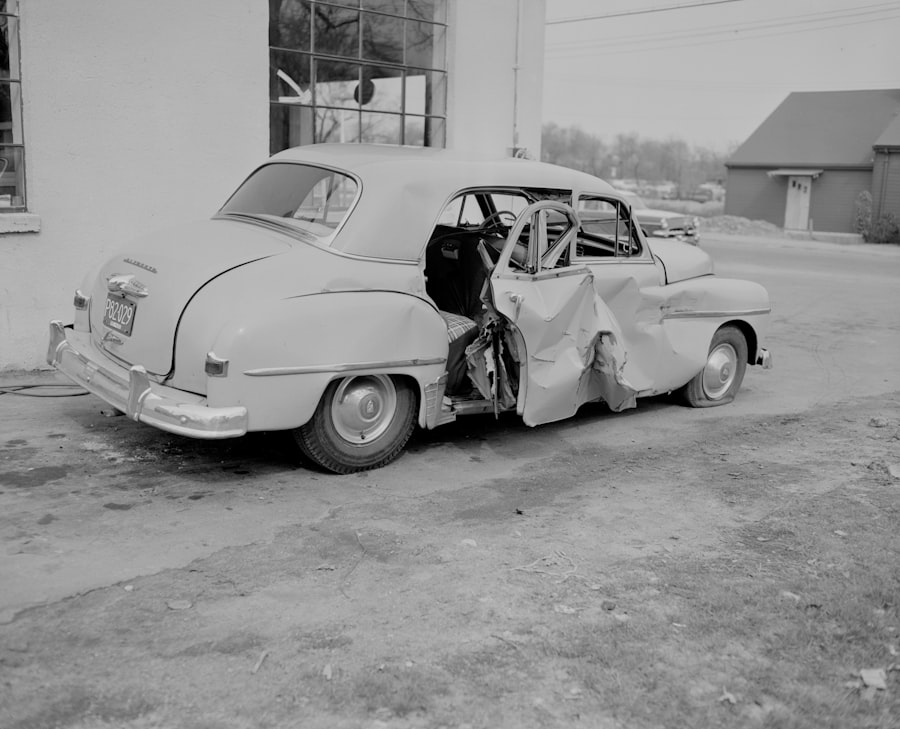
The relationship between speed and time dilation is particularly relevant in the context of car crashes. While you may not reach relativistic speeds on the road, the rapid acceleration and deceleration experienced during a collision can create a unique perception of time. As your vehicle comes to an abrupt halt or changes direction suddenly, your brain processes these changes at an accelerated rate, leading to an altered sense of time.
In practical terms, this means that during a crash, you might feel as though you have more time to react than you actually do. Your brain’s ability to process information quickly can create an illusion of extended moments, allowing you to make split-second decisions that could impact the outcome of the situation. However, this perception is not always accurate; while it may feel like you have ample time to respond, the reality is that decisions must often be made within fractions of a second.
The Influence of Trauma on Time Perception
Trauma can have lasting effects on how you perceive time, particularly after experiencing a car crash. Following such an event, individuals often report feeling as though time has slowed down or sped up during the incident itself. This altered perception can be attributed to the brain’s response to trauma and its attempts to process overwhelming experiences.
In some cases, memories from the crash may become fragmented or distorted, further complicating your understanding of what transpired. The psychological impact of trauma can also lead to changes in how you perceive time in everyday life after the incident. You may find yourself feeling disoriented or detached from reality as your brain grapples with the aftermath of the crash.
This disconnection can manifest as difficulty concentrating or an altered sense of how much time has passed since the event occurred.
The Connection Between Memory and Time Dilation in Car Crashes
Memory plays a critical role in shaping your experience of time during and after a car crash. The way your brain encodes memories from traumatic events can influence how you perceive the passage of time. In high-stress situations like crashes, memories may be stored differently than they would be during more mundane experiences.
You might find that certain details stand out vividly while others fade into obscurity. This selective memory encoding can create an impression that time was experienced differently during the crash itself. For instance, you may vividly recall specific moments—such as the sound of impact or the sight of debris—while struggling to remember other aspects of the event.
This phenomenon highlights how memory and time perception are intertwined; your recollection of events can shape how you perceive their duration and significance.
The Effects of Time Dilation on Decision Making in Car Crashes
The experience of time dilation during a car crash can significantly impact decision-making processes. When faced with an imminent threat, your brain’s heightened state of alertness allows for rapid information processing and decision-making. However, this altered perception can also lead to impulsive choices or misjudgments due to the overwhelming nature of the situation.
In critical moments during a crash, you may feel as though you have more time to react than you actually do. This illusion can lead to overconfidence in your ability to make quick decisions or misinterpretations of available options. Understanding how time dilation affects decision-making is essential for improving safety measures and training programs aimed at reducing accidents on the road.
The Potential Implications for Car Crash Survivors
For survivors of car crashes, understanding the implications of time dilation can be crucial for recovery and healing. The altered perception of time experienced during the incident may lead to lingering effects on mental health and well-being. Survivors might grapple with feelings of anxiety or disorientation as they process their experiences and navigate life after trauma.
Additionally, recognizing how trauma influences memory and decision-making can help survivors make sense of their reactions during the crash. By understanding these dynamics, individuals can work towards developing coping strategies that address their unique experiences and challenges following a traumatic event.
Strategies for Coping with Time Dilation Effects After a Car Crash
Coping with the effects of time dilation after a car crash requires a multifaceted approach that addresses both psychological and emotional needs. One effective strategy is engaging in mindfulness practices that promote present-moment awareness. By focusing on grounding techniques—such as deep breathing or meditation—you can help regulate your emotions and reduce feelings of disorientation.
Seeking support from mental health professionals who specialize in trauma recovery can also be beneficial. Therapy provides a safe space for processing emotions related to the crash while offering tools for managing anxiety and stress responses. Additionally, connecting with support groups or communities composed of fellow survivors can foster understanding and validation as you navigate your healing journey.
In conclusion, understanding the complexities surrounding time dilation during car crashes offers valuable insights into human perception and decision-making under stress. By exploring these concepts further, individuals can better equip themselves for coping with traumatic experiences while fostering resilience in their recovery journeys.
In the intense moments of a car crash, many people report experiencing a sensation of time slowing down. This phenomenon can be attributed to the brain’s heightened state of alertness and the rapid processing of information during high-stress situations. An article on Freaky Science delves into the science behind this perception, explaining how the brain’s amygdala plays a crucial role in enhancing memory and perception during traumatic events. By understanding the neurological processes involved, researchers can better comprehend how our brains react to life-threatening situations, offering insights into human cognition and survival instincts.
WATCH THIS! ⏲️ Time Is A Lie: Stress Breaks Your Brain’s Clock
FAQs
What causes time to slow down in a car crash?
Time slowing down in a car crash is a psychological phenomenon caused by the brain processing an overwhelming amount of information in a short period of time. This can create the perception that time is moving more slowly than it actually is.
Is time actually slowing down in a car crash?
No, time itself does not slow down during a car crash. The sensation of time slowing down is a result of the brain’s heightened state of awareness and increased processing speed during a traumatic event.
How does the brain perceive time during a car crash?
During a car crash, the brain goes into a state of hyperarousal, which can lead to a distortion of time perception. This heightened state of awareness can make it feel like time is moving more slowly as the brain processes a large amount of information in a short period of time.
Can time slowing down in a car crash be beneficial?
The sensation of time slowing down in a car crash can be beneficial as it allows the brain to process and react to the situation more quickly. This heightened perception of time can give individuals the ability to make split-second decisions that could potentially save their lives.
Can time slowing down in a car crash have long-term effects?
Experiencing time slowing down in a car crash can have long-term effects on an individual’s memory and perception of the event. This phenomenon can lead to vivid and detailed recollections of the crash, as well as post-traumatic stress disorder (PTSD) in some cases.