
The Piltdown Man Hoax stands as one of the most elaborate and enduring scientific deceptions of the 20th century. For over four decades, this carefully crafted artifact misled anthropologists, shaping their understanding of human evolution and slowing progress in the field. Its unmasking, driven by the relentless application of modern forensic science, serves as a powerful testament to the self-correcting nature of the scientific method, even when faced with deeply entrenched biases.
The story of Piltdown Man begins in the early 20th century, a period ripe for groundbreaking discoveries in paleoanthropology. Europe was a hotbed of fossil hunting, with recent finds like Neanderthals and Cro-Magnons fueling intense interest in humanity’s ancient past. Within this fervent atmosphere, the stage was set for a discovery that would seemingly bridge the gap between apes and humans.
The Key Players and the Discovery Narrative
In 1912, Charles Dawson, an amateur archaeologist and solicitor, announced a monumental find to the world. He claimed to have unearthed fragments of a human-like skull and an ape-like jawbone from a gravel pit at Piltdown, East Sussex, England. His collaborator, Arthur Smith Woodward, a prominent paleontologist at the British Museum, lent significant credibility to these claims. Dawson’s narrative was that these remains, found together, represented a hitherto unknown early hominid, which they christened Eoanthropus dawsoni, or “Dawson’s Dawn Man.”
The initial discovery, according to Dawson, was a portion of a remarkably thick human-like skull. Subsequent excavations, involving Woodward and a Jesuit priest and paleontologist, Teilhard de Chardin, purportedly yielded more fragments of the skull, along with a controversial lower jawbone and several teeth. This jawbone, remarkably ape-like in its morphology but bearing human-like wear patterns on its molars, was the most contentious element of the initial findings. The narrative carefully constructed by Dawson and Woodward emphasized the discovery of these elements in close proximity, suggesting a single individual.
The Scientific Landscape and Contemporary Expectations
The early 20th century saw intense debate regarding the birthplace and trajectory of human evolution. Many British scientists, fueled by a degree of nationalistic pride, hoped that the “cradle of humanity” would be found within their own borders, rather than in Africa or Asia. The prevailing theory, especially among early British anthropologists, suggested that a large brain developed before an upright gait or modified dentition. Piltdown Man, with its large cranial capacity and ape-like jaw, seemed to perfectly fit this preconceived notion. It was a comfortable narrative, aligning with existing biases and offering a distinctly British contribution to human evolutionary history.
Furthermore, the scientific tools available at the time were rudimentary compared to today’s sophisticated methods. Dating techniques were imprecise, relying heavily on stratigraphic analysis (the study of rock layers) and comparative anatomy. Chemical analyses were in their infancy, making it difficult to definitively distinguish between genuinely ancient and recently introduced materials. This environment of limited analytical capability provided fertile ground for deception to take root and flourish.
The Piltdown Man hoax is one of the most infamous cases in the history of forensic science, illustrating how scientific rigor can be compromised by human error and deception. For a deeper understanding of this fascinating topic, you can explore a related article that delves into the details of the Piltdown Man discovery and its eventual exposure as a fraud. This article provides insights into the implications of the hoax on the field of anthropology and forensic science. For more information, visit Freaky Science.
Decades of Doubt and Suppression
While Piltdown Man was embraced by many, it was not without its detractors. From the very outset, certain aspects of the fossil aroused suspicion, much like a discordant note in an otherwise harmonious symphony. However, these voices of doubt were often marginalized or overshadowed by the weight of prominent scientific endorsement.
Early Skepticism and Anomalies
Several scientists expressed reservations regarding the authenticity of Piltdown Man. French paleontologist Marcellin Boule, a contemporary of Dawson and Woodward, pointed out the stark incongruity between the clearly human-like skull and the unequivocally simian jawbone. He noted that the two parts seemed to belong to entirely different creatures, akin to fitting a rhinoceros horn onto a deer. Likewise, the American paleontologist Gerrit S. Miller, after examining casts of the fossils, concluded that the jaw was undoubtedly that of an orangutan and could not possibly belong to the same individual as the skull. He even suggested that the tooth wear on the molars appeared to be artificially abraded.
These early criticisms, though perceptive, struggled to gain traction against the enthusiastic pronouncements of highly respected figures like Woodward. The prestige of the British Museum and the perceived careful methodology of the discoverers acted as a powerful shield against scrutiny.
The Entrenchment of Belief
Despite these early doubts, Piltdown Man gradually became an established fixture in paleoanthropological discourse. Textbooks were written, museum displays were curated, and scientific papers expounded upon its evolutionary significance. For over 40 years, it was considered a pivotal piece in the human evolutionary puzzle, linking apes and humans through an early English ancestor. Its influence was profound, diverting attention and resources away from genuine fossil discoveries in other parts of the world, particularly those emerging from Africa.
The scientific community’s reluctance to challenge Piltdown Man more vigorously highlights the susceptibility of even rigorous fields to confirmation bias. When a discovery aligns perfectly with prevailing theories and nationalistic aspirations, it can become extraordinarily difficult to dislodge, even in the face of mounting inconsistencies. This period serves as a cautionary tale, demonstrating how the momentum of perceived discovery can override critical examination.
The Shadow of Genuine Discoveries
As the decades progressed, genuine hominid fossils began to emerge from Africa and Asia – discoveries that painted a very different picture of human evolution. Raymond Dart’s discovery of the Taung Child (Australopithecus africanus) in 1924, for instance, presented an early hominid with ape-like brain size but human-like post-cranial features, challenging the Piltdown narrative of a large brain developing first. However, Piltdown Man’s entrenched status meant that these new finds were often viewed through its lens, sometimes leading to misinterpretations or delayed acceptance. The established “truth” of Piltdown acted as a conceptual anchor, dragging down the acceptance of new, contradictory evidence.
The Unraveling: Forensic Science Steps In

The steadfast grip of Piltdown Man on the scientific imagination began to weaken significantly in the early 1950s, largely due to the application of new and more precise scientific techniques. The advent of chemical and radiological analysis, coupled with a renewed willingness to critically re-examine the evidence, finally pulled back the curtain on the elaborate deception.
Fluorine Dating and Relative Chronology
One of the turning points was the application of fluorine absorption dating. This technique, developed by Kenneth Oakley, measured the amount of fluorine absorbed by fossil bone from groundwater. While not an absolute dating method, it allowed for the relative dating of bones found in the same stratigraphic layer. In 1949, Oakley, along with C.R. Hoskins, conducted fluorine tests on the Piltdown remains. Their initial tests revealed that the fluorine content of the cranial fragments and the jawbone was significantly lower than that of genuine Pliocene animal bones from the same gravel pit. This suggested that the Piltdown fossils were considerably younger than originally claimed, certainly not of the antiquity necessary for a “dawn man.”
This initial testing, while not definitively labeling it a hoax, cast a serious shadow of doubt on the Pliocene age attributed to Piltdown Man. It was the first hard, scientific crack in the edifice.
Advanced Chemical Analysis and Discrepancies
Further chemical analyses, particularly by Oakley, Joseph S. Weiner, and Wilfrid Le Gros Clark, plunged deeper. In 1953, they employed a more refined chemical analysis, comparing the nitrogen content in the bones. Nitrogen content decreases over time as organic matter decomposes. Their findings were stark: the Piltdown skull fragments contained a significantly higher nitrogen content than fossil remains of genuine antiquity, indicating they were considerably younger, possibly even medieval. Conversely, the jawbone had very little nitrogen, consistent with more recent bone.
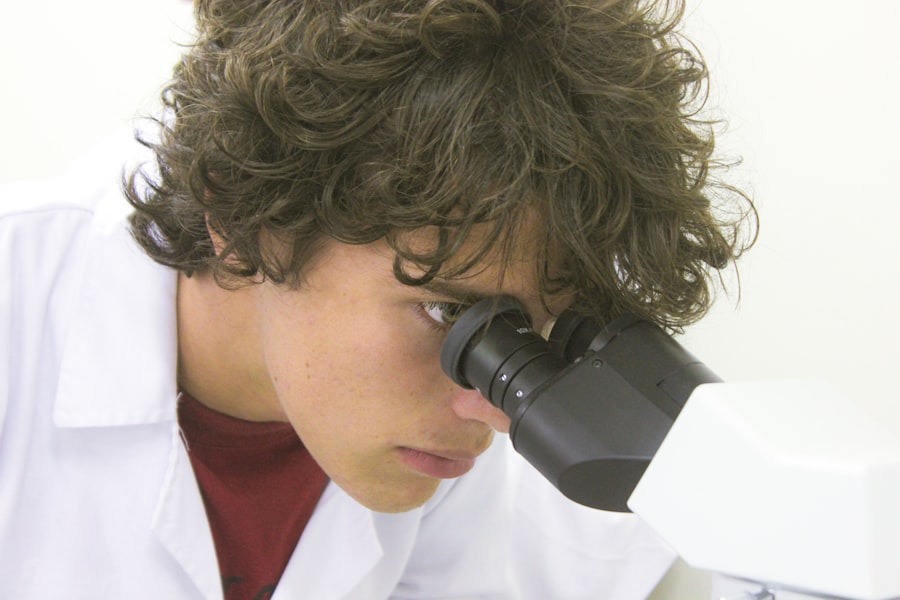
The most damning evidence emerged from examinations of the jawbone and teeth themselves. Le Gros Clark, a renowned anatomist, conducted meticulous examinations of the teeth under a microscope. He found clear evidence of artificial abrasion on the molars, inconsistent with natural wear patterns. The enamel on the teeth was filed down, and then stained to match the appearance of genuine ancient bone. Furthermore, the researchers observed that the jawbone, identified as that of an orangutan, had its condyle (the part that connects to the skull) deliberately broken off, presumably to hinder its positive identification as an ape jaw. The teeth themselves had been stained with an iron solution and bichromate to give them an ancient appearance.
Radiocarbon Dating and Definitive Proof
While not available at the initial discovery, subsequent developments in absolute dating methods, such as radiocarbon dating, also played a crucial role in the post-hoax analysis. Though radiocarbon dating is effective for organic materials up to around 50,000 years old, it was sufficient to confirm the relative youth of the Piltdown skull, placing it within a few thousand years of the present, rather than millions. The combination of fluorine testing, nitrogen analysis, and detailed anatomical examination provided a multi-pronged assault that left no room for doubt. The Piltdown Man was unequivocally a forgery.
The Unmasking and Its Aftermath
The announcement in 1953 that Piltdown Man was a sophisticated forgery sent shockwaves through the scientific community. It was a moment of profound embarrassment but also one of significant scientific introspection and rectification.
Public Reaction and Scientific Humiliation
The revelation was a major news story worldwide. For many, it was a humiliating blow to British science, which had championed the find for so long. The public, which had been captivated by the idea of an ancient English ancestor, reacted with a mixture of disbelief and fascination. Scientific institutions, particularly the British Museum, faced intense scrutiny for having been so thoroughly duped. The meticulous efforts of Oakley, Weiner, and Le Gros Clark, however, were widely praised for their dedication to scientific truth.
The unmasking served as a stark reminder that scientific progress is not always a smooth, linear path; sometimes, deeply ingrained errors must be confronted and painstakingly corrected. It was a crucible moment, forging a stronger commitment to empirical evidence and critical self-assessment within the field.
The Identity of the Forger(s)
Despite extensive investigations, the identity of the Piltdown forger – or forgers – remains a subject of ongoing debate and speculation. Charles Dawson, as the discoverer and the person who initially presented the remains, is widely considered the primary suspect. His reputation for making questionable “discoveries” and his desire for scientific recognition are often cited as motives. Evidence suggesting he was involved in other archaeological hoaxes reinforces this view.
However, some researchers believe others may have been involved, either as accomplices or as the masterminds. Potential co-conspirators include Sir Arthur Conan Doyle, the creator of Sherlock Holmes, who lived near the Piltdown site and had a known interest in spiritualism and hoaxes; Samuel Woodhead, a preparator at the British Museum who had skilled knowledge of bone preparation; and even Teilhard de Chardin, who later claimed to have harbored suspicions but kept silent. Ernest Charles Dawson, Charles Dawson’s son, is another suggested participant, potentially handling the technical aspects of aging the bones. The question of motivation often revolves around scientific rivalry, a desire to embarrass certain individuals, or simply a mischievous delight in deception. The true extent of the conspiracy, and the precise roles of all involved, remain one of history’s enduring scientific mysteries, the threads of truth now too frayed by time to fully reweave.
The Long-Term Impact on Paleoanthropology
The impact of the Piltdown Man hoax on paleoanthropology was profound and multifaceted. For over four decades, it exerted a stifling influence on the direction of research. It skewed perceptions of human evolution, making it difficult for genuine African hominid finds to be fully appreciated and integrated into the evolutionary narrative. The emphasis on a large brain developing before advanced locomotion perpetuated a Eurocentric view of human origins.
However, the unmasking ultimately strengthened the science. It prompted a more rigorous approach to fossil authentication, a greater emphasis on replicable and objective analysis, and a heightened awareness of the potential for fraud. It underscored the importance of skeptical inquiry and the necessity of constantly questioning even widely accepted theories. The Piltdown Man hoax, therefore, serves as a powerful historical lesson – a stark reminder that even within the hallowed halls of science, vigilance and critical examination must always prevail. It demonstrated that science is not merely a collection of facts, but a dynamic process of discovery, debate, and, crucially, self-correction. The exposure of Piltdown Man was a painful but necessary step in the maturity of paleoanthropology, clearing the intellectual undergrowth for a clearer view of humanity’s true evolutionary path.
FAQs
What was the Piltdown Man discovery?
The Piltdown Man was a paleoanthropological hoax in which bone fragments were presented as the fossilized remains of a previously unknown early human. Discovered in 1912 in Piltdown, England, it was initially believed to be the “missing link” between apes and humans.
How was forensic science used to expose the Piltdown Man hoax?
Forensic science techniques, including fluorine dating, microscopic analysis, and chemical tests, were used in the 1950s to analyze the Piltdown fossils. These tests revealed that the bones were a combination of a medieval human skull and an orangutan jawbone, artificially aged and altered to appear ancient.
Who was responsible for the Piltdown Man hoax?
The true perpetrator of the Piltdown Man hoax remains uncertain. Various suspects have been proposed, including Charles Dawson, the amateur archaeologist who discovered the bones, but no definitive proof has identified the hoaxer.
What impact did the Piltdown Man hoax have on science?
The Piltdown Man hoax misled the scientific community for decades, delaying the acceptance of genuine early human fossils from other parts of the world. It highlighted the importance of rigorous scientific testing and skepticism in paleoanthropology.
What lessons did forensic science learn from the Piltdown Man case?
The Piltdown Man case underscored the necessity of applying multiple scientific methods to verify fossil authenticity. It also demonstrated how forensic science can uncover fraud and emphasized the need for transparency and peer review in scientific discoveries.