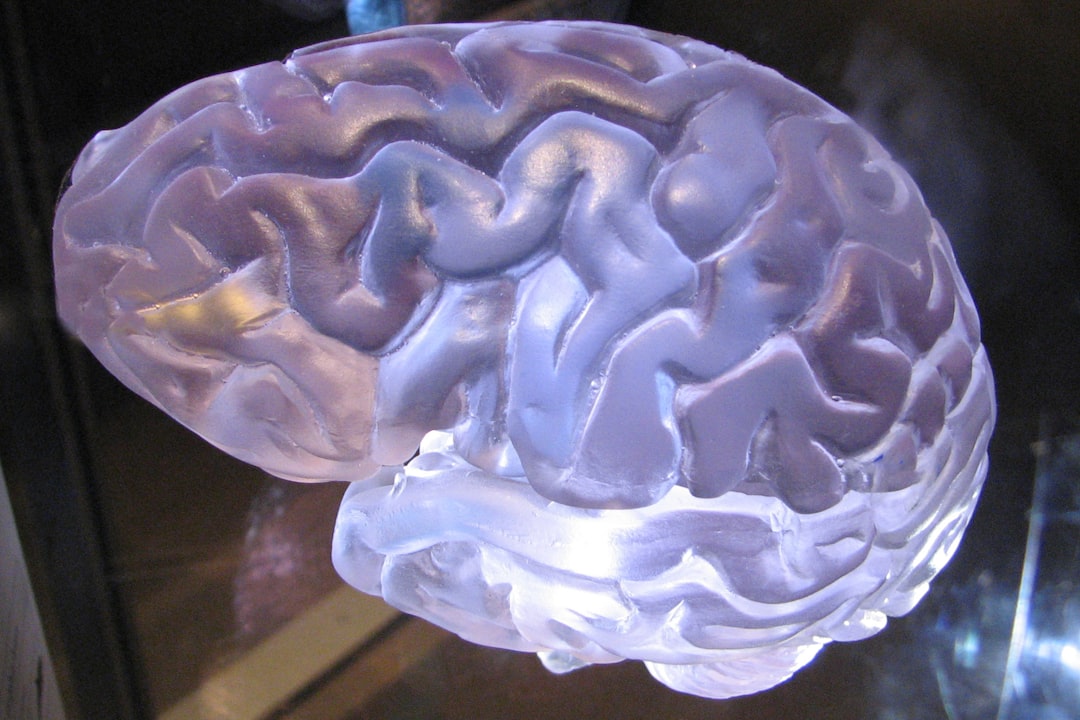
You stand at the precipice of understanding how your mind, that intricate conductor, orchestrates the symphony of your senses. For too long, the brain’s electrical chatter was seen as mere background noise, a chaotic hum of neuronal activity. Yet, as you delve deeper, you discover that these rhythmic surges and ebbs, these cortical oscillations, are not just background but the very melody that shapes your perception of reality. They are the silent architects of your visual world, the unseen puppeteers of your auditory experiences, and the subtle rhythm section for your tactile sensations. This article will guide you through the fascinating landscape of cortical oscillations and their profound impact on how you perceive the world around you.
Imagine your brain as a vast, interconnected city, buzzing with activity. Neurons, the city’s inhabitants, communicate constantly, sending electrical signals to one another. Cortical oscillations are akin to the synchronized traffic flow and the rhythmic pulsing of the city’s power grid. They are not random firings, but rather synchronized patterns of electrical activity that emerge from the collective behavior of billions of neurons in the cerebral cortex. These oscillations occur at different frequencies, each with its own distinct character and presumed role. You can learn more about split brain consciousness in this informative video.
Unraveling the Frequency Spectrum: The Brainwave Bandwidth
You can think of these frequencies as different radio stations broadcasting within your brain. Each station carries a unique type of information and is associated with different mental states and cognitive processes.
Delta Waves: The Deep Slumber’s Soundtrack
At the slowest end of the spectrum are Delta waves, typically ranging from 0.5 to 4 Hertz (Hz). These powerful, slow waves are predominantly observed during deep, dreamless sleep. Imagine them as the heavy, slow-beat rhythm of a lullaby, lulling you into a state of profound rest and restoration. While less directly tied to conscious perception during wakefulness, their presence during sleep is crucial for memory consolidation and brain repair, indirectly influencing your perceptual capabilities when you awaken.
Theta Waves: The Gateway to Memory and Imagination
Moving up in frequency, Theta waves occupy the range of 4 to 8 Hz. You’ll often encounter these rhythms during states of drowsiness, light sleep, and importantly, during creative thinking, memory retrieval, and focused meditation. Think of Theta waves as the soft, flowing melody that accompanies your daydreams or the moment you vividly recall a cherished memory. Their role in binding together disparate pieces of information is thought to be crucial for forming coherent memories and for the flexible shifts in attention that underpin imagination.
Alpha Waves: The Calm Observer’s Hum
Alpha waves, spanning 8 to 12 Hz, are often associated with a relaxed, yet alert state of wakefulness. When your eyes are closed, or you are calmly observing the world without actively processing it, Alpha activity becomes prominent. Picture this as the steady hum of a well-tuned engine, signifying a state of readiness but not intense engagement. This state allows your brain to be receptive to incoming sensory information without being overwhelmed, acting as a kind of perceptual filter.
Beta Waves: The Engaged Thinker’s Buzz
Beta waves, typically between 12 and 30 Hz, characterize active thinking, problem-solving, and focused attention. This is the rhythm of your brain when you’re engrossed in a challenging task, engrossed in a lively conversation, or actively trying to learn something new. Imagine this as the rapid, energetic buzz of a busy marketplace, where ideas are exchanged and transactions are made. High Beta activity can also be associated with anxiety and stress, highlighting the dual nature of this energetic frequency.
Gamma Waves: The High-Speed Information Processor
At the highest end of the observable spectrum are Gamma waves, often exceeding 30 Hz and sometimes reaching into the hundreds of Hz. These incredibly fast oscillations are thought to be critical for binding together different features of sensory stimuli into a unified percept. Consider Gamma waves as the lightning-fast connection between different departments in a high-tech company, ensuring that all necessary parts are coordinated to complete a complex project. Their role in binding sensory information, conscious awareness, and higher cognitive functions is a highly active area of research.
Cortical oscillations play a crucial role in how we perceive sensory information, influencing everything from attention to memory. A related article that delves deeper into this fascinating topic is available at Freaky Science, where you can explore the intricate relationship between brain wave patterns and perceptual processes. This resource provides valuable insights into the mechanisms underlying our cognitive functions and the significance of oscillatory activity in the brain.
Oscillations as the Scaffolding of Sensory Input
You might wonder how these rhythmic electrical patterns can possibly shape something as seemingly direct as seeing a red apple or hearing a musical note. Cortical oscillations act as a temporal scaffolding, organizing the flow of sensory information and facilitating its processing within the brain. They provide a framework within which sensory signals can be integrated, amplified, and prioritized.
The Temporal Binding Hypothesis: Weaving the Sensory Tapestry
One of the most influential theories is the temporal binding hypothesis, which suggests that oscillations, particularly Gamma waves, play a crucial role in synchronizing the activity of neurons that represent different features of an object. When you see a red apple, different neuronal populations are responsible for processing its color, shape, and texture. According to this hypothesis, these populations become synchronized in their firing patterns, oscillating at the same frequency, effectively “binding” these features together into a single, coherent percept of “red apple.” Without this temporal synchronization, the brain might struggle to distinguish the individual attributes from the background noise.
Attention as a Tuned Receiver: Tuning into the Right Frequency
Your ability to focus your attention is profoundly influenced by cortical oscillations. Imagine your attentional spotlight as a radio tuner. Different oscillatory frequencies can be thought of as presets on that radio. When you want to listen to a specific station (attend to a specific sensory input), your brain can “tune” to the relevant oscillatory frequency. For example, Alpha oscillations can be suppressed when you attend to a visual stimulus, allowing for more processing of that specific information. Conversely, Theta oscillations have been implicated in the attentional blink, where attention is momentarily diverted, causing you to miss a subsequent stimulus.
Predictive Coding: The Brain’s Anticipatory Orchestra
Cortical oscillations are also intricately linked to predictive coding, a prominent theory in neuroscience. This theory posits that your brain is constantly generating predictions about incoming sensory information. When sensory input matches these predictions, it confirms the existing model. When there’s a mismatch, a prediction error signal is generated, prompting an update to the brain’s internal model. Oscillations, particularly lower frequencies like Alpha and Theta, are thought to play a role in maintaining these predictions and in signaling prediction errors. Imagine your brain as a musician, constantly anticipating the next note in a familiar melody. Oscillations help maintain that anticipation and signal when an unexpected note is played.
Visual Perception: The Rhythms of Seeing
The impact of cortical oscillations on visual perception is a particularly fertile ground for research. These rhythmic patterns influence how you detect, discriminate, and integrate visual information.
Feature Binding in the Visual Cortex: Assembling the Image
When you look at a scene, your visual cortex processes different aspects of the image – lines, edges, colors, motion. Gamma oscillations are strongly implicated in binding these disparate features together into a unified visual percept. Neurons responding to the same object, even if they are in different areas of the visual cortex, can synchronize their activity in the Gamma range. This synchronized firing acts like a spotlight, illuminating and connecting the relevant neuronal assemblies, allowing you to perceive distinct objects within the visual field rather than a jumbled collection of lines and colors.
The Role of Alpha in Suppression and Salience: Filtering the Visual Noise
Alpha oscillations have been shown to play a key role in attentional filtering within the visual system. When you are not actively attending to a particular region of your visual field, Alpha activity in the corresponding cortical areas tends to be higher. This increased Alpha activity is thought to exert an inhibitory influence, effectively suppressing the processing of irrelevant information. Conversely, when you direct your attention to a specific visual stimulus, Alpha activity in that region typically decreases, allowing for enhanced processing and making the stimulus more salient. Think of Alpha as a vigilant guard at the entrance to your visual processing centers, selectively allowing entry based on your attentional focus.
Illuminating Motion and Object Recognition: The Oscillatory Dance of Vision
Research suggests that specific oscillatory frequencies are involved in processing different aspects of visual information, including motion and object recognition. For instance, Beta and Gamma oscillations have been observed during tasks requiring the identification of moving objects. The interplay between different oscillatory frequencies might also be crucial for distinguishing between similar objects or for recognizing complex shapes, suggesting a dynamic and coordinated oscillatory activity that orchestrates visual processing.
Auditory Perception: The Rhythms of Listening
Just as in vision, cortical oscillations are fundamental to your ability to process and interpret sounds. They influence everything from the detection of faint whispers to the complex understanding of spoken language.
Auditory Feature Integration: From Sound Waves to Meaning
When you hear a sound, your auditory system processes its various features: pitch, loudness, timbre, and location. Similar to visual binding, oscillations, particularly in the Gamma range, are thought to bind these features together to form a coherent auditory percept. For example, neurons in the auditory cortex might synchronize their firing in response to different components of a musical note or a spoken word, allowing you to perceive it as a unified entity.
The Oscillatory Basis of Auditory Attention: Focusing on the Right Sound
Your ability to selectively attend to one sound amidst a cacophony of noise relies heavily on oscillatory mechanisms. Alpha and Theta rhythms are believed to be involved in gating auditory information and modulating its processing based on your attentional focus. When you are trying to listen to a specific conversation in a noisy room, Alpha oscillations in certain auditory cortical areas may increase to suppress irrelevant sounds. Conversely, Theta oscillations might be involved in binding information across time, which is crucial for understanding the flow of speech.
Speech Comprehension and Musical Processing: The Rhythmic Nuances of Sound
The intricate processing of speech and music involves a complex interplay of oscillatory frequencies. For speech comprehension, Theta and Alpha oscillations appear to be important for segmenting the continuous stream of sound into meaningful words and for integrating temporal information. In music perception, Beta and Gamma oscillations are thought to be involved in processing rhythmic patterns, melodic contours, and harmonic structures. The synchronized firing of neurons at specific frequencies allows your brain to deconstruct and appreciate the rich tapestry of auditory experiences.
Recent research has shed light on the intricate relationship between cortical oscillations and perception, revealing how these brain rhythms can influence our sensory experiences. For a deeper understanding of this fascinating topic, you can explore a related article that discusses the mechanisms behind these oscillations and their impact on cognitive functions. This insightful piece can be found at Freaky Science, where you will discover more about the role of brain activity in shaping our perception of the world around us.
Somatosensory Perception: The Rhythms of Touch and Proprioception
| Metric | Description | Frequency Range (Hz) | Role in Perception | Typical Brain Region |
|---|---|---|---|---|
| Delta Oscillations | Slow wave activity associated with deep sleep and attention modulation | 1-4 | Modulates attention and sensory gating during perception | Frontal and temporal cortex |
| Theta Oscillations | Linked to memory encoding and navigation | 4-8 | Supports working memory and integration of sensory inputs | Hippocampus and prefrontal cortex |
| Alpha Oscillations | Associated with cortical idling and inhibition | 8-12 | Regulates sensory processing and suppresses irrelevant stimuli | Occipital and parietal cortex |
| Beta Oscillations | Related to active thinking and sensorimotor processing | 13-30 | Involved in maintaining the current cognitive state during perception | Sensorimotor cortex |
| Gamma Oscillations | High-frequency oscillations linked to feature binding and attention | 30-100 | Facilitates integration of sensory information and conscious perception | Multiple cortical areas including visual and auditory cortex |
Your sense of touch and your awareness of your body’s position in space (proprioception) are also orchestrated by cortical oscillations. These rhythmic patterns contribute to the perceived texture, pressure, and the spatial organization of your body.
Tactile Feature Binding: Weaving the Fabric of Texture
When you touch a surface, your somatosensory cortex processes information about its texture, temperature, and pressure. Oscillations, particularly Gamma activity, are believed to play a role in binding these tactile features together into a coherent perception of the object’s surface properties. Imagine running your fingers over a velvet cloth; different neuronal ensembles are activated by the fine fibers, the smoothness, and the slight resistance. Synchronization of these ensembles via oscillations allows you to perceive the distinct sensation of velvet.
Proprioceptive Integration and Spatial Awareness: The Brain’s Internal Map
Cortical oscillations are also crucial for integrating proprioceptive signals and for maintaining your sense of spatial awareness. Mid-range oscillations, such as Alpha and Beta, are thought to be involved in processing information about the position and movement of your limbs. This rhythmic activity helps your brain construct and maintain an internal map of your body in space, allowing you to move with coordination and to sense the relative positions of your body parts without having to constantly look at them.
Encoding Intensity and Duration: The Amplitude and Rate of the Rhythm
The intensity and duration of tactile stimuli are also likely encoded, in part, by the amplitude and rate of underlying cortical oscillations. A stronger touch might be associated with larger amplitude oscillations, while prolonged contact might be reflected in sustained oscillatory activity. This suggests that the dynamism of these rhythmic patterns allows for detailed encoding of the nuances of your somatosensory experiences.
The Brain’s Orchestra: Synchronization and Cross-Frequency Coupling
The true power of cortical oscillations lies not only in their individual frequency bands but also in their coordinated activity. Your brain is not a mere collection of independent oscillators; rather, it functions as a complex orchestra, where different sections play in harmony and in concert.
Inter-Rhythmic Communication: The Dialog Between Frequencies
One of the most fascinating aspects is cross-frequency coupling, where oscillations at one frequency influence or synchronize with oscillations at another frequency. For instance, the phase of slower Theta oscillations can modulate the amplitude of faster Gamma oscillations. This suggests a hierarchical communication system within the brain, where slower rhythms might provide a framework or context for the processing carried out by faster rhythms. Imagine a conductor (Theta) setting the tempo and guiding the intricate playing of the different instrument sections (Gamma).
Network Oscillations: The Brain’s Communication Highways
Cortical oscillations are not confined to a single brain region; they can extend across widespread neural networks. Synchronized activity across different brain areas is thought to be crucial for integrating information from various sensory modalities and for supporting complex cognitive functions. These network oscillations act like communication highways, facilitating efficient information exchange and coordination between distant brain regions, allowing for a more unified and holistic perception of the world.
The Emergence of Consciousness: A Symphony of Synchronized Rhythms?
While still a subject of intense debate, some theories propose that consciousness itself might emerge from the coordinated activity of large-scale neural networks, perhaps characterized by specific patterns of oscillatory synchronization. The idea is that when different brain regions communicate effectively through synchronized rhythms, a unified sense of subjective experience arises. You might be experiencing the world as a coherent whole precisely because your brain is orchestrating a complex symphony of synchronized oscillations.
In conclusion, you have journeyed through the fascinating world of cortical oscillations and their profound influence on your perception. These rhythmic electrical patterns are not just epiphenomena; they are the fundamental building blocks and the dynamic organizers of your sensory experiences. From the subtle hum of Alpha waves to the rapid fire of Gamma oscillations, each rhythm plays a vital role in shaping how you see, hear, and feel the world. As research continues to unravel the intricate choreography of these brainwave dances, you gain a deeper appreciation for the remarkable complexity and elegance of your own mind.
FAQs
What are cortical oscillations?
Cortical oscillations are rhythmic or repetitive patterns of neural activity in the brain’s cortex. They are typically measured as brain waves using techniques like EEG and are categorized by their frequency bands, such as alpha, beta, gamma, delta, and theta waves.
How do cortical oscillations relate to perception?
Cortical oscillations play a crucial role in perception by coordinating neural activity across different brain regions. They help in processing sensory information, enhancing signal transmission, and facilitating attention and awareness, which are essential for perceiving stimuli accurately.
Which frequency bands are most involved in perceptual processes?
Gamma oscillations (30-100 Hz) are often linked to feature binding and conscious perception, while alpha (8-12 Hz) and beta (13-30 Hz) bands are associated with attentional modulation and sensory gating. Theta (4-7 Hz) oscillations can also contribute to memory-related aspects of perception.
Can disruptions in cortical oscillations affect perception?
Yes, abnormalities or disruptions in cortical oscillations have been associated with perceptual deficits and neurological conditions such as schizophrenia, autism, and epilepsy. These disruptions can impair the brain’s ability to integrate sensory information effectively.
How are cortical oscillations studied in research on perception?
Researchers study cortical oscillations using neuroimaging and electrophysiological methods like EEG, MEG, and intracranial recordings. These techniques allow scientists to observe the timing and synchronization of brain waves during perceptual tasks and understand their functional roles.