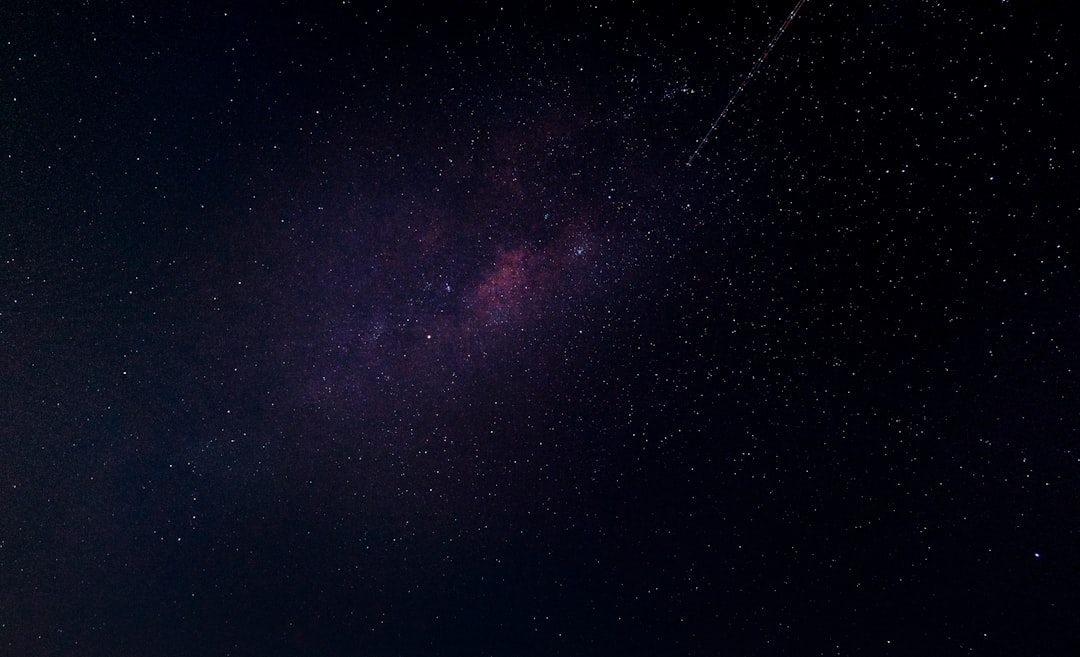
The observable universe, a canvas of celestial bodies and cosmic phenomena, presents an ongoing narrative of creation, evolution, and eventual dissolution. Within this grand scheme, gargantuan structures like superclusters of galaxies represent some of the largest known organizational units of matter. Among these, the Laniakea Supercluster, home to our own Milky Way galaxy, stands as a particularly relevant subject for study. However, like all structures in the universe, Laniakea is not immutable. Its fate, interwoven with the fundamental forces governing the cosmos, is a topic of intense scientific scrutiny and speculation. This article delves into the potential demise of Laniakea, examining the mechanisms at play and the various scenarios envisioned by astrophysicists.
The Laniakea Supercluster, meaning “immeasurable heaven” in Hawaiian, was identified in 2014. It is a vast collection of approximately 100,000 galaxies, spanning an impressive 520 million light-years across. This colossal structure is not a randomly scattered assortment but rather a gravitationally bound entity, albeit a loosely defined one at its edges.
Defining Laniakea’s Boundaries
Unlike more compact galaxy clusters which are clearly delineated by gravitational potential wells, superclusters like Laniakea are characterized by the flow of galaxies. Within Laniakea, galaxies are observed to be moving inwards towards a central gravitational attractor known as the Great Attractor. This flow defines the supercluster, acting as a cosmic watershed where all galaxies within its basin eventually drain towards a common point.
Our Place in the Supercluster
The Milky Way galaxy is located on the outskirts of Laniakea, gradually being pulled towards its core. This movement, while imperceptible on human timescales, is a testament to the immense gravitational forces at play across such vast distances. Understanding our own galaxy’s trajectory within Laniakea is crucial for comprehending the supercluster’s overarching dynamics.
The fate of the Laniakea Supercluster, which encompasses our Milky Way galaxy, is a topic of great interest in the field of cosmology. Researchers are exploring how gravitational forces and the expansion of the universe will affect this vast structure over billions of years. For a deeper understanding of the implications of these cosmic dynamics, you can read a related article that discusses the future of galaxy clusters and their interactions at this link: Fate of the Laniakea Supercluster.
The Expanding Universe: A Cosmic Unraveling
A cornerstone of modern cosmology is the observation that the universe is expanding. This expansion, attributed to dark energy, acts as a counterforce to gravity, slowly but surely pulling galaxies and clusters apart. The interplay between gravity, which seeks to bind matter, and dark energy, which seeks to separate it, dictates the long-term fate of cosmic structures, including Laniakea.
Hubble’s Law and Galactic Recession
Edwin Hubble’s pioneering work established that galaxies are receding from each other, and the farther away they are, the faster they are receding. This observation, encapsulated in Hubble’s Law, is not indicative of galaxies moving through space away from a central point, but rather space itself expanding between them. Imagine dots on an inflating balloon; as the balloon expands, the dots move farther apart from each other, yet they remain stationary on its surface.
The Influence of Dark Energy
Dark energy, a mysterious form of energy that permeates space, is responsible for the accelerated expansion of the universe. Its increasing dominance over gravity on large scales poses a significant challenge to the gravitational cohesion of superclusters like Laniakea. As the universe continues to expand at an accelerating rate, the gravitational pull between distant galaxies within Laniakea will be increasingly overcome.
Gravitational Battles: Local Cohesion vs. Cosmic Expansion
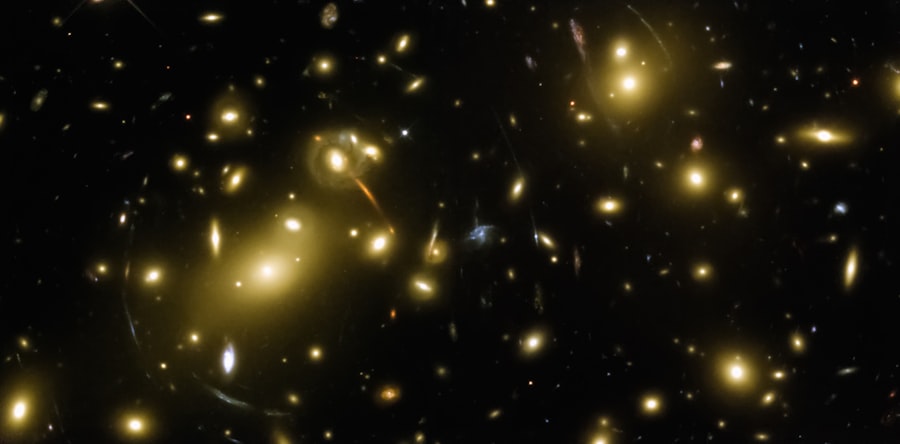
The fate of Laniakea hinges on a cosmic tug-of-war between the internal gravitational attraction holding its constituent galaxies together and the outward push of cosmic expansion driven by dark energy. For larger structures, the gravitational pull is stronger, offering a degree of resistance to the expansion. However, even these colossal entities are not immune to the universe’s relentless stretching.
The Survival of Galaxy Clusters
Within Laniakea, numerous galaxy clusters exist, such as the Virgo Cluster, the Hydra-Centaurus Supercluster (which now forms a part of Laniakea), and the Norma Cluster. These clusters are gravitationally bound entities, meaning the gravitational pull between their constituent galaxies is strong enough to overcome the local expansion of space. They are destined to remain coherent, eventually merging and forming even larger, more massive elliptical galaxies within their boundaries.
The Disintegration of the Supercluster
However, on the scale of the entire Laniakea Supercluster, the gravitational forces acting across its vast expanse are weaker than the accelerating expansion of space. While the galaxies within these local clusters will remain bound, the clusters themselves are predicted to drift apart from each other. Laniakea, as an overarching structure defined by the flow of galaxies towards a common point, will eventually lose its defining characteristic as these flows are disrupted by the accelerating cosmic expansion.
Predictive Models: Envisioning Laniakea’s Demise
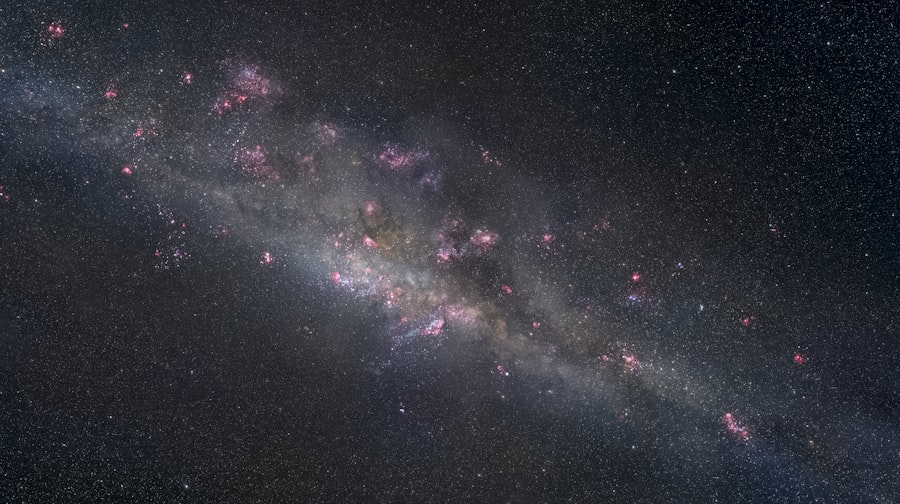
Astrophysicists rely on sophisticated cosmological models and computer simulations to predict the long-term evolution of the universe and its structures. These models incorporate our understanding of gravity, dark energy, and the distribution of matter to project billions of years into the future.
The “Big Rip” and its Implications
One extreme scenario, though less favored by current data, is the “Big Rip.” In this hypothetical future, dark energy would become so potent that it would overcome all forces, from the gravitational binding of galaxies to the atomic forces holding matter together, ultimately tearing everything apart. If the Big Rip were to occur, Laniakea would not merely disperse; it would be utterly annihilated. However, current observations suggest that the density of dark energy is constant or slowly increasing, not rapidly accelerating as required for a Big Rip.
The “Big Freeze” (Heat Death) and Galactic Isolation
A more widely accepted scenario is the “Big Freeze” or “Heat Death” of the universe. In this future, the universe continues to expand and cool indefinitely. Galaxies that are gravitationally bound will eventually merge, forming vast, inert super-galaxies. However, these super-galaxies will become increasingly isolated from each other as the space between them stretches to immense distances. For Laniakea, this means its constituent galaxy clusters, and the merged super-galaxies they form, will become isolated “island universes,” forever cut off from each other by an ever-expanding void.
The Detachment from the Great Attractor
The defining characteristic of Laniakea is the flow of galaxies towards the Great Attractor. As the universe expands and dark energy increasingly dominates, this coherent flow will eventually cease. The gravitational pull of the Great Attractor, while significant locally, will be insufficient to overcome the accelerating expansion across the entire volume of Laniakea. Consequently, the supercluster will lose its structural integrity and its constituent components will drift apart.
The fate of the Laniakea Supercluster, which is home to our Milky Way galaxy, has intrigued astronomers and cosmologists alike as they explore the vastness of the universe. Recent studies suggest that this supercluster may eventually be pulled apart due to the expansion of the universe, leading to a fascinating yet uncertain future. For more insights into cosmic structures and their destinies, you can read a related article on this topic at Freaky Science, where the complexities of superclusters and their interactions are discussed in detail.
The Long Goodbye: A Galactic End
| Metric | Value | Unit | Notes |
|---|---|---|---|
| Diameter | 520 | million light-years | Approximate size of the Laniakea Supercluster |
| Number of Galaxies | 100,000 | galaxies | Estimated count within the supercluster |
| Mass | 10^17 | solar masses | Estimated total mass including dark matter |
| Expansion Rate | ~70 | km/s/Mpc | Hubble constant value affecting supercluster’s fate |
| Fate | Gradual dispersal | N/A | Due to cosmic expansion, galaxies will slowly move apart |
| Timeframe for Significant Change | Billions | years | Timescale over which the supercluster will evolve |
The demise of Laniakea will not be a sudden, cataclysmic event, but rather a slow, protracted process unfolding over billions, if not trillions, of years. It represents a gradual unraveling, a slow unwinding of gravitational bonds as the universe expands into an ever-more dilute and isolated state.
Billions of Years Hence
Imagine a vast, intricate tapestry slowly fraying at its edges. Initially, the central knots remain intact, but the threads connecting them to the wider fabric begin to loosen and eventually break. This is an apt metaphor for Laniakea’s future. The galaxy clusters within Laniakea will persist, merging and evolving, but their connection to the larger supercluster structure will weaken over epochs.
The Age of Isolation
Eventually, the individual galaxy clusters, having coalesced into massive elliptical galaxies, will find themselves alone in an increasingly desolate cosmos. The light from other superclusters, once visible, will be stretched to such extreme wavelengths by the expansion of space that it will become undetectable. Observers in these distant future galaxies will experience a universe seemingly devoid of other cosmic structures, unaware of the vibrant, interconnected cosmos that once existed.
A Legacy of Local Structures
While Laniakea as a supercluster will dissolve, its legacy will persist in the form of the gravitationally bound galaxies and galaxy clusters that once comprised it. These local structures, having survived the supercluster’s fragmentation, will continue their own evolutionary journeys, eventually facing the ultimate fate of all matter in a universe dominated by dark energy: a cold, dim, and largely empty expanse. The supercluster, once a colossal organizing principle, will have dissolved into a collection of isolated islands, each carrying a fragment of its former grandeur.

WATCH NOW ▶️ Our Galaxy Is Sliding Toward a Cosmic Drain
FAQs
What is the Laniakea Supercluster?
The Laniakea Supercluster is a massive galaxy supercluster that includes the Milky Way and approximately 100,000 other galaxies. It spans about 520 million light-years and is one of the largest known structures in the universe.
How was the Laniakea Supercluster discovered?
Laniakea was identified in 2014 by a team of astronomers led by R. Brent Tully. They used galaxy velocity data to map the gravitational flow of galaxies, revealing the boundaries of this supercluster.
What determines the fate of the Laniakea Supercluster?
The fate of the Laniakea Supercluster depends on cosmic expansion, dark energy, and gravitational interactions. Over time, galaxies within the supercluster may move apart due to the universe’s expansion, but gravity may keep some regions bound together.
Will the Laniakea Supercluster remain intact in the future?
Due to the accelerating expansion of the universe driven by dark energy, it is expected that the Laniakea Supercluster will eventually fragment. Only gravitationally bound groups of galaxies will remain together, while others will drift apart.
Why is studying the fate of the Laniakea Supercluster important?
Studying the fate of Laniakea helps astronomers understand large-scale cosmic structures, the influence of dark energy, and the long-term evolution of the universe. It provides insights into how galaxies and clusters interact over billions of years.