
Language syntax serves as the backbone of communication, providing the structural framework that allows individuals to convey complex ideas and emotions. It encompasses the rules and principles that govern the arrangement of words and phrases in sentences, enabling speakers and writers to express themselves clearly and effectively. Syntax is not merely a set of arbitrary rules; it is a dynamic system that evolves over time, reflecting changes in culture, technology, and human cognition.
Understanding syntax is essential for grasping how language functions and how it shapes human interaction. The study of syntax delves into the intricacies of sentence structure, exploring how different languages organize their components. From simple declarative sentences to complex interrogatives, syntax plays a crucial role in determining meaning.
As individuals engage with language, they intuitively navigate these syntactic structures, often without conscious awareness. This seamless integration of syntax into daily communication highlights its fundamental importance in both spoken and written forms of language.
Key Takeaways
- Language syntax is fundamental to structuring communication and conveying meaning effectively.
- Syntax originated as a crucial element in early human societies, shaping social interaction and cognitive growth.
- The development and variation of syntax across language families reflect cultural evolution and diversity.
- Syntax plays a significant role in written language, influencing literacy and information dissemination.
- Advances in technology continue to impact and transform the use and study of language syntax for the future.
The Origins of Language Syntax
The origins of language syntax can be traced back to the earliest forms of human communication. Linguists theorize that primitive languages likely consisted of simple utterances that conveyed immediate needs or emotions. Over time, as human societies became more complex, so too did their means of communication.
The development of syntax allowed for the expression of more intricate thoughts and relationships between ideas, marking a significant evolution in linguistic capability. Archaeological evidence suggests that as early humans began to form social groups and engage in cooperative activities, their language also evolved to reflect these changes. The need for more sophisticated communication likely drove the emergence of syntactic structures.
This evolution was not uniform; different cultures developed unique syntactic rules based on their specific environments and social dynamics. Thus, the origins of syntax are deeply intertwined with the history of human interaction and societal development.
The Role of Syntax in Communication
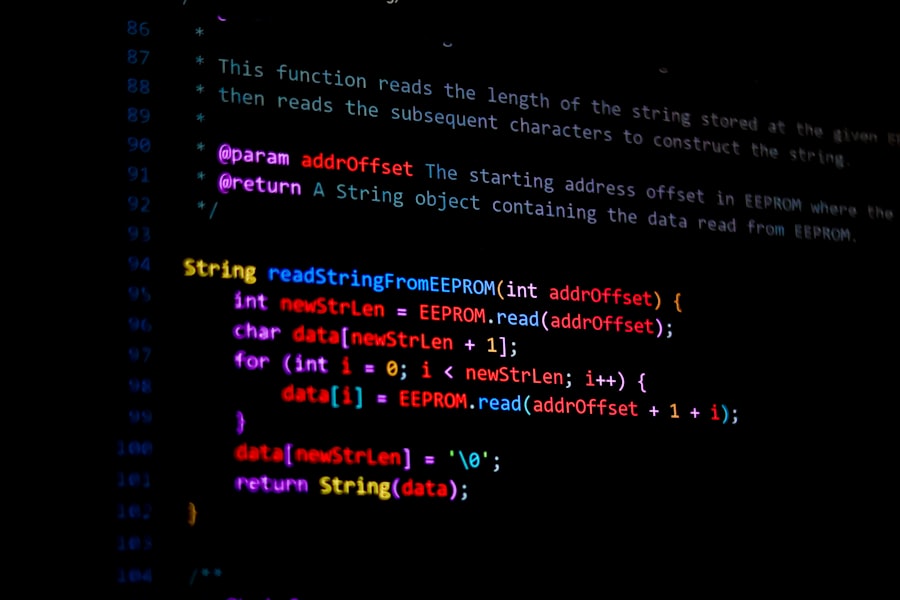
Syntax plays a pivotal role in effective communication by providing clarity and coherence to spoken and written language. It allows speakers to construct sentences that convey precise meanings, ensuring that listeners can interpret messages accurately. For instance, the arrangement of words can significantly alter the meaning of a sentence; consider the difference between “The cat chased the mouse” and “The mouse chased the cat.” Such variations underscore the importance of syntax in conveying intended messages.
Moreover, syntax facilitates the expression of complex ideas by enabling speakers to combine multiple clauses and phrases into cohesive statements. This ability to create compound and complex sentences allows for nuanced expression, which is essential in academic discourse, storytelling, and everyday conversations. Without a robust syntactic framework, communication would be limited to simplistic exchanges, hindering the depth and richness of human interaction.
The Development of Syntax in Early Human Societies
In early human societies, the development of syntax was closely linked to social organization and cultural practices. As communities grew larger and more interconnected, the need for effective communication became increasingly important. Syntax evolved to accommodate this need, allowing individuals to share information about their surroundings, coordinate activities, and establish social bonds.
The emergence of more complex syntactic structures reflected the growing sophistication of human thought and social interaction. Additionally, the development of syntax was influenced by factors such as trade, migration, and contact with other cultures. As groups interacted with one another, they exchanged not only goods but also linguistic features.
This exchange often led to the borrowing of syntactic elements from one language to another, further enriching the linguistic landscape. The interplay between syntax and social dynamics illustrates how language evolves in response to human experiences and relationships.
The Influence of Syntax on Cognitive Development
| Programming Language | Initial Release | Major Syntax Evolution | Year of Syntax Change | Key Syntax Feature Added | Impact on Readability |
|---|---|---|---|---|---|
| Python | 1991 | Introduction of type hints | 2015 (PEP 484) | Optional static typing | Improved code clarity and error detection |
| JavaScript | 1995 | ES6 (ECMAScript 2015) syntax update | 2015 | Arrow functions, let/const, template literals | Enhanced expressiveness and reduced boilerplate |
| C++ | 1985 | C++11 standard | 2011 | Auto keyword, lambda expressions | Improved code conciseness and flexibility |
| Java | 1995 | Introduction of lambda expressions | 2014 (Java 8) | Lambda expressions and streams API | Facilitated functional programming style |
| Ruby | 1995 | Keyword arguments | 2.0 (2013) | Named parameters in methods | Improved method call clarity |
| Swift | 2014 | Swift 5 ABI stability | 2019 | Result type, improved error handling | Enhanced safety and expressiveness |
Research has shown that syntax plays a significant role in cognitive development, particularly in children as they acquire language skills. The ability to understand and produce syntactically correct sentences is closely linked to cognitive processes such as memory, attention, and problem-solving. As children learn to navigate the rules of syntax, they also develop their capacity for abstract thinking and reasoning.
Furthermore, studies suggest that exposure to rich syntactic structures can enhance cognitive flexibility. Children who are exposed to diverse sentence forms are better equipped to understand complex concepts and engage in critical thinking. This relationship between syntax and cognitive development underscores the importance of nurturing linguistic skills from an early age, as it lays the foundation for future learning and intellectual growth.
The Impact of Syntax on Cultural Evolution

Syntax not only shapes individual communication but also influences cultural evolution on a broader scale. Language serves as a vehicle for transmitting cultural values, beliefs, and practices across generations. The syntactic structures inherent in a language can reflect cultural priorities and social norms, thereby shaping how communities perceive and interact with the world around them.
For instance, languages that emphasize certain syntactic forms may prioritize specific cultural concepts or relationships.
As societies evolve, so too does their language; changes in syntax can signal shifts in cultural identity or social dynamics, highlighting the interconnectedness between language and culture.
The Evolution of Syntax in Different Language Families
The evolution of syntax varies significantly across different language families, each exhibiting unique syntactic characteristics shaped by historical and geographical factors. For example, while English follows a subject-verb-object (SVO) order, languages such as Japanese utilize a subject-object-verb (SOV) structure. These differences reflect not only linguistic diversity but also distinct cognitive frameworks that influence how speakers conceptualize relationships between entities.
Moreover, within each language family, dialects may exhibit variations in syntax that further enrich linguistic diversity. These variations can arise from regional influences, social stratification, or contact with other languages. As communities interact and evolve, their syntactic structures may adapt or change altogether, leading to new forms of expression that reflect contemporary realities while preserving historical roots.
The Role of Syntax in Written Language
In written language, syntax plays an equally crucial role as it does in spoken communication. The arrangement of words in writing affects readability and comprehension; well-structured sentences facilitate understanding while poorly constructed ones can lead to confusion. Writers must be mindful of syntactic rules to ensure their ideas are conveyed clearly and effectively to readers.
Additionally, written language allows for greater complexity in syntactic structures compared to spoken language. Writers can take advantage of punctuation marks and formatting techniques to create layered meanings and enhance clarity. This flexibility enables authors to craft intricate narratives or persuasive arguments that engage readers on multiple levels.
Thus, syntax is not only fundamental for effective communication but also serves as a tool for creativity in written expression.
The Influence of Syntax on Technology and Innovation
As technology continues to advance, so too does its impact on language syntax. The rise of digital communication platforms has introduced new syntactic conventions that reflect changing modes of interaction. For instance, the use of abbreviations, emojis, and informal structures has become commonplace in online communication, challenging traditional notions of syntax while also creating new forms of expression.
Moreover, advancements in artificial intelligence and natural language processing have prompted researchers to explore how machines understand and generate human language. These technologies rely heavily on syntactic analysis to interpret meaning accurately. As AI systems become more sophisticated in their understanding of syntax, they may influence how humans communicate with machines and each other in the future.
The Future of Language Syntax
The future of language syntax is likely to be shaped by ongoing social changes, technological advancements, and cultural exchanges. As globalization continues to connect diverse communities, languages may increasingly borrow syntactic features from one another, leading to hybrid forms that reflect a blend of linguistic traditions. This evolution could result in new syntactic norms that challenge established conventions while fostering greater inclusivity.
Additionally, as digital communication becomes more prevalent, the informalization of syntax may continue to influence how people express themselves across various platforms. While this trend may raise concerns about linguistic purity or clarity, it also presents opportunities for creativity and innovation in language use. The future will likely see a dynamic interplay between traditional syntactic structures and emerging forms that reflect contemporary realities.
The Continuing Evolution of Language Syntax
In conclusion, language syntax is a vital component of human communication that has evolved alongside society itself. From its origins in early human interactions to its current manifestations across diverse cultures and technologies, syntax remains a dynamic force shaping how individuals express themselves and connect with one another. As language continues to evolve in response to changing social landscapes and technological advancements, so too will its syntactic structures.
The ongoing evolution of syntax reflects not only linguistic diversity but also the adaptability of human thought and culture. As individuals navigate an increasingly interconnected world, understanding the nuances of syntax will be essential for effective communication across various contexts. Ultimately, the study of language syntax offers valuable insights into the complexities of human interaction and the ever-changing nature of language itself.
The evolution of language syntax is a fascinating topic that sheds light on how communication has transformed over time. For a deeper understanding of this subject, you can explore the article on language development and its implications on modern communication found at Freaky Science. This resource provides insights into the historical changes in syntax and how they reflect cultural shifts.
WATCH THIS! 🌌 Where Is Everybody? The Discovery That Would End Civilization 🌌
FAQs
What is language syntax evolution?
Language syntax evolution refers to the changes and developments in the rules and structures that govern how words and phrases are arranged to create meaningful sentences in a language over time.
Why does language syntax evolve?
Language syntax evolves due to various factors including cultural shifts, contact with other languages, simplification for ease of communication, and changes in social and cognitive needs of speakers.
How long does it take for syntax to evolve?
The evolution of syntax can occur over decades, centuries, or even millennia, depending on the language and the influences acting upon it.
Can syntax evolution be observed in modern languages?
Yes, syntax evolution is ongoing and can be observed in modern languages through changes in grammar rules, sentence structures, and usage patterns influenced by technology, globalization, and social trends.
What are some examples of syntax changes in languages?
Examples include the loss of case endings in English, the shift from Old English word order to Modern English syntax, and the simplification of verb conjugations in many Romance languages.
How do linguists study syntax evolution?
Linguists study syntax evolution by analyzing historical texts, comparing related languages, using computational models, and examining language acquisition and usage patterns.
Does syntax evolution affect language comprehension?
Syntax evolution can affect comprehension, especially between speakers of different generations or dialects, but languages typically evolve in ways that maintain or enhance communicative efficiency.
Is syntax evolution the same as language change?
Syntax evolution is a subset of language change, specifically focusing on changes in sentence structure and grammatical rules, whereas language change can also include phonetic, lexical, and semantic changes.
Can syntax evolution lead to the creation of new languages?
Yes, over long periods, significant syntactic changes combined with other linguistic shifts can contribute to the divergence of dialects and the eventual formation of new languages.
What role does technology play in syntax evolution?
Technology influences syntax evolution by introducing new vocabulary, communication styles (e.g., texting, social media), and language contact, which can accelerate changes in syntax and usage.