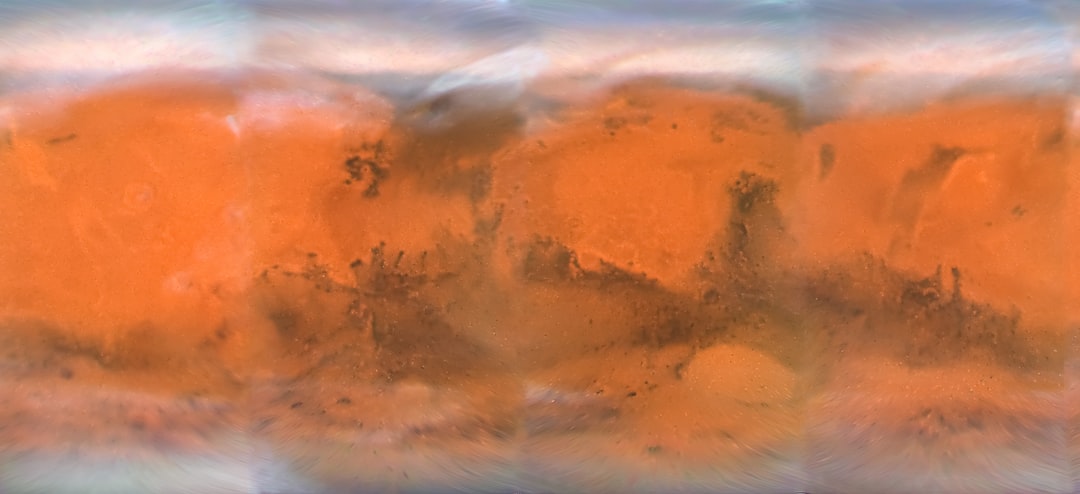
The quest for microbial life on Mars has captivated scientists and the public alike for decades. Mars, often referred to as the “Red Planet,” has long been a focal point in the search for extraterrestrial life due to its similarities to Earth. The presence of water, albeit in frozen form, and the planet’s geological features suggest that it may have once harbored conditions suitable for life.
As researchers delve deeper into the Martian landscape, they are not only investigating the planet’s past but also exploring the possibility that microbial organisms may still exist beneath its surface. This exploration raises profound questions about the nature of life itself and humanity’s place in the cosmos. The significance of finding microbial life on Mars extends beyond mere curiosity; it could fundamentally alter our understanding of biology and the conditions necessary for life.
If life is discovered, it would suggest that life can arise in diverse environments, potentially leading to a reevaluation of where and how scientists search for life beyond Earth. The implications of such a discovery could resonate throughout various fields, including astrobiology, planetary science, and even philosophy, as humanity grapples with the reality of not being alone in the universe.
Key Takeaways
- Mars exploration has focused extensively on finding signs of microbial life, using advanced technology and methods.
- Potential indicators of microbial life include specific chemical signatures and environmental conditions favorable to microbes.
- Detecting microbial life on Mars faces significant challenges due to harsh conditions and limitations of current instruments.
- Discovering microbial life on Mars would profoundly impact our understanding of life’s existence beyond Earth.
- International collaboration and future missions are crucial for advancing research and addressing ethical considerations in Mars exploration.
History of Mars exploration and search for microbial life
The history of Mars exploration is a tale of ambition, innovation, and discovery. It began in earnest in the 1960s with the Mariner missions, which provided the first close-up images of the Martian surface. These early missions revealed a planet that was both intriguing and enigmatic, with features that resembled dry riverbeds and polar ice caps.
As technology advanced, so did the capabilities of spacecraft sent to Mars. The Viking missions in the 1970s were particularly significant, as they included experiments designed to detect signs of life. Although these experiments yielded inconclusive results, they laid the groundwork for future explorations.
In the decades that followed, numerous missions have been launched to study Mars, each contributing valuable data to the ongoing search for microbial life. The Mars Pathfinder mission in 1997 and the Mars Exploration Rovers, Spirit and Opportunity, which landed in 2004, provided further evidence of past water activity on the planet. More recently, the Curiosity rover has been exploring Gale Crater, analyzing soil samples and searching for organic compounds that could indicate past or present life.
Each mission has built upon the findings of its predecessors, creating a rich tapestry of knowledge about Mars and its potential to support life.
Potential signs of microbial life on Mars
The search for microbial life on Mars has led scientists to identify several potential signs that could indicate its existence. One of the most compelling pieces of evidence comes from the detection of methane in the Martian atmosphere. Methane is a gas that can be produced by biological processes, and its seasonal fluctuations suggest that there may be active sources on the planet.
While methane can also be generated through geological processes, its presence raises intriguing questions about possible microbial activity beneath the surface. In addition to methane, researchers have discovered various organic molecules in Martian soil samples collected by rovers. These organic compounds are essential building blocks for life as we know it and could provide clues about past biological activity.
Furthermore, certain geological formations on Mars, such as recurring slope lineae—dark streaks that appear during warmer months—have been hypothesized to be caused by briny liquid water flows, creating an environment where microbial life could thrive. Each of these findings adds to the growing body of evidence suggesting that Mars may have once been—or may still be—a habitat for microbial organisms.
Methods and technology used to search for microbial life on Mars
The methods and technologies employed in the search for microbial life on Mars are as diverse as they are sophisticated. Robotic missions equipped with advanced scientific instruments have become essential tools in this endeavor. Rovers like Curiosity and Perseverance are outfitted with a suite of analytical devices capable of conducting in-situ analysis of soil and rock samples.
These instruments can identify minerals, analyze chemical compositions, and even detect organic molecules—all critical components in assessing the planet’s habitability. In addition to rovers, orbiters play a crucial role in the search for microbial life by providing a broader perspective of Martian geology and climate. Instruments aboard spacecraft like Mars Reconnaissance Orbiter (MRO) have mapped surface features and detected water ice deposits from orbit.
These observations help scientists identify promising landing sites for future missions aimed at directly searching for signs of life. Moreover, advancements in remote sensing technology allow researchers to analyze atmospheric gases and surface materials from great distances, enhancing their understanding of Martian conditions without needing to land on the surface.
Challenges and limitations in detecting microbial life on Mars
| Metric | Value | Notes |
|---|---|---|
| Estimated Microbial Cell Density | 10 – 100 cells/cm³ | Based on analogs from Earth’s extreme environments |
| Potential Habitable Zones | Subsurface ice-rich regions | Below 5 meters depth where liquid water may exist |
| Detected Organic Molecules | Varied (e.g., chlorobenzene, thiophenes) | From Mars rover sample analysis |
| Radiation Levels on Surface | ~0.67 millisieverts/day | High radiation limits surface microbial survival |
| Temperature Range | -125°C to 20°C | Extreme fluctuations affect microbial viability |
| Water Activity (aw) | 0.6 – 0.8 (estimated in briny subsurface) | Lower than Earth’s typical microbial habitats |
| pH Range | 3 – 9 (estimated) | Varies with soil chemistry and brine composition |
| Key Microbial Metabolisms Hypothesized | Chemoautotrophy, methanogenesis | Based on Earth analogs and methane detections |
Despite significant advancements in technology and methodology, detecting microbial life on Mars remains fraught with challenges and limitations. One major hurdle is the harsh environmental conditions present on the planet’s surface. Extreme temperatures, high radiation levels, and a thin atmosphere create an inhospitable environment for life as we know it.
Another challenge lies in distinguishing between biological and non-biological processes that could produce similar signatures. For instance, organic molecules found on Mars could be remnants of ancient biological activity or products of abiotic chemical reactions.
This ambiguity necessitates rigorous testing and validation to ensure that any findings are accurately interpreted. Furthermore, contamination from Earth-based organisms poses a risk during sample collection and analysis, making it imperative for missions to adhere to strict planetary protection protocols.
Implications of discovering microbial life on Mars

The discovery of microbial life on Mars would have profound implications for science and society at large. It would not only confirm that life can exist beyond Earth but also challenge existing paradigms about where and how life can thrive. Such a finding would prompt a reevaluation of astrobiological theories and could lead to new avenues of research focused on understanding life’s resilience in extreme environments.
Moreover, discovering extraterrestrial microbial life could ignite philosophical debates about humanity’s place in the universe. It would raise questions about the uniqueness of Earth and our understanding of life’s origins. The implications would extend beyond academia; they could influence public perception of space exploration and inspire future generations to pursue careers in science and technology.
Potential impact on our understanding of life in the universe
The potential impact of discovering microbial life on Mars extends far beyond our own solar system; it could reshape humanity’s understanding of life throughout the universe. If life is found on Mars, it would suggest that similar conditions elsewhere—on moons like Europa or Enceladus or exoplanets within habitable zones—might also harbor life forms. This realization could expand the search for extraterrestrial life beyond our immediate neighborhood in space.
Furthermore, understanding how Martian microbes adapt to their environment could provide insights into life’s resilience under extreme conditions. This knowledge might inform astrobiological research aimed at identifying biosignatures on distant planets or moons. The implications for evolutionary biology could also be significant; studying Martian microbes might reveal alternative pathways for life’s development that differ from those observed on Earth.
Ethical considerations and precautions in studying Mars microbial life
As scientists pursue the search for microbial life on Mars, ethical considerations must guide their efforts.
To mitigate these risks, space agencies adhere to strict planetary protection protocols designed to prevent biological contamination during missions.
Additionally, ethical considerations extend to how humanity would interact with any discovered Martian life forms. Questions arise regarding whether such organisms should be studied or preserved in their natural habitat. The implications of manipulating or altering Martian ecosystems must be carefully weighed against scientific curiosity and exploration goals.
As humanity stands on the brink of potentially groundbreaking discoveries, it is crucial to approach these endeavors with responsibility and foresight.
Future missions and research plans to further investigate Mars microbial life
Looking ahead, several ambitious missions are planned to further investigate microbial life on Mars. NASA’s Perseverance rover is currently exploring Jezero Crater, an ancient lakebed believed to have once supported microbial life. Its primary mission includes collecting soil samples that will eventually be returned to Earth for detailed analysis through a collaborative effort with ESA’s Sample Return mission.
In addition to Perseverance, future missions aim to explore subsurface environments where conditions may be more favorable for microbial survival. Concepts such as drilling into Martian ice caps or exploring lava tubes are being considered as potential avenues for uncovering hidden biospheres. These missions will not only enhance our understanding of Mars but also refine our search strategies for detecting signs of life.
Collaboration and international efforts in exploring Mars microbial life
The exploration of Mars is increasingly becoming a collaborative effort among nations and space agencies worldwide. International partnerships have emerged as essential components in advancing our understanding of the Red Planet and its potential for harboring microbial life. NASA’s collaboration with ESA on sample return missions exemplifies how shared resources and expertise can enhance scientific outcomes.
Moreover, countries like China, India, and Russia are also investing in their own Mars exploration programs, contributing diverse perspectives and technologies to the global effort. This collaborative spirit fosters innovation while promoting peaceful cooperation in space exploration—a vital aspect as humanity seeks answers about life’s existence beyond Earth.
Public interest and excitement surrounding the potential discovery of Mars microbial life
The prospect of discovering microbial life on Mars has generated immense public interest and excitement across the globe. Media coverage, documentaries, and educational programs have brought attention to this captivating subject, inspiring curiosity about our universe’s mysteries. Social media platforms buzz with discussions about potential findings from ongoing missions, reflecting a collective fascination with what lies beyond our planet.
Public engagement plays a crucial role in shaping perceptions about space exploration and its significance for humanity’s future. As scientists continue their quest for answers regarding Martian microbial life, they also have an opportunity to foster a sense of wonder and connection among people from all walks of life—reminding them that we are all part of this grand journey into the cosmos. In conclusion, the search for microbial life on Mars represents one of humanity’s most ambitious scientific endeavors.
As researchers navigate challenges while employing cutting-edge technologies, they inch closer to answering fundamental questions about life’s existence beyond Earth. The implications of such discoveries extend far beyond science; they touch upon philosophy, ethics, and our collective identity as explorers seeking knowledge about our place in an expansive universe filled with possibilities yet to be uncovered.
Recent studies have sparked interest in the possibility of microbial life on Mars, with researchers exploring the planet’s subsurface for signs of ancient organisms. A related article that delves deeper into this fascinating topic can be found at Freaky Science, where scientists discuss the implications of their findings and what they could mean for future exploration missions.
WATCH THIS! 🌌 Where Is Everybody? The Discovery That Would End Civilization 🌌
FAQs
What evidence suggests that microbial life could have existed on Mars?
Scientists have found signs such as ancient riverbeds, minerals formed in water, and organic molecules on Mars, indicating that the planet once had conditions suitable for microbial life.
Has any microbial life been discovered on Mars so far?
No direct evidence of living microbes has been found on Mars to date. Current missions continue to search for signs of past or present microbial life.
What conditions on Mars could support microbial life?
Microbial life could potentially survive in subsurface environments where liquid water might exist, protected from harsh surface radiation and extreme temperatures.
Which missions are focused on searching for microbial life on Mars?
NASA’s Perseverance rover, ESA’s ExoMars mission, and other robotic explorers are equipped with instruments designed to detect biosignatures and analyze soil and rock samples for signs of microbial life.
Why is the search for microbial life on Mars important?
Discovering microbial life on Mars would provide insights into the origins of life, the potential for life elsewhere in the universe, and inform future human exploration of the planet.
Can Earth microbes survive on Mars?
Some extremophiles on Earth can survive harsh conditions similar to those on Mars, but the planet’s surface environment is generally too extreme for most Earth microbes to survive without protection.
What challenges do scientists face when searching for microbial life on Mars?
Challenges include the planet’s harsh surface conditions, contamination risks from Earth microbes, limited access to subsurface environments, and the difficulty of interpreting ambiguous biosignatures.
How do scientists prevent contamination of Mars with Earth microbes?
Space agencies follow strict planetary protection protocols, including sterilizing spacecraft and instruments, to minimize the risk of contaminating Mars with Earth life.