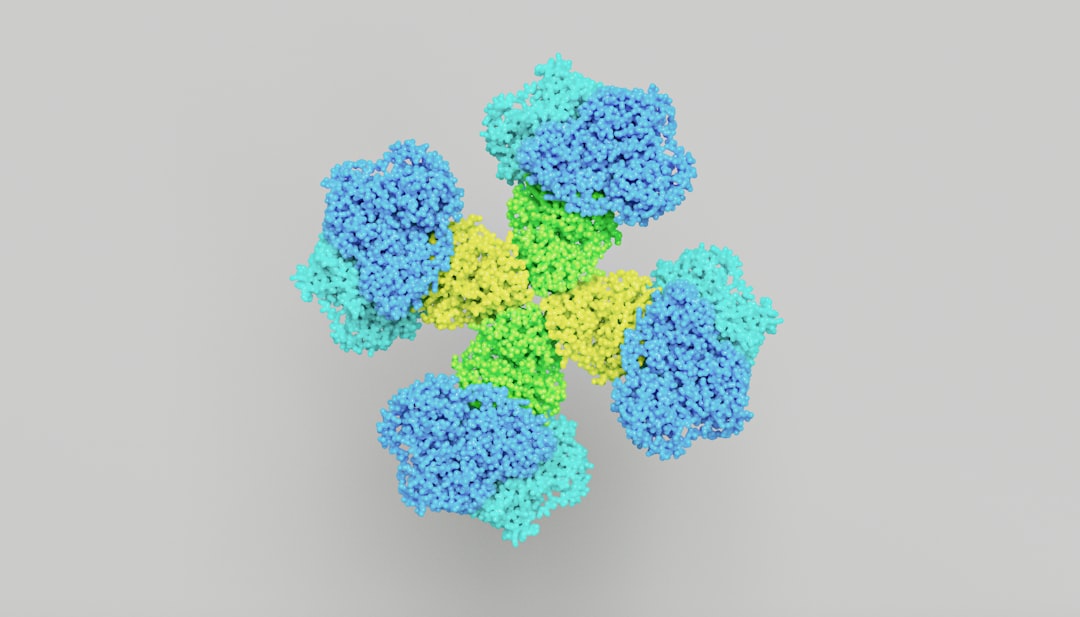
You stand before a mirror, and observe your reflection. You are a unique entity, a specific arrangement of matter. This seems obvious, doesn’t it? You are not, for instance, the mirror image of yourself, a version of you that is your opposite in terms of left and right. This fundamental difference, the distinction between two forms that are mirror images but cannot be superimposed, is the very essence of molecular asymmetry. And it was in the shimmering, crystal-laden world of tartaric acid that Louis Pasteur, through meticulous observation and a certain kind of intellectual humility, first glimpsed this profound characteristic of the universe.
Before Pasteur’s groundbreaking work, the scientific community was grappling with a peculiar phenomenon observed in certain substances, most notably tartaric acid. This crystalline compound, essential to winemaking and found in grapes, exhibited an anomaly that defied easy explanation. When polarized light – light waves vibrating in a single plane – was passed through a solution of tartaric acid, the plane of polarization was rotated. Some samples of tartaric acid rotated the light to the right, while others rotated it to the left, a characteristic known as optical activity.
Crystals that Mimicked Left and Right Hands
The crucial observation that would set Pasteur on his path came from examining the crystals of tartaric acid themselves. Two distinct sets of crystals were identified, each with a distinctive, three-dimensional arrangement of facets. One set was the mirror image of the other. Imagine a pair of gloves: one for your left hand, one for your right. They are identical in shape, yet you cannot wear the left glove on your right hand, nor the right glove on your left. They are distinct, non-superimposable mirror images.
Biot’s Observation: A Puzzling Dual Nature
Jean-Baptiste Biot, a respected French physicist, had previously observed that while ordinary tartaric acid (often derived from wine lees) rotated polarized light, a synthetic form of tartaric acid, known as racemic acid, did not. This racemic acid, a product of chemical synthesis, was a racemic mixture, containing equal parts of two types of tartaric acid molecules that were, in fact, mirror images of each other. Biot’s findings presented a puzzle: why did the naturally occurring substance have this optical property, while its chemically identical synthetic counterpart remained optically inactive?
The Chemical Equivalence and the Optical Difference
The prevailing chemical understanding at the time suggested that substances with the same chemical formula and structure should behave identically. Tartaric acid and racemic acid shared the same atomic composition and connectivity. Chemically, they were one and the same. Yet, their behavior with polarized light was dramatically different. This discrepancy was a thorn in the side of established chemical theory, a loud dissonance in an otherwise harmonious symphony of molecular understanding.
A Crucial Insight: The Hidden Structural Difference
Pasteur, recognizing the profundity of this discrepancy, began to suspect that the difference lay not in the chemical bonds between atoms, but in their spatial arrangement. He theorized that the two forms of tartaric acid, the optically active one and the optically inactive one, must possess differing three-dimensional structures, even though their constituent atoms were the same. This was a bold hypothesis, pushing the boundaries of what was understood about molecular structure.
Louis Pasteur’s groundbreaking discovery of molecular asymmetry laid the foundation for our understanding of stereochemistry and its implications in various scientific fields. For a deeper exploration of this topic, you can refer to a related article that discusses the significance of Pasteur’s work and its impact on modern science. To read more about it, visit Freaky Science.
Pasteur’s Diligent Hands: Separating the Twins
Fueled by his nascent hypothesis, Pasteur embarked on a series of meticulous experiments. He obtained samples of racemic acid and, armed with a magnifying glass, began meticulously examining the crystals under immense magnification. This was not a task for the impatient. It required a keen eye, steady hands, and an unwavering dedication to detail.
The Painstaking Process of Manual Separation
Pasteur’s breakthrough came through sheer manual dexterity and observation. He noticed that the racemic acid, when crystallized, formed a mixture of the two distinct crystal types – the mirror image twins he had suspected. With tweezers, he began the arduous task of physically separating these individual crystals, sorting them into two piles. One pile consisted of crystals with a specific orientation relative to their facets, while the other pile contained their mirror image counterparts.
Sorting the Mirror Twins: A Labour of Love
This separation was incredibly time-consuming and painstaking. Each tiny crystal had to be identified and moved. Imagine sorting grains of sand, each with a subtle, but critical, difference in shape. This was Pasteur’s reality for weeks. He worked in his laboratory, under the glow of gas lamps, meticulously handling these microscopic structures. His focus was absolute, his determination unwavering.
Dissolving the Separated Crystals: The Moment of Truth
Once he had successfully separated the two types of crystals, Pasteur subjected them to a crucial test. He dissolved each collection of crystals in water, creating two separate solutions. He then introduced polarized light to each solution. The result was a revelation.
The Rotation Revealed: A Tale of Two Opposites
The solution made from one set of crystals rotated the plane of polarized light to the right. The solution made from the other set of crystals, the mirror image twins, rotated the plane of polarized light to the left by the exact same angle. The optically inactive racemic mixture, when separated into its constituent enantiomers, had yielded two optically active forms, each with opposite rotational effects.
The Birth of Chirality: Molecules with Handedness
Pasteur’s discovery was not merely about tartaric acid; it was about a fundamental property of matter. He had demonstrated that molecules, like hands, could possess “handedness.” This concept, which he would later refer to as chirality (from the Greek word for hand, cheir), became a cornerstone of modern chemistry.
Defining Enantiomers: Mirror Images, Different Identities
The two forms of tartaric acid that Pasteur had painstakingly separated were now understood to be enantiomers. Enantiomers are stereoisomers that are non-superimposable mirror images of each other. They share the same chemical formula and connectivity but differ in their three-dimensional arrangement of atoms. Think of them as two dancers performing the exact same choreography but facing opposite directions.
Beyond Tartaric Acid: A Universal Principle
Pasteur’s hypothesis, now proven, extended far beyond tartaric acid. He proposed that this phenomenon of molecular asymmetry was a widespread property of organic molecules, many of which are essential for life. This insight provided a potential explanation for a myriad of biological phenomena that had previously remained enigmatic.
The Significance of Spatial Arrangement
The spatial arrangement of atoms within a molecule, Pasteur showed, was not just a secondary detail; it was a crucial determinant of its physical and, importantly, its biological properties. This was a paradigm shift. It meant that two molecules that were chemically identical in terms of the types and number of atoms they contained, and their connections, could nevertheless behave in remarkably different ways simply due to their three-dimensional shape. Imagine two keys cut from the same blank: a slight difference in the teeth can render one useless for a particular lock.
A Foundation for Understanding Life’s Complexity
This understanding of molecular handedness laid the groundwork for understanding the intricate workings of biological systems. Enzymes, receptors, and other biological molecules often exhibit a high degree of specificity, meaning they interact with other molecules in a precise, lock-and-key fashion. Chirality provides the basis for this specificity.
The Biological Implications: Life Favors One Handedness
Pasteur’s insights into molecular asymmetry had profound implications for the field of biology. He began to suspect that life itself might be inherently chiral, preferring one enantiomer over its mirror image. This was a revolutionary idea, challenging the notion that biological processes were purely chemical and therefore indifferent to molecular handedness.
Biological Specificity and Chiral Recognition
You experience this principle every day, perhaps without realizing it. Many drugs, for example, are chiral. One enantiomer of a drug might be therapeutically effective, while its mirror image enantiomer might be inactive or even harmful. The thalidomide tragedy, where one enantiomer of the drug was a sedative and the other caused severe birth defects, remains a stark reminder of this critical difference. Biological molecules, like enzymes and receptors, have specific three-dimensional shapes that allow them to bind to other molecules. This binding is often highly stereoselective, meaning it will only occur with one enantiomer and not its mirror image.
The Role of Enzymes: Biological Architects
Enzymes, the workhorses of biological reactions, are themselves chiral. Their active sites, the regions where chemical reactions occur, are shaped in such a way that they can accommodate and catalyze reactions involving only one specific enantiomer of a substrate. It’s like a hand fitting perfectly into a glove. The enzyme’s active site is the glove, and the substrate molecule of the correct handedness is the hand.
The Origin of Life’s Chirality: A Lingering Question
While Pasteur established that biological systems are chiral, the ultimate origin of this homochirality (the preference for a single handedness) in life remains a subject of ongoing scientific inquiry. How did early life on Earth ‘choose’ a particular handedness for its building blocks, such as amino acids and sugars?
From Space to Earth: Theories of Chiral Selection
Various theories propose mechanisms for this initial bias. Some suggest that asymmetry in the fundamental forces of nature, or radiation from distant celestial objects like quasars, might have played a role. Others explore extraterrestrial origins, contemplating whether chiral molecules from meteorites could have seeded Earth with this preference. Unraveling this mystery is like trying to reconstruct the very first brushstrokes on the canvas of life.
Louis Pasteur’s groundbreaking discovery of molecular asymmetry not only revolutionized the field of chemistry but also laid the foundation for our understanding of chiral molecules. His work demonstrated how certain substances can exist in two mirror-image forms, which has profound implications in various scientific disciplines, including pharmaceuticals and biochemistry. For those interested in exploring more about the impact of Pasteur’s findings on modern science, you can read a related article that delves deeper into this fascinating topic at Freaky Science.
Legacy and Enduring Impact: A Foundational Pillar of Chemistry
| Metric | Details |
|---|---|
| Scientist | Louis Pasteur |
| Discovery | Molecular Asymmetry (Chirality) |
| Year | 1848 |
| Key Experiment | Separation of tartaric acid crystals into left- and right-handed forms |
| Significance | First demonstration of molecular chirality and optical isomerism |
| Impact on Chemistry | Foundation for stereochemistry and understanding of enantiomers |
| Optical Activity | Observed difference in rotation of plane-polarized light by enantiomers |
| Applications | Pharmaceuticals, biochemistry, and molecular biology |
Louis Pasteur’s discovery of molecular asymmetry and his subsequent work on chirality represent a monumental leap in our understanding of the molecular world. It wasn’t just a curious observation about a particular acid; it was the unveiling of a fundamental principle that underpins much of chemistry and biology.
The Chirality Revolution: Shaping Modern Science
The concept of chirality is now woven into the very fabric of modern scientific disciplines. From drug development and materials science to molecular biology and astrobiology, the understanding and manipulation of chiral molecules are paramount. When you encounter a new pharmaceutical, or study the building blocks of life, you are interacting with the legacy of Pasteur’s painstaking work.
The Future of Chiral Chemistry: Precision and Innovation
The ongoing research into enantioselective synthesis – methods for creating one enantiomer of a chiral molecule preferentially over the other – is a direct descendant of Pasteur’s initial separation. This allows for the creation of purer drugs with fewer side effects, the development of novel catalysts, and a deeper understanding of complex biological processes.
Pasteur’s Humility: A Lesson for Aspiring Scientists
It is important to note that Pasteur’s approach was characterized by meticulous observation and a deep respect for experimental evidence. He did not jump to grand conclusions; rather, he built his theories brick by painstaking brick, based onwhat the experiments revealed. This stands as a powerful example for anyone venturing into the pursuit of knowledge: the universe offers its secrets to those who are willing to look closely, patiently, and without prejudice. Your own journey of discovery, whether in a laboratory or in the broader world, will be enriched by this spirit of humble inquiry.
FAQs
What is molecular asymmetry as discovered by Louis Pasteur?
Molecular asymmetry refers to the property of certain molecules that are not superimposable on their mirror images. Louis Pasteur discovered this phenomenon when he observed that crystals of tartaric acid existed in two forms that were mirror images of each other, which was a foundational finding in stereochemistry.
How did Louis Pasteur discover molecular asymmetry?
Louis Pasteur discovered molecular asymmetry in 1848 by studying the crystals of sodium ammonium tartrate. He noticed that the crystals had two distinct shapes that were mirror images, and he manually separated them. This separation demonstrated that molecules could have different spatial arrangements, leading to different optical activities.
Why was Pasteur’s discovery of molecular asymmetry important?
Pasteur’s discovery was important because it provided the first evidence of chirality in molecules, which explained why some substances rotate plane-polarized light differently. This finding laid the groundwork for the field of stereochemistry and had significant implications in chemistry, biology, and pharmacology.
What impact did the discovery of molecular asymmetry have on science?
The discovery of molecular asymmetry influenced the understanding of molecular structures and their interactions. It helped scientists comprehend the behavior of biomolecules like amino acids and sugars, which are chiral, and it has been crucial in the development of drugs and understanding biological processes.
Did Louis Pasteur’s discovery relate to his other scientific work?
Yes, Pasteur’s work on molecular asymmetry was part of his broader scientific contributions, including studies on fermentation and microorganisms. His understanding of molecular structures and their properties complemented his research in microbiology and helped establish the connection between chemistry and biology.