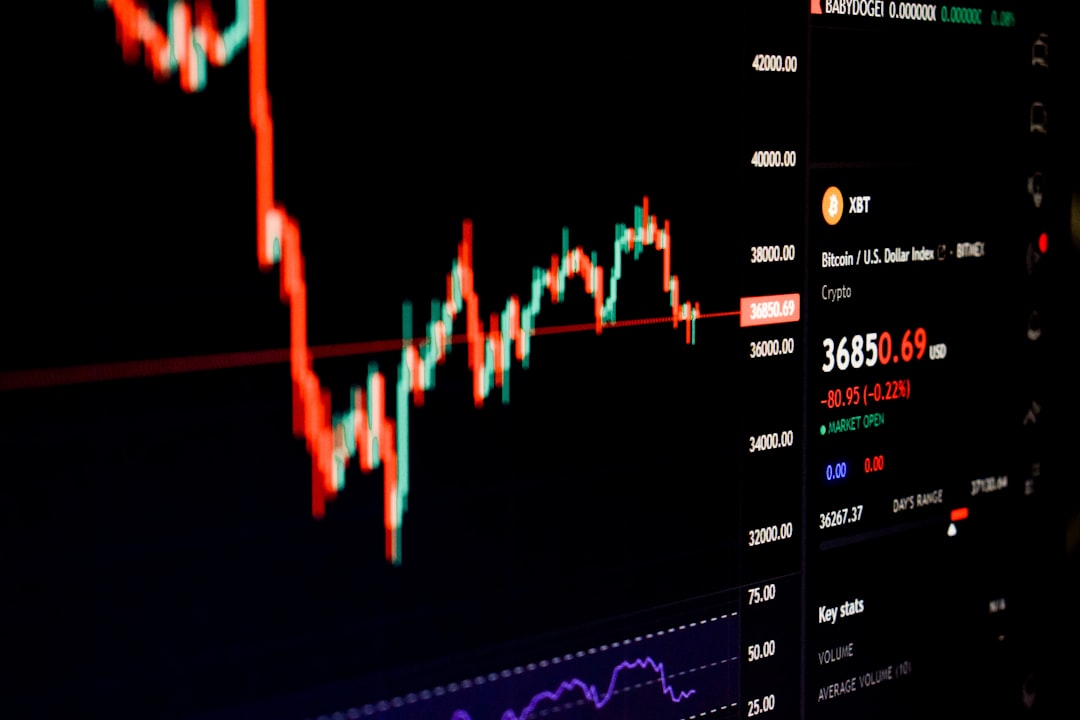
The financial markets, traditionally viewed as intricate mechanisms driven by predictable forces, are increasingly characterized by profound disruption. The once-clear signposts of market timing – indicators that investors sought to interpret for strategic entry and exit points – have become obscured, creating an environment of heightened uncertainty. This article explores the various facets of this disruption, offering insights into its origins, manifestations, and potential strategies for navigating this evolving landscape.
For decades, investors and analysts relied on a repertoire of established methodologies to predict market movements. These paradigms, often rooted in historical data and economic theory, formed the bedrock of market timing strategies. However, several interconnected factors are currently undermining their efficacy. You can learn more about the earth’s magnetic field and its effects on our planet.
The Rise of High-Frequency Trading (HFT)
High-frequency trading, a phenomenon characterized by automated trading systems executing an enormous number of orders at extremely high speeds, has fundamentally altered market microstructure.
Algorithmic Dominance
HFT algorithms, operating on milliseconds timescales, capitalize on minuscule price discrepancies and fleeting market signals. This algorithmic dominance can create price volatility that is difficult for human traders to anticipate or interpret. The sheer volume and speed of these transactions can mask underlying fundamental value changes, making it difficult to discern genuine market trends from ephemeral algorithmic noise.
Micro-Volatility and Flash Crashes
The prevalence of HFT is often linked to increased micro-volatility, where rapid, albeit temporary, price swings occur. Furthermore, concerns persist regarding the potential for HFT to contribute to “flash crashes,” sudden and precipitous market declines triggered by algorithmic feedback loops. These events, while often quickly corrected, underscore the fragility introduced by highly automated trading environments.
The Blurring Lines of Information Asymmetry
Information, once a relatively scarce and valuable commodity, is now ubiquitous. While this democratization of information might seem beneficial, it has paradoxically complicated market timing.
Social Media and Sentiment Analysis
The proliferation of social media platforms has introduced a new, often unpredictable, driver of market sentiment. News breaks instantaneously, rumor mills churn relentlessly, and collective emotional responses can trigger rapid price swings. Analyzing this torrent of unstructured data – sentiment analysis – has become a burgeoning field, yet its predictive power remains contested and highly volatile.
Information Overload and Misinformation
The sheer volume of financial news, analysis, and commentary can overwhelm investors, making it challenging to distill actionable insights from the noise. Moreover, the ease with which misinformation can spread presents a significant challenge. A single tweet, rumor, or misreported fact can trigger disproportionate market reactions, creating false signals for traditional timing models.
Geopolitical Instability and Unpredictable Shocks
The globalized nature of modern finance means that markets are increasingly susceptible to geopolitical events and unforeseen exogenous shocks.
Supply Chain Vulnerabilities
Recent global events have highlighted the fragility of interconnected global supply chains. Disruptions in one region can ripple outwards, impacting production, consumer prices, and corporate earnings across the globe. These sudden and often unpredictable events can render traditional economic FORECASTING models less reliable, making it harder to time market entry or exit based on fundamentals.
Political Risk Premiums
Political instability, trade disputes, and international conflicts inject significant uncertainty into financial markets. Investors react swiftly to perceived increases in political risk, leading to sharp shifts in asset allocation and market sentiment. These events are inherently difficult to predict with precision, thus challenging market timing efforts that rely on stable geopolitical environments.
In recent discussions about financial market timing disruption, an insightful article can be found on Freaky Science that delves into the complexities of market fluctuations and their impact on investment strategies. This piece highlights the challenges investors face in predicting market movements and offers valuable perspectives on navigating these uncertainties. For more information, you can read the article here: Freaky Science.
Adapting to the New Market Dynamic
In this era of disrupted market timing, a re-evaluation of traditional investment strategies is imperative. Investors must develop a more resilient and adaptive approach.
Embracing a Long-Term Perspective
The increased short-term volatility and unpredictability render short-term market timing strategies increasingly perilous.
Patience as a Virtue
Adopting a long-term investment horizon allows investors to weather temporary market fluctuations without succumbing to emotional decision-making. By focusing on fundamental value and long-term growth prospects, investors can mitigate the impact of daily or weekly market noise. Think of it as navigating a stormy sea not by trying to outrun every squall, but by plotting a course to a distant, stable harbor.
Diversification as a Shield
Robust portfolio diversification across asset classes, geographies, and industries remains a cornerstone of prudent investing. Diversification helps to cushion the blow of underperforming assets and reduces overall portfolio risk in an environment where individual sectors or companies can experience sudden and severe disruptions.
The Role of Data Science and Machine Learning
While traditional models falter, advanced analytical techniques offer new avenues for understanding and potentially navigating market complexities.
Pattern Recognition Beyond Human Capacity
Machine learning algorithms can process vast datasets and identify subtle patterns and correlations that are imperceptible to human analysts. These algorithms can be trained on historical market data, economic indicators, news sentiment, and even social media activity to identify emerging trends or potential market shifts.
Predictive Modeling Challenges and Limitations
It is crucial to acknowledge that even sophisticated machine learning models are not infallible. They are only as good as the data they are trained on, and they can be susceptible to overfitting or generating spurious correlations. Furthermore, truly novel events, unrepresented in historical data, can still confound even the most advanced predictive models. Machine learning should be viewed as an augmentative tool, a sophisticated compass, rather than a perfect crystal ball.
A Focus on Risk Management
In an uncertain environment, robust risk management moves from a secondary concern to a primary imperative.
Defining Your Risk Tolerance
A clear understanding of one’s personal risk tolerance is paramount. This involves not only assessing financial capacity for loss but also psychological resilience to market downturns. Knowing your risk limits prevents impulsive decisions driven by fear or greed.
Implementing Stop-Loss Orders and Hedging Strategies
For more active investors, employing stop-loss orders can help limit potential losses on individual positions. Additionally, hedging strategies, such as options or futures, can be utilized to mitigate specific risks within a portfolio. These are akin to having an emergency brake or a life raft when encountering unexpected currents.
The Future of Market Timing: Agility and Resilience

The disruption to traditional market timing is not a temporary anomaly but a fundamental shift in the financial landscape. The future will likely favor investors who embrace adaptability and cultivate resilience.
Continuous Learning and Adaptability
The financial markets are dynamic entities. What works today may not work tomorrow. Therefore, a commitment to continuous learning, staying abreast of technological advancements, and understanding evolving geopolitical and economic forces is crucial. Investors must be prepared to re-evaluate their assumptions and strategies regularly.
Embracing New Data Sources
Beyond traditional financial statements and economic reports, investors should consider incorporating alternative data sources into their analysis. Satellite imagery for retail traffic, anonymized credit card data for consumer spending, or even cargo ship tracking for global trade flows, can offer unique insights that augment conventional analysis.
The Human Element: Judgment and Behavioral Awareness
Despite the proliferation of algorithms and data, the human element remains vital.
Overcoming Cognitive Biases
Investors are susceptible to a range of cognitive biases, such as confirmation bias, overconfidence, and herd mentality. Recognizing and actively mitigating these biases is essential for making rational investment decisions, especially during periods of high uncertainty. Self-awareness becomes a powerful shield against irrationality.
The Value of Independent Thought
In an era of information overload and echo chambers, the ability to think critically and independently is a valuable asset. Resist the urge to follow the crowd blindly. Develop your own well-reasoned investment thesis based on thorough research and analysis, rather than simply reacting to prevailing market sentiment.
In conclusion, the traditional landscape of financial market timing has been irrevocably altered. The confluence of high-frequency trading, information overload, and unpredictable geopolitical events has eroded the efficacy of established paradigms. You, the investor, are navigating a dynamic and often turbulent environment. Success in this new era hinges not on perfectly predicting every market turn, but on cultivating resilience, embracing adaptability, leveraging advanced analytical tools judiciously, and maintaining a steadfast commitment to long-term objectives while prudently managing risk. The market is no longer a simple clockwork mechanism, but a complex, evolving ecosystem, and your approach must evolve with it.
WATCH THIS! 🌍 EARTH’S MAGNETIC FIELD IS WEAKENING
FAQs
What is financial market timing?
Financial market timing refers to the strategy of making buy or sell decisions of financial assets by attempting to predict future market price movements. Investors try to enter or exit the market at the most advantageous times to maximize returns or minimize losses.
What does disruption in financial market timing mean?
Disruption in financial market timing refers to changes or disturbances in the traditional methods and effectiveness of predicting market movements. This can be caused by technological advancements, regulatory changes, market volatility, or the introduction of new trading algorithms that alter how timing strategies perform.
What factors contribute to financial market timing disruption?
Several factors contribute to disruption, including the rise of high-frequency trading, increased use of artificial intelligence and machine learning in trading, changes in market regulations, greater market interconnectedness, and unexpected economic or geopolitical events that increase volatility.
How does technology impact financial market timing?
Technology impacts market timing by enabling faster data processing, real-time analytics, and automated trading systems. These advancements can improve timing accuracy but also increase market complexity and competition, sometimes making traditional timing strategies less effective.
Is financial market timing a reliable investment strategy?
Financial market timing is generally considered challenging and risky because accurately predicting market movements consistently is difficult. Many financial experts recommend long-term investment strategies over frequent market timing due to the unpredictability and potential for losses.
What role do algorithms play in disrupting financial market timing?
Algorithms, especially those used in algorithmic and high-frequency trading, can execute trades at speeds and volumes beyond human capability. This can lead to rapid market movements and increased volatility, disrupting traditional timing strategies and market dynamics.
Can regulatory changes cause disruption in financial market timing?
Yes, regulatory changes such as new trading rules, transparency requirements, or restrictions on certain trading practices can alter market behavior and impact the effectiveness of timing strategies.
How does market volatility affect financial market timing?
Increased market volatility can make timing more difficult because price movements become less predictable. While volatility can create opportunities for profit, it also raises the risk of mistimed trades and losses.
What are the risks associated with financial market timing disruption?
Risks include increased unpredictability, potential for greater financial losses, reduced effectiveness of traditional strategies, and the need for more sophisticated tools and knowledge to navigate the changing market environment.
How can investors adapt to financial market timing disruption?
Investors can adapt by diversifying portfolios, using advanced analytics and technology, focusing on long-term investment goals, staying informed about market and regulatory changes, and considering professional financial advice.