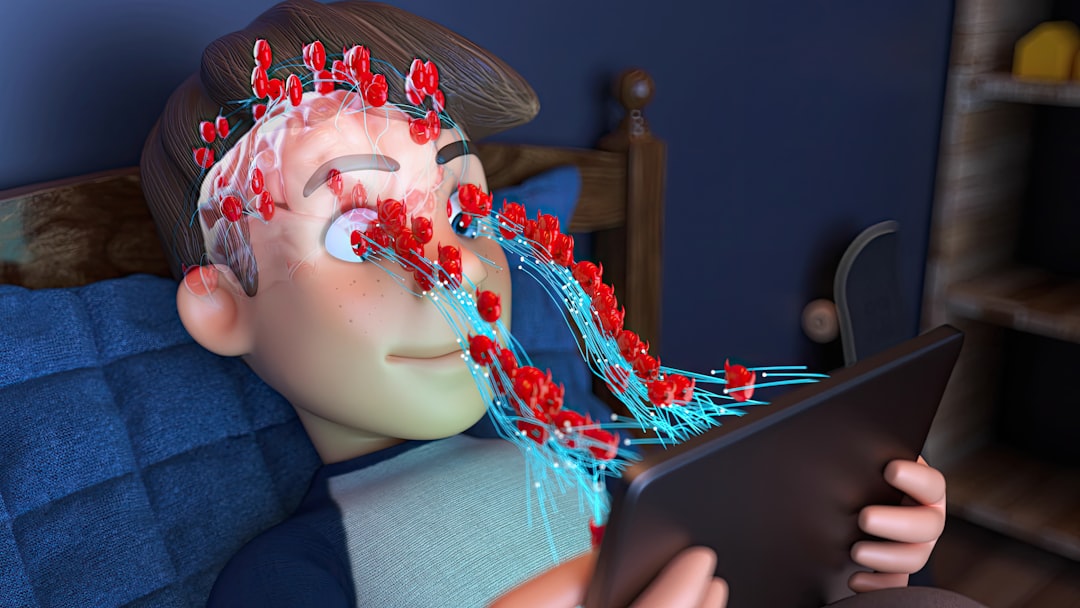
You stand at the precipice of a new era, one where the silent conversation between your mind and machines is becoming increasingly direct. Brain-Computer Interfaces (BCIs), once relegated to the realm of science fiction, are now a tangible reality, and their accelerating development is casting a long, complex shadow over a fundamental aspect of your existence: your identity. This isn’t abstract philosophical musing; this is the blueprint of your self, the intricate tapestry woven from memories, emotions, learned behaviors, and your very sense of being, being re-examined and potentially reconfigured by technology.
The Digital Mirror: How BCIs Reflect and Reshape Your Inner World
Imagine your mind as a bustling metropolis. Thoughts are the vehicles, memories are the historical archives, emotions are the vibrant, sometimes chaotic public squares, and your sense of self is the city’s unique architectural signature. BCIs, in their nascent stages, are like sensitive seismographs, capable of detecting the tremors and vibrations within this mental landscape. As they grow more sophisticated, however, they begin to act as more than just passive observers. They become digital mirrors, not only reflecting your inner world but also, through their interface, offering the potential to sculpt and alter it. You can learn more about split brain consciousness in this informative video.
Decoding the Neural Symphony
At the heart of every BCI lies the ambition to translate the electrical orchestra of your brain into actionable commands or insightful data. This involves understanding the intricate patterns of neural activity associated with specific intentions, emotions, or even abstract concepts. For you, the user, this translation process is often subtle, a quiet acknowledgment of your digital presence within the machine’s understanding.
The Promise of Direct Communication
The most immediate impact of BCIs on your identity lies in their ability to bypass traditional communication channels. Instead of laboriously forming words or gestures, you might, in the future, be able to direct a cursor, select an option, or even broadcast a thought directly through a BCI. This directness can be empowering, offering a voice to those whose physical limitations have previously silenced them. It’s like gaining a new, unhindered limb for your thoughts to operate with.
The Nuance of Neural Interpretation
However, the interpretation of neural signals is not a perfectly transparent process. It’s akin to listening to a distant orchestra through a thick, fog-laden valley. While the main melodies might be discernible, the subtle harmonies and individual instrumentations can be lost or misinterpreted. This raises questions about the fidelity of representation. Is the BCI truly capturing your intent, or a generalized interpretation of a neural pattern that resembles your intent?
The Body-Mind Continuum andprosthetic Integration
Your identity is inextricably linked to your physical form. The way you interact with the world, the sensations you experience, and the limitations or capabilities of your body all contribute to who you are. BCIs are poised to blur the lines between the biological and the artificial, creating a novel continuum between your organic self and the digital or cybernetic extensions.
Embodied Digital Selves
For individuals with disabilities, BCIs can facilitate the control of advanced prosthetic limbs or robotic avatars. This isn’t merely about regaining lost function; it’s about potentially experiencing a new form of embodiment. When you control a prosthetic arm with your thoughts, is the twitch of that robotic hand also becoming part of your felt sense of self? The neural pathways involved in motor control may begin to form connections with the artificial limb, creating a feedback loop that integrates the prosthetic into your proprioception.
The Phantom Limb Phenomenon in Reverse
Consider the phenomenon of the phantom limb, where individuals continue to feel sensations in an amputated limb. BCIs could, in a way, create the opposite: the sensation of presence and control over a non-biological entity as if it were a natural extension of your body. This raises profound questions about where your “body” ends and the prosthetic begins.
Augmentation and the Redefinition of “Normal”
Beyond restoration, BCIs hold the potential for augmentation. Imagine enhanced sensory input, accelerated learning, or even direct access to vast informational databases, all integrated seamlessly with your cognitive processes. This could lead to a redefinition of human capability and, consequently, what is considered “normal.” Your identity might then be subtly influenced by the capabilities you possess, be they biologically derived or technologically augmented.
The Illusion of Authenticity: When the Boundary Between Self and Simulation Thins
As BCIs become more adept at not only reading but also writing to the brain, the very notion of an “authentic” self comes under scrutiny. When your thoughts can be modulated, suppressed, or even generated by external interfaces, the line between spontaneous internal experience and externally influenced cognition begins to blur. This is where the most significant existential questions emerge.
The Subjectivity of Experience
Your subjective experience is the bedrock of your identity. The unique way you perceive the world, the personal meaning you assign to events, and the internal narrative you construct are all deeply personal. BCIs introduce the possibility of external influence on these subjective experiences.
Emotional Regulation and Manipulation
Consider the potential of BCIs designed for emotional regulation. While beneficial for treating conditions like depression or anxiety, the ability to modulate emotional states with external input raises concerns about free will and authenticity. If a BCI can alleviate sadness by stimulating certain neural pathways, are you truly experiencing genuine well-being, or is it a technologically induced facsimile? This is like a painter who can instantly add vibrant colors to a canvas with a button press – is the resulting beauty as profound as that painstakingly achieved with brushstrokes?
Memory Implantation and Modification
The prospect of implanting or modifying memories through BCIs is perhaps one of the most unsettling. Our memories are not static recordings; they are reconstructions, constantly being reshaped by new experiences and emotions. BCIs could, in theory, alter these reconstructions, or even introduce entirely new “memories.” If your past is reshaped, or if you are implanted with experiences that never truly occurred, does this alter the fundamental narrative of your life, and therefore, your identity?
The Self as a Data Stream
In a world where BCIs can translate your thoughts and neural activity into data, you begin to exist in a new dimension: the dimension of digital data. This transformation has profound implications for how your identity is perceived, stored, and potentially controlled.
The Quantified Mind
Your cognitive processes can be quantified, analyzed, and even predicted. This “quantified mind” can be used for various purposes, from personalized medicine to targeted advertising. However, it also means that aspects of your identity – once considered private and ineffable – are now reducible to algorithms and data points. You become a blueprint, accessible for analysis.
The Permanence of the Digital Self
Unlike the fleeting nature of biological thoughts, digital data can persist indefinitely. This raises the specter of a permanent, trackable digital self, meticulously recorded by BCIs. Every thought, every fleeting emotion, could be archived, accessible to future generations, or even to entities with vested interests in your cognitive patterns. This is like leaving an indelible ink stain on the parchment of your existence.
Ethical Frontiers and the Guardrails of Identity
As BCIs advance, so too must our ethical frameworks. Establishing clear guidelines and safeguards is crucial to ensure that this technology enhances, rather than erodes, our sense of self. These are not just legal considerations; they are foundational to preserving the integrity of human identity.
Agency and Consent in a Neuro-Augmented World
The concept of agency, your capacity to act independently and make your own free choices, is fundamental to your identity. BCIs, especially those with the capability of modulating neural activity, present a direct challenge to this.
Informed Consent for Neural Modification
How do you provide informed consent for a technology that might fundamentally alter your cognitive processes or emotional states? The long-term effects of such interventions are often unknown, and the very definition of what constitutes “you” can become fluid. Is consent truly meaningful if the entity giving it can be subtly influenced by the technology it is consenting to?
The Right to Cognitive Liberty
The notion of cognitive liberty – the freedom of your mind from unwanted intrusion or manipulation – is becoming increasingly relevant. This includes the right to control your own thoughts, emotions, and cognitive processes, free from external interference, whether by governments, corporations, or even well-intentioned but intrusive technological systems.
Bias and Equity in BCI Development
The development and deployment of BCIs cannot occur in a vacuum. The potential for bias within these systems, and the subsequent impact on equity, must be a primary concern.
Algorithmic Bias and Identity
If BCIs are trained on biased data sets, they may perpetuate and even amplify existing societal inequalities. An algorithm that misinterprets neural signals from certain demographics could lead to misdiagnoses, discriminatory access to services, or even the misrepresentation of their identities. This is akin to a sculptor whose tools are calibrated to represent only one kind of beauty, leaving others unrepresented.
The Digital Divide and Access
The accessibility of BCI technology also poses an ethical question. Will the benefits of advanced neuro-augmentation be available to all, or will they exacerbate existing social and economic divides, creating a class of cognitively “enhanced” individuals and leaving others behind? This could lead to a fragmentation of human experience, with distinct and unequal versions of what it means to be human.
The Future of Self: Navigating the Evolving Landscape of Identity
Your identity is not a fixed entity; it is a dynamic, evolving construct. BCIs are not simply tools; they are potential catalysts for profound shifts in this evolution. Understanding their impact requires a critical and continuous examination of where we are headed.
The Shifting Definition of Personhood
As the boundaries between human and machine blur, so too will our definitions of personhood. What criteria will we use to delineate consciousness, sentience, and the rights and responsibilities that come with being a person?
Artificial Consciousness and Rights
If advanced BCIs eventually facilitate the emergence of artificial consciousness, or if they allow humans to achieve unprecedented levels of cognitive ability, our understanding of what constitutes a “person” will be fundamentally challenged. Will synthetic intelligences or enhanced human minds deserve the same moral and legal considerations as biologically born humans?
The Interplay of Biological and Artificial Selves
Your identity is currently rooted in your biological existence. As you integrate more deeply with BCIs, the interplay between your biological self and your digital or augmented self will become increasingly complex. How will you reconcile these two facets of your being? Will there be a dominant self, or a more fluid, integrated experience?
The Unfolding Narrative of Human Evolution
BCIs represent a significant juncture in human evolution, not in the Darwinian sense of biological change, but in the evolution of our cognitive and experiential capabilities. You are not merely an observer of this change; you are an active participant, and potentially a co-creator of this new chapter.
The Responsibility of Creation
The development of BCIs places a considerable responsibility on both the creators and the users. The choices made today regarding the design, ethics, and deployment of this technology will shape the future of human identity for generations to come. It is a responsibility akin to that of a gardener tending to a new and powerful species of plant – its growth can be beneficial or detrimental, depending on the care and intention invested.
Embracing or Resisting the Change
Ultimately, your relationship with BCIs, and their impact on your identity, will be a personal and societal negotiation. You will have to decide where to draw the lines, what to embrace, and what to resist. This journey of exploration is not about finding definitive answers, but about asking the right questions and engaging in the ongoing dialogue that will define what it means to be human in an increasingly interconnected and technologically mediated world. Your identity is your story, and with BCIs, you are gaining new pens with which to write it, along with the profound responsibility of understanding the narratives they might also begin to write.
FAQs
What is a brain-computer interface (BCI)?
A brain-computer interface (BCI) is a technology that enables direct communication between the brain and an external device, often bypassing traditional neuromuscular pathways. BCIs can be used to control computers, prosthetics, or other devices by interpreting neural signals.
How do brain-computer interfaces relate to personal identity?
BCIs can influence personal identity by potentially altering how individuals perceive themselves and interact with the world. Since BCIs can modify cognitive functions or enable new forms of communication, they raise questions about the continuity and integrity of one’s sense of self.
Are there ethical concerns associated with BCIs and identity?
Yes, ethical concerns include privacy of neural data, autonomy, consent, and the potential for BCIs to change personality or cognitive traits. These issues challenge traditional notions of identity and raise questions about responsibility and agency.
Can BCIs change a person’s thoughts or memories?
Currently, BCIs primarily read or stimulate neural activity to assist with communication or motor control. While some research explores memory enhancement or modulation, direct alteration of thoughts or memories remains experimental and is not widely available.
What are the potential benefits of BCIs for individuals with disabilities?
BCIs can restore communication and motor functions for people with paralysis, neurodegenerative diseases, or other disabilities. By enabling control of prosthetics or computer interfaces, BCIs can improve independence and quality of life.