
The Mapimi Basin, located in the arid expanse of northern Mexico, is a region steeped in geological intrigue and scientific significance. This vast depression, characterized by its unique topography and ecological diversity, has long captured the attention of researchers and adventurers alike. The basin is not only a natural wonder but also a treasure trove of geological history, offering insights into the Earth’s past and the cosmic events that have shaped it.
With its striking landscapes and rich mineral deposits, the Mapimi Basin serves as a focal point for studies related to meteorites, making it a hotspot for both scientific inquiry and exploration. The allure of the Mapimi Basin extends beyond its physical attributes; it is a place where the boundaries between Earth and space blur. The region’s geological formations tell a story of ancient environments and cataclysmic events, while its meteorite discoveries provide a tangible connection to the cosmos.
As researchers delve into the mysteries of this basin, they uncover not only the secrets of the Earth’s geological past but also the broader narratives of our solar system.
Key Takeaways
- Mapimi Basin is a region in Mexico known for its rich geological history and the discovery of meteorite treasures.
- The basin has a long and complex geological history, with evidence of ancient volcanic activity and the formation of unique mineral deposits.
- Meteorite treasures were first discovered in Mapimi Basin in 1969, sparking a wave of scientific interest and exploration in the area.
- The impact of meteorites has significantly shaped the landscape of Mapimi Basin, creating unique craters and geological formations.
- Mapimi Basin’s meteorites hold great scientific importance, providing valuable insights into the formation and evolution of the solar system.
The Rich Geological History of Mapimi Basin
The geological history of the Mapimi Basin is a complex tapestry woven from millions of years of sedimentation, erosion, and tectonic activity. Formed during the late Cretaceous period, this basin has undergone significant transformations due to various geological forces. The interplay of volcanic activity, sediment deposition, and climatic changes has resulted in a diverse array of rock formations, each telling a different chapter of the Earth’s history.
The basin is primarily composed of sedimentary rocks, including limestone, sandstone, and shale, which provide valuable insights into ancient marine environments and terrestrial ecosystems. In addition to its sedimentary layers, the Mapimi Basin is punctuated by volcanic features that further enrich its geological narrative. These volcanic formations are remnants of past eruptions that have contributed to the basin’s unique landscape.
The presence of these features indicates that the region has experienced significant geological upheaval over time, making it an ideal location for studying the processes that shape planetary surfaces. As geologists continue to explore the basin, they uncover evidence of ancient lakes, river systems, and even glacial activity, all of which contribute to a deeper understanding of Earth’s climatic history.
The Discovery of Meteorite Treasures in Mapimi Basin

The Mapimi Basin is renowned for its remarkable discoveries of meteorites, which have captivated scientists and enthusiasts alike. The first significant meteorite find in this region occurred in the early 20th century when researchers stumbled upon fragments that would later be identified as part of a larger meteorite shower. This initial discovery sparked interest in the area, leading to further explorations that revealed an astonishing variety of meteorite types.
From iron-rich specimens to stony meteorites, the basin has become a veritable treasure trove for those studying extraterrestrial materials. The abundance of meteorites in the Mapimi Basin can be attributed to its unique geological features and arid climate. The dry conditions help preserve meteorite fragments that might otherwise be eroded or obscured by vegetation in more humid environments.
As a result, researchers have been able to locate and catalog numerous meteorites, each providing valuable information about their origins and the processes that brought them to Earth. The discoveries made in this basin have not only advanced scientific knowledge but have also ignited public interest in meteorite hunting and collection.
The Impact of Meteorites on Mapimi Basin’s Landscape
| Metric | Value |
|---|---|
| Number of meteorite craters | Over 50 |
| Size of largest crater | 2.5 km in diameter |
| Age of meteorite impacts | Around 12,000 years ago |
| Impact on landscape | Formation of unique geological features |
| Scientific significance | Study of impact processes and effects |
Meteorites have played a significant role in shaping the landscape of the Mapimi Basin. When these celestial objects collide with Earth, they can create craters that alter the topography and ecology of the surrounding area. The impact events associated with meteorites can lead to dramatic changes in landforms, resulting in depressions or elevated structures depending on the size and velocity of the incoming object.
In the Mapimi Basin, several notable craters serve as evidence of these cosmic collisions, each contributing to the region’s geological diversity. The effects of meteorite impacts extend beyond mere physical alterations; they can also influence local ecosystems. The energy released during an impact can create new habitats by altering soil composition and water drainage patterns.
This can lead to changes in vegetation and animal populations, fostering unique ecological niches that may not have existed prior to the impact event. As researchers study these craters within the Mapimi Basin, they gain insights into how such events can shape not only landscapes but also biological communities over time.
Uncovering the Scientific Importance of Mapimi Basin’s Meteorites
The scientific importance of meteorites found in the Mapimi Basin cannot be overstated. These extraterrestrial materials serve as time capsules, preserving information about the early solar system and the processes that led to planet formation. By analyzing the composition and structure of these meteorites, scientists can glean insights into the conditions present during their formation, as well as the history of our solar system as a whole.
The unique characteristics of Mapimi’s meteorites make them particularly valuable for research purposes. Moreover, studying these meteorites allows scientists to investigate questions related to planetary geology and astrobiology. For instance, certain meteorites contain organic compounds that may provide clues about the building blocks of life beyond Earth.
By examining these materials within the context of their geological history, researchers can explore theories about how life might arise on other planets or moons within our solar system. The ongoing research conducted on Mapimi Basin’s meteorites continues to push the boundaries of human knowledge regarding both our planet and the cosmos.
Exploring Mapimi Basin’s Meteorite Craters
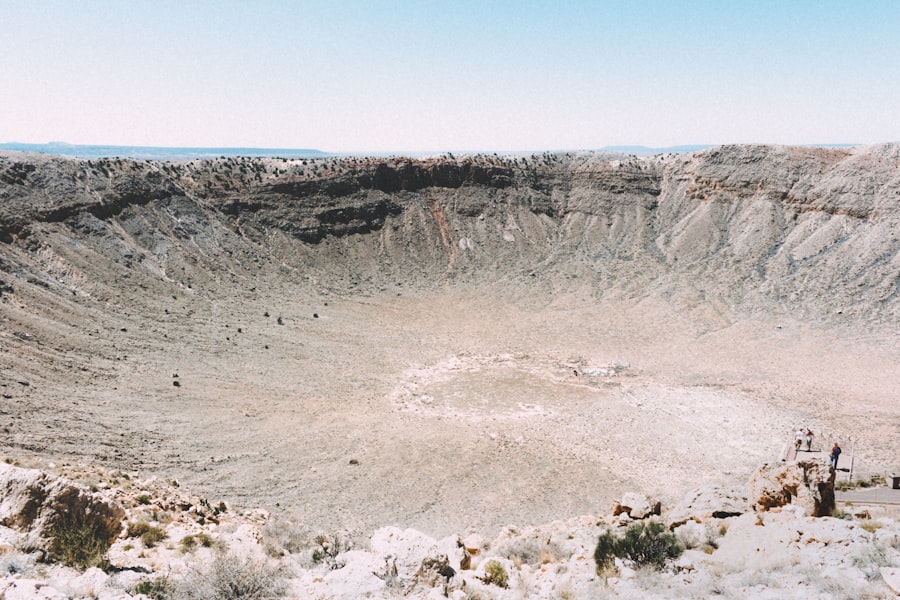
Mapimi Basin is home to several prominent meteorite craters that offer fascinating opportunities for exploration and study. One such crater is the famous “Mapimi Crater,” which stands as a testament to the power of cosmic impacts. This crater provides researchers with a unique window into understanding impact processes and their effects on both geology and biology.
The size and structure of these craters allow scientists to investigate how different materials respond to high-energy collisions, shedding light on impact dynamics. Exploring these craters also presents an opportunity for interdisciplinary research. Geologists, astronomers, and biologists can collaborate to study how impact events influence not only geological formations but also potential biological responses in affected ecosystems.
By examining sediment layers within craters, researchers can reconstruct past environments and assess how life may have adapted following significant impact events. The craters within Mapimi Basin thus serve as natural laboratories for understanding both terrestrial processes and extraterrestrial phenomena.
The Hunt for Meteorite Fragments in Mapimi Basin
The thrill of hunting for meteorite fragments in the Mapimi Basin attracts amateur enthusiasts and seasoned scientists alike. Armed with tools ranging from metal detectors to simple hand trowels, individuals embark on quests across this vast landscape in search of elusive meteorite specimens. The excitement lies not only in the potential discovery but also in the stories each fragment carries—tales of cosmic journeys through space before landing on Earth.
Meteorite hunting in Mapimi requires patience and keen observational skills.
As they scour the terrain, they become attuned to subtle variations in color and texture that may indicate a hidden treasure beneath their feet.
Each successful find adds to their personal collection while contributing valuable data to scientific research efforts aimed at understanding these celestial objects.
The Role of Mapimi Basin’s Meteorites in Understanding the Solar System
The meteorites found in Mapimi Basin play a crucial role in advancing humanity’s understanding of the solar system’s formation and evolution. These fragments serve as direct samples from asteroids and other celestial bodies that have remained largely unchanged since their formation billions of years ago. By studying their isotopic compositions and mineralogical characteristics, scientists can piece together clues about the conditions present during the early solar system’s development.
Furthermore, meteorites from Mapimi provide insights into planetary differentiation processes—the ways in which materials separate based on density during planetary formation. This knowledge helps researchers understand how planets like Earth formed their cores, mantles, and crusts over time. As scientists continue to analyze these extraterrestrial materials from Mapimi Basin, they contribute significantly to ongoing debates about planetary formation theories and the potential for life elsewhere in our solar system.
Mapimi Basin’s Meteorites and Their Cultural Significance
Beyond their scientific value, meteorites from Mapimi Basin hold cultural significance for various communities. Throughout history, these celestial objects have inspired myths, legends, and artistic expressions across different cultures. Indigenous peoples often viewed meteorites as gifts from the heavens or symbols of divine intervention, attributing spiritual meanings to their presence on Earth.
In contemporary society, meteorites have become sought-after collectibles among enthusiasts and investors alike. Their rarity and connection to cosmic events make them valuable artifacts that bridge science with art and culture. Exhibitions showcasing meteorites from Mapimi Basin often draw crowds eager to learn about their origins while marveling at their beauty—a testament to humanity’s enduring fascination with the cosmos.
Challenges and Excitement of Meteorite Exploration in Mapimi Basin
While exploring for meteorites in Mapimi Basin is exhilarating, it is not without its challenges. The harsh desert environment presents obstacles such as extreme temperatures, rugged terrain, and limited access to resources like water or shelter. Adventurers must be well-prepared for their expeditions, equipped with appropriate gear and knowledge about navigating this unique landscape.
Despite these challenges, the excitement of discovery drives many individuals to brave the elements in pursuit of meteorite fragments. Each expedition offers opportunities for learning—about geology, astronomy, survival skills—and fosters camaraderie among fellow enthusiasts who share a passion for uncovering nature’s mysteries. The thrill of finding a meteorite amidst vast stretches of desert serves as a reminder that exploration often requires perseverance but can yield extraordinary rewards.
The Future of Meteorite Exploration in Mapimi Basin
As interest in meteorite exploration continues to grow, so too does the potential for future discoveries within Mapimi Basin. Advances in technology are enhancing researchers’ abilities to locate and analyze meteorite fragments more efficiently than ever before. Remote sensing techniques combined with traditional fieldwork are paving new avenues for exploration while minimizing environmental impacts on this delicate ecosystem.
Moreover, collaborative efforts between scientists, local communities, and educational institutions are fostering greater awareness about the importance of preserving both geological sites and cultural heritage associated with meteorites found in this region. As more people engage with these efforts—whether through formal research initiatives or grassroots community projects—the future looks bright for continued exploration within Mapimi Basin. In conclusion, Mapimi Basin stands as a remarkable intersection between geology and astronomy—a place where ancient Earth meets cosmic wonders through its rich tapestry of meteorite discoveries.
From understanding our planet’s history to unraveling secrets about our solar system’s formation processes, this unique region offers endless opportunities for exploration and discovery that will captivate generations to come.
In the quest to uncover the mysteries of the universe, the search for meteorites in the Mapimí Basin has garnered significant attention from scientists and enthusiasts alike. This region, known for its unique geological features, offers a promising ground for discovering extraterrestrial materials. For those interested in exploring more about the fascinating world of meteorite hunting and the scientific endeavors associated with it, a related article can be found on Freaky Science. This article delves into the methodologies and technologies used in locating these celestial treasures. To read more about these intriguing findings, visit the article on Freaky Science.
WATCH THIS! They Crashed a US Missile Into the Zone of Silence
FAQs
What is the Mapimí Basin?
The Mapimí Basin is a geological depression located in the northern part of Mexico, known for its unique landscape and geological features.
What are meteorites?
Meteorites are fragments of rock or metal that have fallen to Earth from outer space. They can vary in size and composition, and are often of great scientific interest.
Why is the Mapimí Basin a good place to find meteorites?
The Mapimí Basin is a prime location for finding meteorites due to its flat, open terrain and low vegetation, which makes it easier to spot meteorite fragments on the ground.
What should I consider before searching for meteorites in the Mapimí Basin?
Before searching for meteorites in the Mapimí Basin, it is important to obtain the necessary permits and permissions from local authorities, as well as to be aware of any potential safety hazards in the area.
What tools or equipment do I need for finding meteorites in the Mapimí Basin?
When searching for meteorites in the Mapimí Basin, it is recommended to bring a metal detector, a GPS device, sturdy footwear, and plenty of water and sunscreen, as well as a means of carrying any meteorite specimens that are found.
What should I do if I find a potential meteorite in the Mapimí Basin?
If you believe you have found a meteorite in the Mapimí Basin, it is important to document the location and appearance of the specimen, and to contact local authorities or experts in meteorite identification for further guidance.