You might be familiar with a peculiar state that occurs just as you’re drifting off to sleep, a liminal space between wakefulness and slumber. This is the hypnagogic state, a fascinating realm where the boundaries of perception blur. Now, imagine amplifying this experience by stepping into a sensory deprivation tank. This article will guide you through the exploration of hypnagogic states within the profound stillness of isolation tanks, examining the physiological and psychological interplay that gives rise to these unique phenomena.
Two broad categories of sensory experiences are commonly reported during hypnagogia: visual and auditory hallucinations, and somatic sensations. Visual hallucinations can range from simple flashes of light and geometric patterns to complex, vivid imagery. Auditory experiences may include spontaneous sounds, music, or even voices. Somatic sensations can manifest as feelings of falling, floating, or even electrical tingling. The sensory deprivation tank, by removing external stimuli, creates fertile ground for these internal experiences to emerge and often intensify.
The Physiology of Hypnagogia: A Bridge Between Worlds
Hypnagogia is not an arbitrary neurological event; it’s a predictable neurological transition. As your brain prepares for sleep, it undergoes specific changes in its electrical activity.
The Shift in Brainwave Frequencies
Your brain operates on a spectrum of electrical frequencies, each associated with different states of consciousness. When you are fully awake and alert, your brain is dominated by beta waves, characterized by their high frequency and low amplitude, reflecting active cognitive processing. As you begin to relax and your attention starts to wander, alpha waves emerge. These are slower and more organized than beta waves, indicating a state of relaxed awareness. During the transition into sleep, as you become increasingly drowsy, theta waves become more prominent. Theta waves are even slower and more rhythmic than alpha waves, and it is within this theta wave activity that hypnagogic experiences are most commonly observed. The sensory deprivation tank’s ability to induce a state of deep relaxation can facilitate the transition into theta wave dominance, thereby enhancing the likelihood and vividness of hypnagogic phenomena. Think of your brainwaves as different gears in a car; beta is first gear, alpha is neutral, and theta is the gentle coasting as you prepare to park.
Neurotransmitter Activity in the Hypnagogic State
The intricate dance of neurotransmitters plays a crucial role in orchestrating the shift from wakefulness to sleep. Glutamate, an excitatory neurotransmitter, plays a key role in maintaining wakefulness. As you enter the hypnagogic state, glutamate levels begin to decrease, allowing for a quieting of certain neural pathways. Simultaneously, GABA (gamma-aminobutyric acid), an inhibitory neurotransmitter, increases its activity. GABA essentially acts as a brake on neuronal firing, promoting relaxation and sleep onset. This ebb and flow of chemical messengers creates the neurological conditions necessary for the emergence of spontaneous internal experiences. The sensory deprivation tank, by reducing external demands on your sensory systems, can be seen as creating an environment where these endogenous processes can unfold with less interference.
The Role of the Thalamus and Cortex
The thalamus, often referred to as the brain’s relay station, plays a pivotal role in processing sensory information before it reaches the cerebral cortex, the seat of higher-level cognitive functions. During hypnagogia, the thalamus undergoes a shift in its responsiveness. It becomes less effective at filtering external sensory input, which is already minimized in a deprivation tank, but it also becomes more prone to generating its own internal signals. These internally generated signals from the thalamus can then be interpreted by the cortex, leading to the perception of hallucinations. The cortex, no longer bombarded by external data, turns inward, and what it finds can be a kaleidoscope of sensory impressions.
Sensory deprivation has long fascinated researchers and enthusiasts alike, particularly in its connection to hypnagogic states—the transitional phase between wakefulness and sleep. An intriguing article that delves into this topic can be found on Freaky Science, where the effects of sensory deprivation on the mind and body are explored in depth. For those interested in understanding how these altered states can influence creativity and perception, the article provides valuable insights. You can read more about it here: Freaky Science.
Sensory Deprivation: The Silent Crucible
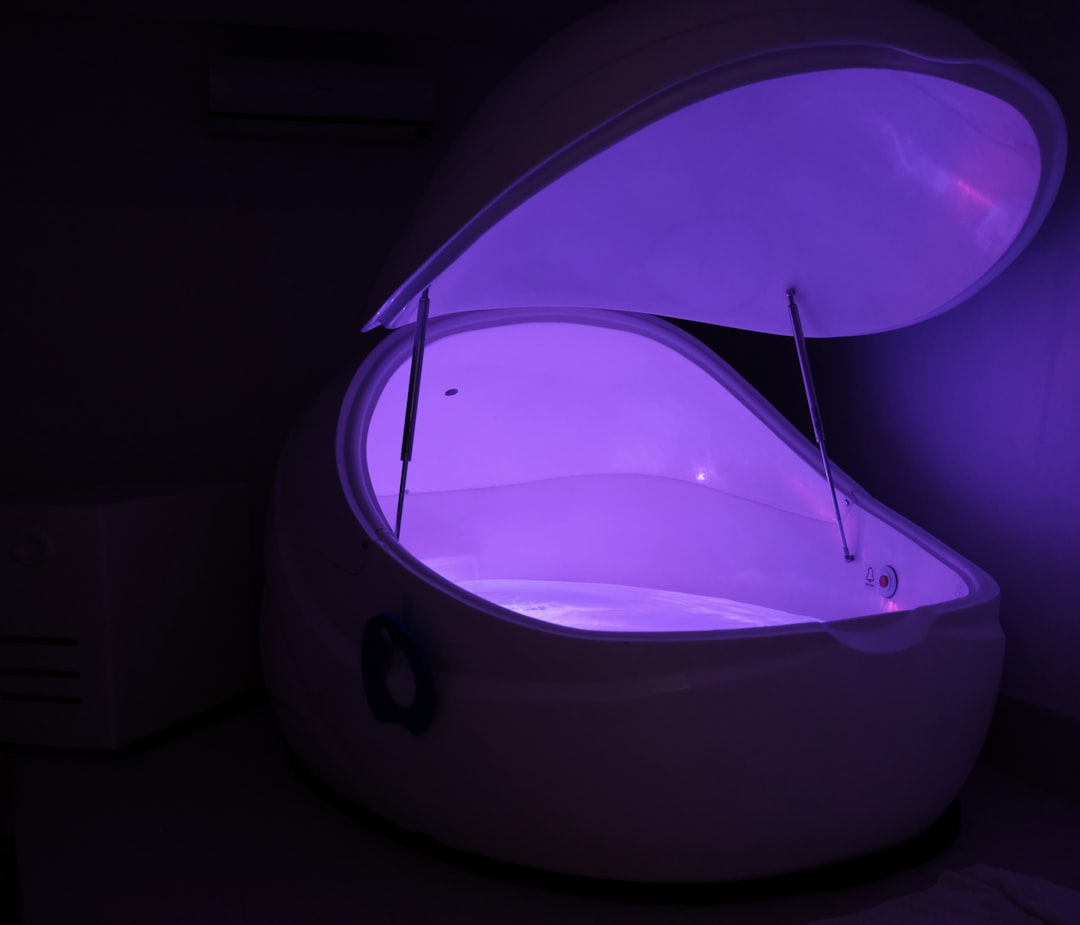
The sensory deprivation tank, or floatation tank, is designed to eliminate external sensory input, creating an environment of profound stillness. This is typically achieved by suspending individuals in a tank filled with Epsom salt-infused water, heated to skin temperature, and kept in complete darkness and silence. The buoyancy provided by the salt water allows for effortless floating, further minimizing physical sensations.
The Reduction of Proprioceptive Input
Proprioception is your body’s sense of its own position and movement in space. In everyday life, you are constantly receiving feedback from your muscles, joints, and tendons. In a sensory deprivation tank, the feeling of lying on a surface is eliminated, and the effortless floating reduces the need for constant muscular adjustment. This reduction in proprioceptive input can lead to a dissociative feeling, where your sense of your physical body becomes less defined. This detachment can be a potent catalyst for the mind to explore internal landscapes.
The Disengagement of the Default Mode Network (DMN)
The Default Mode Network (DMN) is a network of brain regions that is most active when an individual is not focused on the outside world, such as during mind-wandering, daydreaming, and thinking about the past or future. While typically associated with internal thought processes, the DMN’s constant activity can also be a source of distraction and mental chatter. In a sensory deprivation tank, the lack of external stimuli can lead to an initial increase in DMN activity as the mind searches for something to engage with. However, with prolonged immersion, studies suggest a deactivation or modulation of certain aspects of the DMN, potentially allowing for other neural networks associated with sensory processing and introspection to become more prominent. This quieting of the internal monologue creates a vacuum that can be readily filled by hypnagogic imagery.
The Amplification of Internal Stimuli
When the external world fades into insignificance, your internal world takes center stage. With no visual or auditory input from your surroundings, your brain, inherently programmed to process information, begins to generate its own. This self-generated stimulation is the very essence of hypnagogia. The sensory deprivation tank, by acting as a blank canvas, allows these subtle internal flickers and whispers to become a vivid narrative. It’s like turning down the volume on a boisterous party so you can hear a fragile melody playing in the next room.
The Hypnagogic Experience in Isolation: A Spectrum of Phenomena
The interaction between the hypnagogic state and sensory deprivation creates a unique tapestry of subjective experiences. These experiences are not uniform and can vary significantly from person to person and session to session.
Visual Hypnagogia in the Tank
As you descend into the hypnagogic state within the tank, the absence of external light allows for the internal generation of visual phenomena to become particularly striking. You might begin to see phosphenes, which are the experience of light without light actually entering the eye. These can appear as simple colors, geometric patterns, or intricate, swirling forms. As the experience deepens, these patterns can coalesce into more complex imagery. You might see vivid, dream-like scenes, often fleeting and somewhat disconnected, or familiar faces and objects appearing and disappearing. The lack of external visual input means there are no competing images to ground these internal visions, allowing them to unfold with remarkable clarity. It’s as if the projector in your mind, relieved of the burden of copying reality, is now free to create its own, unadulterated films.
Auditory Hallucinations Beyond Silence
While the tank is designed for silence, the hypnagogic state can still give rise to auditory experiences. These are not usually external sounds being perceived, but rather the brain’s internal generation of auditory patterns. You might hear clicks, hums, or whooshing sounds. In some cases, these can evolve into more complex auditory phenomena, such as fragments of music, familiar voices, or even what feels like whispered words. It’s important to distinguish these from actual external sounds; the quietude of the tank makes it easier to recognize these as internal productions. The absence of acoustic interference allows these subtle inner sounds to be perceived with greater prominence.
Somatic Sensations and the Dissolving Body
The reduction of proprioceptive input in sensory deprivation can significantly influence the somatic sensations experienced during hypnagogia. You might experience a profound sense of weightlessness, or the feeling of floating effortlessly, which is amplified by the buoyancy of the water. Conversely, some individuals report sensations of sinking or falling, even though they are perfectly supported. There can also be feelings of tingling, vibrating, or electrical sensations throughout the body. These somatic experiences can sometimes be accompanied by a feeling of dissociation from your physical form, where your sense of embodiment becomes less distinct, and the boundaries of your body seem to blur. This detachment can contribute to a more profound introspective focus.
The Emergence of Hypnagogic Imagery and its Interpretation
The imagery that arises during hypnagogia in sensory deprivation can be highly personal and seemingly random. However, upon closer examination, it can offer insights into your subconscious. The disconnected nature of these images means that logical coherence is not a prerequisite. You might see a series of seemingly unrelated objects, but over time and with reflection, patterns or symbolic meanings might emerge. It is in this space that you can become a detective of your own mind, piecing together clues from the ephemeral narratives that unfold. The lack of external judgment or distraction allows for a more unfettered exploration of these internal narratives.
Facilitating and Navigating the Hypnagogic Experience
While the hypnagogic state can occur spontaneously, certain practices can help you to cultivate and better navigate these experiences within a sensory deprivation tank.
Pre-Float Preparation: Setting the Stage
Before entering the tank, consider your mental state. Engaging in mindfulness or meditation exercises can help to quiet the external noise of your daily life and prime your mind for introspection. Avoid stimulants that might interfere with relaxation. Creating a serene environment before your float session can help to ease the transition into the tank. Think of it as preparing the soil before planting a delicate seed; the environmental conditions are crucial for its growth.
Intent and Expectation Management
Approach your float session with a sense of curiosity rather than a rigid expectation. While you may be interested in exploring hypnagogic states, avoid setting an outcome. Allow the experience to unfold naturally. Pressuring yourself to have a specific experience can create anxiety and paradoxically hinder your progress. Focus on the act of being present and observing. The mind, when not under pressure, often reveals more than when it is being commanded.
Post-Float Integration: Journaling and Reflection
After your float session, take time to integrate your experiences. Keeping a journal is a highly effective method. Record any visual, auditory, or somatic sensations you recall, however fleeting or nonsensical they may seem. Note any emotional shifts or insights that arose. This act of documentation can help you to solidify these fleeting experiences and identify recurring themes or symbols. Reflection on these journal entries in the days and weeks following can reveal deeper meanings and connections. It’s like deciphering an ancient script; the initial symbols may be obscure, but with careful study, a narrative can emerge.
Recent studies have explored the intriguing connection between sensory deprivation and hypnagogic states, revealing how the absence of external stimuli can lead to unique mental experiences. For those interested in delving deeper into this fascinating topic, a related article offers insights into the psychological effects of sensory isolation and its potential benefits. You can read more about it in this informative piece, which discusses various aspects of how these states can influence creativity and relaxation.
Scientific Inquiry into Hypnagogia and Sensory Deprivation
The intersection of hypnagogic states and sensory deprivation is an area of ongoing scientific interest. Researchers are using various methods to understand the neurological underpinnings of these phenomena.
Neuroimaging Studies: Mapping the Inner Landscape
Techniques such as Electroencephalography (EEG) are used to measure brainwave activity during floatation and in the hypnagogic state. These studies can correlate specific brainwave patterns (like theta waves) with the reporting of hypnagogic experiences. Functional Magnetic Resonance Imaging (fMRI) can also provide insights by showing which brain regions are active when individuals report hallucinations or altered states of consciousness. These imaging technologies are like cartographers, drawing detailed maps of the brain’s activity during these introspective journeys.
Psychological Research: Subjective Reports and Their Significance
Beyond neuroimaging, psychological research focuses on understanding the subjective nature of these experiences. Researchers collect detailed reports from individuals who engage in sensory deprivation and experience hypnagogia, analyzing the content, intensity, and emotional impact of these states. The qualitative data gathered provides a rich understanding of the human aspect of these altered states of consciousness. This human-centered approach complements the objective data from neuroimaging, offering a holistic view.
Therapeutic Applications: Potential for Insight and Healing
While still largely an area of exploration, there is growing interest in the potential therapeutic applications of sensory deprivation and the cultivation of hypnagogic states. The reduction of external stimuli and the promotion of introspection can be beneficial for individuals experiencing stress, anxiety, or creative blocks. The vivid imagery and altered states of consciousness can sometimes offer new perspectives on personal challenges or foster creative breakthroughs. It is akin to clearing a cluttered workspace; the enhanced clarity can lead to more efficient and innovative solutions.
Considerations and Safety in Exploring Hypnagogic States
When embarking on the exploration of hypnagogic states within sensory deprivation, it is important to approach the experience with an understanding of safety and personal well-being.
Physical and Psychological Well-being
While generally safe, sensory deprivation is not suitable for everyone. Individuals with certain medical conditions, such as epilepsy, severe claustrophobia, or open wounds, should consult a medical professional before floating. It is also important to maintain a balanced psychological state. If you are experiencing acute mental distress, it is advisable to address those concerns before seeking to explore altered states of consciousness. The float tank should be a tool for exploration, not a substitute for professional mental health support.
Navigating Challenging Experiences
Occasionally, individuals may encounter challenging or unsettling experiences during hypnagogia or within the float tank. This can include strong emotions, anxious thoughts, or disorienting sensations. If you find yourself in such a state, remember that you are in a safe environment and can exit the tank at any time. Practicing grounding techniques beforehand, such as focusing on your breath, can be helpful. Remind yourself that these experiences are transient and are a product of your own mind.
The Importance of Reputable Facilities
If you choose to explore sensory deprivation in a professional setting, ensure you select a reputable float center with well-maintained facilities and trained staff. Familiarize yourself with their safety protocols and guidelines. This ensures a secure and comfortable environment for your exploration. Choosing a well-run facility is like selecting a trusted guide for an unknown territory; their expertise contributes significantly to your safety and experience.
Exploring hypnagogic states in sensory deprivation offers a unique pathway into the depths of your own consciousness. By understanding the physiological underpinnings of hypnagogia and the profound impact of sensory isolation, you can embark on a journey of self-discovery. The quiet stillness of the float tank, devoid of external distractions, becomes a fertile ground for the mind to conjure its own realities, offering glimpses into the intricate landscape of your inner world.
FAQs
What is sensory deprivation?
Sensory deprivation is the deliberate reduction or removal of stimuli from one or more of the senses. This can include the use of sensory deprivation tanks, isolation chambers, or other methods to limit sensory input.
What are hypnagogic states?
Hypnagogic states are transitional states of consciousness that occur between wakefulness and sleep. They are often characterized by vivid sensory experiences, such as hallucinations or dream-like imagery, and can occur during sensory deprivation or other altered states of consciousness.
How does sensory deprivation affect hypnagogic states?
Sensory deprivation can enhance the likelihood of experiencing hypnagogic states by reducing external stimuli and allowing the mind to generate its own sensory experiences. This can lead to more intense and vivid hypnagogic experiences.
What are the potential benefits of experiencing hypnagogic states during sensory deprivation?
Some individuals report that experiencing hypnagogic states during sensory deprivation can lead to increased creativity, problem-solving abilities, and relaxation. It may also provide a sense of introspection and self-discovery.
Are there any risks associated with sensory deprivation and hypnagogic states?
While some people find the experience of hypnagogic states during sensory deprivation to be positive, others may find it disorienting or unsettling. Additionally, prolonged sensory deprivation can lead to psychological distress or exacerbate existing mental health conditions. It is important to approach sensory deprivation and hypnagogic states with caution and under the guidance of a trained professional.