
Evolutionary game theory (EGT) provides a robust framework for understanding the emergence and persistence of strategic behaviors in populations. When integrated with studies of perception, EGT offers profound insights into how organisms, including humans, process information from their environment and subsequently make decisions that impact their fitness. This article explores the intricate relationship between EGT and perception, demonstrating how our sensory and cognitive faculties are not merely passive receivers of data, but active shapers of strategic interactions.
Evolutionary game theory, an extension of classical game theory, applies concepts of strategy and payoff to biological contexts. Unlike traditional game theory, which often assumes rational actors, EGT focuses on populations of players whose strategies are genetically determined or learned and subsequently transmitted. The success of a strategy is measured by its fitness, typically reflected in reproductive success.
Key Concepts in EGT
Several fundamental concepts underpin EGT. Understanding these is crucial for appreciating its application to perception.
Strategies and Payoffs
In EGT, a strategy is a complete set of instructions that dictates an individual’s behavior in any possible situation. Payoffs represent the fitness consequences of employing a particular strategy in interaction with other strategies. These payoffs are not necessarily monetary; they can be resources, reproductive opportunities, or survival rates. For instance, in a predator-prey interaction, a successful escape strategy for the prey yields survival, while a successful hunting strategy for the predator yields nutrients and energy.
Evolutionary Stable Strategies (ESS)
A central concept in EGT is the Evolutionary Stable Strategy (ESS). An ESS is a strategy that, if adopted by a population, cannot be invaded by any alternative strategy. In other words, if a population is playing an ESS, a rare mutant employing a different strategy will not achieve higher fitness and thus will not proliferate. The ESS provides a powerful predictive tool for understanding the long-term stability of behavioral patterns within a population. Consider a population of peacocks; if displaying a certain tail size is an ESS, any mutant peacock with a significantly smaller or larger tail might be less successful in attracting mates or avoiding predators.
Replicator Dynamics
Replicator dynamics describe how the frequencies of different strategies change over time within a population. Strategies that yield higher-than-average payoffs increase in frequency, while those with lower-than-average payoffs decrease. This dynamic process models natural selection, where successful traits become more prevalent. Imagine a bacterial colony; if a particular metabolic strategy allows some bacteria to outcompete others for resources, their numbers will grow exponentially.
In exploring the intricate relationship between evolutionary game theory and perception, one can gain valuable insights from the article available at Freaky Science. This piece delves into how organisms adapt their strategies based on their perceptions of the environment and the behavior of others, illustrating the dynamic interplay between evolutionary processes and cognitive frameworks. Understanding these concepts can enhance our grasp of both biological and social systems, highlighting the importance of perception in strategic decision-making.
Perception as a Strategic Tool
Perception is not a neutral window to reality. Instead, it is an active, constructive process shaped by evolutionary pressures. Organisms perceive what is relevant to their survival and reproduction, often filtering out irrelevant information and sometimes distorting reality in adaptive ways. This “biased” perception can be a strategic asset in evolutionary games.
Sensory Modalities and Information Gathering
The specific sensory modalities an organism possesses – sight, hearing, smell, touch, taste – determine the type and quality of information it can gather from its environment. Each modality presents its own trade-offs in terms of energy cost, range, and resolution.
Visual Perception and Signaling
Visual perception is paramount for many species, enabling them to detect mates, predators, prey, and resources. Signaling through visual displays, such as bright plumage in birds or elaborate courtship dances, is a classic example of a strategic interaction where perception plays a crucial role. The signaler’s display must be accurately perceived by the receiver for the signal to be effective. For example, a bird’s territorial display is only effective if rival birds can perceive and interpret the signal as a threat.
Auditory Perception and Communication
Auditory perception allows for communication over distances and in environments where visual cues are limited, such as dense foliage or darkness. Vocalizations for alarm calls, mate attraction, or territorial defense are strategic interactions. The ability to accurately perceive subtle variations in sound frequency or amplitude can convey critical information. Consider the complex vocalizations of dolphins; their sonar abilities allow them to “see” their environment, including distant prey, through sound waves.
Olfactory Perception and Chemical Cues
Olfactory perception involves detecting chemical cues, which can convey information about the presence of predators, mates, or food sources. Pheromones, for instance, are chemical signals that can dramatically alter the behavior of other individuals, facilitating strategic interactions such as mate finding or group coordination. A male moth detecting a female’s pheromones from miles away is a testament to the strategic power of olfaction.
Attentional Biases and Selective Perception
Organisms do not attend to all sensory information equally. Cognitive mechanisms direct attention towards salient stimuli, effectively filtering the immense stream of sensory data. These attentional biases are not arbitrary; they are shaped by evolutionary history to prioritize information relevant to survival and reproduction.
Threat Detection
The ability to rapidly detect threats is a fundamental survival mechanism. Organisms exhibit attentional biases towards stimuli associated with danger, such as sudden movements or loud noises. This rapid threat detection is a strategic adaptation, allowing for faster evasion or defense. A gazelle, for instance, is hyper-attentive to rustling in the tall grass where predators might lurk.
Mate Choice and Sexual Selection
In the context of mate choice, individuals often exhibit attentional biases towards specific cues that signal fitness or reproductive potential in potential partners. These cues can be visual (e.g., bright coloration), auditory (e.g., complex songs), or olfactory. The perception of these cues, and the subsequent strategic decision to mate or not, drives sexual selection. The elaborate tail of a male peacock, while costly to maintain, strategically signals genetic quality to females, who then direct their attention and mating choices accordingly.
The Co-evolution of Perception and Strategy
The relationship between perception and strategy is not unidirectional. Just as perception influences strategic choices, the strategic demands of an environment can drive the evolution of perceptual abilities. This co-evolutionary dynamic is a hallmark of many biological systems.
Signaling Games
Signaling games are a central framework in EGT for understanding the co-evolution of perception and strategic behavior. In these games, a signaler transmits information to a receiver, and the receiver uses this information to make a decision. The effectiveness of the signal depends on both the signaler’s ability to produce it and the receiver’s ability to perceive and interpret it.
Honest vs. Dishonest Signals
Signals can be honest, reliably conveying information about the signaler, or dishonest, attempting to deceive the receiver. The evolution of honest signals often involves a “handicap principle,” where the signal is costly to produce, making it difficult for low-quality individuals to fake. For example, a male frog’s deep croak, while energetically demanding, honestly signals his size and strength to potential mates and rivals.
Mimicry and Deception
Conversely, dishonest signals are prevalent in mimicry, where one species evolves to resemble another. Batesian mimicry, where a palatable species mimics a toxic one, is a classic example. The success of the mimic depends on the predator’s ability to perceive the resemblance and subsequently avoid it, highlighting how perception can be exploited strategically. A viceroy butterfly mimicking the monarch butterfly gains protection because predators perceive it as unpalatable.
Predator-Prey Arms Races
The dynamic interplay between predators and prey provides a vivid illustration of perceptual-strategic co-evolution. Predators evolve enhanced sensory capabilities to detect prey, while prey evolve strategies to avoid detection. This arms race drives the continuous refinement of both perceptual systems and behavioral strategies.
Camouflage and Crypsis
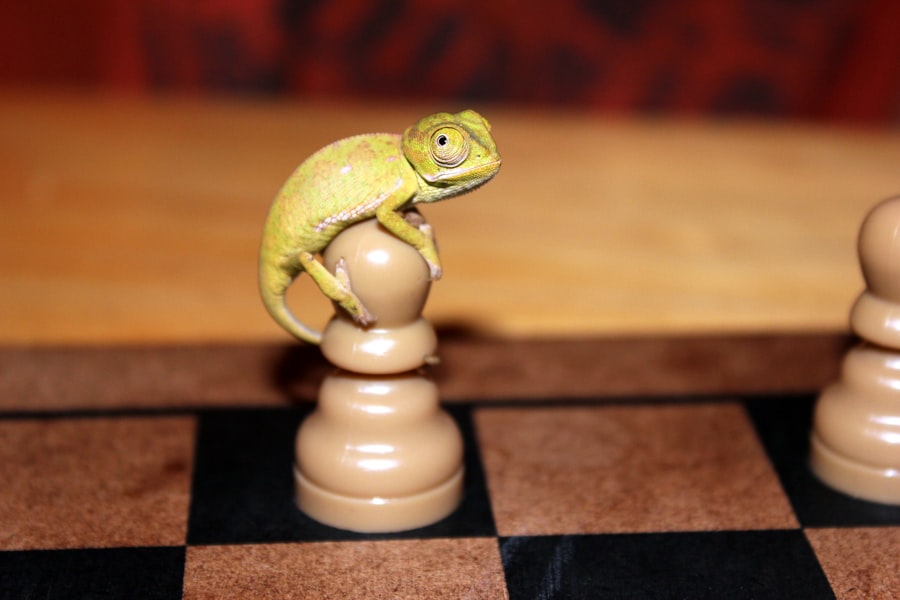
Camouflage, a prime example of a prey strategy, involves evolving patterns and coloration that blend with the background, making detection difficult for predators. The effectiveness of camouflage is directly linked to the predator’s perceptual abilities. If a predator’s visual acuity improves, prey species may evolve more sophisticated camouflage. A chameleon’s ability to change its skin color to match its surroundings is a powerful adaptation against visually oriented predators.
Sensory Exploitation
Predators can also exploit pre-existing sensory biases in their prey. For example, some anglerfish use a luminous lure to attract prey, taking advantage of the prey’s inherent attraction to light. This represents a strategic exploitation of the prey’s perceptual system. The viperfish’s bioluminescent lure mimics small prey, strategically attracting larger fish into its jaws.
Human Perception and Strategic Decision-Making

The principles of EGT and its integration with perception are profoundly relevant to understanding human decision-making. Our cognitive biases, social interactions, and even economic choices are often rooted in evolutionarily shaped perceptual and strategic mechanisms.
Cognitive Biases and Heuristics
Human cognition is replete with cognitive biases and heuristics—mental shortcuts that allow for rapid decision-making but can also lead to systematic errors. Many of these biases can be understood as adaptive, evolutionarily shaped mechanisms that prioritize certain types of information or response patterns.
Availability Heuristic
The availability heuristic, for example, causes individuals to overestimate the likelihood of events that are easily recalled from memory. While this might lead to inaccurate risk assessments in some modern contexts, it could have been adaptive in ancestral environments where immediate threats were highly salient and required rapid response. A vivid memory of a snake bite, for instance, would strategically bias an individual to avoid similar environments.
Confirmation Bias
Confirmation bias, the tendency to seek out and interpret information that confirms pre-existing beliefs, can solidify group cohesion and reinforce social identities. In ancestral groups, conformity and shared beliefs were strategically important for cooperation and survival, even if they sometimes led to inaccurate views of reality. This bias can maintain group solidarity by strategically filtering dissenting opinions.
Social Perception and Trust
Human social interactions are intricately governed by our perception of others and their intentions. Trust, reciprocity, and cooperation are fundamental elements of human society, and their emergence can be explained through EGT in conjunction with social perception.
Facial Recognition and Emotion Perception
The human brain has specialized areas for facial recognition and emotion perception. These abilities are crucial for rapidly assessing the intentions and emotional states of others, facilitating complex social strategies. The ability to differentiate a friendly smile from a menacing scowl is strategically vital for navigating social landscapes.
Reputation and Indirect Reciprocity
Our perception of an individual’s reputation – their past behavior as observed by others – plays a critical role in indirect reciprocity. Individuals are more likely to cooperate with those who have a reputation for being cooperative. This strategic behavior relies heavily on the accurate perception and transmission of social information. A person known for their generosity is strategically positioned to receive help when needed.
In exploring the intricate relationship between evolutionary game theory and perception, one can gain valuable insights from a related article that delves into the dynamics of decision-making in social contexts. This article highlights how perception influences strategies in evolutionary games, ultimately shaping outcomes in competitive environments. For a deeper understanding of these concepts, you can read more about it in this fascinating piece on Freaky Science.
Future Directions and Unanswered Questions
| Metric | Description | Value/Range | Relevance to Evolutionary Game Theory and Perception |
|---|---|---|---|
| Perception Accuracy | Degree to which an agent correctly perceives the environment or opponent’s strategy | 0 to 1 (0 = no accuracy, 1 = perfect accuracy) | Higher accuracy can lead to better strategy adaptation and evolutionary stability |
| Strategy Mutation Rate | Probability of random changes in strategy during evolution | 0.001 to 0.1 | Impacts diversity and exploration of new strategies influenced by perception errors |
| Payoff Matrix Sensitivity | Degree to which perception errors affect payoff outcomes | Low, Medium, High | Determines how perception inaccuracies influence evolutionary dynamics |
| Signal-to-Noise Ratio (SNR) | Ratio of meaningful information to noise in perception signals | 1 to 100 | Higher SNR improves decision-making and strategy success in games |
| Evolutionary Stability Index | Measure of how stable a strategy is against invasion by mutants | 0 to 1 | Perception accuracy can increase stability by enabling better responses |
| Reaction Time | Time taken by an agent to perceive and respond to opponent’s move | Milliseconds to seconds | Faster reaction times can confer advantages in dynamic evolutionary games |
The field of evolutionary game theory and perception is continuously expanding, offering numerous avenues for future research.
Neurobiological Underpinnings
Further investigation into the neurobiological mechanisms underlying perceptual biases and strategic decisions is crucial. How do specific brain regions process sensory information to guide game-theoretic choices? Understanding the neural circuits involved will provide a deeper understanding of the “hardware” behind these complex interactions. This exploration will delve into how the brain’s circuitry implements complex strategic calculations.
Cultural Evolution
The interaction between biological evolution and cultural evolution, particularly concerning perception and strategic norms, is another fertile area. How do cultural practices shape our perceptual filters and influence the games we play? How do these culturally mediated perceptions feed back into evolutionary processes? This area invites us to consider how societal norms, transmitted through learning, contribute to strategic choices.
Technological Impact
The advent of new technologies, particularly in artificial intelligence and virtual reality, presents novel challenges and opportunities to study perception and strategy. How do digital environments alter our perceptual biases and strategic interactions, and what are the evolutionary implications? This line of inquiry probes the strategic implications of living in increasingly mediated realities.
In conclusion, the intertwining of evolutionary game theory and perception reveals a sophisticated and often counter-intuitive picture of strategic decision-making. From the simplest bacterial interactions to the complexities of human social structures, our perceptions are not mere reflections of an objective reality but are active, adaptive filters shaped by the ongoing games of survival and reproduction. To truly understand why organisms behave the way they do, one must appreciate the profoundly strategic nature of seeing, hearing, smelling, touching, tasting, and interpreting the world around them. This understanding empowers us to see the world not just as it is, but as it is strategically perceived and acted upon.

WATCH NOW ▶️ The Universe Is A False State: Is Reality a Simulation?
FAQs
What is evolutionary game theory?
Evolutionary game theory is a mathematical framework used to study the strategic interactions among individuals in populations, where the success of strategies evolves over time based on their relative payoffs. It extends classical game theory by incorporating concepts from biology and evolution.
How does perception influence evolutionary game theory?
Perception affects how individuals interpret and respond to their environment and the actions of others. In evolutionary game theory, differences in perception can lead to variations in strategy choice and outcomes, as players may have incomplete or biased information about payoffs or opponents’ behaviors.
What are common applications of evolutionary game theory involving perception?
Applications include modeling animal behavior, social dynamics, cooperation, and competition where perception plays a role in decision-making. For example, understanding how animals perceive threats or signals can explain the evolution of communication strategies or social norms.
How does evolutionary game theory differ from classical game theory?
Classical game theory typically assumes rational players with complete information making one-time decisions, while evolutionary game theory focuses on populations of players whose strategies evolve over time through natural selection or learning, often with limited or imperfect perception.
Can evolutionary game theory account for errors or biases in perception?
Yes, evolutionary game theory can incorporate errors, noise, or biases in perception by modeling how these factors influence strategy success and evolution. This allows for more realistic predictions of behavior in natural and social systems where perception is not always accurate.