
The ubiquitous role of Global Navigation Satellite Systems (GNSS) in modern society has fostered an indispensable reliance on its precise timing capabilities. From synchronizing critical infrastructure like power grids and telecommunications networks to enabling financial transactions and optimizing logistical operations, GNSS provides the foundational heartbeat for countless systems worldwide. However, this profound dependence also exposes a significant vulnerability: the potential for GNSS signal disruption or denial. Such events, whether caused by atmospheric interference, solar flares, jamming, spoofing, or system malfunctions, pose a substantial threat to the stability and functionality of these critical applications. Consequently, the implementation of robust GNSS backup systems is not merely a recommendation but a necessity for ensuring the sustained resilience of our interconnected world.
The intricate tapestry of modern infrastructure, with its reliance on precise timing, is akin to a complex clockwork mechanism. Each gear and lever, representing a critical system, must rotate and move in perfect synchronicity. GNSS acts as the master clock, dictating the rhythm for all these interconnected components. A disruption to this master clock, even for a brief period, can cascade into widespread outages and significant economic and societal repercussions. You can learn more about the earth’s magnetic field and its effects on our planet.
Vulnerabilities of GNSS Signals
GNSS signals, while highly accurate, are inherently susceptible to various forms of interference. These vulnerabilities necessitate a proactive approach to timing resilience.
Atmospheric and Space Weather Effects
The journey of GNSS signals from distant satellites to receivers on Earth is fraught with potential disturbances. Ionospheric scintillations, caused by plasma irregularities in the Earth’s upper atmosphere, can distort or even block signals. Solar flares, energetic eruptions from the sun, unleash radiation that can disrupt satellite operations and introduce significant errors into GNSS measurements. These natural phenomena, though unpredictable, are a constant consideration for system designers.
Intentional and Unintentional Interference
Beyond natural occurrences, malicious actors or even inadvertent human actions can compromise GNGNSS integrity. Jamming, the deliberate broadcasting of radio signals to overwhelm GNSS receivers, can effectively blind systems to the true satellite signals. Spoofing, a more sophisticated attack, involves transmitting counterfeit GNSS signals designed to deceive receivers into calculating an erroneous position or time. Such attacks can have devastating consequences, ranging from misrouting of autonomous vehicles to disruption of critical financial markets. Unintentional interference can arise from faulty electronic equipment, nearby radio transmissions, or even internal system noise, all of which can degrade GNSS performance.
System Malfunctions and Black Swan Events
Like any complex technological system, GNSS constellations are not immune to technical malfunctions. Satellite failures, ground segment issues, or software bugs can lead to outages or degraded service. Furthermore, unforeseen “black swan” events, such as a major solar storm or orbital debris collision, could theoretically disable a significant portion of the GNSS infrastructure, leading to a global timing crisis.
The Cost of Disruption
The economic and societal costs associated with GNSS disruptions are substantial and multifaceted, akin to a domino effect where the toppling of one critical time-sensitive system triggers failures in many others.
Economic Ramifications
Disruptions to GNSS timing can lead to significant financial losses across various sectors. For instance, telecommunication networks, reliant on precise timing for synchronized data transmission, can experience service interruptions, impacting billions of users. Financial markets, where high-frequency trading often depends on nanosecond-level synchronization, could face severe instability or outright closures, leading to massive capital losses. Supply chain logistics, which utilize GNSS for tracking and optimizing transportation, would suffer delays and inefficiencies, impacting global trade and commerce.
Societal Impact
Beyond economic losses, GNSS outages can have profound societal consequences. Emergency services, which depend on GNSS for location services and efficient dispatch, could be severely hampered, potentially risking lives. Navigation systems, essential for both commercial and personal travel, would be rendered unreliable, leading to widespread confusion and safety concerns. Critical infrastructure, including power grids and water treatment facilities, rely on GNSS for synchronization and control. Disruptions in these areas could lead to widespread blackouts, service interruptions, and even public health emergencies.
In the realm of Global Navigation Satellite System (GNSS) timing backup systems, it is crucial to explore various strategies and technologies that enhance reliability and accuracy. A related article that delves into innovative solutions for GNSS timing backup systems can be found at Freaky Science, where it discusses the importance of alternative timing sources and the integration of advanced technologies to mitigate potential disruptions in GNSS signals.
Architectures for GNSS Backup Systems
To effectively counter the threats to GNSS timing, a layered and diverse approach to backup systems is crucial. This layered redundancy ensures that even if one backup mechanism fails, others can step in to maintain critical timing functions. Think of it as having multiple independent spare tires for a long journey; the more diverse your spares, the better prepared you are for various eventualities.
Terrestrial Timing Systems
Terrestrial timing systems leverage ground-based infrastructure to provide an independent source of precise time. These systems are typically less susceptible to the space-based vulnerabilities of GNSS.
eLoran
Enhanced Long Range Navigation (eLoran) is a terrestrial radionavigation system that provides a robust, independent source of position, navigation, and timing (PNT) information. Operating at much lower frequencies than GNSS, eLoran signals are less susceptible to atmospheric interference, jamming, and spoofing. Its long-wavelength signals can penetrate urban canyons and even some buildings, offering resilience in challenging environments. A network of eLoran transmitters provides wide-area coverage, offering a complementary PNT solution to GNSS. Its timing accuracy, while not as precise as GNSS in ideal conditions, is more than sufficient for many critical infrastructure applications during a GNSS outage.
Fiber-Optic Timing Networks
Dedicated fiber-optic networks, often utilizing Dark Fiber, can be employed to distribute highly precise timing signals from isolated atomic clocks. These networks are inherently secure and largely immune to electromagnetic interference, jamming, and spoofing. By connecting critical facilities to these centralized timing sources, a robust and resilient timing infrastructure can be established. This approach provides a physical layer of timing security, independent of radiofrequency signals. The deployment of such networks is geographically limited but offers extreme precision and reliability within its coverage area.
Atomic Clocks and Oscillators
The ultimate source of precise time resides in atomic clocks and high-performance crystal oscillators. These devices form the foundation of any resilient timing architecture.
Rubidium and Cesium Clocks
Rubidium and Cesium atomic clocks are the gold standard for producing highly stable and accurate time signals. Rubidium clocks offer excellent short-term stability and are commonly used in telecommunications and data centers as a primary timing reference. Cesium clocks, with their superior long-term stability and accuracy, are used as primary reference clocks for national timing laboratories and in applications demanding the highest levels of precision. While these clocks are expensive and require careful maintenance, their unparalleled accuracy makes them indispensable for critical timing infrastructure.
Oven-Controlled Crystal Oscillators (OCXOs)
Oven-Controlled Crystal Oscillators (OCXOs) are a cost-effective alternative that provides good frequency stability, especially when coupled with external timing references. While not as accurate as atomic clocks over extended periods, OCXOs can maintain sufficient timing accuracy for many applications during short periods of GNSS or primary backup system outages. They are often used as a local holdover mechanism, bridging the gap until a more stable reference becomes available.
Software-Defined Receivers and Advanced Signal Processing
The evolution of software-defined radio (SDR) technology and advanced signal processing techniques offers new avenues for enhancing GNSS resilience and developing sophisticated backup systems.
Multi-Constellation and Multi-Frequency GNSS
Leveraging multi-constellation GNSS receivers, capable of tracking signals from multiple satellite systems (e.g., GPS, GLONASS, Galileo, BeiDou), significantly enhances robustness. If one constellation is disrupted, others can continue to provide PNT information. Similarly, multi-frequency receivers, which utilize signals transmitted at different frequencies, offer improved resistance to ionospheric errors and can also provide anti-jamming capabilities through interference cancellation techniques. This diversity in signal sources acts as a natural form of redundancy.
Anti-Jamming and Anti-Spoofing Technologies
Sophisticated algorithms and hardware solutions are being developed to counter jamming and spoofing threats. These include adaptive antenna arrays that can nullify interfering signals, digital signal processing techniques that can detect and filter out counterfeit signals, and cryptographic authentication approaches that verify the authenticity of GNSS signals. Implementing such technologies at the receiver level significantly enhances the integrity and trustworthiness of GNSS timing data.
Integration and Management of Backup Systems

A fragmented approach to GNSS backup is inherently weak. True resilience stems from the seamless integration and intelligent management of diverse timing sources, creating a cohesive and adaptive system.
Hierarchical Timing Architectures
Establishing a hierarchical timing architecture is fundamental to resilient timing. This involves defining primary, secondary, and tertiary timing sources, with clear handover protocols.
Primary Timing Source
The primary timing source is typically GNSS due to its global availability and high precision. All other systems synchronize to this primary source when available and reliable.
Secondary Timing Source
When GNSS is degraded or unavailable, a secondary source, such as eLoran or a fiber-optic timing network, takes over. This source provides a robust, independent alternative.
Tertiary (Holdover) Timing Source
In scenarios where both primary and secondary sources are compromised, local atomic clocks or high-quality OCXOs serve as tertiary (holdover) timing sources. These devices maintain timing accuracy for a limited period, bridging the gap until an external reference becomes available.
Monitoring and Alerting Systems
Effective monitoring and alerting systems are critical for detecting GNSS anomalies and automatically initiating transitions to backup systems. These systems are the vigilant guardians of timing integrity.
Real-time Performance Monitoring
Continuous, real-time monitoring of GNSS signal quality, synchronization accuracy, and the health of all timing components is essential. This includes tracking parameters such as signal-to-noise ratio, receiver autonomous integrity monitoring (RAIM) indicators, and synchronization offsets between various timing sources.
Automated Anomaly Detection and Switching
Sophisticated algorithms can analyze monitoring data to detect anomalies, such as sudden drops in signal quality, unusual timing drifts, or the presence of jamming signals. Upon detection, these systems should be capable of automatically switching to the most reliable available backup source, minimizing human intervention and reaction time during critical events. Alerts should be generated to inform operators of the change in timing source and the nature of the detected anomaly.
The Future of Resilient Timing
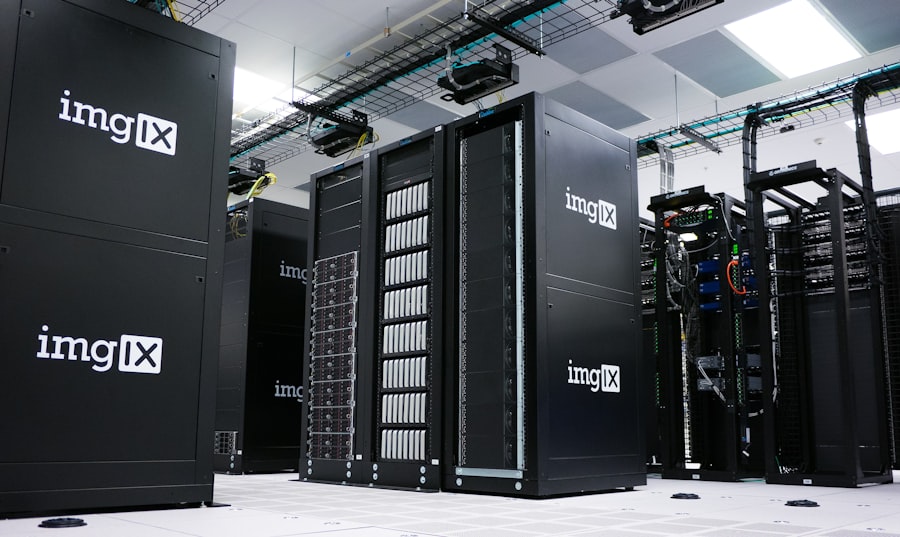
The landscape of timing technology is constantly evolving, driven by the increasing demand for precision and the ever-present threat of disruption. Looking forward, the emphasis will continue to be on diversity, autonomy, and advanced intelligence.
Emerging Technologies
New technologies are continually being developed to enhance timing resilience, offering even more robust alternatives and complementary solutions.
Quantum Clocks and Inertial Sensor Integration
Miniaturized quantum clocks, with their exceptional stability and accuracy, are poised to revolutionize local timing solutions. Their integration with inertial measurement units (IMUs) could provide highly accurate and autonomous PNT in environments where GNSS is unavailable or unreliable, including deep indoor locations or in contested environments. This synergistic approach would provide both short-term absolute position and long-term timing stability.
Low-Earth Orbit (LEO) Satellite Constellations
The proliferation of LEO satellite constellations, initially intended for broadband internet, offers a potential new avenue for timing dissemination. With their proximity to Earth and the sheer number of satellites, these constellations could provide a highly redundant and more robust timing signal than traditional GNSS, which operates at much higher altitudes. The lower signal path length could also reduce susceptibility to atmospheric interference and decrease signal acquisition times.
International Cooperation and Standardization
Ensuring global timing resilience requires a concerted effort on an international scale. The development of common standards and cooperative frameworks will be paramount.
Harmonization of Backup Systems
International collaboration is essential for harmonizing backup systems and ensuring interoperability across national boundaries. This could involve standardizing eLoran signal formats, establishing common protocols for fiber-optic timing distribution, and promoting the adoption of similar authentication mechanisms for GNSS signals. Such harmonization would create a more globally resilient timing infrastructure.
Collaborative Research and Development
Continued collaborative research and development efforts, pooling expertise and resources from different nations and organizations, will be vital for addressing future threats and developing cutting-edge timing technologies. This joint effort can accelerate the development of more robust, secure, and accurate timing solutions, ultimately benefiting all of humanity.
In conclusion, the reliance on GNSS for precise timing underpins the functionality of virtually every aspect of modern society. Recognizing the inherent vulnerabilities of GNSS signals, a proactive and multifaceted approach to timing resilience is no longer optional but imperative. By integrating diverse terrestrial timing systems, leveraging robust atomic clocks and oscillators, implementing advanced signal processing techniques, and establishing intelligent management architectures, we can build a timing infrastructure that is not only robust against current threats but also adaptable to future challenges. The continued investment in research, development, and international cooperation will pave the way for a future where disruptions to the global clock are minimized, ensuring the sustained stability and prosperity of our interconnected world.
WATCH THIS! 🌍 EARTH’S MAGNETIC FIELD IS WEAKENING
FAQs
What is a GNSS timing backup system?
A GNSS timing backup system is an alternative or supplementary timing source used to maintain accurate time synchronization when Global Navigation Satellite System (GNSS) signals are unavailable or compromised. These systems ensure continuous and reliable timing for critical applications.
Why are GNSS timing backup systems important?
GNSS signals can be disrupted by interference, jamming, spoofing, or natural obstructions. Backup systems provide resilience by maintaining precise timing, which is essential for telecommunications, power grids, financial networks, and other infrastructure relying on accurate time.
What types of backup systems are commonly used?
Common GNSS timing backup systems include atomic clocks (such as rubidium or cesium clocks), Network Time Protocol (NTP) servers, Precision Time Protocol (PTP) grandmasters, and terrestrial radio time signals like LORAN or eLORAN.
How do atomic clocks serve as GNSS timing backups?
Atomic clocks provide highly stable and accurate time independently of satellite signals. When GNSS is unavailable, these clocks maintain timing accuracy for extended periods, ensuring minimal disruption to time-sensitive operations.
Can network-based timing protocols replace GNSS timing?
Network-based protocols like NTP and PTP can supplement GNSS timing but often depend on GNSS as a primary reference. While useful as backups, they may not achieve the same precision or reliability in all scenarios, especially if the network itself is compromised.
What are the challenges in implementing GNSS timing backup systems?
Challenges include cost, complexity, maintenance requirements, and ensuring the backup system’s accuracy and reliability match operational needs. Integration with existing infrastructure and regular testing are also critical to effective backup performance.
How often should GNSS timing backup systems be tested?
Regular testing is recommended to verify the backup system’s readiness and accuracy. The frequency depends on the criticality of the application but typically ranges from monthly to quarterly intervals.
Are there regulatory requirements for GNSS timing backup systems?
Certain industries, such as telecommunications and power utilities, may have regulatory mandates requiring GNSS timing backup solutions to ensure operational continuity and security. Compliance depends on regional and sector-specific standards.
What is eLORAN and how does it relate to GNSS timing backup?
eLORAN is an enhanced version of the LORAN terrestrial radio navigation system that provides robust timing and positioning signals. It serves as a complementary or backup system to GNSS, offering resilience against satellite signal disruptions.
Can GNSS timing backup systems protect against spoofing attacks?
Yes, backup systems that do not rely on satellite signals, such as atomic clocks or terrestrial radio signals, can help mitigate the impact of GNSS spoofing attacks by providing an independent and trusted timing source.