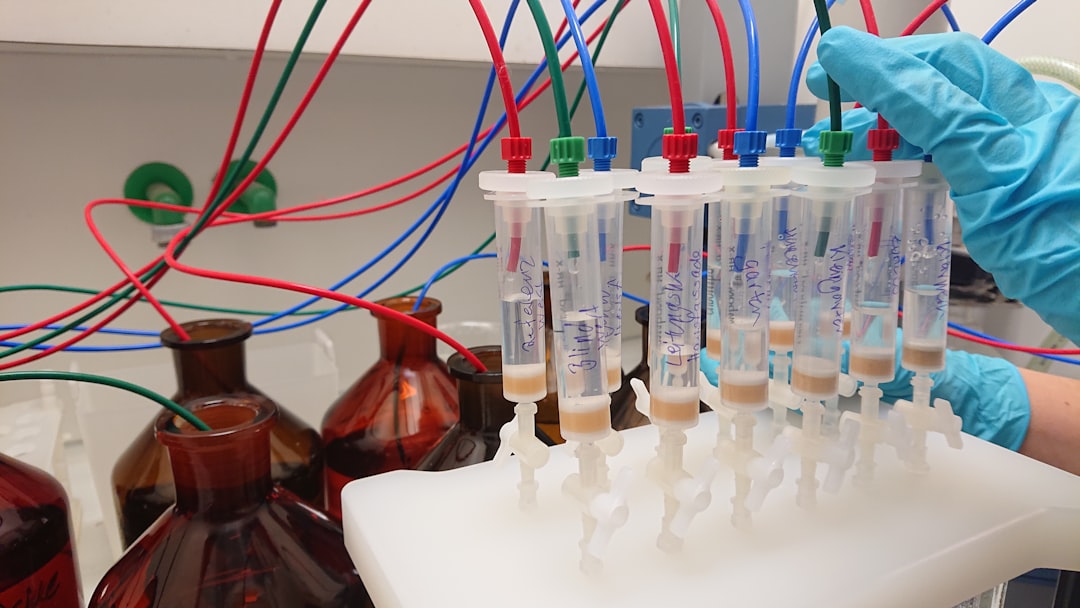
You stand at the precipice of understanding life, not just its presence, but its intricate, hand-wearing nature. Chiral chromatography, a sophisticated tool, offers you a unique lens through which to view the microscopic architecture of biological molecules, revealing secrets that whisper of origins and destinies. This isn’t about simply identifying that something is alive; it’s about discerning the precise molecular “handedness” of life – its biosignature.
Your world is awash with molecules, the fundamental building blocks of everything you perceive. Among these, a peculiar subset exists, molecules that are not identical to their mirror images, much like your left and right hands. This property is known as chirality, derived from the Greek word for “hand.” You, yourself, are chiral. Your hands can perform the same actions, but you cannot perfectly superimpose your left hand onto your right. This symmetry, or rather, the lack thereof, is a pervasive principle in biology.
What is Chirality?
At its core, a chiral molecule possesses at least one stereocenter, typically a carbon atom bonded to four different groups. Imagine this carbon atom as a central point, with four distinct appendages reaching out. If you were to replace one of these appendages with another identical one, the molecule would lose its chirality, becoming achiral. The two non-superimposable mirror-image forms of a chiral molecule are called enantiomers.
Left-Handed vs. Right-Handed Molecules
Just as your hands can be labeled “left” or “right,” enantiomers are assigned specific configurations based on a set of rules (Cahn-Ingold-Prelog priority rules). Think of these configurations as different orientations in three-dimensional space. One enantiomer might be the “R” configuration, and its mirror image the “S” configuration, analogous to a right-hand screw and a left-hand screw.
The Biological Significance of Chirality
The biological realm is overwhelmingly a world of specific enantiomers. Proteins, the workhorses of your cells, are built from amino acids, almost all of which are chiral and exclusively exist in one enantiomeric form (L-amino acids). Similarly, the genetic material DNA and RNA are constructed from nucleotides, whose sugar components are also chiral and found in a specific configuration. This stereospecificity is not an idle quirk of nature; it’s a fundamental requirement for the precise functioning of biological systems. Enzymes, the catalysts for biochemical reactions, are themselves chiral and often exhibit extreme selectivity, binding to only one enantiomer of a substrate while ignoring the other.
Chiral chromatography has emerged as a powerful technique for the detection of biosignatures, particularly in the analysis of enantiomers in biological samples. A related article that delves into the advancements and applications of this method can be found at Freaky Science, where it discusses the significance of chiral separation in understanding complex biological systems and the implications for fields such as pharmacology and environmental science.
Why Separate Enantiomers? The Need for Chiral Chromatography
Understanding why separating enantiomers is crucial begins with recognizing the profound impact their three-dimensional arrangement has on their interactions within biological systems. Imagine a lock and key. A lock is designed to accept a specific key, and a key with even a slight difference in its shape – perhaps a bent tooth – will not fit. Similarly, biological receptors and enzymes are exquisitely tuned to interact with only one specific enantiomer.
Enantioselective Interactions in Biology
Your body is a labyrinth of molecular recognition events. When a drug enters your system, it doesn’t just randomly bump into targets. It docks with specific receptors, a process governed by precise molecular geometry. If a drug is chiral, its two enantiomers can have vastly different pharmacological effects. One might be therapeutic, while the other could be inactive, or worse, toxic. The thalidomide tragedy serves as a stark reminder: one enantiomer was a sedative, while the other caused severe birth defects. This exemplifies the critical need to distinguish between enantiomers for drug safety and efficacy.
Biosignatures: A Molecular Fingerprint
In the search for life beyond Earth, you’re looking for the telltale signs, the biosignatures. These are molecules or patterns of molecules that are unlikely to arise from abiotic (non-biological) processes. While the presence of certain organic molecules might be suggestive, the enantiomeric composition of these molecules can be a much stronger indicator of biological origin. Most abiotic chemical processes produce racemic mixtures – equal proportions of both enantiomers. Life, on the other hand, exhibits a marked preference for one enantiomer over another, a phenomenon called homochirality. Detecting this deviation from a racemic mixture is a powerful way to identify the subtle whispers of life.
The Challenge of Separation
Separating enantiomers is not a trivial task. Because enantiomers have identical physical properties (melting point, boiling point, solubility in achiral solvents), traditional separation techniques like distillation or simple chromatography are ineffective. They are like trying to separate two identical coins by their weight – impossible. You need a method that can “feel” the difference in their three-dimensional shapes.
Chiral Chromatography: The Art of Enantiomeric Separation

This is where chiral chromatography enters the scene, acting as your molecular matchmaker. It employs stationary phases that are themselves chiral, creating a unique environment where enantiomers are treated differently. Imagine walking on a path where one side is cobblestoned and the other is sandy. Even if you’re an equally skilled walker, you’ll progress differently on each surface. Chiral stationary phases work on a similar principle, interacting differently with each enantiomer.
The Chiral Stationary Phase (CSP)
The heart of chiral chromatography lies in the chiral stationary phase (CSP). This is a solid support material, often silica gel, that has been coated or bonded with chiral selector molecules. These selectors are designed to form transient, non-covalent interactions with the enantiomers of your analyte. The strength and type of these interactions will differ between the two enantiomers based on their spatial arrangement.
Mechanisms of Enantioseparation
Several mechanisms contribute to the separation of enantiomers on a CSP:
- Hydrogen Bonding: If the CSP and the enantiomers possess complementary hydrogen bond donors and acceptors, differential hydrogen bonding can lead to different binding strengths.
- Dipole-Dipole Interactions: Polar functional groups within the enantiomers and the CSP can engage in dipole-dipole attractions, with variations in how closely these dipoles align determining the interaction strength.
- π-π Interactions: If both the CSP and the enantiomers contain aromatic rings, π-electron clouds can interact, with steric hindrance playing a role in the degree of overlap.
- Inclusion Complex Formation: Some CSPs form ‘cages’ or cavities where one enantiomer might fit more snugly than the other, leading to differential complexation.
- Steric Hindrance: The most fundamental mechanism, steric interactions arise from the physical bulk of different parts of the enantiomer and the CSP. When one enantiomer can approach the chiral selector more closely or with less obstruction, it leads to a stronger interaction.
The Mobile Phase: The River Carrying the Molecules
Complementing the stationary phase is the mobile phase. This is the solvent or solvent mixture that carries your sample through the chromatographic column. The choice of mobile phase is critical, as it influences the solubility of your analytes, their interaction with the CSP, and the overall efficiency of the separation. By carefully adjusting the mobile phase composition (e.g., polarity, acidity, buffer strength), you can fine-tune the interactions and optimize the separation of enantiomers.
Types of Chiral Chromatography for Biosignature Detection

The versatility of chiral chromatography allows for its application in various forms, each suited to different analytical needs and sample types when searching for biosignatures.
High-Performance Liquid Chromatography (HPLC)
Chiral High-Performance Liquid Chromatography (HPLC) is a workhorse in analytical chemistry and is widely used for enantiomeric separation. In chiral HPLC, a liquid mobile phase is pumped at high pressure through a column packed with a CSP. As your sample passes through, enantiomers that interact more strongly with the CSP will be retained longer, eluting from the column later than those that interact weakly. You can monitor the eluent using detectors (e.g., UV-Vis, mass spectrometry) to identify and quantify the separated enantiomers.
Analytical Scale Chiral HPLC
For biosignature detection, analytical scale HPLC is your primary tool. It allows you to analyze small quantities of sample, precious extraterrestrial material for instance, and accurately determine the enantiomeric composition of key organic molecules. This provides a precise measure of whether a particular molecule exhibits the homochirality characteristic of life.
Preparative Scale Chiral HPLC
While not typically used for initial biosignature detection, preparative scale chiral HPLC can be employed if you need to isolate and purify a specific enantiomer from a mixture. This might be necessary for further characterization or for providing a pure enantiomer for downstream analysis or even seeding experiments.
Gas Chromatography (GC)
Chiral Gas Chromatography (GC) is another powerful technique, particularly effective for volatile chiral compounds. The principle is similar to HPLC, but the mobile phase is an inert gas (e.g., helium, nitrogen), and the stationary phase is often a liquid coating on the inside of a long, thin capillary column. Chiral GC columns are typically coated with chiral polymers or metal complexes that act as the chiral selectors.
Volatile Biosignature Candidates
If you anticipate finding volatile chiral molecules as biosignatures – perhaps from microbial metabolic processes on other planets – chiral GC becomes an invaluable tool. It can separate enantiomers of organic compounds that are too volatile for HPLC or that might degrade under HPLC conditions.
Supercritical Fluid Chromatography (SFC)
Supercritical Fluid Chromatography (SFC) offers a compromise between GC and HPLC. It uses a supercritical fluid, typically carbon dioxide modified with a co-solvent, as the mobile phase. Supercritical fluids possess properties of both liquids and gases, offering high efficiency and speed. Chiral SFC can be particularly advantageous for separating chiral compounds that are thermally labile or have low volatility.
Bridging the Gap in Volatility
SFC can be useful for analyzing chiral compounds that fall into a “gray area” – not volatile enough for efficient GC but not readily soluble or stable enough for easy HPLC. This expands the range of potential biosignatures you can explore.
Chiral chromatography has emerged as a powerful technique for the detection of biosignatures, particularly in the context of understanding complex biological systems. This method allows for the separation of enantiomers, which can provide crucial insights into metabolic processes and the presence of specific biomolecules. For those interested in exploring this topic further, a related article can be found at Freaky Science, where the applications of chiral chromatography in various fields are discussed in detail. The advancements in this area are paving the way for more precise analytical methods in both research and clinical settings.
Detecting Biosignatures: The Chiral Clue
| Parameter | Description | Typical Range/Value | Relevance to Biosignature Detection |
|---|---|---|---|
| Chiral Stationary Phase (CSP) | Type of chiral selector used in chromatography | Polysaccharide derivatives, Cyclodextrins, Pirkle-type phases | Determines enantiomeric resolution and selectivity for biosignature molecules |
| Enantiomeric Excess (ee) | Percentage difference between two enantiomers | 0% to 100% | Indicates biological origin due to homochirality in life forms |
| Retention Time (Rt) | Time taken for an analyte to elute from the column | 1 to 30 minutes (varies by compound and method) | Used to identify and quantify chiral biosignature compounds |
| Limit of Detection (LOD) | Minimum concentration detectable | Low nanomolar to micromolar range | Critical for detecting trace biosignatures in complex samples |
| Sample Types | Types of samples analyzed | Soil, meteorites, water, biological fluids | Varied matrices for biosignature detection in astrobiology and geochemistry |
| Mobile Phase Composition | Solvent system used in chromatography | Hexane/isopropanol, water/acetonitrile mixtures | Affects chiral separation efficiency and resolution |
| Detection Method | Technique used to detect eluted compounds | UV-Vis, Mass Spectrometry (MS), Fluorescence | Enables sensitive and selective detection of chiral biosignatures |
The presence of chiral molecules is not, in itself, a definitive biosignature. Abiotic processes can also produce chiral molecules, albeit often as racemic mixtures. The power of chiral chromatography for biosignature detection lies in its ability to reveal enantiomeric excess (ee), a measure of the predominance of one enantiomer over the other.
Enantiomeric Excess (ee): The Tell-Tale Imbalance
Enantiomeric excess is usually expressed as a percentage. A racemic mixture has 0% ee. If a sample contains 60% of the R enantiomer and 40% of the S enantiomer, it has an ee of 20%. Biological systems, as mentioned, are characterized by homochirality, meaning they strongly favor one enantiomer. Therefore, detecting a significant ee in a chiral organic molecule, especially one known to be involved in biological pathways, is a strong indicator of a biological origin.
Amino Acids: The Cornerstone of Life’s Chirality
Amino acids are fundamental building blocks of proteins. In all known terrestrial life, only L-amino acids are incorporated into proteins. If you were to find evidence of amino acids on another planet, their enantiomeric composition would be a critical piece of evidence. A significantly high ee of L-amino acids would strongly suggest a biological source, while a racemic mixture would point towards abiotic synthesis.
Sugars and Nucleotides: The Blueprint of Life
Similarly, the sugar components of DNA and RNA (ribose and deoxyribose) are chiral and found in a specific configuration (D-sugars). Detecting D-sugars with a high ee in extraterrestrial samples could also be a powerful biosignature.
Fatty Acids and Other Biomolecules
Chirality extends to other classes of biomolecules, including fatty acids, lipids, and certain alcohols. Detecting these chiral molecules with a significant enantiomeric excess can further bolster the case for biological activity.
Challenges and Future Directions in Chiral Biosignature Detection
While chiral chromatography offers a powerful avenue for biosignature detection, it is not without its hurdles and areas for future development.
Sample Contamination and Degradation
One of the most significant challenges you face is ensuring that your samples are not contaminated by terrestrial chiral molecules that could mimic a biosignature. Extreme care must be taken during sample collection, handling, and analysis to prevent cross-contamination. Furthermore, chiral molecules can degrade over time, especially under harsh extraterrestrial conditions. Understanding the stability of potential biosignature molecules is crucial for interpreting analytical results.
Identification of Novel Chirality
Earth life has a remarkable, but not infinite, set of preferred enantiomers. It is possible that extraterrestrial life might utilize different chiral building blocks or exhibit chirality in unexpected ways. The development of more adaptable and broadly applicable chiral selectors for chromatography is essential to detect these novel forms of chirality. You must remain open to the possibility that life elsewhere might not perfectly mirror Earth’s molecular preferences.
Sensitivity and Specificity for Trace Analytes
Biosignatures might exist in extremely low concentrations, especially in environments where life is scarce or has ceased to exist. Enhancing the sensitivity of chiral chromatographic methods to reliably detect trace amounts of chiral molecules with high enantiomeric purity is a continuous goal. Simultaneously, ensuring the specificity of your detection methods to differentiate true biosignatures from abiotic interferences is paramount.
Automation and In-Situ Analysis
For planetary exploration, the ability to perform chiral analysis autonomously in situ (on-site) is highly desirable. This would reduce the need for sample return missions, which are complex and expensive, and allow for rapid analysis of diverse locations. Developing robust, miniaturized chiral chromatographic systems that can operate reliably in extraterrestrial environments is a key area of future research. Imagine a small laboratory on a rover, sniffing out the subtle hints of life.
Integration with Other Analytical Techniques
Chiral chromatography is most powerful when integrated with other analytical techniques. Coupling chiral HPLC or GC with mass spectrometry (MS) provides not only separation but also definitive identification and structural elucidation of the separated enantiomers. Spectroscopic techniques can also provide complementary information about molecular structure and chirality. A multi-pronged analytical approach increases confidence in the identification of biosignatures.
In conclusion, your journey to find life beyond Earth is as much about understanding its fundamental molecular architecture as it is about finding its presence. Chiral chromatography, with its ability to discern the subtle “handedness” of molecules, offers you a sophisticated and indispensable tool in this quest. By understanding the principles of chirality, the mechanisms of separation, and the power of enantiomeric excess, you are better equipped to identify the molecular whispers that might just be the definitive biosignatures of life. The universe is a grand book, and chiral chromatography is one of the keys you hold to deciphering its most profound chapters.
FAQs
What is chiral chromatography?
Chiral chromatography is a type of chromatographic technique used to separate enantiomers, which are molecules that are mirror images of each other but cannot be superimposed. This method is essential for analyzing chiral compounds in various fields, including pharmaceuticals and biosignature detection.
How is chiral chromatography used in biosignature detection?
In biosignature detection, chiral chromatography helps identify and differentiate biological molecules based on their chirality. Since many biological molecules are chiral, detecting specific enantiomers can provide evidence of biological activity or the presence of life-related compounds.
What types of chiral stationary phases are commonly used?
Common chiral stationary phases include polysaccharide derivatives, cyclodextrins, and protein-based materials. These phases interact differently with each enantiomer, allowing for their separation during the chromatographic process.
Why is chirality important in detecting biosignatures?
Chirality is a key indicator of biological processes because most living organisms produce molecules with specific chiral orientations. Detecting an excess of one enantiomer over another can suggest biological origin, making chirality a crucial factor in biosignature analysis.
What are the challenges of using chiral chromatography for biosignature detection?
Challenges include the complexity of natural samples, low concentrations of target molecules, and the need for highly selective and sensitive chiral stationary phases. Additionally, distinguishing between abiotic and biotic sources of chiral molecules can be difficult, requiring careful interpretation of results.