Astrobiology is a multidisciplinary field that explores the potential for life beyond Earth, examining the origins, evolution, distribution, and future of life in the universe. It combines elements of biology, chemistry, geology, and astronomy to understand how life might arise in various environments, both on our planet and elsewhere in the cosmos. The quest for knowledge in astrobiology is driven by fundamental questions about the nature of life itself: What constitutes life?
How did it begin? And could it exist in forms we have yet to imagine? The field of astrobiology has gained significant traction in recent years, particularly with advancements in technology that allow scientists to explore extreme environments on Earth and beyond.
Researchers are not only interested in finding extraterrestrial life but also in understanding the conditions that support life. This includes studying the biochemical processes that sustain organisms in harsh environments, which can provide insights into how life might survive on other planets or moons with extreme conditions.
Key Takeaways
- Astrobiology studies life in the universe, focusing on life’s origins, evolution, and potential existence beyond Earth.
- Extremophiles are organisms that thrive in extreme environments, providing insights into life’s adaptability.
- Studying extremophiles helps identify possible habitats for extraterrestrial life on planets and moons.
- Extremophiles play a crucial role in space exploration by informing the search for life and guiding mission designs.
- Discovering extraterrestrial life could have profound scientific, philosophical, and societal implications.
The Importance of Extremophiles
Extremophiles are organisms that thrive in conditions considered extreme by human standards, such as high temperatures, extreme acidity, or high salinity. Their existence challenges traditional notions of the limits of life and expands the understanding of where and how life can exist. By studying extremophiles, scientists gain valuable insights into the resilience and adaptability of life, which is crucial for astrobiology.
These organisms serve as models for understanding how life might survive in hostile environments beyond Earth. The significance of extremophiles extends beyond their survival strategies; they also play a vital role in biogeochemical cycles on Earth. For instance, some extremophiles contribute to nutrient cycling in extreme environments like hydrothermal vents or salt flats.
Their metabolic processes can inform researchers about the potential for similar processes to occur on other planets, thereby enhancing the search for extraterrestrial life. Understanding extremophiles helps scientists refine their criteria for habitability and guides the exploration of other celestial bodies.
Types of Extremophiles
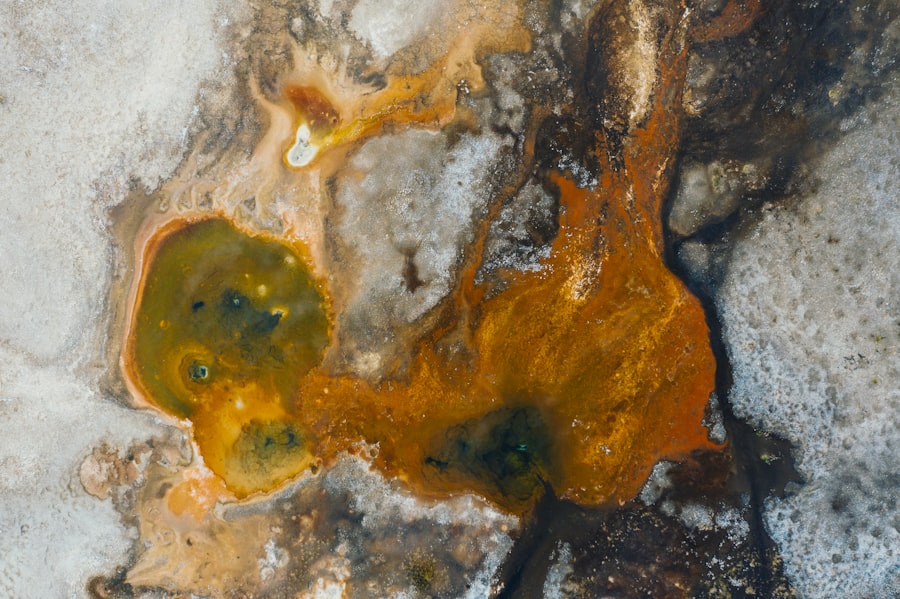
Extremophiles can be categorized based on the specific extreme conditions they endure. Thermophiles, for example, thrive at elevated temperatures, often found in hot springs or hydrothermal vents. These organisms possess unique enzymes that function optimally at high temperatures, making them valuable for industrial applications such as biofuels and pharmaceuticals.
Psychrophiles, on the other hand, flourish in cold environments, such as polar ice caps and deep-sea regions, showcasing the diversity of life’s adaptability.
Alkaliphiles are adapted to basic environments, while piezophiles thrive under high pressure, such as those found in deep ocean trenches.
Each type of extremophile provides unique insights into the biochemical pathways that enable life to flourish under conditions previously thought to be uninhabitable.
Extremophiles on Earth
Earth is home to a remarkable variety of extremophiles that inhabit some of the planet’s most inhospitable environments. For instance, the discovery of microorganisms living in the boiling waters of Yellowstone National Park has revealed how life can endure extreme heat. These thermophilic bacteria not only survive but also thrive in conditions that would be lethal to most other forms of life.
Their unique adaptations have led to significant advancements in biotechnology, particularly in developing heat-stable enzymes used in various industrial processes. In addition to thermophiles, halophiles have been found in salt flats around the world, where they have adapted to high salinity levels that would dehydrate most organisms. These microorganisms often exhibit vibrant colors due to pigments that protect them from intense sunlight and oxidative stress.
The study of these extremophiles has implications for understanding how life might exist on other planets with similar harsh conditions, such as Mars or Europa, one of Jupiter’s moons.
Extremophiles and the Search for Extraterrestrial Life
| Extremophile Type | Environmental Condition | Example Organisms | Relevance to Astrobiology | Known Habitats |
|---|---|---|---|---|
| Thermophiles | High temperature (45-122°C) | Thermus aquaticus, Pyrolobus fumarii | Suggests life can exist near hydrothermal vents on other planets/moons | Hot springs, deep-sea hydrothermal vents |
| Psychrophiles | Low temperature (-20 to 10°C) | Colwellia psychrerythraea, Psychrobacter spp. | Indicates potential for life in icy environments like Europa or Mars | Polar ice caps, permafrost, deep ocean |
| Halophiles | High salinity (up to saturation) | Halobacterium salinarum, Dunaliella salina | Supports possibility of life in salty brines on Mars or icy moons | Salt lakes, salt mines, hypersaline ponds |
| Acidophiles | Low pH (pH 1-5) | Acidithiobacillus ferrooxidans, Ferroplasma acidarmanus | Shows life can survive in acidic environments like sulfuric acid lakes | Acid mine drainage, volcanic springs |
| Alkaliphiles | High pH (pH 9-12) | Bacillus alcalophilus, Natronobacterium | Indicates life can adapt to alkaline environments possibly found on other planets | Alkaline lakes, soda lakes |
| Radiophiles | High radiation levels | Deinococcus radiodurans | Demonstrates potential for life to survive cosmic radiation in space or on Mars | Radioactive waste sites, nuclear reactors |
| Barophiles (Piezophiles) | High pressure (up to 1100 atm) | Thermococcus piezophilus, Shewanella benthica | Suggests life could exist in subsurface oceans of icy moons under high pressure | Deep ocean trenches, deep subsurface environments |
The study of extremophiles has profound implications for the search for extraterrestrial life. By understanding how these organisms survive and thrive in extreme conditions on Earth, scientists can develop hypotheses about where to look for life beyond our planet. For example, Mars has long been a target for astrobiological research due to its past presence of water and current evidence of briny liquid water beneath its surface.
Extremophiles provide a framework for considering how life could exist in such environments. Moreover, the discovery of extremophiles has broadened the scope of astrobiological research to include celestial bodies previously deemed inhospitable. For instance, the icy moons of Jupiter and Saturn—Europa and Enceladus—are now considered prime candidates for hosting life due to their subsurface oceans.
The presence of extremophiles on Earth suggests that if similar conditions exist elsewhere in the solar system, they could potentially harbor microbial life.
The Search for Extraterrestrial Life
The search for extraterrestrial life encompasses a variety of scientific endeavors aimed at detecting signs of life beyond Earth. This includes missions to Mars, where rovers like Perseverance are equipped with instruments designed to analyze soil samples for organic compounds and microbial fossils. Additionally, telescopes are being used to study exoplanets—planets outside our solar system—to identify those that may have conditions suitable for life.
Astrobiologists are also investigating biosignatures—indicators that suggest the presence of life—on distant planets. These biosignatures could include specific gases in a planet’s atmosphere or unusual surface features indicative of biological activity. The ongoing advancements in technology and space exploration are paving the way for more comprehensive searches for extraterrestrial life, with extremophiles serving as a guiding principle for what forms that life might take.
The Role of Extremophiles in Astrobiology
Extremophiles play a crucial role in astrobiology by providing insights into life’s adaptability and resilience under extreme conditions. Their unique biochemical pathways and survival strategies inform researchers about potential life forms that could exist on other planets or moons with harsh environments. By studying extremophiles, scientists can refine their models of habitability and develop more targeted exploration strategies.
Furthermore, extremophiles serve as analogs for potential extraterrestrial organisms. For instance, understanding how certain bacteria metabolize sulfur or utilize light can help scientists predict how similar processes might occur on other celestial bodies. This knowledge is essential for designing experiments and missions aimed at detecting signs of life beyond Earth.
Extremophiles in Space Exploration
The study of extremophiles has significant implications for space exploration missions. As humanity ventures further into space, understanding how these resilient organisms survive can inform strategies for planetary protection and contamination prevention. For example, if extremophiles can survive harsh space conditions, there is a risk that they could contaminate other celestial bodies during exploration missions.
Additionally, extremophiles are being considered for potential use in bioremediation during long-duration space missions. Their ability to thrive on minimal resources could be harnessed to recycle waste products or produce oxygen and food for astronauts on missions to Mars or beyond. This innovative approach highlights the practical applications of extremophile research in supporting human exploration of space.
Challenges in Studying Extremophiles
Despite their significance, studying extremophiles presents several challenges.
Many extremophiles have specific growth requirements that are hard to replicate outside their natural habitats.
This limitation can hinder researchers’ ability to fully understand their biology and metabolic processes. Moreover, there is still much to learn about the genetic diversity among extremophiles. While some species have been extensively studied, many remain uncharacterized or poorly understood.
This gap in knowledge poses challenges when attempting to draw parallels between extremophiles on Earth and potential extraterrestrial life forms. Continued research efforts are necessary to uncover the vast diversity of extremophiles and their adaptations.
Potential Implications of Finding Extraterrestrial Life
The discovery of extraterrestrial life would have profound implications for humanity’s understanding of its place in the universe. It would challenge existing scientific paradigms and raise philosophical questions about the nature of life itself. The implications could extend beyond science into ethics, religion, and society as a whole.
Finding extraterrestrial life could also catalyze advancements in technology and international collaboration as nations unite in the pursuit of knowledge about our cosmic neighbors. The potential for discovering intelligent life raises questions about communication and interaction with such beings, further complicating humanity’s relationship with the universe.
Future of Astrobiology and Extremophiles Research
The future of astrobiology is bright as advancements in technology continue to enhance our understanding of life’s potential beyond Earth. Ongoing missions to Mars and other celestial bodies will likely yield new discoveries about extreme environments and their capacity to support life. As researchers delve deeper into the study of extremophiles, they will uncover more about life’s resilience and adaptability.
Moreover, interdisciplinary collaboration will be essential for advancing astrobiological research. By integrating knowledge from various scientific fields—such as microbiology, planetary science, and engineering—scientists can develop innovative approaches to exploring life’s possibilities across the universe. The continued study of extremophiles will undoubtedly play a pivotal role in shaping humanity’s quest to understand its place among the stars.
Astrobiology explores the potential for life beyond Earth, particularly in extreme environments where extremophiles thrive. These remarkable organisms, which can survive in conditions previously thought to be uninhabitable, provide valuable insights into the possibilities of extraterrestrial life. For a deeper understanding of how extremophiles adapt to extreme conditions, you can read more in this related article on Freaky Science.
WATCH THIS! 🌌 Where Is Everybody? The Discovery That Would End Civilization 🌌
FAQs
What are extremophiles?
Extremophiles are microorganisms that thrive in extreme environmental conditions, such as very high or low temperatures, high salinity, acidic or alkaline environments, and high radiation levels.
Why are extremophiles important in astrobiology?
Extremophiles are important in astrobiology because they demonstrate the potential for life to exist in harsh environments beyond Earth, such as on other planets or moons with extreme conditions.
Where can extremophiles be found on Earth?
Extremophiles can be found in diverse environments on Earth, including deep-sea hydrothermal vents, acidic hot springs, salt flats, polar ice caps, and highly radioactive sites.
How do extremophiles survive in extreme conditions?
Extremophiles have specialized adaptations, such as unique enzymes, protective cell membranes, and efficient DNA repair mechanisms, that allow them to survive and reproduce in extreme conditions.
What types of extremophiles are studied in astrobiology?
Astrobiologists study various types of extremophiles, including thermophiles (heat-loving), psychrophiles (cold-loving), halophiles (salt-loving), acidophiles (acid-loving), and radiation-resistant microbes.
Can extremophiles provide clues about extraterrestrial life?
Yes, studying extremophiles helps scientists understand the limits of life and guides the search for life on other planets by identifying environments where life might exist.
What role do extremophiles play in the search for life on Mars?
Extremophiles serve as models for potential Martian life forms, as Mars has extreme conditions such as low temperatures, high radiation, and dry environments similar to those inhabited by some extremophiles on Earth.
Are extremophiles used in biotechnology?
Yes, extremophiles produce enzymes and biomolecules that are useful in industrial processes, biotechnology, and medicine due to their stability and functionality under extreme conditions.
How do scientists study extremophiles in the lab?
Scientists simulate extreme environmental conditions in the laboratory to culture and study extremophiles, using specialized equipment to replicate temperature, pressure, pH, and salinity levels.
What is the significance of extremophiles in understanding the origin of life?
Extremophiles provide insights into how life might have originated and evolved on early Earth under harsh conditions, offering clues about the resilience and adaptability of life.