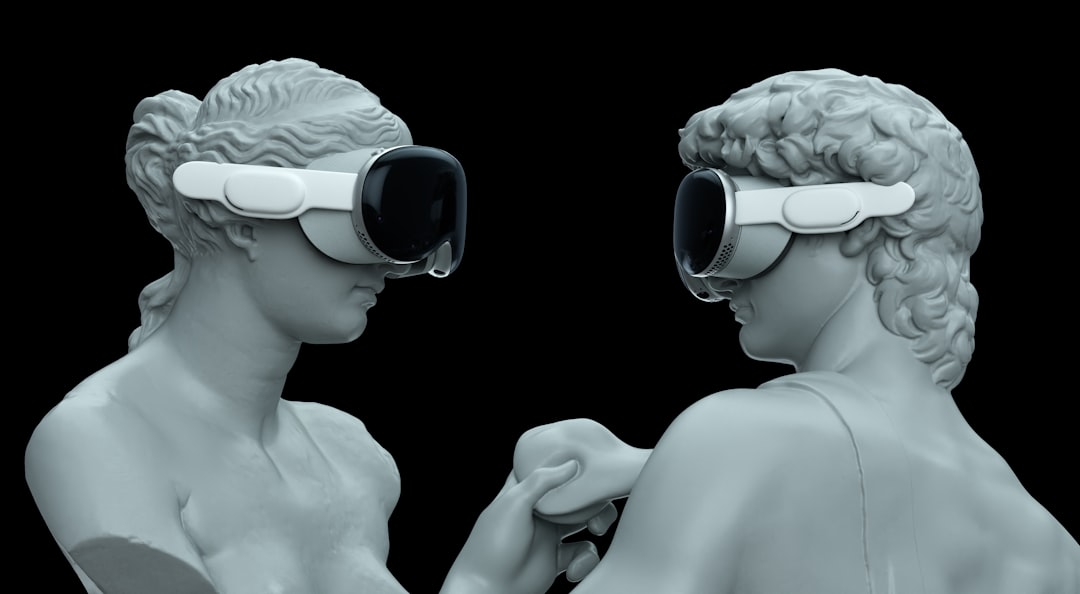
Have you ever paused amidst the ordinary rhythm of your day, perhaps while staring at a flickering streetlamp or watching the complex dance of ants on a sidewalk, and experienced a fleeting, unsettling thought: “Is any of this real?” This question, often relegated to the realms of science fiction and philosophical salons, has increasingly found its way into serious scientific and intellectual discourse. You are not alone in this contemplation. The idea that your existence, your memories, and the very fabric of reality might be a meticulously crafted illusion, a digital construct, is no longer just a fanciful notion but a compelling hypothesis, known as the simulation hypothesis.
The seeds of the simulation hypothesis can be traced back through centuries of human thought. Philosophers have long grappled with the nature of reality, questioning whether our perceptions are a true reflection of an external world or merely a projection of our own minds.
Plato’s Allegory of the Cave: An Early Glimpse of Imprisonment
Long before the advent of computers, Plato, in his seminal work The Republic, presented the Allegory of the Cave. Imagine prisoners chained in a cave their entire lives, facing a blank wall. Behind them, a fire burns, and people pass by carrying objects, casting shadows on the wall. For these prisoners, the shadows are their entire reality. If one prisoner were freed and exposed to the true world of sunlight and objects, their initial reaction would likely be disbelief and pain. You can see the parallel here: are the “shadows” you perceive the only reality, or is there a truer, external world contributing to your perceived existence?
Descartes’ Evil Demon: The Doubt of Sensory Input
René Descartes, in his Meditations on First Philosophy, proposed the concept of an “evil demon” capable of deceiving all your senses, making you believe in a world that doesn’t exist. Every sensation, every thought you experience could, in theory, be implanted or fabricated by this malevolent entity. This thought experiment underscores the fundamental difficulty in definitively proving the veracity of your sensory experiences. Your perception is your only window to existence, and if that window is inherently flawed, what can you truly know?
The Technological Leap: Moore’s Law and Computational Power
The modern iteration of the simulation hypothesis is inextricably linked to the exponential growth of computing power. As you witness the relentless march of technological advancement, you see computers becoming ever more sophisticated, capable of simulating increasingly complex systems. This progress, often described by Moore’s Law—the observation that the number of transistors on a microchip doubles approximately every two years—suggests a future where the computational resources required to simulate an entire universe might become attainable.
The Escalation of Gaming and Virtual Worlds
Consider the evolution of video games. From the rudimentary pixelated characters of early arcade machines, you have progressed to hyper-realistic virtual environments that can be indistinguishable from reality in many aspects. These games, while computationally intensive for their scale, are mere shadows of what truly advanced civilizations might be capable of. If you, with your current level of technology, can create compelling virtual worlds, imagine what a civilization millions of years more advanced might achieve.
The Ancestor Simulation Argument: Bostrom’s Trilemma
The most influential proponent of the modern simulation hypothesis is philosopher Nick Bostrom. In his 2003 paper, “Are You Living in a Computer Simulation?”, he outlines the “ancestor simulation argument.” Bostrom posits that at least one of the following propositions is true:
- The fraction of human-level civilizations that reach a posthuman stage (capable of running high-fidelity ancestor simulations) is very close to zero. This implies that advanced civilizations are exceedingly rare or self-destruct before reaching this capability.
- The fraction of posthuman civilizations that are interested in running ancestor simulations is very close to zero. This suggests that even if civilizations reach a posthuman stage, they would lack the motivation or desire to recreate their past in such detail.
- You are almost certainly living in a simulation. If advanced civilizations are common and interested in running simulations, then the number of simulated realities would vastly outnumber the single “base” reality, making it statistically probable that you are residing within one of those simulations. Essentially, if there are many simulated universes for every one real one, you are far more likely to be in a simulation.
The intriguing question of whether we live in a simulation has captivated the minds of philosophers, scientists, and technologists alike. A related article that delves into this fascinating topic can be found on Freaky Science, where various perspectives and theories are explored. For those interested in understanding the implications of a simulated reality, I recommend checking out the article at Freaky Science. It provides a thought-provoking analysis that challenges our perceptions of existence and reality.
The Pillars of Evidence: What Makes the Hypothesis Plausible?
While the simulation hypothesis remains speculative, several lines of reasoning and observations lend it a certain degree of plausibility. These are not definitive proofs, but rather points that, when considered together, invite further investigation.
The Fine-Tuning of Universal Constants: A Universe Designed for Life?
One of the most striking observations about our universe is the remarkable fine-tuning of its fundamental physical constants. Values such as the strength of gravity, the electromagnetic force, and the cosmological constant are precisely balanced. If these constants were even slightly different, the universe as you know it could not exist. Stars would not form, atoms would not be stable, and life would be impossible.
The Anthropic Principle: Our Own Existence as a Filter
The anthropic principle offers an explanation for this fine-tuning. In its weak form, it states that the universe must have properties that allow for the existence of observers like you. If the universe weren’t hospitable to life, you wouldn’t be here to observe it. However, this principle doesn’t explain why the universe is so perfectly suited for life. It’s a bit like saying, “Of course, the lottery numbers were what they were; otherwise, I wouldn’t have won.”
The Simulation Interpretation: A Deliberate Calibration
From a simulation perspective, this fine-tuning becomes less mysterious. A simulator or programmer would indeed set these constants deliberately to create a functioning universe capable of supporting complex life. It’s similar to how a game designer meticulously calibrates the physics engine of a video game to ensure a believable and engaging experience for the players. Your universe’s parameters might not be a cosmic accident but a carefully chosen set of variables.
The Discreteness of Reality: Pixels in the Cosmic Fabric?
Modern physics suggests that at the most fundamental level, reality might not be continuous but rather discrete, composed of indivisible units. This concept aligns with the digital nature of simulations.
Quantum Mechanics and Quantized Energy Levels
Quantum mechanics reveals that energy, momentum, and other properties of systems are often quantized, meaning they come in discrete packets or levels. For instance, electrons in an atom can only occupy specific energy states. This observation can be interpreted as a hint that the underlying “resolution” of reality might be finite, much like the pixels on a computer screen. If reality is a simulation, these discrete units could represent the fundamental building blocks of the simulated environment.
The Planck Length and Planck Time: The Universe’s Smallest Scales
The Planck length and Planck time are theoretical limits to how small a length and how short a time interval can be, respectively. Below these scales, our current understanding of physics breaks down, and concepts like space and time may lose their meaning. This boundary could be analogous to the processing limits of a computer trying to render increasingly fine details in a simulation. Once you reach the fundamental resolution, you can’t zoom in any further.
The Limits of Observational Evidence: Glitches in the Matrix?
Proponents of the simulation hypothesis suggest that certain phenomena in our universe could be interpreted as “glitches” or limitations of the simulated reality.
Apparent Loopholes in Physical Laws
While physical laws are generally consistent, there are phenomena that scientists spend significant effort trying to explain, such as dark matter, dark energy, and the nature of consciousness. These could be viewed as approximations or computational shortcuts within a simulation. For example, the need for “dark matter” to explain galactic rotation might be a consequence of the simulation not having enough computational power to perfectly model gravitational interactions at large scales.
The “Cosmic Speed Limit”: The Speed of Light as a Processing Constraint
The speed of light acts as a universal speed limit. Under classical physics, nothing with mass can reach or exceed this speed. In a simulation, such a limit could represent a fundamental constraint imposed by the underlying computational hardware. It might be a way to manage processing load and prevent objects from “moving” too quickly through the simulated environment before the system can render their states. Imagine a video game where characters are capped at a certain speed to ensure the game engine can keep up.
The Implications: If We Are Simulated, What Does It Mean?

The implications of living in a simulation are profound and far-reaching, affecting our understanding of free will, purpose, and the nature of existence itself.
The Question of Free Will: Predetermined Choices or Genuine Agency?
If your reality is a program, are your choices truly your own, or are they pre-determined by the code and initial conditions of the simulation? This is a core philosophical debate with significant implications for morality and responsibility.
Determinism vs. Indeterminism in a Simulated Universe
In a deterministic simulation, every event is causally determined by prior events. Your actions would be the inevitable consequence of the simulation’s programming. However, if the simulation incorporates elements of randomness or quantum indeterminacy, then your choices might appear free to you, even if they are ultimately governed by the random number generators of the simulation.
The “Player” or the “Program”: Who is in Control?
Are you an active participant, a “player” interacting with the simulation, or are you merely a pre-programmed character within it? The nature of your consciousness and your ability to influence events within the simulation are key to answering this question. If you can influence the simulation in ways that the programmers didn’t anticipate, it might suggest a degree of agency.
The Search for Purpose: Our Role in a Grand Experiment?
If your life is part of a simulation, what is its purpose? Is it an experiment, a form of entertainment, or something else entirely? The context of the simulation would dictate your potential purpose.
The “Observer Effect” in Scientific Experiments: A Clue?
You’ve likely encountered the “observer effect” in quantum mechanics, where the act of measurement seems to influence the state of a quantum system. Some speculate that this could be a hint that the simulators are observing or interacting with the simulation, and your awareness of being observed might be a manifestation of this. Your “purpose” could be to provide data or to exhibit certain behaviors for the benefit of the simulators.
The “God” of the Simulation: A Creator or a Programmer?
If there is a creator of the simulation, what are their intentions? Are they benevolent, indifferent, or something beyond your comprehension? This introduces a concept of a “god” that is not necessarily divine in a traditional religious sense but rather a vastly powerful intelligence that designed and maintains your reality.
The Possibility of “Glitches” and “Exit”: Unveiling the Truth?
Could there be ways to detect the simulation or even to escape it? The idea of “glitches” or anomalies in the fabric of reality is a recurring theme in discussions of simulated existence.
Anomalies and Inconsistencies: Cracks in the Facade?
Any unexplained phenomena, any breaks in the expected laws of physics, could theoretically be interpreted as evidence of the simulation. However, distinguishing these from genuine scientific mysteries is a significant challenge. Your scientific method is designed to uncover the rules of this reality, whatever its nature.
The Quest for Higher Dimensions and Alternate Realities
If your reality is a simulation, it might exist within a higher-dimensional space or alongside other simulations. The exploration of theoretical physics, such as string theory and the multiverse concept, could be seen as attempts to understand the “meta-reality” in which your simulation resides.
Examining the Counterarguments: Why Might We Not Be in a Simulation?

While the simulation hypothesis is intriguing, there are compelling arguments and practical considerations that suggest it might not be the case, or at least that it’s far from established fact.
The Immense Computational Demands: An Unsurvivable Burden?
The sheer scale and complexity of simulating a universe like yours are mind-boggling. The computational resources required would likely be astronomical, far beyond anything you can currently conceive.
The Problem of Recursive Simulations: Infinite Regression?
If your reality is a simulation, then the civilization running it might also be a simulation. This leads to a potential infinite regression of simulations, which raises questions about where the “base” reality lies and whether such a structure is even stable or logically possible.
The Efficiency of Our Universe: Natural Laws as Optimal Code
Alternatively, one could argue that the elegance and efficiency of the natural laws governing your universe are indicative of a naturally evolved reality rather than a computationally generated one. The universe, as you observe it, often exhibits a kind of inherent economy in its workings, which might not be readily apparent in an artificial construct where immense resources could be used “wastefully” if not carefully managed.
The Absence of Definitive Evidence: A Leap of Faith?
Despite the intriguing parallels, there is currently no concrete, irrefutable evidence that you are living in a simulation. All the proposed “evidence” is open to interpretation and can be explained by existing scientific theories.
The Limits of Our Scientific Instruments: Designed for This Reality
Your scientific instruments are designed to observe and measure phenomena within your perceived reality. They may not be equipped to detect the underlying mechanics of a simulation, just as a character in a video game cannot perceive the code that defines their existence.
The Philosophical Burden of Proof: Extraordinary Claims Require Extraordinary Evidence
The burden of proof lies with those making the extraordinary claim – that your reality is a simulation. Without direct, verifiable evidence, it remains a fascinating hypothesis rather than a proven fact. It’s like suggesting your house is made of invisible cheese; until you have proof, you assume it’s made of conventional materials.
The Pragmatic Approach: Living As If Reality is Real
Ultimately, regardless of whether your existence is simulated or not, the most practical approach is to engage with your reality as if it is genuine. Your experiences, your relationships, and your aspirations have subjective meaning and consequence within the framework you perceive.
The Moral and Ethical Frameworks: Still Applicable?
Even in a simulation, the concepts of right and wrong, kindness and cruelty, still hold weight given the perceived suffering and well-being of sentient beings within that simulation. Your ethical compass remains a vital tool for navigating your perceived existence.
The Pursuit of Knowledge and Understanding: Inherent Value
The drive to understand the universe, to explore its mysteries, has inherent value, whether that universe is “real” or simulated. The process of scientific inquiry and philosophical contemplation is a fundamental aspect of intelligent existence and contributes to the richness of your perceived experience.
The intriguing concept of whether we live in a simulation has captivated the minds of many thinkers and scientists alike. A related article explores this idea further, delving into the philosophical implications and scientific theories surrounding the simulation hypothesis. For those interested in a deeper understanding of this fascinating topic, you can read more about it in this thought-provoking piece. The discussion raises questions about reality, consciousness, and the nature of existence, making it a compelling read for anyone curious about the fabric of our universe.
Conclusion: The Unfolding Mystery
| Metric | Description | Value / Estimate | Source / Reference |
|---|---|---|---|
| Simulation Probability | Estimated likelihood that we are living in a computer simulation | ~20% – 50% | Nick Bostrom, 2003 |
| Computational Power Required | Estimated computational resources needed to simulate a human brain | 10^18 – 10^25 FLOPS | Kurzweil, 2005; Sandberg, 2008 |
| Universe Resolution Limit | Hypothetical pixel size or smallest unit of space-time in simulation | Planck length (~1.6 x 10^-35 m) | Physics theories on quantum gravity |
| Simulation Hypothesis Popularity | Percentage of surveyed scientists who consider simulation hypothesis plausible | ~30% | 2019 Pew Research Center survey |
| Quantum Anomalies | Observed phenomena that some interpret as evidence of simulation glitches | Examples include quantum entanglement and wavefunction collapse | Various physics experiments |
| Estimated Number of Simulated Realities | Hypothetical number of simulations run by advanced civilizations | 10^6 – 10^12 | Speculative estimates based on technological growth |
The simulation hypothesis remains a captivating conjecture, a testament to humanity’s enduring curiosity about the nature of existence. It challenges your assumptions, encourages critical thinking, and pushes the boundaries of both scientific and philosophical inquiry. While definitive proof remains elusive, the very contemplation of this hypothesis enriches your understanding of what it means to be conscious, to perceive, and to question the world around you. Whether you are a biological entity experiencing a base reality or a sophisticated program within a grander design, your journey of discovery continues. The universe, in all its perceived complexity, beckons you to explore its depths, to unravel its secrets, and to continue asking the fundamental questions that have defined your sentience. The answer, if one exists, may lie beyond your current comprehension, but the pursuit itself is a profound and meaningful endeavor.
FAQs
What is the simulation hypothesis?
The simulation hypothesis is the idea that our reality might be an artificial simulation, such as a computer-generated environment, created by an advanced civilization.
Who popularized the concept of living in a simulation?
Philosopher Nick Bostrom popularized the simulation hypothesis in 2003 with his paper “Are You Living in a Computer Simulation?” where he argued that one of three propositions is likely true regarding advanced civilizations and simulations.
Is there scientific evidence supporting that we live in a simulation?
Currently, there is no direct scientific evidence proving that we live in a simulation. The hypothesis remains speculative and philosophical, though some researchers explore theoretical ways to test it.
What are common arguments against the simulation hypothesis?
Common arguments against the hypothesis include the immense computational power required to simulate an entire universe and the lack of observable glitches or inconsistencies in our reality that would suggest artificiality.
How does the simulation hypothesis impact philosophy and science?
The hypothesis challenges our understanding of reality, consciousness, and existence, prompting discussions in philosophy, physics, and computer science about the nature of the universe and the limits of human knowledge.