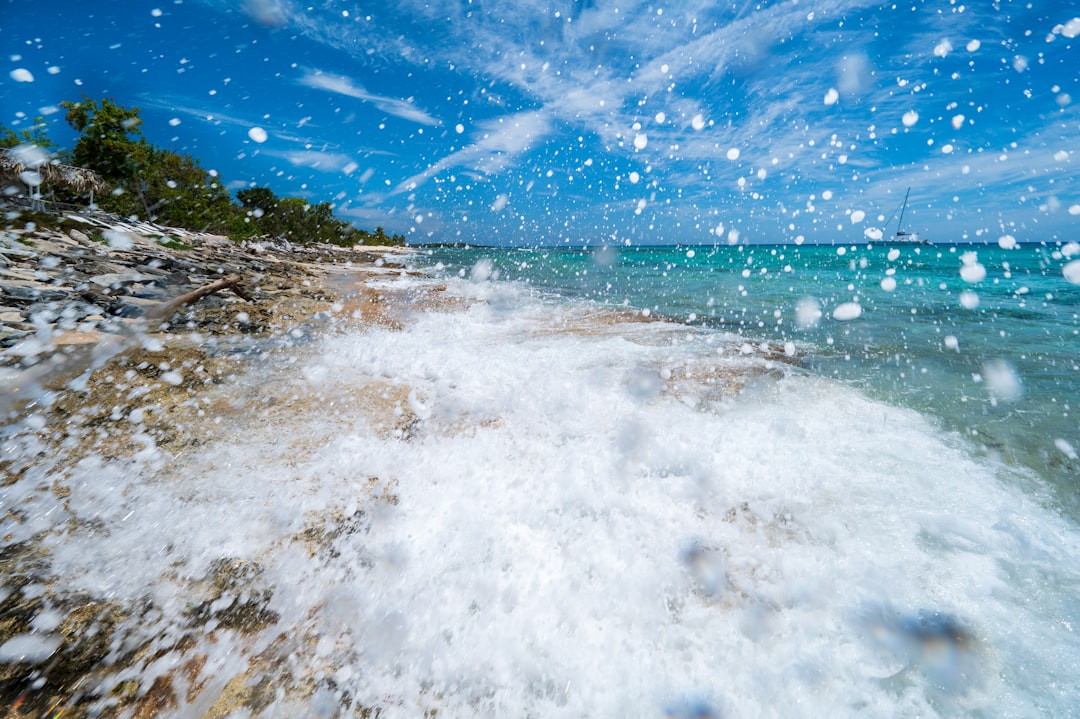
The North Atlantic Ocean, a vast and dynamic body of water, is increasingly experiencing periods of unusually high sea surface temperatures, a phenomenon scientifically termed marine heatwaves. These events are not mere anomalies; they are potent indicators of a changing climate and carry profound implications for the marine ecosystems and the human communities that depend on them. Understanding North Atlantic marine heatwaves requires delving into their definition, drivers, observable impacts, projected future trends, and the strategies being developed to address them.
At its core, a marine heatwave is defined by a prolonged period of anomalously warm ocean temperatures. This warmth is not a fleeting fluctuation but a sustained deviation from the expected temperature for a given time of year and location.
The Threshold Concept
The scientific consensus defines a marine heatwave as a period of at least five consecutive days where the sea surface temperature is above the 90th percentile of the historical climatological baseline for that specific location and time of year. This percentile is crucial because it establishes a benchmark of what is considered “normal” or typical. When temperatures consistently breach this threshold, it triggers the classification as a marine heatwave. This threshold is not a static number but shifts dynamically with the seasons and regional oceanographic conditions.
Anomalies and Baseline Data
The “anomalously warm” aspect is paramount. Scientists construct baselines using decades of historical sea surface temperature data, often from satellite observations and in-situ measurements. These baselines represent the expected temperature range for each day of the year. A marine heatwave occurs when observed temperatures significantly and persistently exceed this established range. Imagine a runner’s pace. A slight increase in speed might be a brief sprint. A marine heatwave is akin to that runner maintaining an unsustainable, record-breaking pace for an extended period, far beyond their usual performance.
Duration and Intensity
Two key metrics characterize marine heatwaves: their duration and intensity. Duration refers to how long the elevated temperatures persist, ranging from days to months. Intensity denotes the magnitude of the temperature anomaly, measuring how much warmer the water becomes compared to the historical average. A short, intensely warm event can be as damaging as a prolonged, moderately warm period. The combination of these factors dictates the severity of the impact on marine life.
Marine heatwaves in the North Atlantic have garnered significant attention due to their impact on marine ecosystems and weather patterns. A related article that delves deeper into this phenomenon can be found at Freaky Science, where researchers discuss the implications of rising sea temperatures and their effects on marine biodiversity. This resource provides valuable insights into the ongoing changes in oceanic conditions and their broader environmental consequences.
Drivers of North Atlantic Marine Heatwaves
The emergence and intensification of North Atlantic marine heatwaves are driven by a confluence of factors, primarily stemming from anthropogenic climate change, but also influenced by natural oceanographic variability.
Anthropogenic Climate Change: The Overarching Influence
The most significant driver is the global warming trend caused by increased concentrations of greenhouse gases in the atmosphere. These gases, such as carbon dioxide and methane, trap heat, leading to a gradual increase in Earth’s average temperature, including the ocean. The ocean acts as a massive heat sink, absorbing over 90% of the excess heat generated by human activities. This continuous absorption inevitably leads to rising sea surface temperatures, providing the fundamental fuel for marine heatwaves. Think of the ocean as a giant sponge, slowly becoming saturated with heat due to greenhouse gas emissions.
Greenhouse Gas Emissions and Ocean Heat Uptake
The sustained increase in atmospheric greenhouse gas concentrations directly correlates with the ocean’s warming. This warming is not uniform, but the North Atlantic has experienced some of the most pronounced warming trends globally. This suggests a particular vulnerability of this region to the impacts of climate change. The energy imbalance caused by these emissions manifests as a steady increase in the thermal energy stored within the ocean.
Atmospheric Circulation Patterns
Beyond the general warming trend, specific atmospheric conditions can amplify or trigger marine heatwaves. Shifts in large-scale atmospheric circulation patterns, such as changes in the position and strength of the jet stream or the prevalence of high-pressure systems, can influence heat transfer from the atmosphere to the ocean.
Blocking High-Pressure Systems
Persistent high-pressure systems, known as “blocking events,” are particularly effective at trapping heat over a region. These systems tend to suppress clouds and light winds, allowing for greater solar radiation to penetrate the ocean surface and reducing the mixing of warmer surface waters with cooler deeper waters. This creates a “cap” of warm water, intensifying the heatwave. Imagine a lid placed firmly on a pot of water; it heats up much faster and stays hotter than an uncovered pot.
Reduced Wind Speed and Mixing
Wind plays a crucial role in ocean mixing, bringing cooler, deeper water to the surface and dispersing heat. During periods of reduced wind speed, this natural cooling mechanism is compromised. The warm surface layer becomes more stratified, trapping heat and preventing its dissipation. This lack of oceanic churning allows the heat to accumulate and intensify.
Oceanographic Factors
Natural oceanic processes also contribute to the occurrence and severity of marine heatwaves, interacting with the overarching climate change influence.
Ocean Currents and Heat Transport
Ocean currents are the planet’s great conveyor belts, transporting heat around the globe. Changes in the strength or pathways of these currents, like the Atlantic Meridional Overturning Circulation (AMOC), can influence regional temperature distributions and potentially exacerbate warming in specific areas. For instance, a weakening of the AMOC could lead to less heat being transported away from the North Atlantic for northward and eastward flow, contributing to localized warming.
Stratification and Reduced Upwelling
Ocean stratification refers to the layering of water masses with different temperatures and densities. Increased stratification, often driven by surface warming, can inhibit vertical mixing. Similarly, reduced upwelling, the process by which deep, cold, nutrient-rich water rises to the surface, can also contribute to warming as this cooling mechanism is less active.
Impacts of North Atlantic Marine Heatwaves

The elevated sea surface temperatures associated with marine heatwaves trigger a cascade of detrimental effects throughout the marine environment, impacting everything from microscopic plankton to apex predators, and ultimately affecting human societies.
Direct Physiological Impacts on Marine Organisms
Marine organisms are adapted to specific temperature ranges. When these temperatures are exceeded for prolonged periods, they experience direct physiological stress.
Thermal Stress and Mortality
Many species have a narrow thermal tolerance. Exceeding this threshold can lead to metabolic disruption, reduced reproductive success, increased susceptibility to disease, and ultimately, mass mortality events. Fish, shellfish, and marine invertebrates are particularly vulnerable, with coral reefs, though less prevalent in the North Atlantic than in tropical waters, also being susceptible to bleaching under extreme heat stress. Imagine a human trying to live in a desert without adequate water; prolonged exposure to extreme heat would overwhelm their system.
Behavioral Changes
In response to warming waters, mobile species may attempt to migrate to cooler regions, altering their typical distribution patterns. This can lead to shifts in predator-prey dynamics and disrupt established food webs. Sessile organisms, unable to move, are left to endure the stress or perish.
Disruption of Marine Ecosystems
The cumulative effects of individual organism stress can lead to profound disruptions at the ecosystem level.
Food Web Alterations
Changes in the abundance and distribution of primary producers (like phytoplankton), zooplankton, and lower trophic level fish can propagate upwards through the food web, impacting larger fish, marine mammals, and seabirds. For example, a decline in the abundance of a key plankton species due to heat stress can starve the organisms that feed on it, creating a domino effect of scarcity.
Habitat Degradation
Marine heatwaves can degrade critical habitats, such as kelp forests and seagrass meadows, which provide essential shelter and feeding grounds for numerous species. The loss of these foundational habitats further exacerbates biodiversity loss and ecosystem instability.
Increased Disease Prevalence
Warmer waters can create favorable conditions for the proliferation of pathogens and increase the susceptibility of marine organisms to diseases, leading to further population declines.
Socioeconomic Consequences
The ecological impacts of marine heatwaves translate directly into significant socioeconomic consequences for human communities.
Fisheries Impacts
Marine heatwaves can devastate commercial and recreational fisheries. Shifts in fish stocks, reduced catch rates, and the collapse of certain fisheries directly impact the livelihoods of fishers and the seafood supply chain. The economic losses can be substantial, affecting coastal economies that rely heavily on fishing.
Aquaculture Challenges
Aquaculture operations, where fish and shellfish are farmed, are also highly vulnerable. Elevated temperatures can lead to mass mortality events in farmed stocks, disrupt growth rates, and increase the susceptibility to diseases, resulting in significant economic losses for farmers.
Tourism and Recreation
Healthy marine ecosystems underpin coastal tourism and recreation. Degraded habitats, loss of iconic species, and an increase in jellyfish blooms (often favored by warmer waters) can deter tourists, impacting local economies.
Coastal Communities and Food Security
For many coastal communities, particularly in developing nations, fish are a primary source of protein and income. The disruption of fisheries by marine heatwaves can threaten food security and exacerbate poverty.
Identifying and Monitoring North Atlantic Marine Heatwaves

Effective management and mitigation of marine heatwaves rely on robust monitoring systems and sophisticated analytical tools to identify and track these events.
Satellite Remote Sensing
Satellites play a pivotal role in providing broad-scale, continuous monitoring of sea surface temperatures. Advanced sensors can measure the temperature of the ocean’s surface across vast areas, allowing scientists to detect anomalies and track the spatial extent of heatwaves.
Infrared and Microwave Radiometers
These instruments measure the thermal radiation emitted by the ocean, which is directly related to its temperature. By comparing these measurements to historical data, scientists can identify areas experiencing unusually warm conditions. The resolution of satellite data enables the detection of temperature variations across hundreds of kilometers.
In-situ Observations
While satellites provide a broad overview, in-situ (on-site) measurements from buoys, research vessels, and autonomous floats offer crucial ground truth and detailed information about subsurface temperatures and other oceanographic parameters.
Argo Floats and Moorings
Argo floats are a global network of robotic probes that drift throughout the ocean, measuring temperature and salinity at various depths. Their data provides invaluable insights into the three-dimensional structure of the ocean and how heat is distributed. Fixed moorings equipped with temperature sensors offer continuous, high-frequency data at specific locations.
Ship-based Surveys and Biological Sampling
Research vessels conduct periodic surveys to collect oceanographic data and biological samples. These surveys help validate satellite data, assess the physiological condition of marine organisms, and monitor ecosystem health during heatwave events.
Climate Models and Forecasting
Climate models are essential for understanding the drivers of marine heatwaves, projecting their future occurrence, and providing early warnings.
Reanalysis Data and Trend Analysis
Scientists use reanalysis data, which combines observational data with climate models to create a consistent historical record of ocean conditions. This data allows for the identification of long-term trends in marine heatwave frequency and intensity.
Coupled Ocean-Atmosphere Models
These complex models simulate the interactions between the ocean and the atmosphere, allowing scientists to forecast future warming trends and the potential for marine heatwaves under different emissions scenarios. Early warning systems built on these models can provide valuable lead time for stakeholders to prepare for potential impacts.
Recent studies have highlighted the increasing frequency and intensity of marine heatwaves in the North Atlantic, which have significant implications for marine ecosystems and fisheries. For a deeper understanding of this phenomenon, you can explore a related article that discusses the impacts of these heatwaves on ocean biodiversity and climate patterns. This insightful piece can be found here, providing valuable information for anyone interested in the ongoing changes in our oceans.
Future Projections and Mitigation Strategies
| Year | Duration (days) | Maximum Temperature Anomaly (°C) | Region | Impact |
|---|---|---|---|---|
| 2018 | 45 | 3.2 | North Atlantic – Gulf Stream | Coral bleaching, fish migration shifts |
| 2019 | 30 | 2.8 | North Atlantic – Bay of Biscay | Reduced plankton productivity |
| 2020 | 50 | 3.5 | North Atlantic – Celtic Sea | Disruption of shellfish breeding cycles |
| 2021 | 40 | 3.0 | North Atlantic – Labrador Sea | Altered fish stock distributions |
| 2022 | 55 | 3.7 | North Atlantic – Mid-Atlantic Ridge | Increased mortality in benthic species |
The future trajectory of North Atlantic marine heatwaves is intrinsically linked to global greenhouse gas emissions and the effectiveness of mitigation and adaptation strategies.
Projected Increases in Frequency and Intensity
Climate models consistently project an increase in the frequency, intensity, and duration of marine heatwaves in the North Atlantic throughout the 21st century. The pace and severity of this increase will depend heavily on the global community’s success in reducing greenhouse gas emissions.
Emissions Scenarios and Warming Pathways
Different emissions scenarios paint starkly different futures. Under high-emission pathways, the North Atlantic can expect significantly more frequent and intense heatwaves, leading to widespread ecological and socioeconomic disruption. Conversely, aggressive emissions reductions could limit the severity of these future events. The path we choose now will determine the ocean’s future thermal stress.
Mitigation and Adaptation Measures
Addressing the challenge of marine heatwaves requires a multi-pronged approach encompassing both efforts to reduce the root cause (climate change) and strategies to adapt to the inevitable impacts.
Global Greenhouse Gas Reductions
The most critical mitigation strategy is the global reduction of greenhouse gas emissions, aligning with the goals of international climate agreements. Stabilizing global temperatures is the ultimate solution for curbing the fundamental driver of ocean warming and, consequently, marine heatwaves.
Ecosystem-Based Management and Marine Protected Areas
Implementing robust ecosystem-based management practices can enhance the resilience of marine ecosystems. Establishing and effectively managing marine protected areas (MPAs) can provide refuges for species, allowing them to recover from stress and fostering greater biodiversity, which can make ecosystems more adaptable to changing conditions.
Early Warning Systems and Adaptive Fisheries Management
Developing and refining early warning systems for marine heatwaves can provide valuable lead time for coastal communities and fisheries managers. This allows for proactive decision-making, such as temporary fishing closures in vulnerable areas or the development of alternative livelihoods. Adaptive fisheries management, which can adjust quotas and fishing seasons based on real-time environmental conditions, becomes increasingly crucial.
Climate-Resilient Aquaculture
Developing and implementing climate-resilient aquaculture practices is essential. This includes selecting species with higher thermal tolerance, optimizing stocking densities, and utilizing advanced monitoring and control systems to manage water quality and temperature within optimal ranges.
Research and Innovation
Continued investment in scientific research is vital for improving our understanding of marine heatwave dynamics, their impacts, and the effectiveness of various mitigation and adaptation strategies. Innovations in areas such as remote sensing, genetic research for heat-tolerant species, and novel ecosystem restoration techniques will be critical.
The North Atlantic, with its intricate ecosystems and vital role in global climate regulation, is on the front lines of a warming world. Understanding North Atlantic marine heatwaves is not merely an academic exercise; it is a critical imperative for safeguarding marine biodiversity, ensuring food security, and supporting the livelihoods of millions who depend on the health of this magnificent ocean. The time for decisive action, guided by scientific understanding, is now.
FAQs
What are marine heatwaves in the North Atlantic?
Marine heatwaves in the North Atlantic are prolonged periods of unusually high sea surface temperatures in the region. These events can last from days to months and significantly impact marine ecosystems.
What causes marine heatwaves in the North Atlantic?
Marine heatwaves in the North Atlantic are caused by a combination of factors including atmospheric conditions, ocean currents, reduced wind mixing, and climate change, which leads to increased ocean temperatures.
How do marine heatwaves affect marine life in the North Atlantic?
Marine heatwaves can disrupt marine ecosystems by causing stress to fish, coral, and other marine species. They can lead to shifts in species distribution, coral bleaching, and reduced productivity in fisheries.
Have marine heatwaves in the North Atlantic become more frequent or intense?
Yes, scientific studies indicate that marine heatwaves in the North Atlantic have become more frequent and intense in recent decades, largely due to global warming and changing oceanographic conditions.
What measures are being taken to monitor and mitigate the impact of marine heatwaves in the North Atlantic?
Researchers use satellite data, ocean buoys, and climate models to monitor marine heatwaves. Efforts to mitigate impacts include improving fisheries management, protecting vulnerable habitats, and reducing greenhouse gas emissions to address climate change.