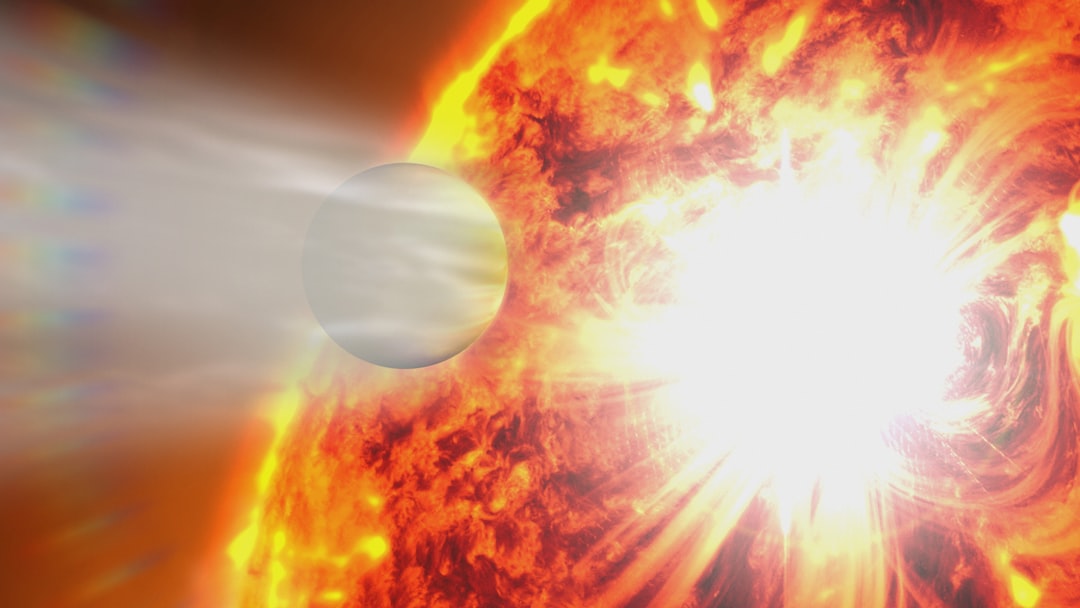
The Earth, a vibrant blue marble suspended in the cosmic ocean, is constantly bathed in a torrent of radiation from our nearest star, the Sun. While this solar radiance fuels life and paints our skies with dazzling auroras, it also carries a potent, unseen force: solar storms. These are not mere weather events; they are cataclysmic releases of energy from the Sun’s surface, capable of etching their signature across vast interstellar distances. When these energetic particles and magnetic field fluctuations interact with our planet, they unleash a chain reaction that can ripple through the very fabric of our digital infrastructure, particularly impacting the vital arteries of transoceanic data traffic. Understanding the nature of these solar storms and their profound influence on the undersea fiber optic cables that form the backbone of global communication is crucial in an increasingly interconnected world.
The Sun, a colossal fusion reactor, is an arena of perpetual, dynamic activity. Its visible surface, the photosphere, is a tapestry woven with magnetic field lines. These intricate magnetic patterns are the architects of solar storms, orchestrating powerful eruptions and expulsions of plasma. It is essential to grasp the fundamental processes that give rise to these events to appreciate their potential downstream consequences.
The Solar Cycle: A Rhythmic Dance of Activity
The Sun does not operate with a constant output. Instead, it undergoes a roughly 11-year cycle of activity, characterized by a waxing and waning of sunspots, solar flares, and coronal mass ejections (CMEs). At the solar maximum, the Sun’s magnetic field is tangled and chaotic, leading to a more frequent and intense barrage of these energetic outbursts. Conversely, during solar minimum, the Sun appears quieter, but even in these lull periods, significant events can still occur. Observing and predicting the solar cycle is akin to charting the tides of a vast, celestial ocean, allowing scientists to anticipate periods of heightened risk.
Solar Flares: Sudden Bursts of Electromagnetic Radiation
A solar flare is a sudden, intense burst of electromagnetic radiation from the Sun’s surface. Think of it as a celestial spark plug misfiring, releasing a concentrated wave of photons across the spectrum, from radio waves to X-rays and gamma rays. While these flares travel at the speed of light and reach Earth within minutes, their primary impact on transoceanic cables is less direct, affecting primarily satellite communications and radio propagation. However, the underlying phenomena that cause flares often precede or accompany more impactful events.
Coronal Mass Ejections (CMEs): The Sun’s Violent Outbursts
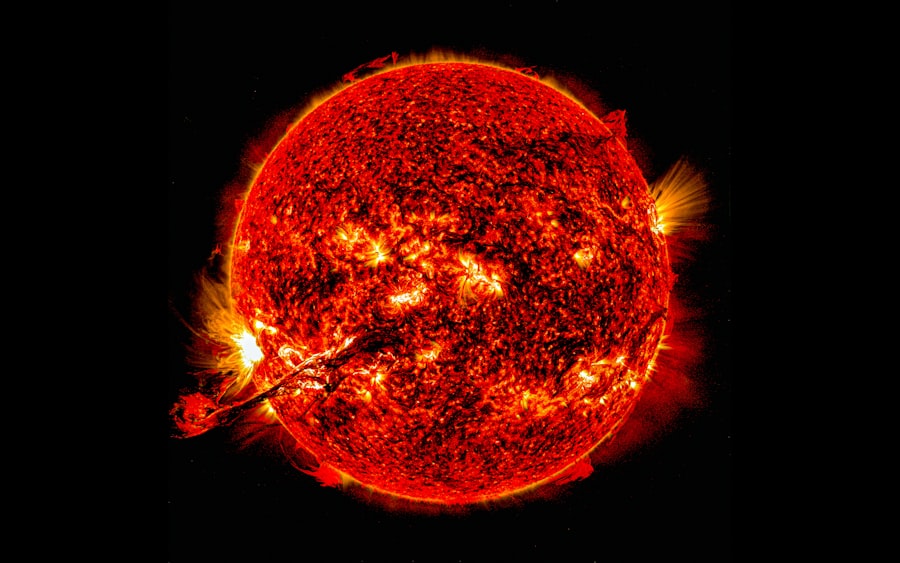
Coronal Mass Ejections are the true titans of solar storms. These are massive expulsions of plasma and magnetic field from the Sun’s corona, its outer atmosphere. A CME can accelerate billions of tons of matter to speeds of millions of miles per hour. When the trajectory of such an event is Earthward, it unleashes a solar storm, a cosmic shotgun blast aimed at our planet. The sheer kinetic energy and embedded magnetic field of a CME are the primary drivers of the disruptions we observe.
Geomagnetic Storms: Earth’s Response to Solar Fury
When a CME or a high-speed solar wind stream reaches Earth, it interacts with our planet’s magnetic field, the magnetosphere. This interaction can lead to a geomagnetic storm, a significant disturbance of the magnetosphere. Imagine the magnetosphere as a shield, deflecting most of the solar onslaught. However, during a severe geomagnetic storm, this shield can be overwhelmed, allowing energetic particles to penetrate deeper and inducing powerful electrical currents. It is these induced currents that pose the most significant threat to our technological arteries.
Recent studies have highlighted the potential impact of solar storms on transoceanic data traffic, emphasizing the vulnerability of undersea cables to geomagnetic disturbances. For a deeper understanding of this phenomenon and its implications for global communications, you can read the related article on this topic at Freaky Science. This resource provides insights into how solar activity can disrupt data transmission and the measures being taken to mitigate these risks.
The Submarine Lifelines: Transoceanic Fiber Optic Cables
A vast, hidden network of fiber optic cables lies beneath the world’s oceans, forming the invisible arteries that carry the lifeblood of global communication. These cables, often no thicker than a human thumb, are the unsung heroes of our digital age, enabling everything from international video calls to high-frequency financial trading and the streaming of countless hours of entertainment. Their resilience is paramount, and their vulnerability to solar storms is a growing concern.
The Backbone of the Internet: How They Work
Transoceanic fiber optic cables transmit data as pulses of light through thin strands of glass. These pulses encode binary information, which is then reassembled at the receiving end. To ensure the signal remains strong over thousands of kilometers, the cables are equipped with repeaters or optical amplifiers, strategically placed along their length. These devices boost the light signal, preventing it from fading into the darkness of the deep sea. The sheer scale of this network is staggering, with hundreds of thousands of kilometers of cable crisscrossing the ocean floor, connecting continents and powering our interconnected world.
The Deep Sea Environment: Harsh but Protective
The deep ocean environment, while seemingly serene, is a realm of immense pressure and perpetual darkness. This harshness, paradoxically, provides a degree of protection for the cables. The water column acts as a buffer against some of the more direct impacts of solar radiation that might affect terrestrial infrastructure. However, this protection is not absolute, and the indirect effects of geomagnetic storms can still penetrate these depths.
Amplifiers and Power Systems: The Achilles’ Heel
The repeaters within the undersea cables require a constant supply of electrical power, which is typically supplied from shore stations through separate power conductors integrated within the cable sheath. These power systems, along with the sensitive electronic components within the amplifiers, are particularly susceptible to the effects of geomagnetically induced currents (GICs). This is where the vulnerability truly lies.
Geomagnetically Induced Currents (GICs): The Invisible Menace
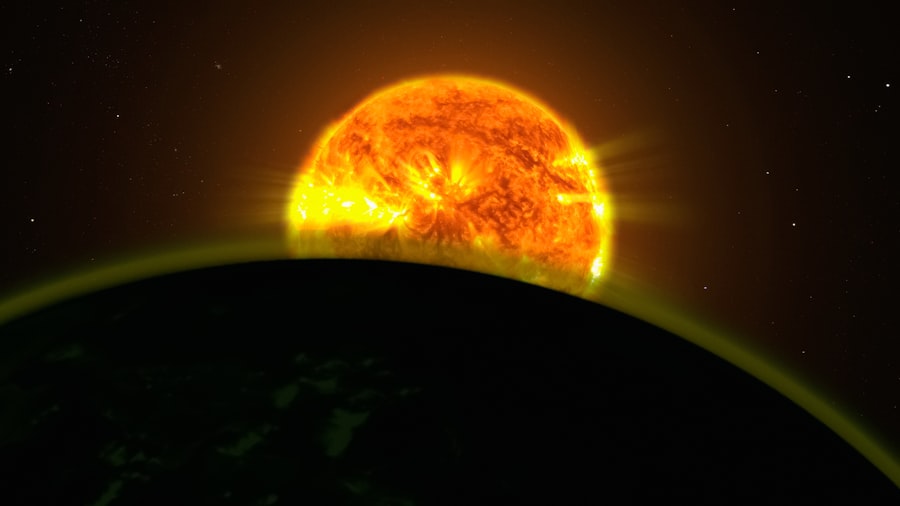
Geomagnetically Induced Currents are electric currents that flow in the Earth’s crust and in conductive systems on its surface during geomagnetic storms. They are not directly caused by the charged particles themselves, but rather by the rapid fluctuations in the Earth’s magnetic field that occur during these events. Think of it as the Earth’s magnetic field being shaken, and this shaking inducing electrical currents in any conductive pathways it encounters, much like a transformer works.
The Mechanism of Induction: Faraday’s Law in Action
The physical principle behind GICs is Faraday’s Law of Induction. This fundamental law of electromagnetism states that a changing magnetic flux through a loop of wire induces an electromotive force (EMF), and consequently, an electric current. During a geomagnetic storm, the Earth’s magnetic field, which acts like a giant, albeit rapidly shifting, loop, experiences significant variations. These variations, when interacting with large, conductive systems like power grids or, critically, long-haul cables, generate GICs.
Flowing Through Conductive Paths: The Cable as an Antenna
The long, continuous lengths of transoceanic fiber optic cables, especially those with integrated power conductors, can act as very effective antennas for these induced currents. As the Earth’s magnetic field fluctuates, it induces an electrical potential difference along the cable. If the cable is also part of a larger conductive circuit, such as being connected to land-based power grids at either end, these induced voltages can drive significant GICs through the cable and its associated electronics.
Impact on Power Systems: A Cascading Threat
The immediate and most well-understood impact of GICs is on terrestrial power grids. They can overload transformers, cause voltage instability, and even lead to widespread blackouts. However, the power systems that supply energy to undersea cable amplifiers are also vulnerable. An influx of GICs can mimic a surge or a fault condition, triggering protective mechanisms within the amplifiers or causing irreparable damage to their sensitive electronic components.
Direct and Indirect Impacts on Transoceanic Data Traffic
The consequences of solar storms on transoceanic data traffic are multifaceted, ranging from subtle degradations in signal quality to complete service interruptions. Understanding these specific impacts is key to developing robust mitigation strategies.
Signal Degradation and Data Errors: The Subtle Sabotage
Even before a complete outage, solar storms can introduce subtle degradations to the integrity of the data signal. The induced electrical currents can cause minor fluctuations in the power supplied to the optical amplifiers. These fluctuations, though seemingly small, can lead to small variations in the amplification levels, introducing noise and bit errors into the transmitted light signal. This is akin to trying to read a book in flickering candlelight; the text is still there, but it becomes harder to decipher accurately, leading to potential data corruption.
Amplifier Malfunctions and Failures: The Weakest Link
As mentioned, the optical amplifiers are critical for maintaining signal strength. If GICs are strong enough to exceed the designed tolerances of the amplifier’s power supply or its internal circuitry, they can lead to immediate hardware failure. This is the more direct and dramatic impact. Imagine a delicate vascular system within the body; if a surge of uncontrolled energy is introduced, it can cause a critical organ to shut down. When multiple amplifiers along a cable section fail, the data link is broken.
Outages and Service Disruptions: The Complete Blackout
When a sufficient number of amplifiers fail, or if protective systems respond by shutting down segments of the cable as a precaution, transoceanic data traffic can grind to a halt. This results in full-blown outages, severing the digital connections between continents. These disruptions can have far-reaching consequences, impacting financial markets, global communication networks, airline operations, and critical scientific research that relies on real-time data exchange. The world suddenly becomes a much larger, more isolated place when these vital data highways are shut down.
Cascading Effects on Terrestrial Networks: The Ripple Effect
The impact of a transoceanic cable outage is not confined to the undersea segment. It can trigger a cascade of problems on terrestrial networks. Internet service providers and data centers will attempt to reroute traffic through alternative undersea cables. However, if the affected event is widespread, or if the alternative cables are also experiencing issues, this rerouting can lead to congestion, further degradation of service, and even localized terrestrial outages as networks struggle to cope with the rerouted load.
Recent studies have highlighted the potential impact of solar storms on transoceanic data traffic, raising concerns about the vulnerability of undersea cables to geomagnetic disturbances. These events can disrupt communication networks and lead to significant data loss, affecting global connectivity. For a deeper understanding of this issue, you can explore a related article that discusses the implications of solar activity on our digital infrastructure. To learn more, check out this insightful piece on the topic here.
Mitigation and Resilience: Preparing for the Cosmic Onslaught
| Metric | Description | Impact Level | Typical Duration | Mitigation Strategies |
|---|---|---|---|---|
| Signal Degradation | Reduction in signal quality due to ionospheric disturbances | Moderate to High | Minutes to Hours | Use of error correction protocols, signal amplification |
| Latency Increase | Delay in data transmission caused by rerouting or signal interference | Low to Moderate | Minutes to Hours | Dynamic routing, network redundancy |
| Packet Loss | Loss of data packets during transmission | Moderate | Minutes | Retransmission protocols, buffering |
| Submarine Cable Damage | Physical damage to cables due to geomagnetically induced currents | Low (rare) | Days to Weeks (repair time) | Regular maintenance, cable shielding |
| Network Outages | Complete loss of connectivity in affected regions | Low to Moderate | Minutes to Hours | Backup satellite links, failover systems |
Recognizing the threat posed by solar storms to our digital infrastructure necessitates a proactive approach to mitigation and enhancing resilience. This involves a combination of improved forecasting, robust engineering, and innovative operational strategies.
Enhanced Solar Forecasting and Space Weather Monitoring: The Early Warning System
The first line of defense is an advanced understanding of impending solar activity. Sophisticated space weather forecasting systems, utilizing data from a network of satellites and ground-based observatories, can provide crucial lead times for potential geomagnetic storms. These systems monitor solar activity, track CMEs, and model their trajectory towards Earth. This early warning allows operators to take preemptive measures. Think of this as a meteorologist issuing a severe weather alert; it gives people time to prepare and take shelter.
Cable Redundancy and Diversification: Building Multiple Arteries
A single point of failure is a significant vulnerability. The telecommunications industry employs significant redundancy in its transoceanic network. Multiple, geographically diverse routes for undersea cables exist between continents, ensuring that if one cable is down, traffic can be rerouted to others. Diversifying the types of cable systems and their placement also adds a layer of resilience, as different designs might have varying sensitivities to GICs.
Protective Measures for Amplifiers and Power Systems: Fortifying the Weak Points
Engineers are continuously working to design and implement more resilient amplifier and power systems. This includes incorporating surge protection devices, improved grounding techniques, and more robust electronic components that are less susceptible to damage from induced currents. Some systems may also be designed to temporarily shut down or isolate themselves during periods of heightened geomagnetic activity to prevent damage, with an automated or rapid manual restart capability.
Operational Strategies: Intelligent Rerouting and Load Management
During periods of predicted or active geomagnetic storms, network operators can employ intelligent operational strategies. This might involve rerouting traffic to less vulnerable cable segments, reducing transmission speeds to minimize the risk of errors, or temporarily deferring non-critical data transfers. Load balancing across available redundant links becomes critical, ensuring that no single link is overwhelmed.
Future Research and Development: Charting the Unknown
The field of space weather and its impact on technology is constantly evolving. Ongoing research aims to improve our understanding of the complex interactions between solar storms and Earth’s magnetosphere and ionosphere. This includes developing more accurate predictive models for GIC generation, assessing the long-term degradation effects on cable materials, and exploring novel materials and designs for future undersea cable infrastructure that are inherently more resistant to these cosmic threats. The quest for a truly resilient global digital infrastructure is a continuous journey, one that requires vigilance and innovation in the face of nature’s most powerful forces.
FAQs
What is a solar storm and how does it occur?
A solar storm is a disturbance on the Sun, often caused by solar flares or coronal mass ejections (CMEs), which release large amounts of charged particles and electromagnetic radiation into space. When these particles reach Earth, they can interact with the planet’s magnetic field and atmosphere, causing geomagnetic storms.
How can solar storms affect transoceanic data traffic?
Solar storms can disrupt transoceanic data traffic by interfering with undersea communication cables and satellite systems that facilitate global internet and data transmission. The geomagnetic disturbances can induce electrical currents in cables and damage electronic equipment, leading to data loss, delays, or outages.
Are undersea communication cables vulnerable to solar storms?
Yes, undersea communication cables can be vulnerable to solar storms, especially through geomagnetically induced currents (GICs) that can affect the cable’s repeaters and power systems. However, these cables are generally well-shielded and designed to withstand many environmental challenges, though extreme solar events may still pose risks.
What measures are taken to protect transoceanic data traffic from solar storm impacts?
To protect transoceanic data traffic, operators use robust cable designs, implement real-time monitoring systems, and develop contingency plans for rerouting data if disruptions occur. Additionally, space weather forecasting helps provide early warnings to prepare and mitigate potential impacts.
How often do solar storms significantly impact global data communications?
Significant impacts on global data communications from solar storms are relatively rare. While solar storms occur frequently, only the most intense events, such as major geomagnetic storms, have the potential to cause widespread disruptions. Continuous advancements in technology and preparedness help minimize these risks.