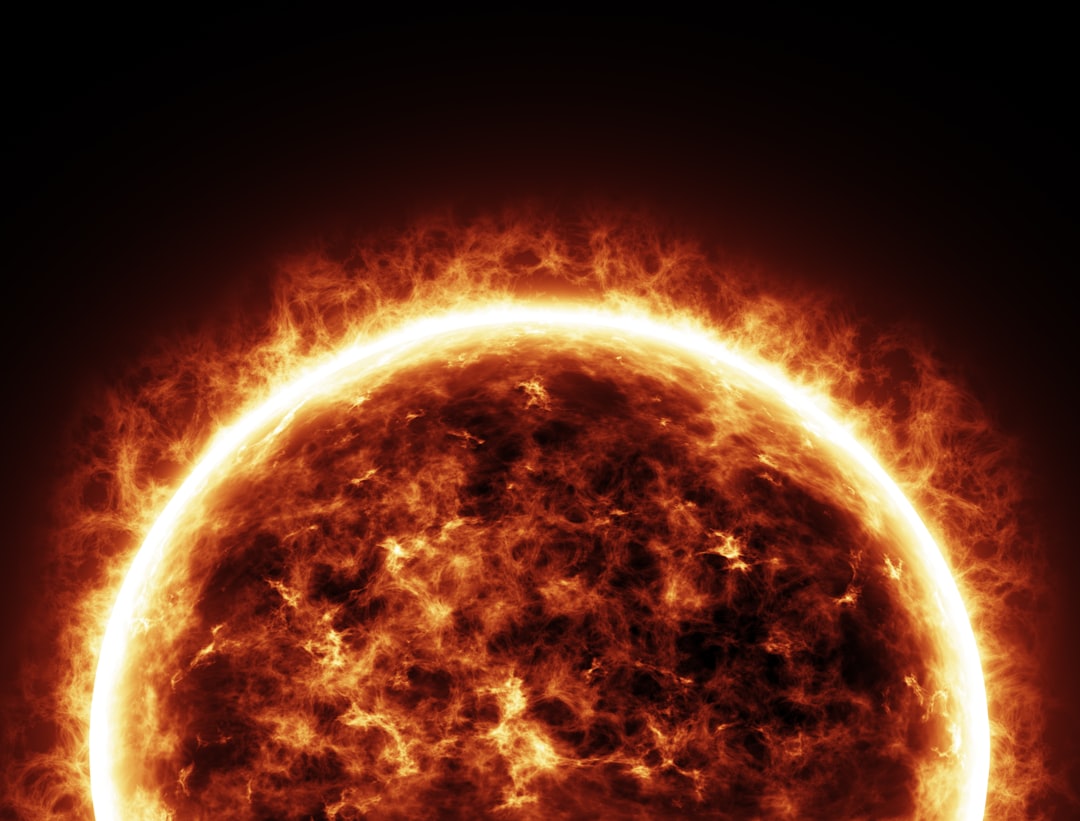
Understanding the key differences between a solar flare and the Carrington Event is crucial for appreciating the spectrum of solar activity and its potential impact on Earth. While both phenomena originate from the Sun and involve intense bursts of energy, they differ significantly in their scale, characteristics, and consequential effects.
The Sun, our star, is a dynamic and turbulent celestial body. Its surface is not a placid, unchanging sphere but a fiery cauldron where magnetic fields twist, tangle, and occasionally snap. Solar flares are a direct manifestation of this magnetic activity.
What Exactly is a Solar Flare?
A solar flare is a sudden, intense burst of radiation that occurs in the Sun’s atmosphere. This radiation, in the form of electromagnetic waves, travels at the speed of light, reaching Earth in approximately eight minutes. Flares are classified into different categories based on their X-ray brightness, with A, B, C, M, and X being the most common designations, where X-class flares are the most powerful.
The Mechanism Behind Solar Flares
The underlying cause of solar flares is the release of magnetic energy stored in the Sun’s atmosphere, specifically in areas known as active regions. These regions are often characterized by sunspots, which are temporary phenomena on the photosphere that appear darker than surrounding areas due to lower temperatures. Within these active regions, magnetic field lines can become twisted and stressed, similar to stretching a rubber band to its breaking point. When these field lines reconfigure, they release an enormous amount of energy, accelerating charged particles to near the speed of light and emitting intense radiation across the electromagnetic spectrum.
Types and Intensity of Solar Flares
Solar flares are not a monolithic event. Their intensity varies dramatically, dictating their potential impact.
X-Class Flares: The Heaviest Hitters
X-class flares are the most powerful solar flares. They are capable of causing widespread radio blackouts around the entire planet and can trigger long-lasting radiation storms. These are the events that capture the attention of space weather forecasters.
M-Class Flares: Moderate Disturbances
M-class flares are considered medium-sized. They can cause brief radio blackouts in polar regions and can be accompanied by minor radiation storms. While less severe than X-class flares, they can still disrupt satellite operations and communication systems.
C-Class and Below: Minor Ripples
C-class flares are small and have very few noticeable consequences on Earth. They are so common that they are usually not a cause for concern. Flares smaller than C-class are even less significant.
Impacts of Solar Flares on Earth
The effects of a solar flare on Earth are primarily felt through its electromagnetic radiation and the energetic particles it can release.
Radio Blackouts and Communication Disruptions
The intense X-rays and ultraviolet radiation emitted during a solar flare can ionize the Earth’s upper atmosphere, specifically the ionosphere. This ionization disrupts high-frequency radio communications, leading to signal degradation or complete blackouts. Imagine a sudden static storm overwhelming your radio; this is the atmospheric equivalent on a global scale.
Satellite Operations and GPS
The charged particles accelerated by flares can penetrate satellites, damaging sensitive electronic components and interfering with their operation. This can lead to temporary or permanent malfunctions, impacting everything from weather forecasting to navigation systems. Even GPS signals can be affected by the increased ionization in the atmosphere.
Radiation Exposure
While the Earth’s magnetic field and atmosphere provide significant protection, powerful solar flares can increase radiation levels at high altitudes and in polar regions. This is a concern for astronauts in space and for passengers and crew on high-altitude, polar-route aircraft.
Understanding the difference between a solar flare and the Carrington Event is crucial for comprehending the impact of solar activity on Earth. While solar flares are sudden bursts of energy from the sun, the Carrington Event of 1859 was a massive geomagnetic storm caused by a coronal mass ejection that had significant effects on Earth’s magnetosphere. For a more in-depth exploration of these phenomena, you can read a related article that delves into the specifics of solar activity and its implications by visiting Freaky Science.
The Carrington Event: A Solar Superstorm of Unprecedented Magnitude
The Carrington Event, which occurred in September 1859, stands as a stark reminder of the Sun’s potential to unleash devastating power. It was not merely a solar flare but a colossal combination of solar phenomena, including a massive solar flare and a coronal mass ejection (CME), that swept across space.
What Was the Carrington Event?
The Carrington Event is widely regarded as the most intense geomagnetic storm on record. It was triggered by a powerful solar flare observed by Richard Carrington on September 1, 1859, followed a day later by a massive coronal mass ejection (CME) that erupted from the Sun and headed directly towards Earth. The geomagnetic storm resulting from this event had profound and widespread effects on Earth’s systems.
The Dual Threat: Flare and Coronal Mass Ejection
The Carrington Event was characterized by two critical components: a powerful solar flare and an associated coronal mass ejection (CME). While flares release electromagnetic radiation, CMEs are vast eruptions of plasma and magnetic field from the Sun’s corona.
Solar Flare as the Spark
The initial solar flare observed by Carrington was exceptionally intense, releasing a torrent of X-rays and charged particles. This flare acted as the “spark” that ignited the subsequent, more impactful event.
Coronal Mass Ejections: The Interplanetary Shockwave
The true destructive power of the Carrington Event lay in the massive CME that followed. CMEs are like giant bubbles of magnetized plasma that burst out from the Sun at incredible speeds. When a CME is directed towards Earth, it can collide with our planet’s magnetic field, causing a geomagnetic storm. The CME associated with the Carrington Event was exceptionally large and fast-moving, striking Earth with immense force.
The Geomagnetic Storm: The Earth’s Magnetic Field Under Siege
The arrival of the CME at Earth triggered a colossal geomagnetic storm. This is where the distinction between a solar flare and the Carrington Event becomes most pronounced. A solar flare is a localized burst of energy, while a geomagnetic storm is a global disturbance of Earth’s magnetosphere.
Earth’s Magnetosphere Under Pressure
Earth’s magnetosphere, a protective shield generated by our planet’s molten core, normally deflects the majority of harmful solar particles. However, during a severe geomagnetic storm like the Carrington Event, the force of the incoming solar plasma can compress and distort the magnetosphere, allowing more energetic particles to penetrate. Imagine the magnetosphere as a balloon; a mild gust of wind might barely move it, but a hurricane can significantly deform it.
Aurorae Visible Across the Globe
One of the most dramatic visual manifestations of powerful geomagnetic storms is the aurora. During the Carrington Event, auroras were seen at much lower latitudes than usual, a phenomenon rarely witnessed. Reports described bright red and green auroras visible as far south as the Caribbean and Mexico, painting the night sky with ethereal colors. This widespread visibility indicated the immense extent of the geomagnetic disturbance.
Consequences of the Carrington Event
The impact of the Carrington Event on the technology of its time was significant, providing a stark glimpse into what a similar event could do to our modern, highly interconnected world.
Telegraph Systems Overwhelmed
The telegraph, the dominant communication technology of the mid-19th century, was severely disrupted. Operators reported that telegraph machines sparked, caught fire, and some even sent messages spontaneously without external power. This was due to the geomagnetically induced currents (GICs) flowing through the wires.
Geomagnetically Induced Currents (GICs): The Unseen Threat
GICs are electrical currents that are induced in long, conductive structures, such as telegraph wires or pipelines, by rapidly changing magnetic fields during geomagnetic storms. These currents can overwhelm electronic systems and cause significant damage. Think of them as a rogue electrical current piggybacking on existing infrastructure, flowing where it shouldn’t.
Disruptions to Navigation and Communication
While the telegraph was the primary communication network then, the effects would have had implications for any system relying on electrical currents for its function. The disruption to telegraphy was essentially a precursor to the kind of widespread technological failure we might experience today.
Key Differences Highlighted
To clearly distinguish between a solar flare and the Carrington Event, it is essential to break down their defining characteristics and compare them side-by-side.
Scale and Intensity: A Different League Entirely
The most fundamental difference lies in their scale and intensity. A solar flare is a powerful, yet relatively localized event. The Carrington Event, however, was a massive, coordinated outburst involving multiple solar phenomena that together created a catastrophic geomagnetic storm.
Flare as a Firecracker, Carrington as a Volcano
A solar flare can be likened to a powerful firecracker exploding – a sudden, bright burst of energy. The Carrington Event, in contrast, was more akin to a supervolcano eruption, a cataclysmic release of energy with far-reaching and sustained consequences.
Duration and Impact Profile
The duration and the type of impact also separate these events. Solar flares are typically short-lived, lasting from minutes to hours, and their primary impact is through electromagnetic radiation and short-lived particle streams. The Carrington Event, on the other hand, was part of a longer-lasting geomagnetic storm, with its effects lingering for days.
Transient Radiation vs. Sustained Magnetic Disturbance
Solar flares deliver a powerful, but brief, punch of radiation. The Carrington Event’s impact was characterized by a sustained and profound disturbance of Earth’s magnetic field, leading to widespread GICs and long-lasting effects.
Associated Phenomena: Flare vs. Flare + CME + Geomagnetic Storm
Understanding the full range of phenomena associated with each event is critical. A solar flare is the primary event itself. The Carrington Event, however, was a cascade: a powerful solar flare initiated the release of a massive CME, which then slammed into Earth, triggering a severe geomagnetic storm.
A Chain Reaction of Solar Power
If a solar flare is a single shot, the Carrington Event was a chain reaction. The flare] set in motion the larger CME, and that CME’s interaction with Earth’s magnetosphere was the final, devastating link in the chain.
Modern Implications: What if the Carrington Event Happened Today?
The thought of another Carrington-level event occurring in our modern, technologically dependent society is a scenario that occupies the minds of scientists and policymakers alike. The implications would be far more severe than those observed in 1859.
Our Hyper-Connected World: A Vulnerable Infrastructure
Our modern world is built upon an intricate network of electrical grids, satellites, communication systems, and digital infrastructure. Unlike the telegraph of the 19th century, these systems are interconnected and rely on precise electronic components.
The Fragility of the Grid
A Carrington-scale event today would likely induce massive GICs in power grids, leading to widespread blackouts that could last for weeks, months, or even longer. The cascading failures could cripple financial systems, transportation, water and sewage systems, and emergency services. Imagine a domino effect where the fall of one domino topples hundreds more.
Satellites: The Eyes and Ears of Our World
Our reliance on satellites for communication, navigation (GPS), weather forecasting, and military operations makes them a critical vulnerability. A severe geomagnetic storm could disable or destroy a significant portion of the global satellite constellation, leading to a blackout of essential services.
The Internet and Digital Infrastructure
The internet, the backbone of global communication and commerce, is not immune. While the internet itself is decentralized, the power grids that support the data centers and the communication links are vulnerable to widespread outages.
Preparedness and Mitigation Efforts
Recognizing the potential threat, governments and scientific organizations are actively working to understand and mitigate the risks associated with solar storms.
Space Weather Forecasting and Monitoring
Advanced space weather forecasting systems are in place to monitor solar activity and provide warnings of impending geomagnetic storms. These systems aim to provide as much lead time as possible for protective measures to be taken.
Hardening Infrastructure
Efforts are underway to make critical infrastructure, such as power grids and satellite systems, more resilient to the effects of space weather. This includes developing strategies to protect against GICs and to design more robust electronic components.
International Cooperation
Addressing the global threat of space weather requires international collaboration. Sharing data, research, and best practices is crucial for developing effective mitigation strategies.
Understanding the differences between a solar flare and the Carrington Event is crucial for comprehending solar activity’s impact on Earth. While solar flares are sudden bursts of energy from the sun’s surface, the Carrington Event, which occurred in 1859, was a massive coronal mass ejection that caused widespread disruptions to telegraph systems. For a deeper insight into these phenomena, you can explore a related article that elaborates on their distinctions and implications for modern technology. To read more, visit this informative article.
Distinguishing Flare Characteristics from Carrington Event Impacts
| Aspect | Solar Flare | Carrington Event |
|---|---|---|
| Definition | A sudden, intense burst of radiation from the sun’s surface caused by magnetic energy release. | The most powerful geomagnetic storm on record, caused by a massive solar flare and associated coronal mass ejection (CME) in 1859. |
| Occurrence Frequency | Several times daily during solar maximum; common solar phenomenon. | Extremely rare; once in approximately 150 years or more. |
| Energy Released | Ranges from 10^20 to 10^25 joules depending on class (C, M, X). | Estimated energy release equivalent to an X45+ class solar flare (very high). |
| Impact on Earth | Can cause radio blackouts, minor geomagnetic storms, and auroras. | Severe geomagnetic storm causing widespread telegraph disruptions, auroras visible near the equator, and potential damage to modern electrical grids. |
| Duration | Minutes to hours. | Geomagnetic storm effects lasted several days. |
| Associated Phenomena | Solar radiation bursts, X-rays, UV radiation. | Coronal mass ejection (CME), intense geomagnetic storm, auroras worldwide. |
| Historical Date | Ongoing events; no specific date. | September 1–2, 1859. |
To further solidify the distinction, it’s beneficial to consider how the characteristics of a solar flare translate into the impacts of an event like the Carrington Event.
Flare Characteristics: The Seed of the Storm
The specific characteristics of a solar flare are the “seeds” from which a geomagnetic storm can grow.
Energetic Particle Acceleration
During a flare, particularly powerful ones, charged particles like protons and electrons are accelerated to very high energies. These particles can pose a radiation hazard, but their direct impact on Earth’s magnetic field is less significant than that of a CME.
Electromagnetic Radiation Dominance
The immediate impact of a solar flare is the emission of electromagnetic radiation across the spectrum, from radio waves to gamma rays. This radiation travels at the speed of light and causes effects like radio blackouts.
Carrington Event Impacts: The Harvest of the Storm
The impacts of the Carrington Event were primarily driven by the geomagnetic storm, which was a consequence of the interaction between the CME and Earth’s magnetosphere.
Geomagnetically Induced Currents (GICs)
As mentioned, GICs are the hallmark of severe geomagnetic storms. They are not directly caused by the initial solar flare but by the prolonged and intense fluctuations in Earth’s magnetic field induced by the CME.
Magnetospheric Penetration of Particles
While flares accelerate particles, the CME associated with the Carrington Event injected a massive amount of plasma and magnetic field into the magnetosphere, leading to a more profound and widespread influx of energetic particles into the atmosphere.
Prolonged and Widespread Disturbances
The duration and geographical extent of the Carrington Event’s impacts were vastly different from those of a typical solar flare. The geomagnetic storm affected the entire planet for an extended period, demonstrating the scale of its power.
In conclusion, while solar flares and the Carrington Event both originate from the Sun’s magnetic activity, they represent vastly different phenomena in terms of scale, intensity, and consequential impact. A solar flare is a sudden, intense burst of radiation, whereas the Carrington Event was a colossal solar storm, a confluence of a powerful flare and a massive coronal mass ejection that triggered a geomagnetic storm with devastating consequences. Understanding these distinctions is vital for appreciating the dynamic nature of our Sun and for preparing for the potential challenges posed by severe space weather events in our increasingly technological world.
FAQs
What is a solar flare?
A solar flare is a sudden, intense burst of radiation and energy from the Sun’s surface, caused by the release of magnetic energy stored in the Sun’s atmosphere. It emits light and particles across the electromagnetic spectrum.
What was the Carrington Event?
The Carrington Event was a massive solar storm that occurred in 1859, named after astronomer Richard Carrington who observed the associated solar flare. It caused widespread geomagnetic disturbances and auroras visible at low latitudes.
How do solar flares and the Carrington Event differ?
A solar flare is a general phenomenon involving bursts of solar energy, while the Carrington Event was a specific, extreme solar storm linked to a powerful solar flare and coronal mass ejection that caused significant geomagnetic effects on Earth.
Can all solar flares cause events like the Carrington Event?
No, not all solar flares lead to events like the Carrington Event. The Carrington Event was caused by an exceptionally strong solar flare combined with a coronal mass ejection directed at Earth, which is rare.
What are the potential impacts of a Carrington-like event today?
A Carrington-like event today could disrupt satellite communications, power grids, navigation systems, and cause widespread technological damage due to intense geomagnetic storms induced by solar activity.