
The Earth’s crust is a vast, ever-changing tapestry, and within its stony folds lie secrets of bygone eras. Among the most compelling narratives are those etched in the silent, ancient language of molten rock. Paleomagnetic lava flows, those frozen rivers of fire, are not merely geological formations; they are time capsules, offering a unique window into our planet’s tumultuous past. By studying the magnetic signatures imprinted within these solidified flows, scientists can, in essence, read the history of Earth’s magnetic field and, consequently, glean crucial insights into geological processes, continental drift, and even the planet’s internal dynamics.
The Earth’s magnetic field is a phenomenon that permeates our planet, acting as a protective shield against harmful solar radiation. This invisible force is largely generated by the movement of molten iron and nickel in the Earth’s outer core – a dynamo effect that has been active for billions of years. The magnetic field, much like a giant bar magnet, has a north and south magnetic pole, though these are not fixed geographically and do wander over time. This magnetic field is not static; it fluctuates in strength and, remarkably, has periodically reversed its polarity. These reversals, where north becomes south and south becomes north, are not instantaneous events but rather complex, lengthy processes that occur over thousands of years. Understanding these shifts is fundamental to unlocking the stories held within paleomagnetic lava flows.
The Core Dynamo: A Planetary Engine
The precise mechanisms driving the Earth’s magnetic field are a subject of ongoing scientific research, but the prevailing theory centers on the geodynamo. This process involves the convection of the electrically conductive fluid in the outer core. Heat from the inner core drives this convection, and the Earth’s rotation, through the Coriolis effect, organizes these fluid motions into complex patterns. These patterns generate electric currents, which in turn produce the magnetic field. Think of the outer core as a colossal, churning generator, constantly powering the planet’s magnetic shield.
Polarity Reversals: A Cosmic Flip-Flop
The most dramatic aspect of Earth’s magnetic field is its propensity for reversal. These events are not random but appear to occur with a certain statistical regularity, though the timing can vary considerably. During a reversal, the magnetic field weakens significantly, and multiple north and south poles may briefly emerge before the field reorganizes itself in the opposite orientation. The study of these reversals, known as paleomagnetic polarity reversals, is where lava flows truly shine as historical records.
Paleomagnetic records of lava flows provide crucial insights into the historical behavior of Earth’s magnetic field and its implications for understanding tectonic movements. For a deeper exploration of this fascinating topic, you can read a related article that discusses the methodologies and findings associated with paleomagnetic studies. To learn more, visit this article for an in-depth analysis and further information.
Frozen Fire, Permanent Imprints
When lava erupts from a volcano, it is a incandescent, molten rock. Crucially, it contains magnetic minerals, such as magnetite, which behave like tiny compass needles. As the lava cools and solidifies, these magnetic grains align themselves with the prevailing direction and intensity of the Earth’s magnetic field at that specific time and location. This alignment is effectively a snapshot, a geological fingerprint of the magnetic environment Earth possessed when that particular lava flow cooled. Even after the lava has solidified into rock, these magnetic orientations are locked in, preserving a record of a moment in Earth’s magnetic history.
Thermoremanent Magnetization: The Magnetic Lock
The process by which this magnetic record is preserved is known as thermoremanent magnetization (TRM). As the ferromagnetic minerals in the lava cool below their Curie temperature (the point at which they lose their permanent magnetism), their magnetic domains align with the external magnetic field. This alignment is then “frozen” in place as the rock solidifies. The stronger the external magnetic field and the cooler the minerals are, the more robust and stable the resulting TRM becomes. This is the fundamental principle that allows us to extract magnetic information from ancient rocks.
Direction and Inclination: A Glimpse of Past Poles
The TRM recorded in lava flows provides two key pieces of information: the direction and the inclination of the Earth’s magnetic field at the time of its formation. The direction tells us where magnetic north was relative to the lava flow’s location, and the inclination indicates how steeply the magnetic field lines were dipping into the Earth’s surface. These two parameters, when analyzed from a sufficient number of sites and at different geological ages, allow scientists to reconstruct the path of the geomagnetic poles over vast timescales.
Deciphering the Magnetic Code: Paleomagnetic Analysis
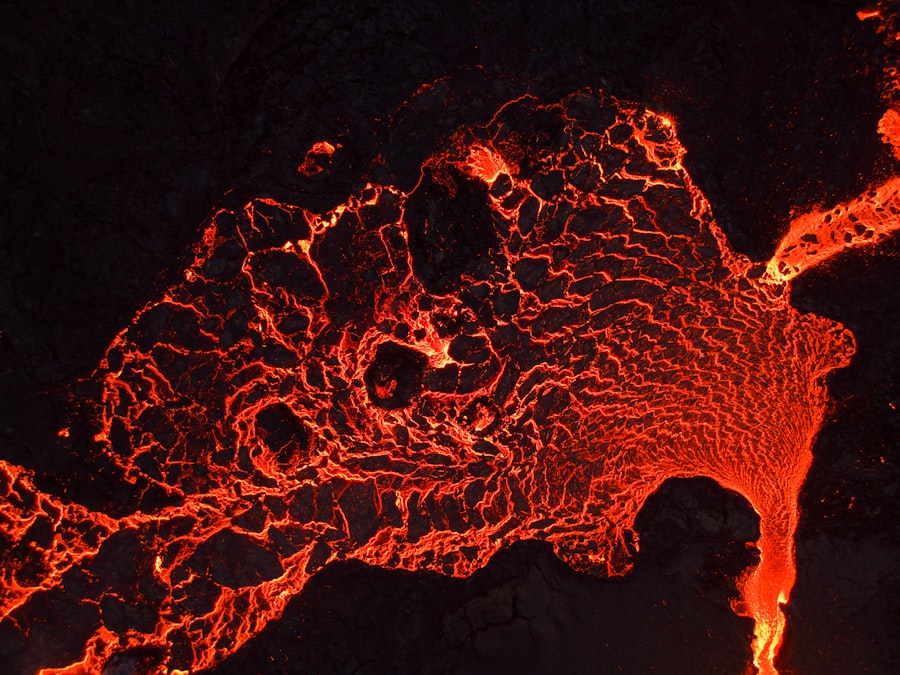
Unlocking the magnetic secrets of lava flows is a meticulous scientific undertaking. Samples are carefully collected from fresh surfaces of lava flows, ensuring that no contamination from recent magnetic fields has occurred. These samples are then brought back to specialized laboratories where their magnetic properties are analyzed using sensitive instruments. The goal is to isolate the original, ancient magnetism (the TRM) from any later superimposed magnetism.
Demagnetization: Stripping Away the Noise
A critical step in paleomagnetic analysis is demagnetization. This process involves carefully exposing the rock samples to alternating magnetic fields or heating them to progressively higher temperatures. Each step’s magnetic signal is measured. The aim is to remove any secondary magnetism acquired over geological time, such as that from lightning strikes or the present-day magnetic field, to reveal the pristine, original magnetic signature. Think of it like carefully peeling back layers of paint to reveal the original artwork beneath.
Paleopole Determination: Tracing the Wanderings
Once the primary magnetization is isolated, scientists can calculate the paleopole – the inferred position of the Earth’s magnetic pole at the time the lava flow solidified. By gathering paleopole data from numerous lava flows of different ages and from various locations on Earth, researchers can plot the apparent polar wander paths. These paths are not a reflection of the continents moving relative to a fixed pole, but rather indicate how the actual magnetic poles have shifted over geological time.
Continental Drift and Plate Tectonics: The Grand Narrative
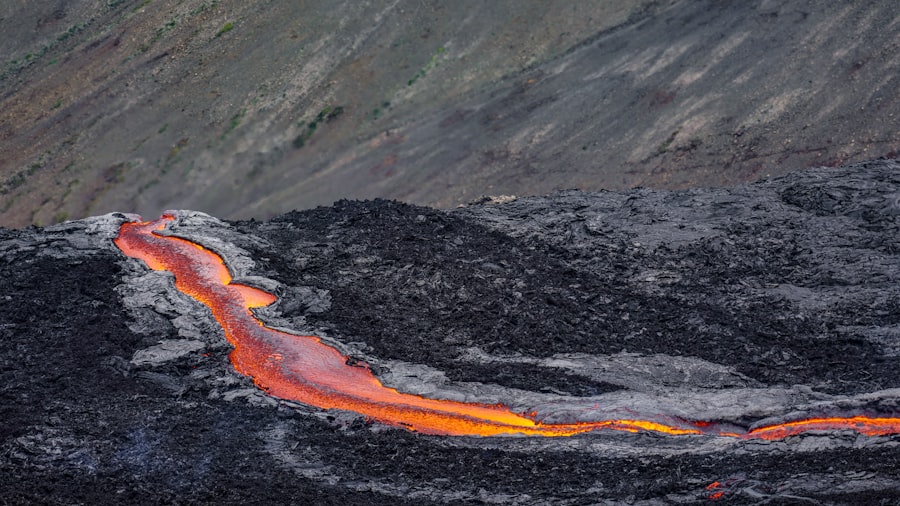
The most profound implications of paleomagnetic studies, particularly those derived from lava flows, lie in their contribution to our understanding of plate tectonics and continental drift. As the Earth’s continents move across its surface, they carry their geological history with them. The paleomagnetic record preserved in ancient lava flows on different continents serves as a powerful tool for piecing together the jigsaw puzzle of Earth’s past configurations. If lava flows of the same age on two different continents show the same paleomagnetic orientation, it suggests they were once adjacent.
Apparent Polar Wander Paths: A Continental Clue
When paleopole positions are plotted on a map for rocks of different ages from a single continental block, they reveal an “apparent polar wander path” unique to that continent. If one compares the apparent polar wander paths of different continents, striking similarities emerge when the continents are reassembled into their ancient supercontinents, such as Pangaea. This is compelling evidence that the continents have indeed moved relative to one another. This is akin to finding matching footprints on different shores, indicating a shared origin.
Paleomagnetic Reconstructions: Visualizing Past Worlds
By integrating paleomagnetic data with other geological evidence, scientists can create detailed paleogeographic reconstructions. These reconstructions illustrate the probable positions of continents and oceans at various points in Earth’s history. Studying these reconstructions allows us to visualize how landmasses have collided, rifted apart, and shifted across the globe, shaping the continents and oceans we see today.
The study of paleomagnetic records in lava flows provides valuable insights into the Earth’s magnetic field changes over time. Researchers have discovered that analyzing the magnetic properties of ancient lava can reveal important information about tectonic movements and volcanic activity. For a deeper understanding of this fascinating topic, you can explore a related article that discusses the implications of these findings in greater detail. Check out the article here to learn more about how paleomagnetic studies contribute to our knowledge of Earth’s geological history.
Earth’s Magnetic Field: A Deeper Understanding
| Flow Name | Location | Age (Ma) | Magnetic Polarity | Declination (°) | Inclination (°) | Intensity (µT) | Rock Type |
|---|---|---|---|---|---|---|---|
| Flow A | Hawaii | 0.5 | Normal | 12 | 45 | 35 | Basalt |
| Flow B | Iceland | 1.2 | Reversed | 198 | -42 | 28 | Basalt |
| Flow C | Japan | 0.8 | Normal | 5 | 50 | 40 | Andesite |
| Flow D | East Africa | 2.0 | Reversed | 185 | -48 | 30 | Basalt |
| Flow E | Chile | 0.3 | Normal | 10 | 47 | 38 | Basalt |
Beyond their role in understanding continental movement, paleomagnetic lava flows also provide invaluable data for comprehending the behavior and evolution of Earth’s magnetic field itself. The frequency and duration of polarity reversals, the rates of magnetic field decay and recovery during reversals, and variations in magnetic field strength over geological time can all be inferred from the detailed chronicles held within these ancient rocks.
The Geomagnetic Polarity Timescale: A Geological Clock
The accumulation of paleomagnetic data from well-dated lava flows has led to the construction of the Geomagnetic Polarity Timescale (GPTS). This is a fundamental tool in geology, a chronometer that divides Earth’s history into distinct intervals of normal and reversed polarity. The GPTS acts as a geological compass, allowing scientists to date rock formations and correlate geological events across vast distances. Each reversal boundary can be considered a chapter marker in our planet’s magnetic biography.
Insights into Core Processes and Mantle Convection
Studying patterns in polarity reversals and variations in magnetic field strength can offer clues about the dynamic processes occurring deep within the Earth’s core. For instance, periods of more frequent reversals might suggest changes in the flow patterns within the outer core. Furthermore, the distribution of volcanic activity, which produces the lava flows we study, is often linked to mantle plumes and convection currents within the Earth’s mantle. Therefore, paleomagnetic studies can indirectly shed light on mantle dynamics as well.
In conclusion, paleomagnetic lava flows are far more than just inert geological specimens. They are eloquent witnesses to Earth’s deep past, offering a tangible record of our planet’s magnetic heartbeat, the grand dance of its continents, and the dynamic forces that shape it from its core to its surface. The insights gleaned from these frozen rivers of fire continue to refine our understanding of Earth’s intricate history and its ongoing evolution.
FAQs
What is a paleomagnetic record?
A paleomagnetic record is the record of the Earth’s past magnetic field preserved in rocks, sediments, or archaeological materials. It provides information about the direction and intensity of the Earth’s magnetic field at the time the material was formed.
How do lava flows preserve paleomagnetic information?
When lava cools and solidifies, magnetic minerals within the lava align with the Earth’s magnetic field. This alignment is locked in as the rock cools below the Curie temperature, preserving a snapshot of the magnetic field’s direction and strength at that time.
Why are lava flows important for studying Earth’s magnetic history?
Lava flows provide well-dated, discrete time markers that record the Earth’s magnetic field at specific moments in geological history. This makes them valuable for reconstructing changes in the Earth’s magnetic field, such as reversals and secular variation.
What can scientists learn from studying paleomagnetic records in lava flows?
Scientists can learn about the timing and frequency of geomagnetic reversals, the movement of tectonic plates, and the behavior of the Earth’s geodynamo. Paleomagnetic data also help in dating geological formations and understanding past continental configurations.
How is paleomagnetic data from lava flows collected and analyzed?
Samples are collected from cooled lava flows and analyzed in laboratories using magnetometers to measure the remanent magnetization. The data are then compared to known geomagnetic polarity timescales to interpret the history of the Earth’s magnetic field.