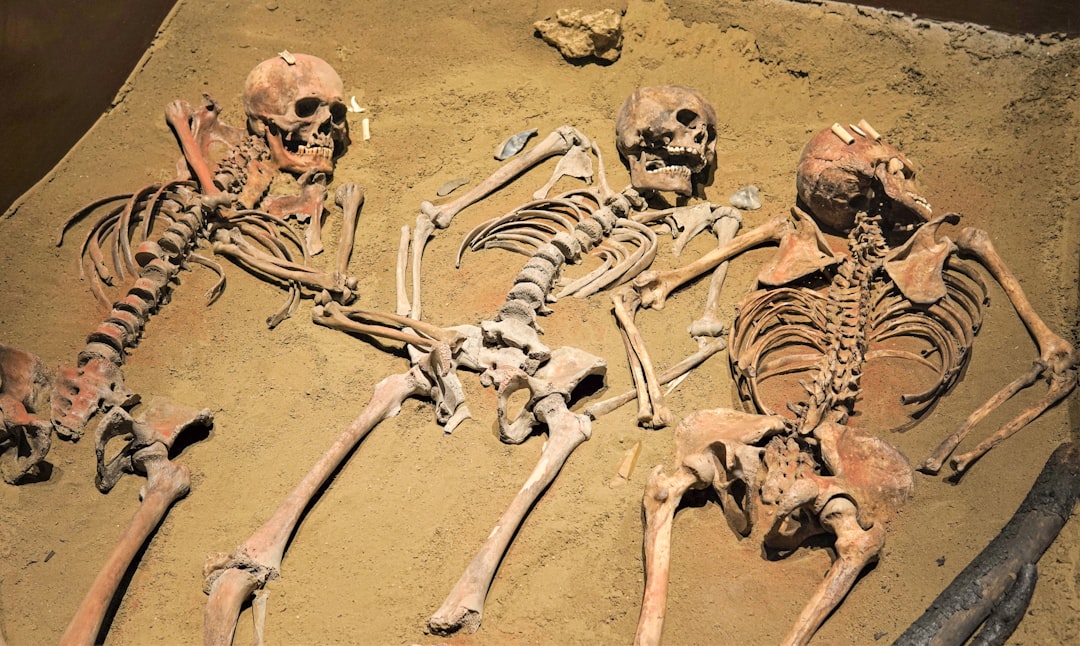
The study of human origins, a field known as paleoanthropology, navigates a complex tapestry of evidence to reconstruct the ancient story of Homo sapiens. This discipline, a fascinating intersection of paleontology, anthropology, and archaeology, probes the fossil record, archaeological sites, and genetic data to illuminate the evolutionary lineage of humankind. It is a quest to understand not just where we come from, but how we evolved, adapting to changing environments and developing the unique cognitive and social complexities that define our species today.
The Dawn of Inquiry: Early Foundations of Paleoanthropology
The early stirrings of paleoanthropology can be traced back to the burgeoning scientific curiosity of the 19th century. Prior to this, prevalent explanations for human existence often rested on religious or mythological narratives.
The Discovery of Neanderthals and the Notion of “Pre-Human” Forms
The unearthing of Neanderthal remains in Germany in 1856, specifically in the Neander Valley, marked a pivotal moment. Initially dismissed as a pathological individual or a deformed soldier, the distinct morphology of the Neanderthal skull and post-cranial skeleton eventually challenged the prevailing notion of a static human form. This discovery, along with others in Europe, began to introduce the revolutionary idea of ancient, “pre-human” populations. These finds, though initially controversial, laid the groundwork for accepting a deeper human past than previously imagined. The scientific community grappled with the implications of these findings, forcing a reassessment of humanity’s place in the natural world.
Darwin’s Influence and the Evolutionary Framework
Charles Darwin’s On the Origin of Species (1859) provided the theoretical scaffolding upon which paleoanthropology would be built. Although Darwin himself only briefly touched upon human evolution in this seminal work, the principles of natural selection offered a compelling mechanism for how species, including humans, could change over vast stretches of time. His later work, The Descent of Man, and Selection in Relation to Sex (1871), directly addressed human origins, positing an African genesis based on comparative anatomy. Darwin’s framework shifted scientific inquiry from mere cataloging of differences to understanding the processes that drove evolutionary change. This created a new lens through which to interpret fossil discoveries, moving beyond simple identification to reconstructing evolutionary relationships and adaptive pressures.
The Pitfalls of Piltdown and the Importance of Critical Analysis
The Piltdown Man hoax, exposed in 1953, serves as a stark reminder of the importance of rigorous scientific scrutiny in paleoanthropology. For decades, fragments of a human-like cranium and an ape-like jawbone, allegedly found in a gravel pit in Piltdown, England, were presented as strong evidence of early human ancestors in Europe. Subsequent analysis, however, revealed the specimens to be a deliberate fabrication – a medieval human skull combined with the jaw of an orangutan, artificially stained to appear ancient. This elaborate hoax, though damaging to the field’s reputation at the time, ultimately reinforced the necessity of independent verification, robust dating methods, and a healthy skepticism when interpreting new evidence. It underscored that the pursuit of knowledge, particularly in areas touching fundamental human identity, requires unwavering commitment to scientific integrity.
Navigating the Chronological Labyrinth: Dating Methods in Paleoanthropology
Establishing the age of fossil finds and archaeological sites is paramount in paleoanthropology. Without accurate temporal placement, interpreting evolutionary relationships becomes a speculative exercise. Think of it as assembling a puzzle without knowing which pieces belong in which epoch.
Radiometric Dating: Unlocking Absolute Ages
Radiometric dating techniques, particularly potassium-argon (K-Ar) and argon-argon (Ar-Ar) dating, have revolutionized our understanding of hominin chronology. These methods rely on the predictable decay of radioactive isotopes in volcanic rocks, commonly found in association with fossil sites in East Africa. For instance, K-Ar dating measures the ratio of radioactive potassium-40 to its stable daughter product, argon-40, to determine the time elapsed since the volcanic rock solidified. This provides an “absolute” age, offering precise dates for layers of rock and, by extension, the fossils embedded within them. These techniques have allowed for a robust chronological framework, placing key hominin species like Australopithecus afarensis and Homo erectus into specific time periods.
Paleomagnetism: A Global Chronological Marker
Paleomagnetism provides an indirect yet powerful dating tool for sedimentary sequences. The Earth’s magnetic field periodically reverses, with magnetic North becoming South and vice-versa. These reversals are recorded as “remanent magnetization” in iron-rich sediments as they accumulate. By correlating the pattern of magnetic reversals in a stratigraphic column with the globally recognized geomagnetic polarity scale, researchers can establish the age of different layers. This technique, while not providing absolute dates, offers a valuable chronological framework, especially for sediments that lack volcanic material suitable for radiometric dating. It acts like a global barcode, allowing scientists to correlate geographically disparate sites based on shared magnetic signatures.
Biostratigraphy: Fossil Faunas as Timekeepers
Biostratigraphy involves using the presence or absence of specific animal fossils (“index fossils”) to determine the relative age of a rock layer. Certain mammal species, for example, evolved and became extinct within well-defined time periods. If a hominin fossil is found in association with a known faunal assemblage, its age can be relatively constrained. While not providing absolute dates, biostratigraphy is crucial for cross-referencing and refining age estimates obtained through other methods. It’s like using different sets of dominoes, each representing a specific animal lineage, to understand the precise sequence of events.
The Bones of Contention: Interpreting the Hominin Fossil Record
The fossil record, though fragmented, provides the fundamental evidence for human evolution. Each newly discovered bone or牙齿 contributes a piece to the grand mosaic. However, interpreting these ancient remains is often contentious, leading to debates about species definitions, phylogenetic relationships, and behavioral inferences.
Defining “Hominin”: The Question of Bipedalism
The earliest definitive characteristic separating hominins from other apes is habitual bipedalism – walking upright on two legs. Evidence for bipedalism comes from various skeletal features, including the foramen magnum (the hole at the base of the skull where the spinal cord connects) positioned more centrally, a curved spine, a broad and bowl-shaped pelvis, and angled femurs. Disagreements often arise over the extent and form of bipedalism in early hominins. Was it obligate, like modern humans, or facultative, alongside arboreal locomotion? Different researchers interpret the varied skeletal adaptations to propose different locomotor repertoires for species like Ardipithecus ramidus and Australopithecus afarensis.
Species Identification and Phylogenetic Relationships
Assigning fossil fragments to specific species and then mapping their evolutionary relationships (phylogeny) is a constant challenge. The concept of a “species” itself can be fluid in the fossil record, as reproductive isolation, the defining characteristic for living species, cannot be directly observed. Paleoanthropologists look for consistent morphological differences and shared derived characteristics (synapomorphies) to define fossil species. Debates often rage over whether a new find represents a distinct species, a subspecies, or simply variation within an existing population. The classification of robust australopithecines (e.g., Paranthropus Boisei) versus gracile australopithecines (e.g., Australopithecus africanus) exemplifies these ongoing taxonomic debates, with implications for understanding the branches of the human evolutionary tree.
Reconstructing Ancient Lifeways: Diet, Environment, and Social Behavior
Beyond mere classification, paleoanthropologists strive to reconstruct the lives of our ancient ancestors. The morphology of teeth (e.g., size, enamel thickness, wear patterns) provides clues about diet. Fossilized pollen and animal remains at archaeological sites inform us about ancient environments. Evidence of stone tools, cut marks on animal bones, and even preserved hearths illuminate hunting practices, scavenging strategies, and the emergence of controlled fire. The presence of multiple individuals at a site, or evidence of cooperative hunting, can hint at social structures. Interpreting these indirect proxies, however, requires careful consideration and avoidance of anthropocentric biases.
The Cultural Footprint: The Archaeological Record and Human Behavior
While paleoanthropology primarily focuses on biological evolution, the archaeological record, the study of human past through material remains, offers invaluable insights into the emergence and development of human culture and behavior. These material remnants provide a tangible link to the cognitive abilities and adaptive strategies of our ancestors.
The Oldowan Industry: The Dawn of Stone Tool Technology
The Oldowan tool industry, dating back approximately 2.6 million years ago, represents the earliest undisputed evidence of stone tool manufacture. These simple tools, often consisting of choppers and flakes, indicate a significant cognitive leap. The ability to conceptualize a tool, select appropriate raw material, and then systematically modify it through knapping suggests a level of planning and dexterity not seen before. Oldowan tools revolutionized hominin resource acquisition, enabling access to marrow and meat from carcasses. The presence of Oldowan sites in East Africa marks a critical juncture in our evolutionary journey, signifying a dependence on technology that would only intensify over time.
The Acheulean Handaxe: A Leap in Cognitive Complexity
The Acheulean industry, characterized by the iconic handaxe, emerged around 1.7 million years ago and persisted for over a million years. These bifacially flaked tools demonstrate a significantly higher level of skill and conceptual thought than Oldowan tools. Acheulean handaxes exhibit a standardized form, often tear-drop shaped, indicating a mental template for their creation. The symmetry and recurring design suggest cognitive foresight and an understanding of form and function. The widespread distribution of Acheulean tools across Africa, Europe, and Asia speaks to the adaptive success of Homo erectus, the primary maker of these tools, and their ability to conquer diverse environments.
The Emergence of Symbolic Thought and Art: A Window into the Mind
The most profound shift in human behavior is arguably the emergence of symbolic thought, manifested in art, adornment, and ritualistic practices. While the earliest evidence is debated, cave paintings, sculpted figurines, and personal ornaments appearing in the Upper Paleolithic (around 40,000 to 10,000 years ago) provide unambiguous proof of complex symbolic capabilities. These expressions transcend practical utility, reflecting abstract thought, imagination, and perhaps even early forms of communication and belief systems. The Chauvet and Lascaux cave paintings, for example, are not merely depictions of animals; they represent a sophisticated artistic tradition with potential spiritual or narrative elements, offering a rare glimpse into the internal worlds of our ancient ancestors.
Future Frontiers: Unanswered Questions and Emerging Technologies
Paleoanthropology remains a dynamic field, with numerous unanswered questions and continually evolving methodologies. The future promises exciting discoveries and refined understandings of our evolutionary past.
The “Missing Links” and the Fragmented Record
Despite significant progress, the hominin fossil record remains frustratingly incomplete. Vast chronological gaps exist, and many species are represented by only a handful of fragmented remains. The search for “missing links” continues, particularly in areas like the origin of the genus Homo and the precise relationship between Neanderthals and modern humans. Future discoveries in unexplored regions, or the re-examination of existing collections with new analytical techniques, could fill crucial gaps in our evolutionary narrative. The more pieces we uncover, the clearer the picture becomes, though the puzzle itself is of immense scale.
Ancient DNA: Rewriting Evolutionary Relationships
The advent of ancient DNA (aDNA) analysis has revolutionized paleoanthropology, offering a direct window into the genetic makeup of past populations. While challenging to extract and analyze from ancient bones due to degradation, aDNA has provided unprecedented insights. It has confirmed the interbreeding between Neanderthals and modern humans, revealed the existence of previously unknown hominin groups like the Denisovans, and helped trace ancient migrations. As methodologies improve and contamination issues are further mitigated, aDNA promises to refine our understanding of population movements, genetic adaptations, and the complex web of relationships among different hominin lineages.
Advanced Imaging and Digital Reconstruction Techniques
Technological advancements in imaging and digital reconstruction are transforming how paleoanthropologists study fossils. Micro-CT scanning, for instance, allows researchers to examine internal structures of bones and teeth without causing damage, revealing details about diet, growth, and pathology. 3D digital modeling enables the reconstruction of fragmented skulls and skeletons, facilitating virtual comparisons and analyses that would be impossible with physical specimens. These non-invasive techniques provide unprecedented access to the intricate details of ancient remains, allowing for a deeper understanding of their anatomy, function, and evolutionary significance. The digital realm is becoming an increasingly important laboratory for unlocking the secrets held within ancient bones.
In conclusion, paleoanthropology is a continuous journey of discovery and interpretation. You, the reader, are invited to appreciate the intricate detective work involved in piecing together the story of human evolution. From the initial recognition of ancient human forms to the application of cutting-edge genetic and imaging technologies, the field systematically unpacks the saga of our origins. Each fossil, each tool, each ancient DNA fragment contributes to a grand narrative – a narrative that extends far beyond the confines of academic journals, touching upon the fundamental questions of what it means to be human. The mysteries may be profound, but the relentless pursuit of knowledge continues to unravel the vibrant tapestry of our shared evolutionary past.
FAQs
What is paleoanthropology?
Paleoanthropology is the scientific study of ancient humans and their ancestors through fossils and other archaeological evidence. It combines methods from anthropology, archaeology, and paleontology to understand human evolution.
What are some key discoveries in the history of paleoanthropology?
Key discoveries include the finding of the first Neanderthal fossils in the 19th century, the discovery of Australopithecus afarensis (“Lucy”) in the 1970s, and the identification of Homo habilis and Homo erectus fossils, which have helped trace the evolutionary lineage of modern humans.
Why are there mysteries in paleoanthropology?
Mysteries arise due to incomplete fossil records, dating challenges, and the complex nature of human evolution. New discoveries often raise questions about migration patterns, species relationships, and the development of human traits.
How do scientists date fossils in paleoanthropology?
Scientists use various dating methods such as radiocarbon dating, potassium-argon dating, and stratigraphy to estimate the age of fossils and surrounding materials, helping to place findings within a chronological framework.
What impact has paleoanthropology had on our understanding of human origins?
Paleoanthropology has significantly expanded our knowledge of how humans evolved, revealing the diversity of hominin species, their adaptations, and migration patterns. It has also challenged earlier simplistic views of human evolution as a linear process.