
You are about to embark on a journey into one of medicine’s most profound mysteries: the temporary cessation of consciousness brought about by anesthesia. It is a state you have likely experienced, or may experience in the future, yet its intricate mechanisms remain an active area of scientific inquiry. This article will guide you through the multifaceted world of anesthesia, exploring how it orchestrates your brain’s departure from and return to wakefulness. You will learn about the various agents used, the physiological changes they induce, and the ongoing research that seeks to illuminate the exact nature of this controlled oblivion.
When you undergo anesthesia, you are not simply falling asleep. The state induced by anesthetic agents is a carefully controlled, reversible coma. Your brain’s intricate networks, normally bustling with electrical activity, are dampened and reorganized. Imagine your brain as a hyper-connected city, with millions of inhabitants communicating constantly. Anesthesia, in essence, imposes a widespread, temporary blackout, disrupting these communication pathways. You can learn more about split brain consciousness by watching this insightful video.
Global Neuronal Depression
At the cellular level, anesthetic agents primarily function by modulating the activity of ion channels in your neurons. Think of ion channels as tiny gates controlling the flow of charged particles into and out of these nerve cells. By altering the permeability of these gates, anesthetics can either enhance inhibitory signals, effectively silencing nerve impulses, or suppress excitatory signals, preventing them from propagating. This leads to a generalized depression of neuronal activity across vast regions of your brain, particularly those associated with consciousness.
Receptor Targets
The primary targets for many commonly used anesthetics are receptors for neurotransmitters, the chemical messengers that transmit signals between neurons.
GABAergic System Enhancement
One of the most significant receptor targets is the Gamma-aminobutyric acid (GABA) type A receptor. GABA is the primary inhibitory neurotransmitter in your brain. Anesthetic agents like propofol, benzodiazepines, and many inhaled anesthetics (e.g., sevoflurane, isoflurane) bind to and potentiate the action of GABA at these receptors. This means they enhance the inhibitory effect of GABA, leading to hyperpolarization of the neuron, making it less likely to fire an action potential. You can visualize this as turning up the volume on your brain’s “stop” signal, effectively quieting down neuronal chatter.
NMDA Receptor Antagonism
Another crucial target is the N-methyl-D-aspartate (NMDA) receptor, which mediates excitatory neurotransmission, particularly by glutamate. Ketamine, a dissociative anesthetic, acts primarily as an NMDA receptor antagonist. By blocking these receptors, ketamine prevents the excitatory signals from propagating, leading to a state characterized by analgesia, amnesia, and a disconnection from your environment, often described as a “dissociative” state. Think of it as deliberately jamming your brain’s “go” signal.
Other Receptor Systems
While GABA and NMDA receptors are dominant players, other neurochemical systems are also implicated. Opioid receptors are targeted by drugs like fentanyl, providing powerful analgesia. Alpha-2 adrenergic receptors are modulated by agents like clonidine and dexmedetomidine, contributing to sedation and anxiolysis. The interplay between these various receptor systems contributes to the complex and multifaceted effects of anesthesia.
Recent studies have explored the intricate relationship between anesthesia and consciousness loss, shedding light on how various anesthetic agents affect brain activity and perception. For a deeper understanding of this topic, you can read a related article that discusses the mechanisms behind anesthesia and its impact on consciousness at this link. This article provides valuable insights into the science of anesthesia and its effects on the human mind.
The Stages of Anesthesia
Anesthesia is not a monolithic state; it is a continuum. When you are given anesthetic agents, you typically progress through distinct stages, each characterized by specific physiological and behavioral changes. These stages were initially described by Guedel in 1937 for diethyl ether, but the principles still apply, albeit with less distinct boundaries, for modern agents.
Stage I: Analgesia and Amnesia (Induction)
During this initial phase, you begin to feel the effects of the anesthetic. You may experience dizziness, a tingling sensation, and a gradual reduction in pain perception. Though you are still conscious, your awareness may become hazy, and you might experience amnesia for events occurring during this stage. This is the period when you are moving from awake to the threshold of unconsciousness.
Stage II: Excitement (Delirium)
This stage is often characterized by involuntary movements, irregular breathing, and potentially increased heart rate and blood pressure. You might speak incoherently, laugh, or cry. This “excitement” is due to the differential effects of anesthetics on various brain regions, with some inhibitory pathways being suppressed before others, leading to a temporary disinhibition. Modern anesthetic techniques aim to bypass or minimize this stage for your comfort and safety.
Stage III: Surgical Anesthesia
This is the target stage for surgical procedures. Your muscles are relaxed, breathing becomes regular, and your reflexes are suppressed. You are completely unconscious and unresponsive to painful stimuli. The depth of anesthesia within this stage is carefully monitored by the anesthesiologist to ensure you remain pain-free and still, while avoiding excessive depression of vital functions.
Planes of Surgical Anesthesia
Within Stage III, there are further distinctions.
Plane 1: Light Surgical Anesthesia
You are unconscious, but still have some reflexes, such as a cough reflex, which may be elicited by surgical stimulation. Your pupils may be constricted.
Plane 2: Moderate Surgical Anesthesia
This is the ideal plane for most surgeries. Your reflexes are largely abolished, your breathing is regular, and your pupils are fixed and centrally located.
Plane 3: Deep Surgical Anesthesia
In this plane, your breathing becomes progressively shallower, and your cardiovascular system may show signs of depression (e.g., low blood pressure). This depth is typically avoided unless specifically required for certain procedures.
Stage IV: Medullary Paralysis (Overdose)
This is a critical and dangerous stage, representing an overdose of anesthetic. Your breathing ceases, your heart activity significantly slows or stops, and death may ensue. Modern anesthetic monitoring and precise drug delivery systems make this stage exceedingly rare.
Monitoring the Depth of Anesthesia

How does your anesthesiologist know you are “out” but not “too out”? Monitoring the depth of anesthesia is crucial for your safety and the success of the procedure. It’s a delicate balance, ensuring you remain unconscious and pain-free without excessively depressing vital physiological functions.
Physiological Parameters
Traditional monitoring relies on observing your physiological responses, which serve as indirect indicators of anesthetic depth.
Cardiorespiratory Monitoring
Your heart rate, blood pressure, and respiratory rate are continuously monitored. As you descend into deeper planes of anesthesia, these parameters generally decrease. Excessive changes, however, may indicate an overly deep or an overly light anesthetic state. For instance, a sudden increase in heart rate and blood pressure during surgery might suggest you are feeling pain and are becoming lighter.
Reflexes
The presence or absence of certain reflexes provides valuable clues. The blink reflex, corneal reflex (touching the cornea), and the presence of lacrimation (tearing) often disappear as anesthesia deepens. Muscle tone, assessed through neuromuscular monitoring if muscle relaxants are used, also indicates the depth of paralysis.
Pupillary Response
Your pupils’ size and reactivity to light can also be indicative. While inconsistent, a dilated and fixed pupil, particularly in the later stages, can signal very deep anesthesia.
Electroencephalography (EEG)
More advanced monitoring techniques directly assess your brain’s electrical activity. Electroencephalography (EEG) involves placing electrodes on your scalp to record the electrical signals generated by your neurons.
Spectral Analysis
The raw EEG signal is complex. Anesthesiologists often use processed EEG monitors that analyze the signal’s frequency and amplitude. These monitors provide a “Bispectral Index” (BIS) or similar numerical value, typically ranging from 0 (deep coma) to 100 (awake). A target range of approximately 40-60 is often aimed for during surgery, corresponding to a state of adequate surgical anesthesia. Think of it as a speedometer for your brain’s electrical activity, indicating how fast and chaotic the neuronal chatter is.
Burst Suppression
At very deep levels of anesthesia, the EEG pattern can exhibit “burst suppression,” characterized by periods of high-amplitude electrical activity (“bursts”) interspersed with periods of electrical silence (“suppression”). This pattern can sometimes be indicative of profound brain depression and is generally avoided, though it may be intentionally induced in specific neurosurgical procedures.
Potential Complications and Risks
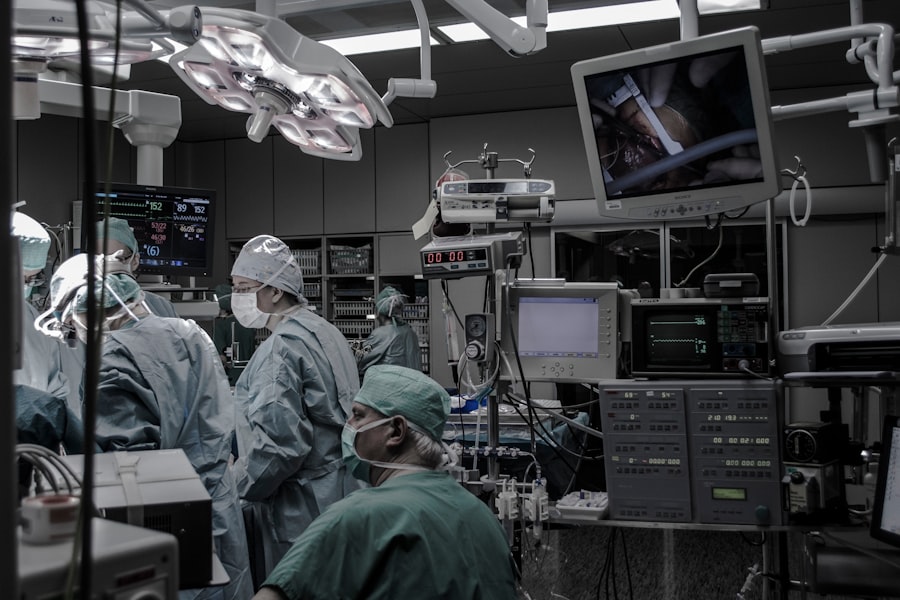
While remarkably safe, anesthesia is not without its risks. As a patient, you should be aware of these potential complications, though the overall incidence of serious adverse events is low due to meticulous pre-operative assessment, skilled administration, and continuous monitoring.
Nausea and Vomiting
Postoperative nausea and vomiting (PONV) is one of the most common complications, affecting approximately 20-30% of patients. It can be caused by the anesthetic agents themselves, opioids used for pain control, or surgical manipulation.
Sore Throat and Hoarseness
If you have an endotracheal tube inserted to assist with breathing, you may experience a sore throat or hoarseness after surgery due to irritation of your vocal cords. This is usually temporary.
Allergic Reactions
Although rare, you can have an allergic reaction to anesthetic drugs. These reactions can range from mild skin rashes to severe anaphylaxis, a life-threatening systemic allergic response. Your anesthesiologist will take a thorough medical history to identify any known allergies.
Awareness Under Anesthesia
One of the most feared, albeit rare, complications is intraoperative awareness, where you become conscious during surgery, able to recall events, but unable to move or communicate. While distressing, the incidence is very low (estimated at 0.1-0.2% for general anesthesia), and continuous monitoring helps mitigate this risk.
More Serious Complications
Less common but more serious complications include:
Cardiovascular Events
Changes in heart rate and blood pressure are common during anesthesia. However, in patients with pre-existing heart conditions, anesthesia can precipitate myocardial infarction (heart attack) or stroke.
Respiratory Complications
Anesthesia can depress your breathing and lung function, potentially leading to pneumonia, atelectasis (collapsed lung segments), or exacerbation of pre-existing lung diseases.
Malignant Hyperthermia
This is a rare, life-threatening inherited disorder triggered by certain general anesthetics (e.g., succinylcholine, inhaled volatile anesthetics). It causes a rapid and uncontrolled increase in body temperature and muscle rigidity. Immediate treatment is crucial. You will be screened for a family history of this condition.
Recent studies have explored the intricate relationship between anesthesia and consciousness loss, shedding light on how different anesthetic agents affect brain activity. For a deeper understanding of this fascinating topic, you can read an insightful article that discusses the mechanisms behind anesthesia and its impact on consciousness at Freaky Science. This resource provides valuable information for both medical professionals and curious readers interested in the science of anesthesia.
The Future of Anesthesia Research
| Metric | Description | Typical Range/Value | Relevance to Anesthesia and Consciousness Loss |
|---|---|---|---|
| Minimum Alveolar Concentration (MAC) | Concentration of anesthetic in the lungs needed to prevent movement in 50% of patients in response to surgical stimulus | 1.0 (varies by agent) | Indicator of anesthetic potency; lower MAC means higher potency |
| Bispectral Index (BIS) | EEG-derived index to monitor depth of anesthesia | 40-60 (target range during general anesthesia) | Helps assess level of consciousness and avoid awareness during surgery |
| Loss of Consciousness (LOC) Time | Time from anesthetic administration to loss of patient responsiveness | Typically 30 seconds to 2 minutes | Measures onset speed of anesthetic agents |
| Recovery Time | Time from cessation of anesthetic to regaining consciousness | Varies widely; often 5-30 minutes | Indicates duration of anesthetic effect and patient recovery |
| End-tidal Anesthetic Concentration | Concentration of anesthetic gas in exhaled breath | Monitored continuously; correlates with brain anesthetic levels | Used to titrate anesthetic depth and maintain unconsciousness |
| Electroencephalogram (EEG) Patterns | Brain wave activity changes during anesthesia | Shift from high-frequency, low-amplitude to low-frequency, high-amplitude waves | Reflects changes in brain activity and consciousness level |
The field of anesthesiology is continuously evolving, driven by scientific inquiry into the fundamental mechanisms of consciousness and the optimization of patient care. Researchers are pushing the boundaries to make anesthesia even safer, more precise, and tailored to individual patient needs.
Understanding Consciousness
One of the grand challenges in neuroscience is understanding the neural correlates of consciousness. Anesthesia provides a unique experimental model to probe this question. By studying how different anesthetics selectively disrupt and restore consciousness, scientists hope to gain deeper insights into how your brain generates subjective experience. Imagine trying to understand how a complex symphony works by selectively muting different sections of the orchestra and observing the auditory changes.
Connectivity and Brain Networks
Current research focuses on how anesthetic agents affect the large-scale functional connectivity within your brain. Tools like functional magnetic resonance imaging (fMRI) and magnetoencephalography (MEG) are used to visualize how connections between different brain regions are altered during anesthesia. The hypothesis is that consciousness arises from the integration of information across widespread brain networks, and anesthetics disrupt this integration.
Neural Oscillations
Different states of consciousness are associated with characteristic patterns of neural oscillations – rhythmic electrical activity in your brain. For instance, wakefulness is often characterized by higher-frequency beta and gamma waves, while deep sleep and anesthesia are associated with lower-frequency delta and theta waves. Research aims to elucidate how anesthetics precisely modulate these oscillatory patterns to induce and maintain unconsciousness.
Personalized Anesthesia
The “one-size-fits-all” approach to anesthesia is gradually being replaced by personalized medicine. You are unique, with your own genetic makeup, physiological responses, and co-existing medical conditions. The goal is to tailor anesthetic delivery to optimize outcomes and minimize risks for you specifically.
Pharmacogenomics
Genetic variations can influence how you metabolize and respond to various drugs, including anesthetics. Pharmacogenomics aims to identify these genetic markers to predict individual responses to drugs, allowing for more precise dosing and selection of anesthetic agents. For example, some individuals may metabolize certain drugs faster or slower, requiring adjustments in dosage.
Advanced Monitoring Technologies
The development of more sophisticated monitoring devices capable of providing real-time, non-invasive assessment of your neurological and physiological status will enhance patient safety. Imagine continuous, subtle feedback loops that allow the anesthesiologist to constantly fine-tune anesthetic delivery with unprecedented accuracy.
Artificial Intelligence and Machine Learning
AI and machine learning are being increasingly applied to anesthesiology. These technologies can analyze vast amounts of patient data to predict individual risks, optimize drug dosages, and assist in decision-making during complex surgical procedures. Think of an AI system acting as a highly intelligent co-pilot, constantly assessing data and providing insights to the anesthesiologist.
In conclusion, anesthesia represents a triumph of modern medicine, allowing you to undergo life-saving and life-enhancing procedures without the burden of pain or awareness. Yet, it also remains a profound scientific puzzle, pushing the boundaries of our understanding of the human brain and consciousness itself. As you reflect on this temporary journey into oblivion, consider the intricate choreography of molecules, neurons, and technology that safeguards your well-being.
FAQs
What is anesthesia and how does it cause loss of consciousness?
Anesthesia is a medically induced state that includes loss of consciousness, pain relief, muscle relaxation, and amnesia. It works by affecting the central nervous system, particularly the brain, to temporarily block the sensation of pain and awareness, leading to loss of consciousness during surgical procedures.
Are there different types of anesthesia that cause loss of consciousness?
Yes, the main types of anesthesia that cause loss of consciousness are general anesthesia and sometimes deep sedation. General anesthesia induces a controlled, reversible unconscious state, while deep sedation depresses consciousness but may not cause complete unconsciousness.
Is loss of consciousness under anesthesia safe?
When administered by trained anesthesiologists and monitored properly, loss of consciousness under anesthesia is generally safe. Modern anesthesia techniques and monitoring equipment have significantly reduced risks, but like any medical procedure, there are potential risks and side effects.
How is consciousness monitored during anesthesia?
Consciousness during anesthesia is monitored using various methods, including clinical signs (such as heart rate and blood pressure), brain activity monitors like the Bispectral Index (BIS), and patient responsiveness tests to ensure the patient remains unconscious and pain-free.
Can patients remember events that occur while under anesthesia?
Typically, patients do not remember events during general anesthesia due to the amnesic effects of anesthetic drugs. However, in rare cases, some patients may experience awareness during anesthesia, which is called anesthesia awareness, but this is uncommon and usually prevented with careful monitoring.