
The universe is an extraordinarily large space that extends far beyond human perception. Throughout history, philosophers, scientists, and researchers have studied it extensively. The universe contains numerous remarkable features, including stars visible in the night sky and black holes that distort space and time.
Current estimates suggest the universe contains approximately two trillion galaxies, with each galaxy containing billions of stars and numerous planets. These observations have led humanity to investigate the universe’s origins, composition, and future development. As humans study the cosmos, they recognize their relatively small place within it.
However, this awareness has not diminished the pursuit of knowledge. Instead, it has motivated continued scientific inquiry. From ancient societies that observed celestial bodies to contemporary astrophysicists using advanced instruments and technology, humans have consistently worked to understand the universe.
The study of the cosmos represents both a scientific endeavor and a fundamental human activity, as people seek to understand their position within the larger universe.
Key Takeaways
- The universe is a complex system governed by fundamental physical laws and cosmic forces.
- Quantum mechanics and the role of dark matter and dark energy are key to unraveling cosmic mysteries.
- Mathematics is essential for modeling and understanding the universe’s underlying principles.
- The search for a unified theory aims to connect all physical phenomena into a single framework.
- Advances in technology and the study of consciousness are crucial for future breakthroughs in cosmology.
The Quest for the Secret
Throughout history, humanity has embarked on a relentless quest to uncover the secrets of the universe. This journey has taken many forms, from mythological explanations of celestial phenomena to rigorous scientific inquiry. Ancient cultures often attributed cosmic events to the actions of gods or supernatural forces, weaving intricate narratives that sought to explain their existence.
However, as knowledge progressed, these myths gradually gave way to empirical observation and experimentation, laying the groundwork for modern science. The quest for understanding has been marked by significant milestones, such as Copernicus’s heliocentric model, which revolutionized humanity’s perception of its place in the cosmos. This shift in perspective ignited a series of discoveries that would ultimately lead to Newton’s laws of motion and gravity, Einstein’s theory of relativity, and beyond.
Each breakthrough has brought humanity closer to deciphering the universe’s enigmatic language, yet many questions remain unanswered. The pursuit of knowledge is an ongoing journey, one that continues to inspire generations of scientists and thinkers who strive to unlock the universe’s deepest secrets. One fascinating concept explored in modern science is simulation theory.
Understanding the Laws of Physics
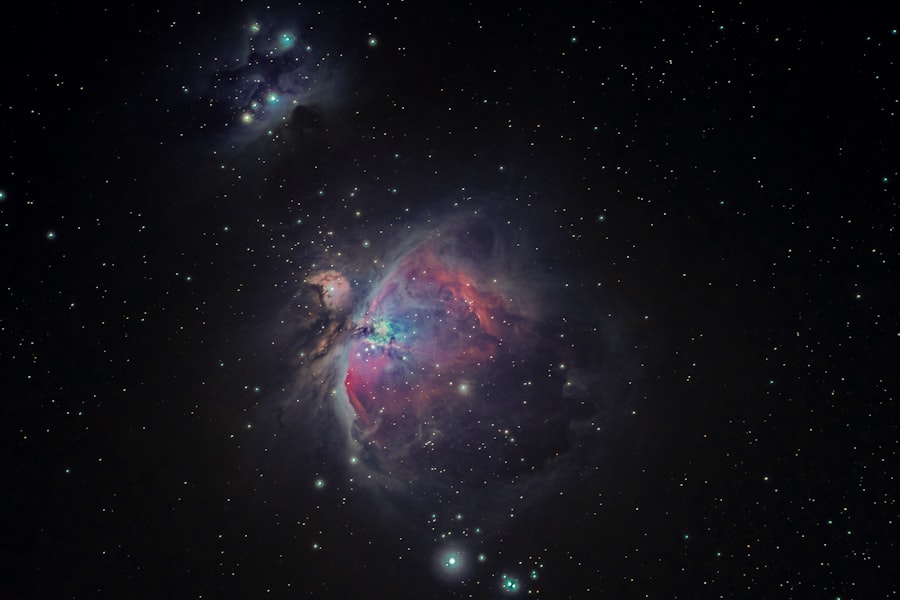
At the heart of humanity’s quest for understanding lies the study of physics, a discipline that seeks to describe the fundamental principles governing the universe. Physics provides a framework through which individuals can comprehend the behavior of matter and energy, offering insights into everything from subatomic particles to cosmic phenomena. The laws of physics serve as a universal language, enabling scientists to formulate theories and make predictions about the natural world.
One of the most profound aspects of physics is its ability to reveal the interconnectedness of seemingly disparate phenomena. For instance, the same principles that govern the motion of planets also apply to falling apples. This unity in diversity underscores the elegance of physical laws and their capacity to explain a wide range of observations.
As researchers delve deeper into the intricacies of these laws, they uncover new dimensions of reality that challenge conventional wisdom and expand humanity’s understanding of existence itself.
Unraveling the Mysteries of Quantum Mechanics
Quantum mechanics represents one of the most revolutionary developments in modern physics, fundamentally altering humanity’s understanding of reality at its most basic level. This branch of physics explores the behavior of particles at atomic and subatomic scales, revealing a world that defies classical intuition. In this strange realm, particles can exist in multiple states simultaneously, and their properties are intrinsically linked through phenomena such as entanglement.
The implications of quantum mechanics extend far beyond theoretical musings; they have practical applications in technology and industry. Quantum computing, for instance, harnesses the principles of superposition and entanglement to perform calculations at speeds unimaginable with classical computers. As researchers continue to probe the depths of quantum mechanics, they confront profound philosophical questions about the nature of reality itself.
The duality between wave and particle behavior challenges traditional notions of determinism and raises intriguing possibilities about consciousness and observation’s role in shaping reality.
Exploring the Cosmic Forces
| Aspect | Description | Metric/Value | Significance |
|---|---|---|---|
| Fundamental Constants | Physical constants that define the laws of physics | Speed of light (c): 299,792,458 m/s Gravitational constant (G): 6.674×10⁻¹¹ m³/kg/s² Planck constant (h): 6.626×10⁻³⁴ Js |
Determine the behavior of matter and energy in the universe |
| Quantum Information | Bits of information encoded in quantum states | Qubits: Basic unit of quantum information Entanglement entropy: Measures quantum correlations |
Underpins quantum computing and the fabric of reality |
| Mathematical Constants | Constants that appear in equations describing the universe | Pi (π): 3.14159 Euler’s number (e): 2.71828 Fine-structure constant (α): ~1/137 |
Essential in geometry, growth processes, and electromagnetic interactions |
| Cosmological Parameters | Values describing the large-scale structure and evolution of the universe | Hubble constant (H₀): ~70 km/s/Mpc Dark energy density (ΩΛ): ~0.7 Dark matter density (Ωm): ~0.3 |
Explain the expansion and composition of the universe |
| Genetic Code | Biological code that governs life processes | 64 codons 4 nucleotide bases (A, T, C, G) |
Encodes instructions for protein synthesis and life functions |
The universe is governed by a set of fundamental forces that shape its structure and dynamics. These forces—gravity, electromagnetism, and the strong and weak nuclear forces—interact in complex ways to create everything from galaxies to atomic nuclei. Gravity, perhaps the most familiar force, governs the motion of celestial bodies and dictates the formation of structures on both cosmic and terrestrial scales.
Electromagnetism plays a crucial role in shaping matter at a molecular level, influencing chemical reactions and enabling life as it is known on Earth. Meanwhile, the strong and weak nuclear forces operate within atomic nuclei, holding protons and neutrons together while facilitating processes such as radioactive decay. Understanding these cosmic forces is essential for deciphering the universe’s behavior and evolution over time.
As scientists continue to investigate these interactions, they uncover new insights into phenomena such as dark matter and dark energy—mysterious components that constitute much of the universe yet remain elusive in terms of direct observation.
The Role of Mathematics in Understanding the Universe

Mathematics serves as a powerful tool in humanity’s quest to understand the universe. It provides a precise language through which complex ideas can be articulated and analyzed. From algebraic equations describing motion to calculus used in understanding change over time, mathematics underpins much of modern scientific inquiry.
The elegance and universality of mathematical principles allow scientists to formulate theories that can be tested against empirical observations. The relationship between mathematics and physics is particularly profound; many physical laws are expressed mathematically, revealing deep connections between abstract concepts and tangible phenomena. For instance, Einstein’s equations describing general relativity elegantly encapsulate how mass influences spacetime curvature.
This interplay between mathematics and physical reality not only enhances comprehension but also inspires new avenues for exploration. As mathematicians develop new theories and techniques, they often uncover insights that propel scientific progress forward.
The Search for a Unified Theory
One of the most ambitious goals in modern physics is the search for a unified theory—a comprehensive framework that reconciles general relativity with quantum mechanics. While general relativity successfully describes gravity on cosmic scales, it struggles to account for phenomena at subatomic levels where quantum mechanics reigns supreme. This dichotomy presents a significant challenge for physicists seeking a holistic understanding of the universe.
Efforts to develop a unified theory have led to various approaches, including string theory and loop quantum gravity. String theory posits that fundamental particles are not point-like entities but rather tiny vibrating strings whose vibrational modes determine their properties. Loop quantum gravity, on the other hand, seeks to quantize spacetime itself, suggesting that space is composed of discrete units rather than being continuous.
Each approach offers tantalizing possibilities but also faces significant hurdles in terms of experimental validation. The quest for a unified theory remains an open frontier in physics, promising profound implications for humanity’s understanding of reality.
The Influence of Dark Matter and Dark Energy
As scientists delve deeper into cosmic exploration, they encounter two enigmatic components that dominate the universe: dark matter and dark energy. Dark matter is believed to account for approximately 27% of the universe’s total mass-energy content yet remains invisible to direct observation. Its presence is inferred through gravitational effects on visible matter, such as galaxies’ rotation curves and gravitational lensing phenomena.
Dark energy presents an even greater mystery; it constitutes about 68% of the universe and is thought to be responsible for its accelerated expansion. The nature of dark energy remains one of cosmology’s most pressing questions, with implications for understanding the universe’s fate. Various theories have been proposed to explain these phenomena, ranging from modifications to general relativity to entirely new physics beyond current models.
As researchers continue their investigations into dark matter and dark energy, they inch closer to unraveling some of the universe’s most profound mysteries.
The Importance of Consciousness in the Universe
The role of consciousness in understanding the universe introduces a philosophical dimension that transcends empirical inquiry. As humans seek to comprehend their place within this vast cosmos, questions arise about consciousness’s nature and its relationship with reality itself. Some theorists propose that consciousness may play an integral role in shaping perceptions of reality—suggesting that observation influences outcomes at quantum levels.
This intersection between consciousness and cosmology invites contemplation about existence itself. Are humans mere observers within an indifferent universe, or do they possess an active role in shaping its unfolding narrative? Such inquiries challenge traditional boundaries between science and philosophy, prompting interdisciplinary dialogue that enriches both fields.
As humanity grapples with these profound questions, it becomes increasingly aware that understanding consciousness may be as crucial as deciphering physical laws in comprehending the universe.
The Impact of Technology on Unlocking the Universe’s Secrets
Advancements in technology have revolutionized humanity’s ability to explore and understand the universe. From powerful telescopes that peer into distant galaxies to particle accelerators that probe fundamental particles’ properties, technological innovations have expanded our horizons beyond imagination. These tools enable scientists to gather vast amounts of data, leading to groundbreaking discoveries that reshape our understanding.
Moreover, technology facilitates collaboration across disciplines and borders, fostering a global community dedicated to unraveling cosmic mysteries. Data-sharing platforms allow researchers from diverse backgrounds to contribute insights and findings collectively. As artificial intelligence continues to evolve, it holds promise for analyzing complex datasets more efficiently than ever before—potentially accelerating discoveries in astrophysics and cosmology.
The Future of Understanding the Universe
The future holds immense potential for furthering humanity’s understanding of the universe.
The continued exploration of dark matter and dark energy may yield transformative insights into cosmic evolution while advancing theories toward unification.
Moreover, as humanity ventures beyond Earth through space exploration initiatives—such as missions to Mars or beyond—new opportunities arise for direct observation and experimentation in extraterrestrial environments. These endeavors may not only enhance scientific knowledge but also inspire future generations to engage with science meaningfully. In conclusion, humanity’s quest for understanding the universe is an ongoing journey marked by curiosity, innovation, and collaboration across disciplines.
As individuals strive to unlock its secrets—from fundamental laws governing physical phenomena to profound questions about consciousness—their efforts contribute not only to scientific progress but also enrich our collective narrative as inhabitants within this magnificent cosmos.
For a deeper exploration of this intriguing topic, you can read more in the article found at Freaky Science, which delves into the mysteries of the universe and the underlying principles that govern it.
WATCH THIS! EXPOSED: This Quantum Physics Secret Proves Reality Is Not Real 🤯
FAQs
What is meant by “the secret code that runs the universe”?
The phrase “the secret code that runs the universe” typically refers to the fundamental laws and principles, often expressed through mathematics and physics, that govern the behavior and structure of the cosmos.
Is there an actual code that controls the universe?
While there is no literal “code” like computer software, scientists describe the universe’s workings through mathematical equations and physical laws, such as those in quantum mechanics and general relativity, which can be thought of as a “code” underlying reality.
What scientific fields study this “secret code”?
Fields such as physics, cosmology, and mathematics study the fundamental laws of nature. Theoretical physics, in particular, seeks to understand the universe’s underlying principles through models and equations.
How do scientists uncover the universe’s fundamental laws?
Scientists use observation, experimentation, and mathematical modeling to discover and test theories about how the universe operates, from the behavior of subatomic particles to the dynamics of galaxies.
Are there any famous theories related to this concept?
Yes, theories like Einstein’s theory of general relativity, quantum mechanics, and the Standard Model of particle physics are key frameworks that describe the universe’s fundamental workings.
Can the universe’s “code” be fully understood?
Currently, scientists continue to explore and refine their understanding. While much has been discovered, questions remain, such as how to unify quantum mechanics with gravity, indicating that the full “code” is not yet completely known.
Does this “secret code” have practical applications?
Yes, understanding fundamental physics has led to technologies like semiconductors, GPS, medical imaging, and more, demonstrating that knowledge of the universe’s laws can have significant real-world impacts.
Is the “secret code” the same as DNA or genetic code?
No, the “secret code” in this context refers to the laws of physics governing the universe, whereas DNA is the biological code that carries genetic information in living organisms.