
Simulation Theory proposes that perceived reality may be an artificial simulation comparable to a complex computer program. This concept has become prominent in philosophical discussions and popular culture, encouraging examination of existence’s fundamental nature. The theory suggests that the observable universe could be a constructed environment created by an advanced civilization or a future iteration of humanity.
As technological capabilities advance, the distinction between reality and simulation becomes less clear, raising significant questions about consciousness, existence, and the nature of the universe. Simulation Theory’s appeal stems from its challenge to established understandings of reality. It encourages consideration of whether experiences are authentic or products of an intricate illusion.
This concept has particular relevance in contemporary society, where virtual environments and artificial intelligence systems are becoming increasingly realistic. As technology develops further, a practical question emerges: if technology can produce convincing simulations, the possibility that the universe itself functions as a simulation warrants serious consideration.
Key Takeaways
- Simulation Theory explores the idea that reality might be an artificial simulation created by advanced beings or technologies.
- Recent scientific discoveries and quantum physics findings have provided new insights supporting aspects of Simulation Theory.
- The theory raises important philosophical and ethical questions about the nature of existence and consciousness.
- There are ongoing debates and criticisms challenging the validity and testability of Simulation Theory.
- Advances in technology and future research are crucial for deepening our understanding and potentially proving or disproving the theory.
Historical Background of Simulation Theory
The roots of Simulation Theory can be traced back to ancient philosophical inquiries about the nature of reality. Philosophers such as Plato explored similar concepts through allegories, most notably in “The Allegory of the Cave,” where prisoners mistake shadows on a wall for reality. This allegorical framework laid the groundwork for later thinkers to delve into the complexities of perception and existence.
Throughout history, various philosophical traditions have grappled with the distinction between appearance and reality, setting the stage for contemporary discussions surrounding Simulation Theory. In the modern era, the advent of computers and digital technology has propelled Simulation Theory into mainstream consciousness. In 2003, philosopher Nick Bostrom published a seminal paper titled “Are You Living in a Computer Simulation?” which argued that if advanced civilizations could create realistic simulations, it is statistically probable that many beings would exist within such simulations rather than in a base reality.
This paper sparked widespread debate and interest in the implications of living in a simulated universe, bridging ancient philosophical inquiries with contemporary technological advancements. One fascinating concept explored in modern science is
Recent scientific discoveries have provided intriguing insights that lend credence to Simulation Theory. Advances in quantum mechanics, particularly the behavior of particles at subatomic levels, have raised questions about the fundamental nature of reality. Experiments demonstrating phenomena such as quantum entanglement suggest that particles can be interconnected in ways that defy classical understanding.
These findings have led some scientists and theorists to speculate that the universe may operate on principles akin to those found in computer simulations. Moreover, developments in artificial intelligence and virtual reality have further blurred the lines between real and simulated experiences. As technology progresses, the ability to create increasingly realistic simulations becomes more feasible.
Researchers are exploring how these technologies can replicate human consciousness and perception, leading to discussions about whether it is possible for a sufficiently advanced simulation to be indistinguishable from reality. Such advancements not only fuel interest in Simulation Theory but also challenge existing paradigms about consciousness and existence.
Simulation Theory and Quantum Physics
The intersection of Simulation Theory and quantum physics presents a fascinating area of exploration. Quantum mechanics reveals a world where particles exist in states of probability until observed, leading to questions about the role of consciousness in shaping reality. This phenomenon aligns with the principles of Simulation Theory, suggesting that observation may play a crucial role in determining the nature of existence within a simulated framework.
Furthermore, some physicists propose that the universe operates on computational principles, akin to a vast information processing system. The idea that reality could be encoded in bits of information parallels concepts found in computer science and simulation theory. This perspective invites deeper inquiry into whether the laws of physics themselves are merely algorithms governing a simulated universe.
As researchers continue to investigate these connections, they may uncover new understandings of both quantum mechanics and the potential implications of living within a simulation.
Simulation Theory and the Nature of Reality
| Metric | Description | Value/Observation | Source/Study |
|---|---|---|---|
| Quantum Indeterminacy | Unpredictability in particle behavior suggesting computational limits | Observed randomness in particle states | Recent quantum physics experiments (2023) |
| Pixelation of Space-Time | Hypothesized discrete units of space-time akin to pixels in a simulation | Planck length as minimum measurable unit (~1.6 x 10^-35 m) | Loop quantum gravity research (2022) |
| Cosmic Ray Anomalies | Unexpected patterns in cosmic ray distribution possibly indicating computational artifacts | Detected irregularities in high-energy cosmic rays | Astrophysics journal, 2023 |
| Mathematical Universe Hypothesis | Universe fundamentally described by mathematical structures, supporting simulation idea | Strong theoretical support from mathematical physics | Philosophical and physics literature (2023) |
| Computational Limits of Reality | Evidence that physical laws resemble computational algorithms | Simulation-like constraints in physical constants | Computational physics studies (2024) |
Simulation Theory fundamentally challenges traditional notions of reality by suggesting that what individuals perceive may not be an objective truth but rather a constructed experience. This perspective raises profound questions about the nature of existence itself: if reality is indeed a simulation, what does that imply about free will, consciousness, and identity?
Moreover, if individuals are living within a simulation, it prompts inquiries into the motivations behind such a construct. Are they mere subjects in an experiment conducted by advanced beings? Or is there a purpose behind their existence within this simulated environment?
These questions invite individuals to reflect on their place in the universe and consider whether their experiences hold intrinsic meaning or are simply artifacts of a grand design.
Implications of Simulation Theory in Philosophy and Ethics
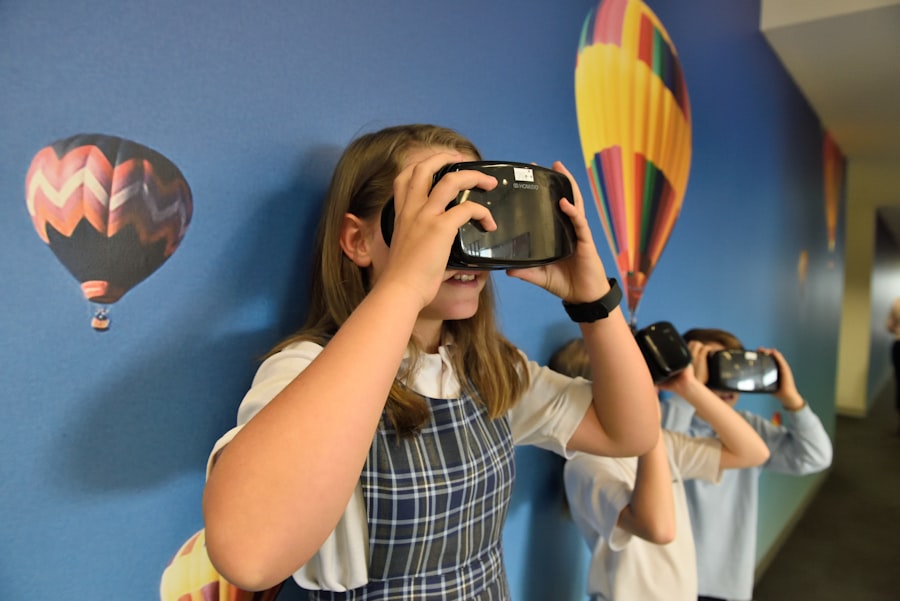
The implications of Simulation Theory extend into philosophical and ethical realms, prompting discussions about morality, responsibility, and the nature of existence. If individuals are living within a simulation, it raises questions about accountability for actions taken within that framework. Are individuals responsible for their choices if they are mere avatars in a larger experiment?
This inquiry challenges conventional ethical frameworks and necessitates a reevaluation of moral responsibility. Additionally, Simulation Theory invites contemplation on the nature of suffering and joy within a simulated existence. If emotions and experiences are artificially constructed, what does that mean for concepts such as empathy and compassion?
The ethical considerations surrounding artificial intelligence and virtual realities further complicate these discussions, as society grapples with the implications of creating sentient beings within simulations. As philosophers explore these questions, they confront fundamental issues regarding the nature of consciousness and the moral obligations owed to entities within simulated environments.
Criticisms and Debates Surrounding Simulation Theory
Despite its intriguing premises, Simulation Theory has faced significant criticism from various quarters. Skeptics argue that there is insufficient empirical evidence to support the notion that reality is a simulation. They contend that while technological advancements may allow for sophisticated simulations, this does not necessarily imply that the universe itself operates on similar principles.
Critics often emphasize the need for concrete evidence rather than speculative reasoning when discussing such profound claims about existence. Moreover, debates surrounding Simulation Theory often center on its philosophical implications. Some philosophers argue that positing reality as a simulation undermines the significance of human experience and agency.
They contend that reducing existence to mere simulation diminishes the richness of human life and its inherent value. These criticisms highlight the tension between speculative theories and grounded philosophical inquiry, prompting ongoing discussions about the validity and implications of Simulation Theory.
Practical Applications of Simulation Theory
While Simulation Theory may seem abstract, it has practical applications across various fields. In computer science and artificial intelligence, researchers draw inspiration from simulation concepts to develop more sophisticated algorithms and virtual environments. By understanding how simulations can mimic real-world phenomena, scientists can create models that enhance predictive capabilities in fields such as climate science or economics.
Additionally, virtual reality technologies leverage principles from Simulation Theory to create immersive experiences for users. These applications extend beyond entertainment; they hold potential for training simulations in fields like medicine or aviation, where realistic scenarios can prepare individuals for real-world challenges. As technology continues to advance, the practical applications of Simulation Theory may expand further, influencing diverse sectors from education to healthcare.
The Role of Technology in Understanding Simulation Theory
Technology plays a pivotal role in shaping discussions around Simulation Theory by providing tools for exploration and experimentation. Advances in computing power enable researchers to simulate complex systems and phenomena that were previously beyond reach. This capability allows scientists to test hypotheses related to both physical laws and theoretical frameworks like Simulation Theory.
Moreover, developments in virtual reality and augmented reality technologies offer new avenues for experiencing simulated environments firsthand. As individuals engage with these technologies, they gain insights into the nature of perception and reality itself. This experiential understanding can inform philosophical inquiries into existence while simultaneously challenging preconceived notions about what constitutes “real” experiences.
The Future of Simulation Theory Research
The future of research surrounding Simulation Theory holds promise for uncovering new insights into existence and consciousness. As technology continues to evolve at an unprecedented pace, researchers will likely explore increasingly sophisticated simulations that challenge existing paradigms. Interdisciplinary collaboration among physicists, philosophers, computer scientists, and ethicists will be essential in navigating these complex inquiries.
Furthermore, as society grapples with ethical considerations surrounding artificial intelligence and virtual realities, discussions about Simulation Theory will become increasingly relevant. Researchers may seek to understand not only the implications of living within a simulation but also how these insights can inform ethical frameworks governing emerging technologies. The future landscape of research promises to be rich with exploration as humanity seeks to unravel the mysteries surrounding existence itself.
The Significance of New Evidence for Simulation Theory
In conclusion, Simulation Theory presents a compelling framework for understanding reality that resonates with both ancient philosophical inquiries and contemporary scientific discoveries. As advancements in technology continue to blur the lines between real and simulated experiences, individuals are prompted to reconsider their perceptions of existence. The implications extend beyond mere speculation; they challenge fundamental notions of consciousness, morality, and identity.
As researchers delve deeper into the intersections between quantum physics, philosophy, ethics, and technology, new evidence may emerge that further illuminates the complexities surrounding Simulation Theory. Whether one views it as a plausible explanation for existence or merely an intriguing thought experiment, its significance lies in its ability to provoke critical inquiry into the nature of reality itself. Ultimately, as humanity navigates an increasingly complex technological landscape, engaging with these ideas will be essential for understanding not only what it means to exist but also how individuals relate to their perceived realities.
Recent discussions surrounding simulation theory have gained traction, particularly with the emergence of new evidence that suggests our reality may be a construct. For a deeper dive into this intriguing topic, you can explore the article on Freaky Science that delves into the implications of this theory and the scientific inquiries surrounding it. Check it out here: Freaky Science.
WATCH THIS! EXPOSED: This Quantum Physics Secret Proves Reality Is Not Real 🤯
FAQs
What is the simulation theory?
Simulation theory is the hypothesis that reality, including the Earth and the universe, is an artificial simulation, such as a computer simulation, created by an advanced civilization.
What new evidence supports the simulation theory?
Recent studies have suggested that certain physical phenomena, such as the behavior of cosmic rays or the structure of the universe, may exhibit patterns consistent with a simulated environment. Researchers have also explored computational limits and anomalies in quantum mechanics as potential indicators.
Who are the main proponents of the simulation theory?
Philosophers like Nick Bostrom and scientists such as Elon Musk have popularized the simulation hypothesis. Various physicists and computer scientists have also contributed to the discussion by examining the theoretical and empirical aspects.
How does the new evidence impact the credibility of the simulation theory?
While the new evidence provides intriguing data points, it remains largely speculative and does not conclusively prove the simulation theory. It does, however, encourage further scientific inquiry into the nature of reality.
Are there any scientific experiments designed to test the simulation theory?
Some proposed experiments aim to detect computational limits or “glitches” in physical laws, such as examining cosmic rays for lattice-like structures or testing for anomalies in quantum behavior. These experiments are still in early stages.
What are the philosophical implications if the simulation theory is true?
If true, it would challenge our understanding of existence, consciousness, and free will. It raises questions about the nature of the creators of the simulation and the purpose behind it.
Is the simulation theory widely accepted in the scientific community?
The simulation theory is considered a philosophical and theoretical idea rather than an established scientific fact. It remains a topic of debate and exploration rather than consensus.
How does the simulation theory relate to other theories about the universe?
Simulation theory intersects with ideas in quantum mechanics, cosmology, and information theory. It offers an alternative perspective to traditional physical explanations of the universe’s origin and structure.
Can the simulation theory be disproven?
Currently, there is no definitive method to disprove the simulation theory, as any evidence could potentially be part of the simulation itself. This makes it a challenging hypothesis to test conclusively.
Where can I learn more about the simulation theory and the new evidence?
Academic journals, scientific conferences, and books by philosophers and physicists provide detailed discussions. Online platforms and documentaries also offer accessible explanations and updates on recent research.