Space weather forecasting is essential for predicting how solar activity affects Earth and its environment. The Sun regularly produces solar flares and coronal mass ejections (CMEs) that can disrupt satellites, communication systems, and electrical power grids. Accurate forecasts protect technological infrastructure, ensure astronaut safety, and support space missions.
As technology becomes more integral to modern society, precise space weather predictions are increasingly important. Inaccurate space weather forecasts can have serious consequences. Geomagnetic storms triggered by CMEs can cause widespread power outages affecting millions of people.
Satellites may malfunction or sustain damage from elevated radiation levels during these events. Improving forecast accuracy is therefore critical for reducing risks to both ground-based and space-based systems. Researchers continue to develop and refine forecasting models and methods to provide more reliable predictions in space weather science.
The Earth’s Magnetic Field plays a crucial role in protecting our planet from solar radiation.
Key Takeaways
- Accurate space weather forecasting is crucial for protecting Earth and spacecraft from solar and geomagnetic disturbances.
- Advances in monitoring technology and data analysis are enhancing the precision of space weather predictions.
- Collaborative research efforts are key to overcoming current challenges and improving forecasting models.
- Effective communication of forecasts is essential for timely decision-making and astronaut safety.
- Ongoing research focuses on reducing uncertainties and developing next-generation forecasting techniques.
Current Challenges in Space Weather Forecasting
Despite advancements in technology and research, space weather forecasting still faces numerous challenges. One significant hurdle is the inherent complexity of solar phenomena. The Sun’s behavior is influenced by a multitude of factors, including magnetic fields, plasma dynamics, and solar cycles, making it difficult to predict events with high precision.
This complexity often leads to uncertainties in forecasting models, which can result in either overestimating or underestimating the potential impact of solar events. Another challenge lies in the limited observational data available for real-time analysis. While satellites and ground-based observatories provide valuable information, there are still gaps in coverage that can hinder accurate predictions.
For example, certain regions of the Sun may not be adequately monitored, leading to incomplete data sets that affect the reliability of forecasts. As researchers strive to improve their understanding of solar activity, addressing these challenges is essential for enhancing the overall accuracy of space weather predictions.
Advancements in Space Weather Monitoring Technology
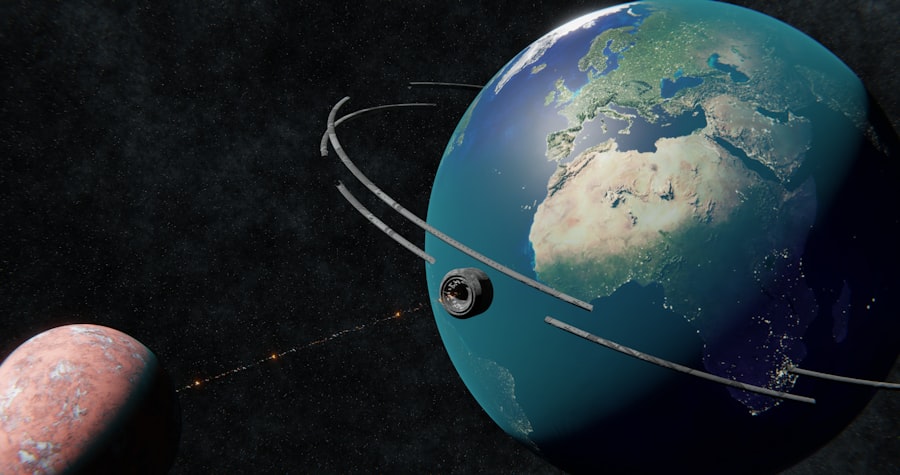
In recent years, significant advancements in space weather monitoring technology have emerged, providing researchers with new tools to enhance forecasting capabilities. The development of sophisticated satellites equipped with advanced sensors has revolutionized the way scientists observe solar activity. These satellites can capture real-time data on solar flares, CMEs, and other phenomena, allowing for more timely and accurate predictions.
Moreover, ground-based observatories have also seen improvements in their instrumentation. Enhanced radar systems and magnetometers enable scientists to monitor geomagnetic activity with greater precision. These technological advancements not only improve data collection but also facilitate better modeling of space weather events.
As researchers continue to innovate and integrate new technologies into their monitoring efforts, the potential for more accurate and reliable space weather forecasts increases significantly.
The Role of Data Analysis in Improving Space Weather Forecasting
Data analysis plays a pivotal role in refining space weather forecasting techniques. With the vast amounts of data generated by satellites and ground-based observatories, effective data processing and interpretation are essential for deriving meaningful insights. Advanced algorithms and machine learning techniques are increasingly being employed to analyze complex datasets, enabling researchers to identify patterns and correlations that may not be immediately apparent.
Furthermore, data assimilation techniques allow scientists to integrate observational data into existing models, improving their accuracy and predictive capabilities. By continuously updating models with real-time data, researchers can enhance their understanding of solar activity and its potential impacts on Earth. As data analysis methods continue to evolve, they hold the promise of significantly improving the reliability of space weather forecasts.
Collaborative Efforts in Space Weather Research
| Metric | Description | Typical Accuracy | Measurement Period | Source |
|---|---|---|---|---|
| Geomagnetic Storm Forecast Accuracy | Percentage of correctly predicted geomagnetic storm events | 70-85% | 1-3 days ahead | NOAA Space Weather Prediction Center |
| Solar Flare Prediction Accuracy | Correct identification of M-class and X-class solar flares | 60-75% | 24-48 hours ahead | NASA Goddard Space Flight Center |
| Solar Wind Speed Forecast Accuracy | Correlation between predicted and observed solar wind speeds | 0.7-0.85 (correlation coefficient) | 1-4 days ahead | ACE Satellite Data Analysis |
| Coronal Mass Ejection (CME) Arrival Time Accuracy | Difference between predicted and actual CME arrival times at Earth | ±6 to 12 hours | 1-3 days ahead | SOHO and STEREO Observations |
| Radiation Storm Forecast Accuracy | Correct prediction of solar energetic particle events | 65-80% | Hours to 1 day ahead | NOAA SWPC and GOES Data |
Collaboration among international research institutions is vital for advancing the field of space weather forecasting.
Collaborative efforts have led to the establishment of global networks that facilitate real-time data sharing and joint research initiatives.
These partnerships not only enhance the quality of research but also promote a more comprehensive understanding of space weather events. By pooling resources and knowledge, researchers can develop more robust forecasting models that account for a wider range of variables.
Enhancing Space Weather Modeling Techniques
The development of advanced modeling techniques is crucial for improving space weather forecasting accuracy. Traditional models often rely on simplified assumptions that may not fully capture the complexities of solar activity. However, recent advancements in computational power have enabled researchers to create more sophisticated models that incorporate a wider range of variables and interactions.
One promising approach involves using magnetohydrodynamic (MHD) simulations to model the behavior of solar plasma and magnetic fields. These simulations allow scientists to visualize how solar events unfold and predict their potential impacts on Earth’s magnetosphere. Additionally, ensemble modeling techniques, which involve running multiple simulations with varying initial conditions, can provide insights into the range of possible outcomes associated with solar events.
By enhancing modeling techniques, researchers can improve their ability to forecast space weather events with greater accuracy.
The Impact of Space Weather on Earth and Spacecraft
The impact of space weather extends beyond mere inconvenience; it poses significant risks to both Earth-based infrastructure and spacecraft operations. Geomagnetic storms can induce currents in power lines, leading to voltage fluctuations that may cause transformers to fail or even result in widespread blackouts. Communication systems can also be disrupted during intense solar activity, affecting everything from GPS navigation to satellite television broadcasts.
For spacecraft operating beyond Earth’s protective atmosphere, the risks are even more pronounced. Increased radiation levels during solar events can damage sensitive electronics and degrade materials used in spacecraft construction. Astronauts aboard the International Space Station (ISS) are also at risk during periods of heightened solar activity, necessitating careful monitoring and planning to ensure their safety.
Understanding these impacts underscores the importance of accurate space weather forecasting as a means of protecting both terrestrial systems and human endeavors in space.
Improving Communication of Space Weather Forecasts
Effective communication of space weather forecasts is essential for ensuring that stakeholders are informed and prepared for potential impacts. Scientists must convey complex information in a manner that is accessible to a wide audience, including government agencies, industry leaders, and the general public. This requires not only clear language but also visual representations that help illustrate potential risks associated with solar events.
Moreover, timely dissemination of forecasts is critical for enabling proactive measures to mitigate risks. Establishing robust communication channels between researchers and end-users can facilitate quicker responses during periods of heightened solar activity. By improving communication strategies, scientists can enhance public awareness and preparedness for space weather events.
Space Weather Forecasting for Astronaut Safety
The safety of astronauts is a paramount concern in space exploration, particularly during periods of increased solar activity. Space weather forecasting plays a vital role in ensuring that astronauts are protected from harmful radiation exposure while conducting missions outside Earth’s atmosphere. Accurate predictions allow mission planners to schedule extravehicular activities (EVAs) during periods of low solar activity or implement protective measures when heightened risks are anticipated.
Additionally, real-time monitoring of space weather conditions is essential for astronauts aboard spacecraft or the ISS. In the event of a significant solar event, astronauts may need to take shelter in designated safe areas within their spacecraft or station until conditions improve. By prioritizing astronaut safety through effective space weather forecasting, agencies like NASA can continue to advance human exploration beyond Earth while minimizing risks associated with solar phenomena.
Addressing Uncertainties in Space Weather Predictions
Uncertainties in space weather predictions remain a significant challenge for researchers and forecasters alike. The complex nature of solar phenomena means that even advanced models may struggle to accurately predict specific events or their impacts on Earth. To address these uncertainties, scientists are exploring various approaches aimed at improving predictive capabilities.
One strategy involves enhancing observational networks to gather more comprehensive data on solar activity. By increasing the number and diversity of monitoring instruments, researchers can obtain a clearer picture of ongoing solar phenomena and their potential consequences. Additionally, ongoing research into the underlying physics of solar events can help refine models and reduce uncertainties associated with predictions.
As efforts continue to address these challenges, the reliability of space weather forecasts is expected to improve significantly.
Future Directions in Space Weather Forecasting Research
Looking ahead, the future of space weather forecasting research holds great promise as scientists continue to explore innovative approaches and technologies. One area of focus is the integration of artificial intelligence (AI) into forecasting models. AI has the potential to analyze vast datasets quickly and identify patterns that may elude traditional methods, leading to more accurate predictions.
Furthermore, international collaboration will likely play an increasingly important role in advancing research efforts. As global awareness of space weather impacts grows, partnerships among countries will facilitate knowledge sharing and resource allocation for monitoring initiatives. By embracing new technologies and fostering collaboration, researchers can pave the way for a new era in space weather forecasting that enhances safety and resilience against solar phenomena.
In conclusion, as society becomes more dependent on technology and ventures further into space exploration, the importance of accurate space weather forecasting cannot be overstated. Addressing current challenges while leveraging advancements in technology and collaboration will be key to improving predictions and safeguarding both Earth-based systems and human activities beyond our planet.
Space weather forecasting accuracy is crucial for protecting our technology and infrastructure from solar storms. A related article that delves into the advancements in this field can be found at Freaky Science, where researchers discuss the latest techniques and tools being developed to improve predictions and mitigate the impacts of space weather events.
WATCH THIS! 💡 NASA KNEW: The Magnetic Field Secret They Didn’t Tell You
FAQs
What is space weather forecasting?
Space weather forecasting involves predicting conditions in space, primarily the solar wind, solar flares, geomagnetic storms, and other phenomena caused by solar activity that can affect Earth’s magnetosphere, satellites, and communication systems.
Why is accuracy important in space weather forecasting?
Accurate space weather forecasts are crucial for protecting satellites, power grids, communication networks, and astronauts from harmful solar radiation and geomagnetic disturbances. Improved accuracy helps mitigate risks and plan preventive measures.
What factors influence the accuracy of space weather forecasts?
The accuracy depends on the quality of solar observations, the models used to simulate solar and geomagnetic activity, real-time data availability, and the understanding of complex solar-terrestrial interactions.
How do scientists measure the accuracy of space weather forecasts?
Accuracy is measured by comparing forecasted events, such as solar flares or geomagnetic storms, with actual observed events. Metrics include timing precision, intensity prediction, and the correct identification of event occurrence.
What are the current limitations in space weather forecasting accuracy?
Limitations include incomplete understanding of solar processes, limited observational coverage, delays in data transmission, and the inherent unpredictability of some solar phenomena.
What technologies are used to improve space weather forecasting accuracy?
Technologies include space-based observatories like the Solar and Heliospheric Observatory (SOHO), the Solar Dynamics Observatory (SDO), advanced computer models, machine learning algorithms, and ground-based monitoring stations.
Can space weather forecasts predict solar storms in advance?
Yes, forecasts can predict solar storms hours to days in advance, depending on the event type and available data, but the lead time and accuracy vary.
How often are space weather forecasts updated?
Forecasts are typically updated multiple times daily, with real-time alerts issued when significant solar events are detected.
Who uses space weather forecasts?
Users include satellite operators, power grid managers, aviation industries, military organizations, space agencies, and researchers who rely on accurate information to protect infrastructure and plan operations.
Are there international efforts to improve space weather forecasting accuracy?
Yes, international collaborations like the International Space Environment Service (ISES) and partnerships between space agencies aim to share data, improve models, and enhance forecasting capabilities globally.