
Fine-tuning in cosmology refers to the observation that the fundamental physical constants and conditions of the universe appear precisely calibrated to permit the existence of life. If these parameters—such as the strength of gravity, the electromagnetic force, or the ratio between the masses of fundamental particles—were even slightly different, the universe would likely be incapable of supporting complex structures, including stars, planets, and biological organisms. The fine-tuning phenomenon presents a significant scientific puzzle.
For example, if gravitational force were marginally stronger or weaker, stars could not maintain the stable nuclear fusion processes that produce the elements necessary for life. Similarly, slight alterations in electromagnetic force would prevent atoms from forming the chemical bonds essential for complex molecules. The improbability of these precise values occurring randomly has generated substantial scientific debate.
Some physicists interpret fine-tuning as evidence for a multiverse theory, where our universe represents one of countless universes with varying physical laws. Others suggest it indicates an underlying physical principle not yet discovered. This area remains an active field of research in theoretical physics and cosmology, with implications for our understanding of the universe’s fundamental nature.
One fascinating concept explored in modern science is simulation theory.
Key Takeaways
- Fine-tuning refers to the precise conditions and constants in the universe that allow life to exist.
- The anthropic principle suggests that the universe’s laws appear fine-tuned because we observe it from the perspective of existing life.
- Fundamental constants and physical laws play a critical role in maintaining the delicate balance necessary for life.
- The multiverse hypothesis offers a possible explanation for fine-tuning by proposing many universes with varying conditions.
- Fine-tuning raises significant scientific, philosophical, and theological questions about the nature and origin of the universe.
The conditions necessary for life to exist
Life, as you know it, requires a specific set of conditions to thrive. These include a stable environment, the presence of water, an energy source, and a range of chemical elements. Water, often referred to as the “universal solvent,” plays a crucial role in biological processes.
Its unique properties allow it to support various chemical reactions necessary for life. You might find it intriguing that Earth is situated in the “Goldilocks Zone,” where temperatures are just right for liquid water to exist—neither too hot nor too cold. This delicate balance is one of the many factors that contribute to the fine-tuning of our planet.
These elements form the building blocks of DNA, proteins, and other essential molecules. The abundance of these elements in the universe is not a mere coincidence; rather, it reflects the processes that occur within stars and supernovae.
As you explore these conditions further, you may realize that the specific combination of factors necessary for life is incredibly rare in the cosmos. This rarity adds another layer to the fine-tuning debate, prompting you to consider how unique Earth truly is in the vast expanse of space.
The anthropic principle and its implications

The anthropic principle posits that the universe’s fundamental parameters must allow for the existence of observers like you; otherwise, you wouldn’t be here to contemplate them. This principle can be understood in two ways: the weak anthropic principle suggests that we can only observe conditions suitable for life because we exist in such a universe, while the strong anthropic principle implies that the universe must have properties that inevitably lead to the emergence of intelligent life. As you reflect on this idea, you may find yourself grappling with its implications for your understanding of existence.
The anthropic principle raises profound questions about purpose and design in the universe. If the universe is indeed fine-tuned for life, does this suggest an intentional creator or designer? Or is it merely a product of chance?
You might find it thought-provoking to consider how this principle influences scientific inquiry and philosophical discourse. It challenges you to think critically about your place in the cosmos and whether your existence is a mere accident or part of a grander scheme.
The role of fundamental constants and physical laws in fine-tuning
Fundamental constants and physical laws play a pivotal role in the fine-tuning argument. These constants—such as the gravitational constant, the speed of light, and Planck’s constant—are essential for governing the behavior of matter and energy in the universe. You may be surprised to learn that even slight variations in these constants could lead to drastically different outcomes.
For example, if the gravitational constant were altered by just one part in 10^60, stars would either collapse too quickly or fail to form altogether. As you explore this topic further, consider how these constants interact with one another to create a stable environment conducive to life. The delicate balance between forces such as electromagnetism and gravity shapes everything from atomic structure to galaxy formation.
This intricate web of relationships invites you to ponder whether these constants are merely arbitrary or if they reflect deeper principles governing reality. The more you investigate, the more you may find yourself captivated by the elegance and complexity inherent in the laws of physics.
The debate between design and chance in fine-tuning
| Parameter | Life-Permitting Range | Observed Value | Significance | Notes |
|---|---|---|---|---|
| Cosmological Constant (Λ) | Approximately 0 to 10 times observed value | ~1.1 × 10⁻¹²² (Planck units) | Must be very small to allow galaxy formation | Too large → rapid expansion, no structure formation |
| Strong Nuclear Force (α_s) | Within ~0.5% of observed value | ~0.118 | Controls stability of atomic nuclei | Small changes prevent formation of essential elements |
| Electromagnetic Force (α) | Within ~4% of observed value | ~1/137 | Determines chemical bonding and atomic structure | Too strong or weak disrupts chemistry |
| Ratio of Proton to Electron Mass (m_p/m_e) | Within ~10% of observed value | ~1836 | Influences molecular chemistry and stability | Large deviations affect molecular formation |
| Initial Entropy | Extremely low | Very low (highly ordered) | Allows formation of complex structures | High entropy initial state prevents complexity |
| Ratio of Electromagnetic to Gravitational Force | Within narrow range (~10³⁶) | ~10³⁶ | Enables stable stars and planets | Imbalance disrupts star formation |
The debate surrounding fine-tuning often centers on two opposing viewpoints: design and chance. On one hand, proponents of design argue that the precise conditions necessary for life suggest an intelligent creator who intentionally crafted the universe with humanity in mind. This perspective resonates with many who seek meaning and purpose in existence.
You might find it compelling to consider how this viewpoint aligns with various religious beliefs and philosophical frameworks that posit a higher power guiding creation. Conversely, advocates of chance argue that while fine-tuning appears improbable, it is not impossible within an infinite universe or multiverse scenario. They contend that given enough time and space, random fluctuations could lead to the emergence of life-supporting conditions.
This perspective challenges you to think critically about probability and randomness in cosmic events. As you weigh both sides of this debate, you may find yourself grappling with fundamental questions about existence: Is your life a product of divine design or an extraordinary accident within an indifferent cosmos?
The multiverse hypothesis and its impact on fine-tuning
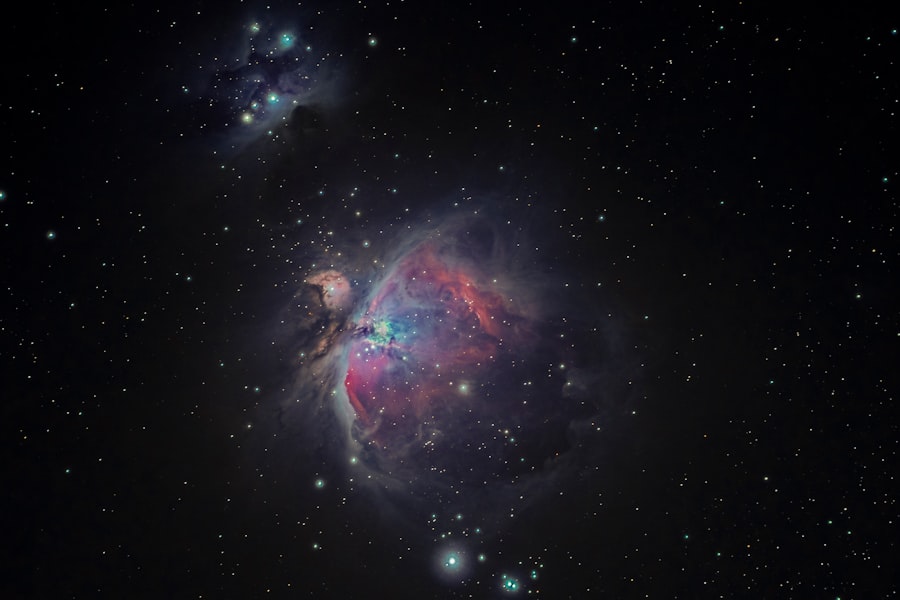
The multiverse hypothesis offers an intriguing framework for understanding fine-tuning by suggesting that our universe is just one of many—perhaps an infinite number—of universes with varying physical laws and constants. In this scenario, it becomes more plausible that at least one universe would possess the right conditions for life to emerge. You may find this idea both exhilarating and perplexing; if there are countless other universes out there, what does that mean for your understanding of reality?
As you explore this hypothesis further, consider its implications for fine-tuning discussions. If our universe is merely one among many, then the apparent improbability of life-supporting conditions becomes less daunting. However, this raises additional questions about how we can ever observe or test these other universes.
The multiverse theory challenges traditional notions of scientific inquiry and invites you to think beyond conventional boundaries as you contemplate your place within this vast cosmic tapestry.
The implications of fine-tuning for the search for extraterrestrial life
Fine-tuning has significant implications for humanity’s quest to discover extraterrestrial life. As you ponder this topic, consider how understanding the specific conditions necessary for life can guide your search beyond Earth. Scientists often focus on exoplanets located within their stars’ habitable zones—regions where temperatures allow for liquid water—because these environments are thought to be more likely to support life as we know it.
However, fine-tuning also prompts you to think critically about what constitutes “life.” Could there be forms of life that thrive under conditions vastly different from those on Earth? As researchers continue to explore extreme environments on our planet—such as deep-sea hydrothermal vents or acidic lakes—you may find yourself contemplating how adaptable life can be. This exploration broadens your perspective on what extraterrestrial life might look like and where it could exist within our finely tuned universe.
Fine-tuning and the philosophical implications for the nature of the universe
The concept of fine-tuning invites profound philosophical inquiries about existence itself. As you engage with these ideas, consider what they reveal about your understanding of reality and your place within it. If the universe is indeed finely tuned for life, does this imply purpose or intention behind its creation?
You may find yourself grappling with existential questions about meaning and significance in a seemingly indifferent cosmos. Moreover, fine-tuning challenges traditional philosophical perspectives on causality and determinism. If certain conditions are necessary for life but appear improbable without an intelligent designer, what does this mean for your understanding of free will?
As you navigate these complex ideas, you may discover new avenues for exploring your beliefs about existence and your role within the grand narrative of the universe.
The scientific evidence for fine-tuning in the universe
Scientific evidence supporting fine-tuning comes from various fields such as cosmology, physics, and biology. Researchers have identified numerous parameters that must fall within specific ranges for life to exist. For instance, studies have shown that if the strong nuclear force were slightly weaker or stronger, complex atoms could not form; similarly, if dark energy were different, galaxies would not have formed as they did.
As you examine this evidence, you may find it compelling how interconnected these findings are across disciplines. Additionally, advancements in observational technology have allowed scientists to explore distant galaxies and exoplanets more effectively than ever before. These discoveries provide further insights into how unique our own solar system may be within a broader cosmic context.
As you engage with this scientific evidence, consider how it shapes your understanding of fine-tuning and its implications for both your worldview and humanity’s quest for knowledge.
The theological and religious implications of fine-tuning
Fine-tuning has significant theological implications that resonate with various religious beliefs about creation and existence. For many believers, the precise conditions necessary for life serve as evidence of a divine creator who intentionally designed the universe with humanity in mind. This perspective aligns with traditional religious narratives that emphasize purpose and intention behind creation.
As you reflect on these ideas, consider how they intersect with your own beliefs about spirituality and existence. Conversely, some theologians argue that fine-tuning does not necessarily require a traditional understanding of God but could instead point toward a more abstract concept of divinity or higher intelligence guiding cosmic processes. This perspective invites you to think critically about how different religious frameworks interpret fine-tuning and its implications for humanity’s relationship with the cosmos.
The ongoing research and future implications of fine-tuning in the universe
As research into fine-tuning continues to evolve, new discoveries are likely to reshape your understanding of both science and philosophy. Ongoing investigations into fundamental constants and their relationships will deepen your appreciation for the complexity inherent in our universe. Additionally, advancements in technology may enable scientists to explore previously uncharted territories—both within our own solar system and beyond—potentially uncovering new insights into life’s origins.
The future implications of fine-tuning extend beyond scientific inquiry; they also invite you to engage with profound questions about existence itself. As humanity continues its quest for knowledge about the cosmos, you may find yourself reflecting on what it means to be alive in such a finely tuned universe—a question that transcends disciplines and invites exploration across science, philosophy, theology, and beyond.
In exploring the concept of a fine-tuned universe that permits life, one can delve into various scientific discussions and theories. A related article that provides insights into this fascinating topic can be found on Freaky Science, which examines the intricate balance of physical constants and conditions necessary for life to exist. For more information, you can read the article [here](https://www.freakyscience.com/).
WATCH THIS!🤯 SHOCKING: The Simulation Theory Proof They Don’t Want You To See
FAQs
What does “fine tuning” of the universe mean?
Fine tuning refers to the observation that certain fundamental physical constants and conditions in the universe fall within a very narrow range that allows for the existence of life. Small variations in these parameters could make the universe inhospitable to life as we know it.
Which physical constants are considered fine-tuned for life?
Some of the key constants include the gravitational constant, the electromagnetic force constant, the strong and weak nuclear force strengths, the cosmological constant, and the ratio of the masses of fundamental particles like protons and electrons.
Why is the fine tuning of the universe important for life?
Life depends on stable atoms, chemical reactions, and the formation of stars and planets. The fine-tuned constants ensure that these processes can occur. If these constants were even slightly different, the universe might not support the complex chemistry necessary for life.
What are some examples of fine tuning in the universe?
Examples include the precise strength of the strong nuclear force that allows atomic nuclei to form, the balance between gravity and expansion that permits galaxy formation, and the cosmological constant’s small value that enables the universe to expand at a rate conducive to life.
Are there scientific explanations for why the universe is fine-tuned?
Several hypotheses exist, including the multiverse theory, which suggests many universes with varying constants exist, and we happen to be in one that supports life. Other explanations involve anthropic principles or unknown physical laws that determine these constants.
Does fine tuning imply the existence of a designer or creator?
Fine tuning is often discussed in philosophical and theological contexts, but scientifically it is an observation about the universe’s parameters. Whether it implies a designer is a matter of personal belief and interpretation, not a scientific conclusion.
Can fine tuning be tested or measured?
Scientists measure the fundamental constants with high precision and study their effects on physical processes. While the constants themselves are observed values, researchers explore how changes would impact the universe through theoretical models and simulations.
How does fine tuning relate to the origin of life?
Fine tuning sets the stage for the physical and chemical conditions necessary for life to emerge. Without these conditions, the complex molecules and stable environments required for life would not exist.
Is fine tuning unique to our universe?
Currently, we only have direct evidence of our own universe. The concept of fine tuning arises from comparing the observed constants to hypothetical variations. The existence of other universes with different constants remains speculative.
What fields of study investigate fine tuning?
Fine tuning is studied in cosmology, physics, astrophysics, and philosophy of science. Researchers analyze fundamental constants, cosmic evolution, and the conditions necessary for life to understand this phenomenon.