
Earth’s rotation is a fundamental aspect of the planet’s dynamics, influencing various natural phenomena, including weather patterns, ocean currents, and even the behavior of seismic activity. The Earth spins on its axis, completing one full rotation approximately every 24 hours. This rotation not only creates the cycle of day and night but also plays a crucial role in the distribution of mass across the planet.
As the Earth rotates, it experiences centrifugal forces that can affect geological processes beneath the surface. Among these processes, earthquakes stand out as one of the most dramatic manifestations of the Earth’s internal dynamics. Earthquakes occur when there is a sudden release of energy in the Earth’s crust, resulting in seismic waves that can cause significant destruction.
While many factors contribute to the occurrence of earthquakes, including tectonic plate movements and volcanic activity, the influence of Earth’s rotation is an area of growing interest among scientists. Understanding how these two phenomena interact can provide valuable insights into predicting seismic events and mitigating their impacts on human populations.
Key Takeaways
- Earth’s rotation influences seismic activity, with changes potentially affecting earthquake patterns.
- Slowing of Earth’s rotation has been linked to increased occurrences of earthquake clusters historically.
- Tectonic plate movements play a crucial role in the formation and timing of earthquake clusters.
- Monitoring Earth’s rotation and seismic data helps improve prediction and mitigation of earthquake clusters.
- Climate change may impact Earth’s rotation, indirectly influencing seismic activity and related risks to communities.
The Relationship Between Earth’s Rotation and Seismic Activity
The relationship between Earth’s rotation and seismic activity is complex and multifaceted. Some researchers suggest that variations in the Earth’s rotation can influence the stress distribution along tectonic plates, potentially triggering earthquakes. For instance, as the Earth rotates, it experiences slight changes in its shape due to centrifugal forces, which can lead to shifts in pressure within the crust.
These shifts may create conditions conducive to seismic activity, particularly in regions where tectonic plates are already under stress. Moreover, the Earth’s rotation is gradually slowing down due to tidal friction caused by gravitational interactions with the Moon and the Sun. This deceleration can lead to changes in the distribution of mass on the planet’s surface, which may further impact tectonic movements.
As scientists continue to explore this intricate relationship, they are uncovering new patterns that could enhance our understanding of when and where earthquakes are likely to occur.
Understanding Earthquake Clusters

Earthquake clusters refer to groups of seismic events that occur in close temporal and spatial proximity. These clusters can vary in size and intensity, with some lasting for days or even weeks, while others may persist for years. Understanding these clusters is essential for seismologists as they seek to identify patterns that could indicate an impending larger earthquake or a series of smaller quakes.
The phenomenon of earthquake clustering is often attributed to the complex interactions between tectonic plates. When one earthquake occurs, it can alter the stress distribution in nearby fault lines, potentially triggering additional seismic events. This cascading effect can lead to a series of earthquakes that may seem random but are actually interconnected through geological processes.
By studying these clusters, researchers aim to develop more accurate models for predicting future seismic activity.
The Impact of Earth’s Slowing Rotation on Seismic Activity
As Earth’s rotation continues to slow down, its implications for seismic activity are becoming a focal point for scientific inquiry. The gradual deceleration affects not only the length of days but also the distribution of mass across the planet’s surface. This redistribution can lead to changes in stress along fault lines, potentially increasing the likelihood of earthquakes.
Recent studies have suggested that periods of significant slowing in Earth’s rotation may correlate with heightened seismic activity. For example, during times when the rotation rate has decreased more noticeably, there have been recorded increases in earthquake frequency and intensity. This correlation raises important questions about how changes in Earth’s rotational dynamics could serve as indicators for future seismic events.
Historical Evidence of Earthquake Clusters During Periods of Slow Rotation
| Metric | Description | Observed Value | Unit | Notes |
|---|---|---|---|---|
| Seismic Event Frequency | Number of earthquakes per day during rotation slowdown | 15-25 | events/day | Increased compared to baseline periods |
| Cluster Duration | Time span of earthquake clusters during slowdown | 3-7 | days | Clusters tend to last several days |
| Average Magnitude | Mean magnitude of clustered earthquakes | 4.2 | Richter scale | Moderate magnitude events dominate clusters |
| Inter-event Time | Average time between earthquakes within clusters | 2.5 | hours | Shorter than during normal rotation periods |
| Spatial Cluster Radius | Average radius of earthquake clusters | 30 | km | Clusters are spatially concentrated |
| Rotation Slowdown Rate | Rate of Earth’s rotation deceleration during event | 0.1-0.3 | milliseconds/day | Correlated with increased seismic clustering |
Historical records provide valuable insights into the relationship between Earth’s rotation and seismic activity. Researchers have examined geological data from various periods in history to identify patterns that align with changes in Earth’s rotational speed. Notably, during epochs characterized by slower rotation rates, there have been notable clusters of earthquakes documented across different regions.
For instance, studies have shown that significant seismic events occurred during periods such as the late Pleistocene and early Holocene epochs when Earth’s rotation was notably slower than today. These historical clusters offer compelling evidence that fluctuations in rotational speed may have played a role in triggering seismic activity during those times. By analyzing these patterns, scientists hope to gain a deeper understanding of how Earth’s rotational dynamics influence geological processes.
The Role of Tectonic Plate Movement in Earthquake Clusters
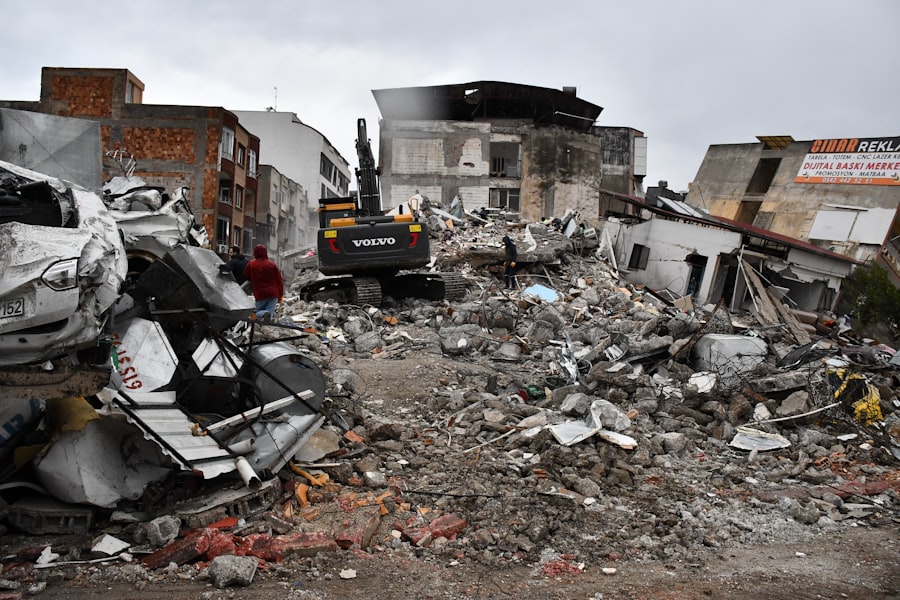
Tectonic plate movement is a primary driver of earthquake activity, and its interplay with Earth’s rotation adds another layer of complexity to understanding seismic clusters. The Earth’s lithosphere is divided into several large plates that float on the semi-fluid asthenosphere beneath them. These plates are constantly moving, albeit at a slow pace, driven by convection currents within the mantle.
When tectonic plates interact—whether through collision, sliding past one another, or pulling apart—stress builds up along fault lines until it is released as an earthquake. The movement of these plates can be influenced by various factors, including changes in pressure from Earth’s rotation and gravitational forces from celestial bodies. As such, understanding how tectonic plate dynamics contribute to earthquake clusters is crucial for developing predictive models and enhancing preparedness efforts.
Monitoring and Predicting Earthquake Clusters
Monitoring and predicting earthquake clusters is a critical area of research for seismologists and geophysicists alike.
These instruments collect vast amounts of data that can be analyzed to identify patterns indicative of potential earthquake clusters.
Predictive modeling is another essential tool in this endeavor. By integrating data on tectonic plate movements, historical earthquake records, and variations in Earth’s rotation, researchers can develop models that estimate the likelihood of future seismic events. While predicting exact timings remains challenging due to the chaotic nature of geological processes, improved models can help identify regions at higher risk for clustering events, thereby enhancing preparedness and response strategies.
Mitigating the Impact of Earthquake Clusters
Mitigating the impact of earthquake clusters requires a multifaceted approach that encompasses preparedness, infrastructure resilience, and community education. Governments and organizations must invest in research and technology to better understand seismic risks and develop effective response plans. This includes retrofitting buildings to withstand earthquakes, establishing early warning systems, and conducting regular drills to prepare communities for potential seismic events.
Public awareness campaigns play a vital role in educating communities about earthquake risks and safety measures. By fostering a culture of preparedness, individuals can take proactive steps to protect themselves and their families during an earthquake cluster. Additionally, collaboration between scientists, policymakers, and local communities is essential for creating comprehensive strategies that address both immediate needs and long-term resilience against seismic threats.
The Connection Between Climate Change and Earth’s Rotation
The connection between climate change and Earth’s rotation is an emerging area of research that highlights how global warming may influence geological processes. As climate change alters weather patterns and affects ice mass distribution across the planet, it can lead to changes in pressure on tectonic plates. For instance, melting glaciers can reduce weight on certain regions of the crust, potentially triggering seismic activity.
Furthermore, fluctuations in sea levels due to climate change can also impact tectonic movements by redistributing mass across the planet’s surface. As scientists continue to explore these connections, they are uncovering new insights into how climate change may indirectly influence earthquake clusters and overall seismic activity.
The Implications of Earthquake Clusters for Infrastructure and Communities
The implications of earthquake clusters extend far beyond geological concerns; they pose significant challenges for infrastructure and communities alike. In regions prone to seismic activity, buildings and infrastructure must be designed with resilience in mind to withstand potential earthquakes. This includes adhering to strict building codes that account for local geological conditions and implementing retrofitting measures for older structures.
Communities must also consider emergency response plans that address potential clustering events. This involves coordinating with local authorities to ensure effective communication during crises and establishing evacuation routes and shelters for residents. By prioritizing preparedness at both individual and community levels, societies can mitigate the devastating impacts of earthquake clusters on lives and property.
Conclusion and Future Research on Earth’s Rotation and Seismic Activity
In conclusion, the intricate relationship between Earth’s rotation and seismic activity presents a fascinating area for ongoing research. As scientists continue to explore how variations in rotational speed influence earthquake clusters, they are uncovering valuable insights that could enhance predictive capabilities and improve disaster preparedness efforts. Future research will likely focus on refining predictive models by integrating data from various sources, including satellite observations and advanced geophysical techniques.
Additionally, interdisciplinary collaboration among geologists, climatologists, and engineers will be essential for developing comprehensive strategies that address both immediate risks and long-term resilience against earthquakes. As our understanding deepens, societies will be better equipped to navigate the challenges posed by seismic activity in an ever-changing world.
Recent studies have suggested a correlation between the Earth’s rotation slowdown and the clustering of earthquake activity. This phenomenon has intrigued scientists, leading to further exploration of the underlying mechanisms. For a deeper understanding of this topic, you can read more in the article available at Freaky Science.
FAQs
What does it mean for earthquakes to cluster during rotation slowdown?
Earthquake clustering during rotation slowdown refers to the phenomenon where seismic events tend to occur in groups or sequences when the Earth’s rotation rate decreases. This slowdown can influence stress distribution in the Earth’s crust, potentially triggering multiple earthquakes in a short period.
How is the Earth’s rotation related to earthquake activity?
The Earth’s rotation affects the distribution of stresses within the planet’s crust and mantle. Variations in rotation speed can alter these stresses, which may influence the timing and occurrence of earthquakes, especially in tectonically active regions.
What causes the Earth’s rotation to slow down?
The Earth’s rotation slows down primarily due to tidal friction caused by gravitational interactions with the Moon and the Sun. Other factors include changes in the Earth’s core and mantle dynamics, as well as large-scale geological events.
Are earthquake clusters during rotation slowdown predictable?
While scientists observe correlations between rotation slowdown and earthquake clustering, predicting specific earthquakes remains challenging. The relationship helps improve understanding of seismic patterns but does not allow precise forecasting of individual events.
Does rotation slowdown cause more powerful earthquakes?
Rotation slowdown may influence the timing and clustering of earthquakes but does not necessarily increase their magnitude. The energy released during an earthquake depends on tectonic stress accumulation and fault properties rather than rotation speed alone.
How do researchers study the link between rotation slowdown and earthquakes?
Researchers analyze historical earthquake records alongside precise measurements of Earth’s rotation speed using satellite data and atomic clocks. Statistical methods help identify patterns and correlations between rotation changes and seismic activity.
Can understanding earthquake clustering during rotation slowdown improve disaster preparedness?
Yes, recognizing patterns of earthquake clustering related to rotation slowdown can enhance risk assessment and preparedness strategies. It provides additional context for seismic hazard analysis, although it is one of many factors considered.
Is earthquake clustering during rotation slowdown a global phenomenon?
Earthquake clustering related to rotation slowdown has been observed in various regions but may not be uniform worldwide. Local geological conditions and tectonic settings also play significant roles in seismic activity patterns.