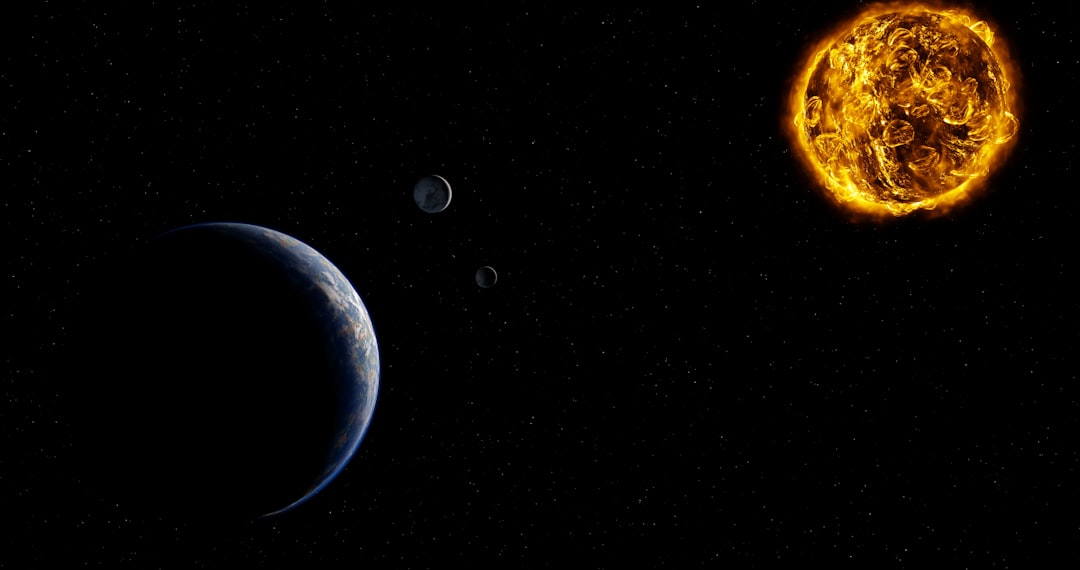
The study of exoplanet atmospheres has emerged as a captivating frontier in the field of astronomy, offering insights into the diverse worlds that exist beyond our solar system. As scientists have discovered thousands of exoplanets, the quest to understand their atmospheres has become increasingly significant. These atmospheres can reveal vital information about a planet’s potential habitability, climate, and even its geological history.
By analyzing the composition and behavior of these distant atmospheres, researchers aim to answer fundamental questions about the nature of planets beyond Earth and the conditions that might support life. Exoplanet atmospheres are not merely a collection of gases; they are complex systems influenced by a variety of factors, including a planet’s distance from its star, its size, and its intrinsic properties. The diversity of exoplanets—ranging from gas giants to rocky worlds—means that their atmospheres can vary dramatically.
Some may be thick with clouds and storms, while others could be thin and barren. Understanding these atmospheres is crucial for piecing together the broader narrative of planetary formation and evolution in the universe.
Key Takeaways
- Spectroscopy is essential for identifying the chemical composition of exoplanet atmospheres.
- Advanced telescopes enable detailed observation and analysis of distant exoplanet atmospheres.
- Understanding exoplanet atmospheres helps assess their habitability and potential for life.
- Analyzing exoplanet atmospheres faces challenges like signal interference and limited data.
- Studies of exoplanet atmospheres contribute to broader insights in astrobiology and climate modeling.
Methods for Analyzing Exoplanet Atmospheres
To analyze exoplanet atmospheres, astronomers employ a range of sophisticated methods that leverage both observational techniques and theoretical models. One of the primary approaches involves transit photometry, where scientists observe a star’s brightness over time. When an exoplanet passes in front of its host star, it causes a temporary dip in brightness, allowing researchers to infer the planet’s size and orbital characteristics.
This method is particularly effective for detecting smaller, Earth-like planets that may harbor atmospheres conducive to life. Another critical method is direct imaging, which allows astronomers to capture images of exoplanets by blocking out the light from their parent stars. This technique is particularly useful for studying larger gas giants that are located far from their stars.
By isolating the light from an exoplanet, researchers can analyze its spectrum to determine the composition of its atmosphere. Additionally, radial velocity measurements help scientists detect the gravitational influence of an exoplanet on its star, providing further insights into its mass and density. Together, these methods form a comprehensive toolkit for exploring the atmospheres of distant worlds.
Spectroscopy: A Key Tool for Studying Exoplanet Atmospheres
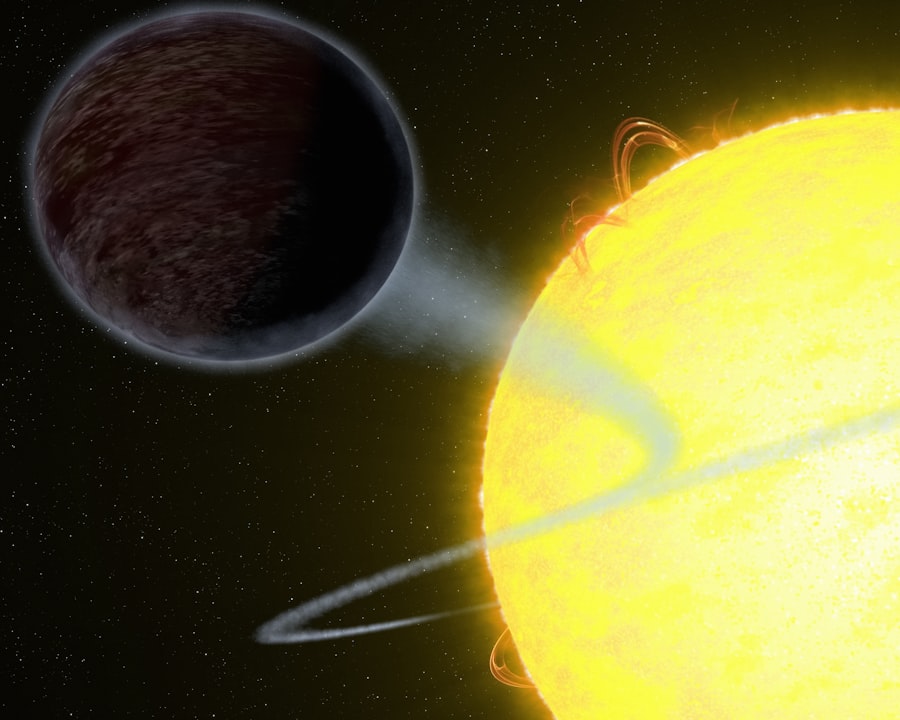
Spectroscopy stands out as one of the most powerful tools in the analysis of exoplanet atmospheres. This technique involves breaking down light into its constituent wavelengths to identify specific spectral lines associated with various elements and molecules. When light from a star passes through an exoplanet’s atmosphere, certain wavelengths are absorbed by atmospheric constituents, creating unique signatures that can be detected by telescopes.
By studying these signatures, scientists can determine the chemical composition of an atmosphere and infer its physical properties. The application of spectroscopy has led to groundbreaking discoveries regarding the presence of key molecules such as water vapor, carbon dioxide, and methane in exoplanet atmospheres. These findings are not only crucial for understanding the potential habitability of these planets but also for assessing their climatic conditions.
For instance, the detection of water vapor could indicate the possibility of liquid water on a planet’s surface, a critical factor for life as we know it. As technology advances, spectroscopy continues to evolve, enabling more detailed analyses of increasingly distant exoplanets.
The Role of Telescopes in Analyzing Exoplanet Atmospheres
Telescopes play an indispensable role in the study of exoplanet atmospheres, serving as the primary instruments through which astronomers gather data about these distant worlds. Ground-based telescopes equipped with advanced adaptive optics systems can minimize atmospheric distortion, allowing for clearer observations of exoplanets. However, space-based telescopes offer distinct advantages by eliminating atmospheric interference altogether.
Instruments like the Hubble Space Telescope and the upcoming James Webb Space Telescope are designed specifically to capture high-resolution spectra from exoplanets. The capabilities of modern telescopes have expanded significantly over recent years, enabling astronomers to probe deeper into the cosmos than ever before. With improved sensitivity and resolution, these instruments can detect faint signals from distant exoplanets and analyze their atmospheres with unprecedented detail.
The combination of various observational techniques—such as transit observations and direct imaging—enhances the overall understanding of exoplanet atmospheres, paving the way for future discoveries that could reshape our understanding of planetary systems.
Exoplanet Atmosphere Composition: What We Know So Far
| Exoplanet Name | Host Star Type | Atmospheric Composition | Detection Method | Temperature (K) | Pressure (bar) | Notable Molecules | Observation Instrument |
|---|---|---|---|---|---|---|---|
| HD 209458 b | G0V | Hydrogen, Sodium, Water Vapor | Transit Spectroscopy | 1450 | 0.1 | Na, H2O, CO | Hubble Space Telescope |
| WASP-12 b | G0V | Hydrogen, Carbon-rich Compounds | Emission Spectroscopy | 2500 | 0.01 | CH4, CO, HCN | Spitzer Space Telescope |
| GJ 1214 b | M4.5V | Water Vapor, Possible Clouds | Transit Spectroscopy | 550 | 1.0 | H2O, CH4 (tentative) | Hubble Space Telescope |
| HD 189733 b | K1V | Hydrogen, Water Vapor, Methane | Transit and Emission Spectroscopy | 1200 | 0.1 | H2O, CH4, CO2 | Hubble & Spitzer Space Telescopes |
| Kepler-51 b | G-type | Hydrogen-rich, Low Density | Transit Spectroscopy | 550 | 0.05 | H2, He | Hubble Space Telescope |
The composition of exoplanet atmospheres has revealed a fascinating array of chemical constituents that vary widely among different planets. Some exoplanets exhibit thick atmospheres dominated by hydrogen and helium, akin to those found in gas giants like Jupiter and Saturn. Others have been found to possess more complex mixtures, including water vapor, carbon dioxide, and even signs of organic molecules such as methane.
These findings have significant implications for understanding planetary formation processes and the potential for habitability. Recent studies have also uncovered intriguing phenomena such as temperature inversions in certain exoplanet atmospheres, where temperatures increase with altitude rather than decrease.
Furthermore, researchers have identified “hot Jupiters,” gas giants that orbit very close to their stars, exhibiting extreme temperatures and unique atmospheric compositions. The ongoing analysis of exoplanet atmospheres continues to challenge existing theories and expand our knowledge of planetary diversity.
Challenges in Analyzing Exoplanet Atmospheres
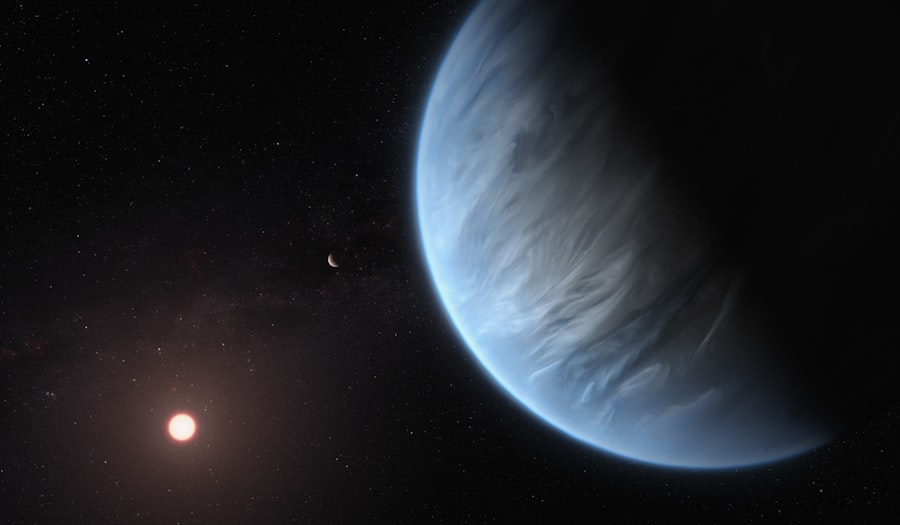
Despite significant advancements in technology and methodology, analyzing exoplanet atmospheres presents numerous challenges that researchers must navigate. One major hurdle is the vast distances involved; many exoplanets are located light-years away from Earth, making direct observation difficult.
Additionally, the interpretation of spectral data can be complex due to overlapping signals from various atmospheric components. Distinguishing between different molecules requires sophisticated modeling techniques and a deep understanding of atmospheric physics. Furthermore, many exoplanets exhibit dynamic weather patterns that can alter their atmospheric composition over time, adding another layer of complexity to analyses.
As researchers continue to refine their techniques and develop new technologies, they remain committed to overcoming these challenges in pursuit of a deeper understanding of exoplanet atmospheres.
The Search for Habitable Exoplanet Atmospheres
The search for habitable exoplanet atmospheres is one of the most exciting aspects of contemporary astronomy. Scientists are particularly interested in identifying planets located within their star’s habitable zone—the region where conditions may be just right for liquid water to exist on a planet’s surface. The presence of water is often considered a key indicator of potential habitability, as it is essential for life as we know it.
In recent years, missions such as NASA’s Kepler Space Telescope have identified numerous candidates within this habitable zone. By analyzing their atmospheres for signs of water vapor and other biosignatures—substances that may indicate biological activity—researchers hope to uncover planets that could support life. The ongoing exploration of potentially habitable exoplanets not only fuels scientific curiosity but also raises profound questions about humanity’s place in the universe and whether we are alone in our cosmic neighborhood.
The Impact of Exoplanet Atmosphere Studies on Astrobiology
The study of exoplanet atmospheres has profound implications for astrobiology—the scientific field dedicated to understanding the potential for life beyond Earth. By examining the chemical compositions and physical properties of these distant atmospheres, researchers can gain insights into the conditions that might support life forms similar to those on Earth or entirely different organisms adapted to alien environments. The detection of specific molecules associated with biological processes—such as oxygen or methane—could serve as compelling evidence for extraterrestrial life.
Moreover, understanding how different atmospheric conditions influence climate and weather patterns on exoplanets can inform theories about how life might evolve under varying circumstances. As astrobiologists continue to explore these possibilities, they are not only expanding our knowledge of life’s potential diversity but also refining our understanding of life’s origins on Earth.
Exoplanet Atmospheres and Climate Modeling
Exoplanet atmosphere studies are closely intertwined with climate modeling efforts aimed at predicting how different atmospheric compositions influence planetary climates. By simulating various scenarios based on observed data from exoplanets, researchers can explore how factors such as greenhouse gas concentrations or cloud cover might affect surface temperatures and weather patterns. These climate models provide valuable insights into how different types of atmospheres could support or hinder habitability.
For instance, understanding how thick clouds might trap heat or how varying levels of carbon dioxide could influence temperature gradients helps scientists assess which planets might be more conducive to life. As computational power increases and models become more sophisticated, climate modeling will play an increasingly vital role in interpreting data from exoplanet atmospheres.
Future Prospects for Analyzing Exoplanet Atmospheres
The future prospects for analyzing exoplanet atmospheres are incredibly promising as technological advancements continue to reshape our capabilities in this field. Upcoming missions such as NASA’s James Webb Space Telescope are set to revolutionize our understanding by providing unprecedented access to high-resolution spectra from distant worlds. This next-generation telescope will enable astronomers to probe deeper into the atmospheres of smaller and cooler exoplanets than ever before.
Moreover, advancements in artificial intelligence and machine learning are poised to enhance data analysis techniques significantly. These technologies can help identify patterns within vast datasets more efficiently than traditional methods, potentially leading to new discoveries about atmospheric compositions and behaviors. As researchers continue to refine their methodologies and develop innovative tools, the exploration of exoplanet atmospheres will undoubtedly yield exciting revelations about our universe.
Implications of Exoplanet Atmosphere Studies for Understanding the Universe
The implications of studying exoplanet atmospheres extend far beyond individual planets; they contribute to a broader understanding of planetary systems and the universe as a whole. By examining how different atmospheric conditions arise and evolve across various types of planets, scientists can gain insights into fundamental processes governing planetary formation and evolution. Furthermore, these studies challenge existing paradigms about what constitutes a habitable environment and encourage researchers to think creatively about life’s potential forms across diverse settings.
As humanity continues its quest for knowledge about the cosmos, the exploration of exoplanet atmospheres serves as a vital piece in unraveling the mysteries surrounding our existence and our place within the vast expanse of space. Through this ongoing research endeavor, scientists hope not only to discover new worlds but also to deepen humanity’s understanding of life’s potential beyond Earth.
Recent advancements in exoplanet atmosphere analysis have opened new avenues for understanding the potential habitability of distant worlds. A particularly insightful article on this topic can be found at Freaky Science, where researchers discuss the techniques used to detect and analyze the chemical compositions of exoplanet atmospheres. This research is crucial for identifying planets that may support life and for unraveling the mysteries of our universe.
WATCH THIS! 🌌 Where Is Everybody? The Discovery That Would End Civilization 🌌
FAQs
What is exoplanet atmosphere analysis?
Exoplanet atmosphere analysis is the study of the composition, structure, and properties of the atmospheres surrounding planets outside our solar system, known as exoplanets. This analysis helps scientists understand the planet’s climate, potential habitability, and formation history.
How do scientists analyze exoplanet atmospheres?
Scientists analyze exoplanet atmospheres primarily through spectroscopy, observing the light from the host star as it passes through or reflects off the planet’s atmosphere. Techniques include transmission spectroscopy during transits, emission spectroscopy during secondary eclipses, and direct imaging.
What information can be obtained from exoplanet atmosphere analysis?
Analysis can reveal the presence of gases such as water vapor, methane, carbon dioxide, and oxygen. It can also provide data on temperature, pressure, cloud coverage, and atmospheric dynamics, which are crucial for assessing the planet’s environment and potential for life.
Why is studying exoplanet atmospheres important?
Studying exoplanet atmospheres helps scientists understand planetary formation and evolution, assess the potential for habitability, and search for biosignatures that might indicate the presence of life beyond Earth.
What challenges exist in analyzing exoplanet atmospheres?
Challenges include the faintness of the signals, interference from the host star’s light, limited resolution of current instruments, and the vast distances involved. These factors make it difficult to obtain detailed and accurate atmospheric data.
Which telescopes are used for exoplanet atmosphere analysis?
Space telescopes like the Hubble Space Telescope, the James Webb Space Telescope, and ground-based observatories equipped with advanced spectrographs are commonly used to study exoplanet atmospheres.
Can exoplanet atmosphere analysis detect signs of life?
While it cannot directly detect life, analyzing atmospheric composition for biosignature gases such as oxygen, methane, or combinations thereof can provide indirect evidence suggesting the possibility of life.
What is transmission spectroscopy?
Transmission spectroscopy is a method where scientists observe the starlight filtered through an exoplanet’s atmosphere during a transit. The atmosphere absorbs certain wavelengths, allowing identification of its chemical components.
How does the study of exoplanet atmospheres contribute to understanding planetary systems?
It provides insights into the diversity of planetary atmospheres, their chemical processes, and interactions with their stars, which helps build comprehensive models of planetary system formation and evolution.
Are all exoplanet atmospheres similar to Earth’s?
No, exoplanet atmospheres vary widely depending on factors like planet size, composition, distance from their star, and stellar radiation. Some may be thick and gaseous like Jupiter, while others could be thin or even absent.