
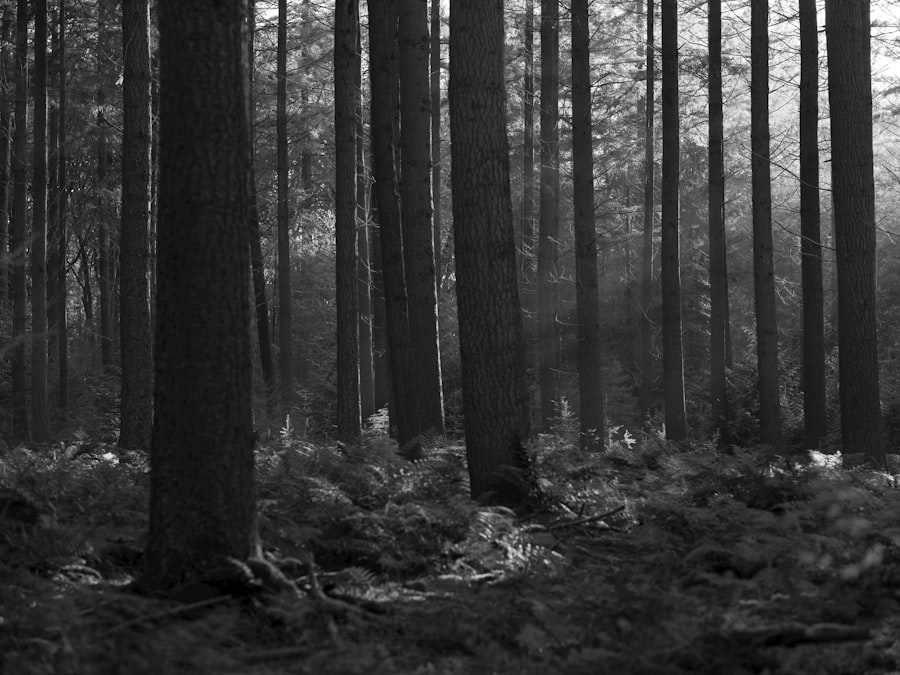
The Dark Forest Hypothesis presents a compelling and unsettling perspective on the search for extraterrestrial life. Proposed by Chinese science fiction author Liu Cixin in his novel “The Dark Forest,” this hypothesis suggests that the universe is akin to a dark forest, where every civilization is a silent hunter, hiding from others to avoid potential threats. In this metaphorical forest, the act of revealing one’s presence could lead to annihilation, as advanced civilizations may view each other as existential threats.
This idea challenges the optimistic view that intelligent life would naturally seek contact and cooperation, instead positing that silence is a survival strategy in a universe filled with unknown dangers. The implications of the Dark Forest Hypothesis extend far beyond mere speculation. It raises profound questions about the nature of intelligence, communication, and survival in the cosmos.
If civilizations are indeed hiding from one another, it could explain the apparent absence of extraterrestrial signals despite the vastness of the universe. This hypothesis invites a reevaluation of humanity’s approach to space exploration and communication, urging a more cautious and strategic mindset as we venture into the unknown.
Key Takeaways
- The Dark Forest Hypothesis suggests alien civilizations remain silent to avoid detection and potential threats.
- The Fermi Paradox questions why we haven’t found evidence of extraterrestrial life despite the vast universe.
- Interstellar communication may pose significant risks, as revealing our location could attract hostile civilizations.
- The Great Filter concept implies many civilizations might self-destruct or be destroyed before achieving advanced space exploration.
- Ethical and psychological challenges arise when considering contact with alien life, influencing SETI strategies and space exploration policies.
The Fermi Paradox: Where are all the aliens?
The Fermi Paradox encapsulates one of the most perplexing questions in modern science: if the universe is teeming with potentially habitable planets and intelligent life, why have we not yet encountered any evidence of such civilizations? This paradox highlights the contradiction between the high probability of extraterrestrial life and the lack of observable signs of their existence. The vastness of space, combined with the billions of stars and planets, suggests that intelligent life should be common; yet, humanity remains alone in its cosmic silence.
Several theories have been proposed to address this paradox, ranging from the idea that advanced civilizations self-destruct before they can communicate with others, to the possibility that they are simply avoiding us. The Dark Forest Hypothesis fits neatly into this framework, suggesting that civilizations may choose to remain silent out of fear. This fear could stem from a history of conflict or a fundamental understanding that revealing one’s location could lead to catastrophic consequences.
Thus, the Fermi Paradox and the Dark Forest Hypothesis intertwine, presenting a chilling narrative about the nature of life in the universe.
The potential dangers of interstellar communication
Engaging in interstellar communication carries inherent risks that cannot be overlooked. The act of broadcasting signals into space may seem innocuous or even hopeful; however, it could inadvertently expose humanity to hostile civilizations. The Dark Forest Hypothesis posits that advanced societies may interpret such signals as an invitation for confrontation rather than cooperation.
This perspective urges caution in how humanity approaches communication with potential extraterrestrial intelligences. Moreover, the potential for miscommunication adds another layer of complexity. Different civilizations may possess vastly different cultural norms, values, and technological capabilities.
A message intended as friendly could be misconstrued as a threat, leading to unintended consequences. The history of human interactions serves as a reminder that misunderstandings can escalate into conflict. Therefore, before embarking on any attempts at interstellar communication, it is crucial for humanity to consider not only the content of its messages but also the potential reactions from unknown recipients.
The Great Filter: Are we destined for extinction?
The Great Filter theory posits that there is a significant barrier preventing civilizations from advancing to a stage where they can communicate across interstellar distances. This filter could exist at various points in a civilization’s development—either before intelligent life emerges or after it reaches a certain level of technological advancement. If humanity has already passed through this filter, it raises questions about what lies ahead; if not, it suggests that there may be catastrophic challenges yet to come.
The Dark Forest Hypothesis aligns with the concept of the Great Filter by suggesting that civilizations may self-destruct before they can establish contact with others. This self-destruction could stem from technological advancements leading to warfare, environmental collapse, or other existential threats. As humanity grapples with its own challenges—climate change, nuclear proliferation, and social unrest—the specter of extinction looms large.
The realization that other civilizations may have faced similar fates adds urgency to humanity’s quest for survival and understanding in an unpredictable universe.
The implications of the Dark Forest Hypothesis for space exploration
| Metric | Description | Value / Estimate | Source / Notes |
|---|---|---|---|
| Hypothesis Origin | Concept introduced by Liu Cixin in “The Dark Forest” novel | 2008 | Science fiction literature |
| Core Idea | Advanced civilizations remain silent to avoid detection and potential destruction | N/A | Philosophical and theoretical |
| Implication for SETI | Explains the Fermi Paradox by suggesting civilizations hide | N/A | SETI research context |
| Estimated Number of Civilizations | Number of detectable civilizations in the galaxy | Unknown / Possibly zero detectable | Dependent on Drake Equation variables |
| Risk of Contact | Potential existential threat from revealing location | High (theoretical) | Assumed in hypothesis |
| Communication Strategy | Silence or deceptive signals to avoid detection | N/A | Hypothetical behavior |
| Relation to Fermi Paradox | Provides a possible explanation for the lack of observed extraterrestrial signals | N/A | Widely discussed in astrobiology |
The Dark Forest Hypothesis has profound implications for humanity’s approach to space exploration. If civilizations are indeed hiding from one another out of fear, then humanity must tread carefully as it ventures into the cosmos. This perspective calls for a reevaluation of current exploration strategies, emphasizing caution over ambition.
Rather than broadcasting signals indiscriminately into space, humanity might consider adopting a more discreet approach to exploration and communication. Additionally, this hypothesis encourages collaboration among nations and organizations involved in space exploration. By sharing knowledge and resources, humanity can develop a unified strategy that prioritizes safety and minimizes risks associated with interstellar communication.
The Dark Forest Hypothesis serves as a reminder that while curiosity drives exploration, prudence must guide actions in an environment where unknown dangers lurk in the shadows.
The search for extraterrestrial intelligence (SETI) and the Dark Forest Hypothesis

The Search for Extraterrestrial Intelligence (SETI) has long been a beacon of hope for those seeking contact with alien civilizations. However, the Dark Forest Hypothesis casts a shadow over these efforts by suggesting that silence may be a deliberate choice made by advanced societies. If civilizations are indeed hiding to protect themselves from potential threats, then SETI’s quest may be fundamentally flawed in its assumptions about communication.
This hypothesis challenges SETI researchers to reconsider their methods and objectives. Instead of solely focusing on detecting signals from distant civilizations, they may need to explore alternative approaches that account for the possibility of silence being a strategic choice rather than an absence of life. Understanding why civilizations might choose not to communicate could provide valuable insights into the nature of intelligence itself and inform future strategies for engaging with potential extraterrestrial life.
The role of technology in detecting potential alien civilizations
Advancements in technology play a crucial role in humanity’s ability to detect potential alien civilizations. From radio telescopes scanning the cosmos for signals to sophisticated algorithms analyzing vast amounts of data, technology has transformed the search for extraterrestrial intelligence. However, as technology evolves, so too do the methods employed by advanced civilizations to conceal their presence.
The Dark Forest Hypothesis suggests that if civilizations are intentionally remaining silent, they may also develop technologies designed to avoid detection. Stealth technologies or methods of communication that do not rely on traditional electromagnetic signals could render current detection methods ineffective. As such, researchers must remain adaptable and innovative in their approaches to ensure they are not left behind in an ever-evolving landscape of cosmic communication.
The ethical considerations of contacting alien civilizations
The prospect of contacting alien civilizations raises significant ethical questions that humanity must grapple with before taking any definitive steps toward interstellar communication. If the Dark Forest Hypothesis holds true, then reaching out could pose existential risks not only to humanity but also to any potential alien societies. The ethical implications extend beyond mere survival; they encompass issues of consent, respect for autonomy, and the potential consequences of interference.
Humanity must consider whether it has the right to initiate contact with another civilization without understanding its culture or intentions fully. The ethical dilemma becomes even more pronounced when considering that advanced civilizations may have their own reasons for remaining silent. Engaging in contact without careful consideration could lead to unintended harm or conflict, underscoring the need for a thoughtful approach grounded in ethical principles.
The possibility of hidden or stealthy alien civilizations
The notion of hidden or stealthy alien civilizations adds another layer of complexity to humanity’s understanding of life beyond Earth. If advanced societies are indeed employing strategies to remain undetected, it raises questions about their motivations and capabilities. These hidden civilizations may possess technologies far beyond human comprehension or have developed social structures that prioritize secrecy over interaction.
The Dark Forest Hypothesis suggests that these stealthy civilizations may be acutely aware of the dangers posed by revealing their existence. They might have learned from past encounters or conflicts within their own histories, leading them to adopt a cautious approach toward other intelligent beings. This possibility challenges humanity’s assumptions about what constitutes intelligent life and how it might behave in an interconnected universe.
The psychological impact of the Dark Forest Hypothesis on humanity
The Dark Forest Hypothesis carries significant psychological implications for humanity as it confronts its place in the cosmos. The idea that silence is a survival strategy can evoke feelings of isolation and existential dread. If advanced civilizations are deliberately avoiding contact due to fear or mistrust, it raises questions about humanity’s own future and whether it too will succumb to similar instincts.
This hypothesis can also foster a sense of urgency among scientists and policymakers regarding humanity’s responsibilities in space exploration and communication. As awareness grows about the potential dangers lurking in the universe, individuals may feel compelled to advocate for more cautious approaches to interstellar engagement. Ultimately, grappling with these psychological impacts can shape how humanity perceives itself within the broader context of existence.
Navigating the uncertainties of the universe
In navigating the uncertainties of the universe, humanity must confront profound questions about existence, communication, and survival. The Dark Forest Hypothesis serves as both a cautionary tale and a call to action—urging careful consideration of how we approach interstellar exploration and contact with potential extraterrestrial intelligences. As scientists continue their search for signs of life beyond Earth, they must remain vigilant about the implications of their actions and decisions.
While curiosity drives exploration, wisdom must guide humanity’s steps into the unknown realms of space. By acknowledging both the possibilities and dangers inherent in seeking contact with other civilizations, humanity can strive toward a future where exploration is balanced with caution—a future where it navigates the dark forest with both hope and prudence.
The dark forest hypothesis presents a compelling explanation for the Fermi Paradox, suggesting that advanced civilizations may choose to remain silent to avoid detection by potentially hostile entities. This concept aligns with discussions found in related articles, such as the one on Freaky Science, which explores the implications of extraterrestrial life and the strategies civilizations might employ for survival in a vast and potentially dangerous universe.
WATCH THIS! 🌌 Where Is Everybody? The Discovery That Would End Civilization 🌌
FAQs
What is the Dark Forest Hypothesis?
The Dark Forest Hypothesis is a theoretical explanation for the Fermi Paradox, which questions why we have not yet detected signs of extraterrestrial civilizations despite the vastness of the universe. It suggests that advanced civilizations remain silent and hidden to avoid being destroyed by others, much like hunters in a dark forest who stay quiet to avoid attracting predators.
Where does the term “Dark Forest” come from?
The term “Dark Forest” originates from the science fiction novel “The Dark Forest” by Liu Cixin. In the novel, the universe is likened to a dark forest where every civilization is a silent hunter, fearing that revealing their location could lead to their destruction by others.
How does the Dark Forest Hypothesis explain the Fermi Paradox?
The hypothesis proposes that all intelligent civilizations are aware of the potential threat posed by others. To survive, they avoid broadcasting their presence or actively hide, which explains why we have not detected any signals or signs of extraterrestrial life despite the high probability of its existence.
Is the Dark Forest Hypothesis widely accepted?
While the Dark Forest Hypothesis is a popular and thought-provoking idea, it remains speculative. It is one of several theories attempting to explain the Fermi Paradox, and there is no empirical evidence to confirm or refute it.
What implications does the Dark Forest Hypothesis have for humanity?
If the hypothesis is correct, it suggests that humanity should be cautious about actively sending signals into space, as revealing our location could potentially attract hostile civilizations. It also implies that the universe might be more dangerous than previously thought.
Are there any criticisms of the Dark Forest Hypothesis?
Yes, some critics argue that the hypothesis assumes all civilizations behave similarly and are inherently hostile or fearful, which may not be true. Others point out that advanced civilizations might have other means of communication or conflict resolution that do not involve hiding or attacking.
How does the Dark Forest Hypothesis relate to other explanations of the Fermi Paradox?
The Dark Forest Hypothesis is one of many explanations, alongside ideas such as the Rare Earth hypothesis, the Great Filter, or the possibility that intelligent life self-destructs. It uniquely emphasizes the strategic silence and fear of detection among civilizations as a survival mechanism.