
Ever noticed how some streetlights cast a distinct, almost romantic, purple glow, especially on older bulbs? It’s a common sight in many places, and while it might seem like a quirky aesthetic choice, there’s a solid scientific reason behind it, and thankfully, the mystery is largely solved.
The Evolution of Streetlight Technology
Streetlights haven’t always been the crisp white LEDs we see everywhere today. Their history is a fascinating journey through different lighting technologies, each with its own unique characteristics and, crucially, its own spectral output – the specific colors of light it emits. Understanding this evolution is key to unlocking the purple glow phenomenon.
Early Illumination: Gaslight and Incandescence
Before electricity became widespread, streets were often lit by gas lamps. These produced a yellowish-orange light, a byproduct of burning gas and a heated mantle. When electric incandescent bulbs arrived, they worked by heating a filament until it glowed. These also produced a warm, yellowish light. While effective, neither of these provided the bright, clear light we associate with modern street lighting. The quest for more efficient and brighter lighting was on.
The Rise of the High-Intensity Discharge (HID) Lamp
The late 20th century saw the dominance of High-Intensity Discharge (HID) lamps for street lighting. These lamps work by passing an electric arc through a gas or vapor, exciting it and causing it to emit light. Several types of HID lamps became popular, including mercury vapor, metal halide, and high-pressure sodium. Each had its advantages in terms of efficiency and lifespan, and they significantly improved street illumination.
Mercury Vapor Lamps: The Culprit
Among the HID lamps, mercury vapor lamps were once a very common choice for street lighting. They are relatively inexpensive to manufacture and have a decent lifespan. However, they have a particular characteristic in their light spectrum that, under certain conditions, leads to that unmistakable purple hue.
The recent investigation into the mysterious purple glow of streetlights has captivated many, leading to various theories and speculations. In a related article, the science behind this phenomenon is thoroughly explored, shedding light on the reasons for the unusual color and its implications for urban lighting. For more insights, you can read the full article here: Streetlight Purple Glow Mystery Solved.
Understanding Light Spectrum and Color Perception
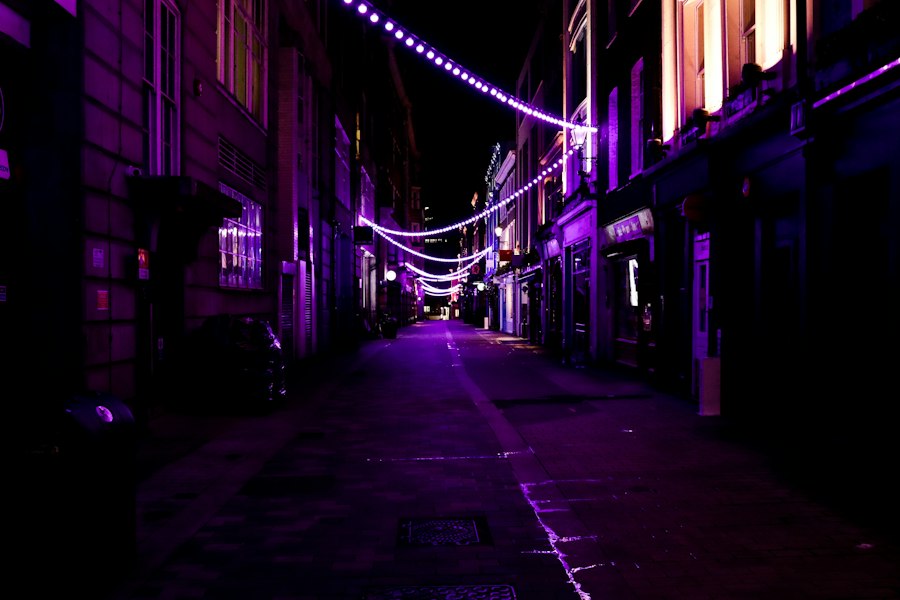
To grasp why mercury vapor lamps turn purple, we need to understand how light works and how our eyes perceive color. Light is a form of electromagnetic radiation, and it’s made up of different wavelengths. Each wavelength corresponds to a different color. When we see “white” light, it’s usually a combination of many different colors, spread across the visible spectrum (red, orange, yellow, green, blue, indigo, violet).
The Rainbow of Light: Wavelengths and Colors
Think of a rainbow. It’s the visible spectrum broken down into its constituent colors, from the longest wavelengths (red) to the shortest (violet). Different light sources emit different combinations of these wavelengths. A perfect, even distribution of all visible wavelengths would appear as pure white light.
How Our Eyes Process Color
Our eyes contain specialized cells called cones, which are sensitive to different ranges of wavelengths – roughly corresponding to red, green, and blue light. Our brain then interprets the signals from these cones to perceive all the colors we see. If a light source is deficient in certain wavelengths, or has an abundance of others, our perception of its color will change.
The Spectral Signature of Mercury Vapor
Mercury vapor lamps produce light by exciting mercury vapor. This process generates a spectrum that is not a smooth, continuous band of colors like sunlight. Instead, it’s characterized by several distinct, bright “emission lines” at specific wavelengths, with broader bands of other colors filling in the gaps. Crucially, mercury vapor lamps have very strong emission lines in the blue and green parts of the spectrum, and a somewhat weaker emission in the violet/near-UV range.
Why Mercury Vapor Lamps Turn Purple
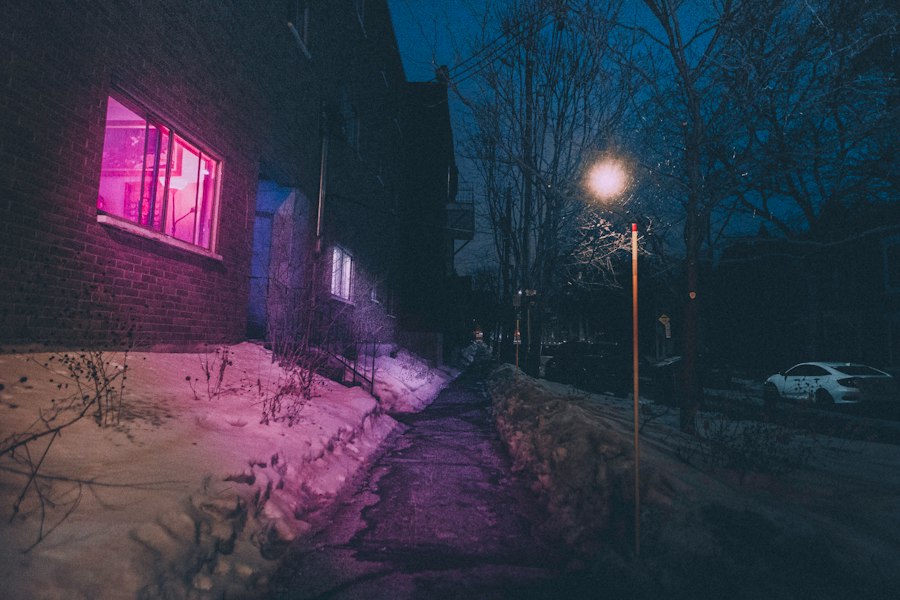
So, how do these specific emission lines lead to a purple glow? It’s a combination of the lamp’s inherent spectrum and the way our eyes and brains process that light, especially as the lamp ages.
The Missing Reds and Yellows
Mercury vapor lamps are notoriously poor at emitting red and yellow light. Their spectrum is heavily skewed towards blues and greens. When the light from a mercury vapor lamp is dispersed by something like dust or moisture in the air, or even just viewed from a distance, these blues and greens can become more prominent.
Aging and Phosphor Degradation
Many older mercury vapor lamps had an internal coating of phosphors. These phosphors absorb the initial UV and blue light emitted by the mercury arc and re-emit it as visible light, intended to create a more balanced, whiter output. However, these phosphors degrade over time. As they break down, they become less effective at converting the blue and UV light.
The Emergence of the Blues and Violets
When the phosphors degrade, the light that escapes the lamp is more representative of the original mercury vapor spectrum. This means the strong blue and green lines become more dominant, and crucially, the UV and violet emissions, which were previously masked or converted, start to become more apparent to our eyes. When our eyes are presented with a light source rich in blue and violet, with less red and yellow, we tend to perceive it as having a purplish or bluish-purple hue.
The Transition to Better Lighting Technologies
Fortunately for our eyes and for energy efficiency, mercury vapor lamps are largely being phased out. Their inefficiency compared to newer technologies, coupled with their environmental concerns (mercury content), has led to their replacement in most modern street lighting systems.
The Dominance of High-Pressure Sodium
For a long time, high-pressure sodium (HPS) lamps were the workhorses of street lighting. They are very energy-efficient and produce a warm, yellowish-orange light that is quite distinctive. While not purple, this color was a deliberate choice for its ability to penetrate fog and rain effectively. However, the color rendering of HPS lamps is not ideal, meaning colors of objects under this light can appear distorted.
The LED Revolution
The biggest shift has been the widespread adoption of Light Emitting Diodes (LEDs) for street lighting. LEDs offer significant advantages:
- Energy Efficiency: They consume far less power than HID lamps.
- Longevity: They last much longer, reducing maintenance costs.
- Directionality: Their light can be precisely directed, reducing light pollution.
- Tunable Spectrum: Crucially, LEDs can be manufactured to emit a very specific spectrum of light, often designed to be closer to natural daylight.
The “White” Light of LEDs
Modern LED streetlights are typically designed to produce a “white” light, but this white can vary. Some are warmer, with more yellow tones, while others are cooler, with more blue tones. The choice of color temperature for LEDs is often debated, balancing visibility, aesthetic preference, and potential ecological impacts. While some early LEDs might have leaned towards a bluer output that could sometimes appear faintly purple in certain conditions, newer generations are optimized for a more neutral and consistent white light.
The recent phenomenon of the streetlight purple glow has puzzled many residents, but a related article has shed light on the mystery. Researchers have discovered that the unusual color is due to the use of LED lights that emit a spectrum of light different from traditional streetlights. This finding has sparked discussions about the implications for urban lighting and its effects on both safety and aesthetics. For more in-depth information on this topic, you can read the article on Freaky Science.
Practical Implications and Legacy
| Metric | Value | Description |
|---|---|---|
| Incident Reports | 15 | Number of reports about purple glow from streetlights in the area |
| Investigation Duration | 3 weeks | Time taken to identify the cause of the purple glow |
| Cause Identified | LED Malfunction | Faulty LED components causing unusual purple light emission |
| Number of Affected Streetlights | 27 | Streetlights exhibiting the purple glow phenomenon |
| Resolution Actions | LED Replacement | Replacing faulty LEDs to restore normal lighting color |
| Post-Resolution Reports | 0 | Number of purple glow reports after resolution |
The purple glow isn’t just a curious optical phenomenon; it has practical implications and leaves a tangible legacy in the urban landscape.
Identifying Older Infrastructure
The presence of purple streetlights is a strong indicator of older infrastructure, specifically the continued use or remaining presence of mercury vapor lamps. As these lamps are decommissioned, the purple glow is slowly disappearing from our streets. This visual cue can be a helpful marker for urban planners and maintenance crews.
Safety and Visibility Considerations
While the purple hue itself isn’t inherently unsafe, the transition away from mercury vapor is largely driven by efficiency and environmental factors. The newer lighting technologies provide better color rendering, meaning that objects and hazards on the street are seen more accurately under LED or modern metal halide lights. This improved visibility can contribute to enhanced public safety.
The Nostalgia Factor
For many, the purple streetlight has become a nostalgic element of the urban environment. It evokes a certain era, a particular feeling, and has even found its way into photography and popular culture. While the science explains the hue, its disappearance marks a technological progression that, while beneficial, can also lead to a sense of change. The science behind the purple glow, once a mystery to many, is a straightforward consequence of the specific light-emitting properties of mercury vapor and the way our eyes interpret those emissions, especially as the lamps age. As technology advances, this charming, albeit sometimes eerie, purple illumination is becoming a rarer sight, replaced by the more efficient and versatile lighting of the future.
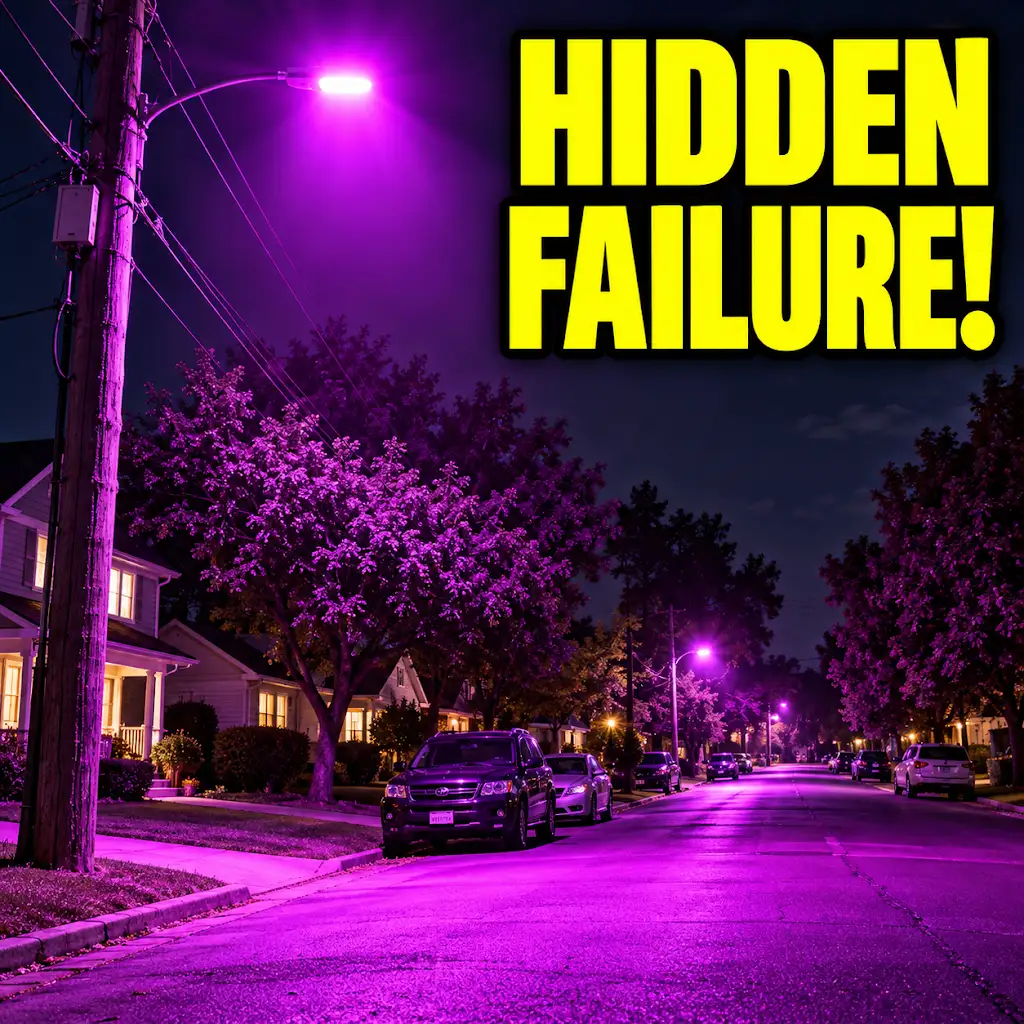
Why The Streetlights Are Turning Purple
FAQs
What caused the purple glow in streetlights?
The purple glow in streetlights was caused by a combination of LED lights and a specific type of phosphor coating on the bulbs.
Why did the purple glow appear only in certain streetlights?
The purple glow appeared only in certain streetlights because those particular lights were using LED bulbs with the specific phosphor coating that caused the purple hue.
Was the purple glow harmful to the environment or human health?
No, the purple glow was not harmful to the environment or human health. It was simply a unique visual effect caused by the type of bulbs and coating used in those streetlights.
How was the mystery of the purple glow solved?
The mystery of the purple glow was solved through a combination of research, testing, and analysis of the streetlights in question, which led to the discovery of the specific cause of the purple hue.
Will the purple glow continue to be seen in streetlights in the future?
It is unlikely that the purple glow will continue to be seen in streetlights in the future, as the specific combination of LED bulbs and phosphor coating that caused the purple hue can be adjusted or replaced to eliminate the effect.