
The question of whether a purple streetlight camera or a human eye sees better in the dark boils down to a few key factors, but generally, a well-designed purple streetlight camera is engineered to perceive detail and identify objects in low-light conditions far more effectively than the unaided human eye. While the “purple” aspect is a bit of a red herring (it’s more about the technology behind the light than the color itself for human vision), the underlying imaging technology in these cameras offers distinct advantages.
Understanding the Purple Light Technology
When you see those distinct purple-hued streetlights, it’s usually a sign of a specific type of illumination designed to work with advanced camera systems. This isn’t about making the scene look purple to you; it’s about optimizing the light spectrum for the camera’s sensor.
The Science Behind the Hue
The purple color often comes from a high-pressure sodium lamp that has been modified or has coatings that shift its light output. The goal is to provide illumination that is rich in wavelengths that are particularly sensitive to digital camera sensors, especially those designed for low-light performance. Standard white light, while good for general visibility, can sometimes be less efficient for capturing subtle details in very dim environments when processed by a camera. The purple light aims to accentuate these low-light details, making them more apparent to the camera’s digital “eye.”
Why Not Just Use Brighter White Light?
You might wonder why we don’t just crank up the brightness of regular white streetlights. The issue isn’t always just about raw lumens. While more light is generally better, the quality of that light and how it interacts with both the scene and the camera sensor matters significantly. Specialized lighting, like the kind used with these purple lights, can be tuned to highlight features that might be lost in the broader spectrum of white light, especially when dealing with reflections, shadows, and low contrast. It’s a targeted approach to low-light imaging.
In recent discussions about urban surveillance and public safety, the debate over the effectiveness of purple streetlight cameras versus traditional eye cameras has gained significant attention. A related article that delves into the implications of these technologies can be found at Freaky Science. This piece explores the advantages and disadvantages of each system, highlighting how they impact both crime prevention and community privacy.
How the Human Eye Adapts to Darkness
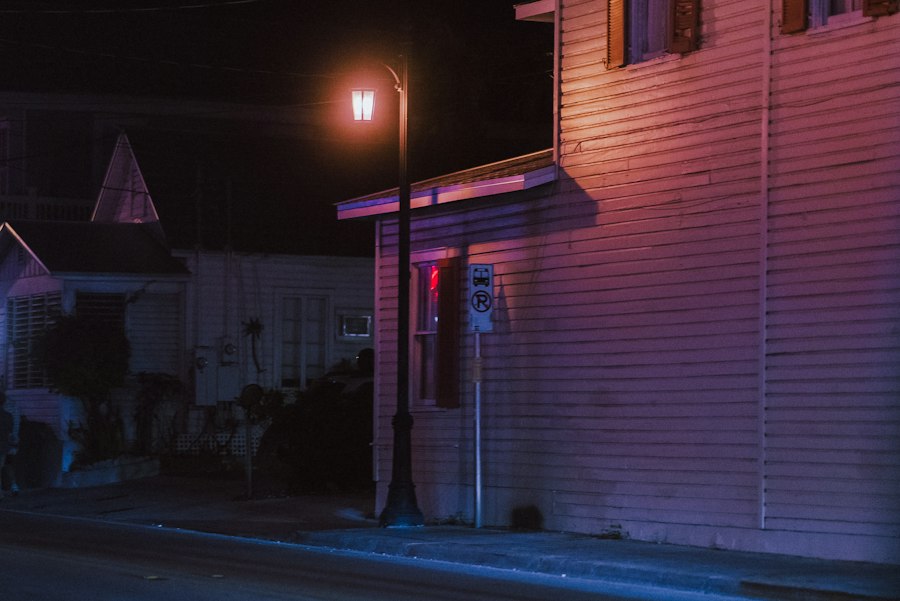
Our eyes are incredible biological instruments, but they have their limitations, especially when the light levels drop dramatically. We have two main types of photoreceptor cells in our retinas: rods and cones, and they handle low-light vision very differently.
The Role of Rods and Cones
Cones are responsible for color vision and sharp detail, and they work best in bright light. This is why colors tend to look washed out or disappear in dim conditions. Rods, on the other hand, are much more sensitive to light. They don’t detect color and provide lower resolution detail, but they are what allow us to see shapes and movement in near-darkness. When you’re transitioning from light to dark, your eyes are slowly adapting as your cones become less active and your rods take over. This process, called dark adaptation, takes time, and even then, our ability to discern fine details is significantly reduced compared to daylight.
Limitations in Low Light
Even with full dark adaptation, the human eye struggles with identifying subtle textures, reading small text, or distinguishing between similar dark colors. We become more reliant on contrast and movement. A car that is a dark silhouette against a slightly less dark road is recognizable, but the make and model might be impossible to determine. Similarly, a person’s facial features can become indistinct. This is where technological enhancement becomes crucial.
Camera Technology’s Advantage in Low Light

Digital camera sensors, especially those designed for surveillance or specialized applications, can be engineered to excel in conditions where the human eye falters. The “purple light” systems are often paired with cameras that exploit this.
Sensor Sensitivity and Processing
Modern camera sensors have significantly higher light sensitivity than our eyes can achieve. They can capture photons across a wider range of wavelengths and are designed to amplify weak signals without introducing excessive noise. Furthermore, advanced image processing algorithms can take this raw sensor data and enhance it, increasing contrast, reducing noise, and sharpening details. This processing can reveal information that would be completely invisible to a human observer.
Capturing a Wider Spectrum
While the visible spectrum for humans is limited, cameras can be made sensitive to infrared (IR) light. Some “purple light” systems might also incorporate IR illumination, which is invisible to our eyes but readily captured by specialized camera sensors. This allows cameras to “see” in complete darkness by detecting heat signatures or reflected IR light, providing a level of detail impossible for human vision. The purple light itself is often chosen because it complements the sensitivity of these cameras, maximizing the amount of usable light captured.
Specific Advantages of Purple Light Camera Systems
The combination of specific lighting and advanced camera technology creates a synergy that offers clear benefits over relying solely on the human eye.
Enhanced Detail Recognition
In low-light conditions, our eyes tend to see impressions of shapes rather than distinct features. A purple light system, coupled with a capable camera, can bring out details like the texture of a road surface, the subtle variations in clothing, or the specific markings on a vehicle. This is crucial for identification purposes, whether it’s for law enforcement, security, or even simple traffic monitoring. The light source is optimized to reflect off surfaces in a way that highlights these nuances for the camera.
Improved Object Identification and Tracking
When you can see more detail, you can also identify objects more accurately. This means distinguishing between different types of vehicles, recognizing pedestrians, and even spotting small items dropped on the ground. For surveillance applications, this level of detail is invaluable for tracking suspects or identifying evidence. The camera isn’t just seeing light; it’s seeing structured information that can be interpreted by software or human operators.
Reduced Glare and Improved Contrast
The specific wavelengths used in purple lighting can sometimes be engineered to reduce glare from wet surfaces or other reflective elements, which can blind the human eye. At the same time, the light can be tuned to increase the contrast between objects and their surroundings, making them stand out more clearly to the camera sensor. This is not about making everything bright; it’s about making the important things stand out from the background, even when the overall light level is low.
In recent discussions about urban surveillance, the debate surrounding the effectiveness of purple streetlight cameras versus traditional eye-level cameras has gained traction. A related article explores the implications of these technologies on privacy and public safety, shedding light on the advantages and disadvantages of each system. For more insights, you can read the full article here. This ongoing conversation highlights the need for a balanced approach to surveillance in our cities.
Practical Applications and Real-World Differences
| Feature | Purple Streetlight Camera | Eye (Biometric Technology) |
|---|---|---|
| Primary Use | Surveillance and traffic monitoring | Biometric identification and authentication |
| Technology Type | Camera with purple LED lighting for enhanced night vision | Optical sensor capturing iris or retina patterns |
| Image Capture | Wide-angle video and still images in low light | High-resolution close-up images of the eye |
| Data Collected | Visual footage of environment and subjects | Unique biometric patterns for identity verification |
| Privacy Concerns | Potential for mass surveillance and tracking | Concerns over biometric data security and misuse |
| Deployment Locations | Streetlights, public areas, traffic intersections | Security checkpoints, mobile devices, access control |
| Power Source | Connected to streetlight electrical grid | Integrated with device or standalone biometric scanners |
| Cost Range | Moderate to high depending on installation scale | Varies widely based on technology and application |
| Accuracy | Dependent on lighting and camera quality | High accuracy in identity verification |
| Typical Users | Municipalities, law enforcement agencies | Security firms, government agencies, consumers |
The difference between what a human eye sees and what these specialized camera systems can capture in the dark has significant implications in various fields.
Public Safety and Surveillance
For law enforcement and security, the ability to clearly identify individuals, vehicles, or activities in low-light conditions is paramount. Purple light camera systems can provide crucial evidence, aid in suspect identification, and improve situational awareness for officers. Imagine being able to read a license plate in near darkness or clearly see a person’s face from a distance – this is the advantage these systems offer.
Urban Planning and Traffic Management
Beyond immediate safety concerns, these systems can also inform urban planning and traffic management. Understanding pedestrian flow, vehicle patterns, and potential hazards in low-light conditions helps in designing safer streets and more efficient traffic systems. The data collected can highlight areas where visibility is consistently poor, prompting improvements to street lighting or signage.
The “Purple” Observation vs. Actual Capability
It’s important to remember that the “purple” hue is primarily a characteristic of the light source used to illuminate the scene for the camera. While our eyes might perceive a scene under such lighting as having a purplish cast, this is secondary to the camera’s ability to capture a far richer and more detailed image than our own eyes could in the same dim conditions. The camera is the primary beneficiary of this specialized illumination. The human eye might see a vague outline, but the camera can often see the weave of fabric or the tread pattern on a tire. The technology is designed to overcome the inherent limitations of biological vision in challenging light.

Why The Streetlights Are Turning Purple
FAQs
What is a purple streetlight camera?
A purple streetlight camera is a surveillance camera installed on a streetlight pole that is equipped with purple LED lights. These cameras are used for monitoring and recording activities in public areas.
How does a purple streetlight camera differ from a regular surveillance camera?
A purple streetlight camera is unique because it is integrated into the streetlight infrastructure and often goes unnoticed by individuals in the area. The purple LED lights help to camouflage the camera, making it less conspicuous compared to traditional surveillance cameras.
What is the purpose of using purple LED lights on streetlight cameras?
The purple LED lights on streetlight cameras serve the dual purpose of providing illumination for the camera’s surveillance activities while also blending in with the surrounding environment. This helps to maintain the aesthetics of the area while ensuring effective monitoring.
Are there any privacy concerns associated with purple streetlight cameras?
Privacy concerns may arise with the use of purple streetlight cameras, as individuals may not be aware of being monitored due to the discreet nature of these cameras. It is important for authorities to be transparent about the presence of surveillance cameras in public spaces to address these concerns.
How does the human eye compare to a purple streetlight camera in terms of surveillance capabilities?
The human eye has limitations in terms of continuous monitoring and recording of activities compared to a purple streetlight camera. While the human eye provides real-time perception, a streetlight camera can capture and store footage for later review, making it a valuable tool for surveillance purposes.