
Have you noticed those streetlights that have started glowing an odd purple color? It’s not just you; it’s a surprisingly common issue happening with certain types of LED streetlights, and it’s all down to a specific component failing. The good news is, it’s usually not a sign of a bigger, imminent system failure, and there are practical ways to fix it. Let’s dive into what’s actually going on and what can be done about it.
Why the Purple Hue? The Role of Phosphors
Those streetlights you see turning purple are almost certainly using a specific type of white LED technology. While they were initially designed to be an energy-efficient and long-lasting alternative to older lighting, the way they produce white light has a small Achilles’ heel.
How White LEDs Work (The Short Version)
Most white LEDs you encounter, including those in streetlights, don’t actually emit white light directly. Instead, they emit light in a narrow spectrum, usually blue. This blue light then passes through a phosphor coating. Phosphors are materials that absorb light of one wavelength and re-emit it at a different wavelength. In the case of white LEDs, the blue light excites the phosphor, which then emits yellow light. When blue and yellow light combine, our eyes perceive it as white. The specific mix of phosphors determines the exact shade of white light.
The Degeneration of the Phosphor Coating
The issue causing the purple glow lies with the degradation of these phosphor materials, particularly a class known as yttrium aluminum garnet (YAG) phosphors, which were common in early white LED designs. Over time, and under constant exposure to the heat and light generated by the LED chip, these phosphors can break down.
When the phosphor degrades, it becomes less efficient at converting the blue light into yellow light. This means more of the original blue light passes through without being converted, and the yellow light emission is reduced. The remaining blue light, combined with the diminished yellow light, shifts the perceived color towards the blue end of the spectrum. As the phosphor continues to degrade, the blue component becomes more dominant, leading to that distinct purple or sometimes even blue appearance.
Why Some LEDs Turn Purple and Others Don’t
It’s not every LED streetlight that succumbs to this purple fate. Several factors influence why some fail this way:
- Phosphor Composition: As mentioned, YAG phosphors are particularly prone to this degradation. Newer LED designs often use different phosphor blends or alternative white light generation methods that are more stable.
- Manufacturing Quality: The purity and uniformity of the phosphor coating during manufacturing play a huge role. Imperfections or inconsistencies can accelerate degradation.
- Operating Conditions: The amount of heat an LED generates and how well that heat is dissipated are critical. LEDs in enclosed fixtures that get hotter or have poor thermal management are more likely to experience phosphor breakdown. The intensity and duration of operation also contribute.
- Age: Even with good manufacturing and operating conditions, phosphors have a finite lifespan. Older LED installations are more likely to show signs of this degradation.
This degradation is a form of accelerated aging of the phosphor material, a known phenomenon in solid-state lighting, but one that became particularly apparent in early generations of white LEDs used in demanding applications like outdoor street lighting.
The recent phenomenon of purple streetlight semiconductor failures has raised significant concerns among city officials and residents alike. For a deeper understanding of the implications and potential solutions to this issue, you can refer to a related article that discusses the technical aspects and the impact on urban lighting systems. To explore this further, visit this article.
Common Culprits: Specific Failure Mechanisms
Beyond the general degradation of phosphors, there are a few more specific ways this problem manifests itself. Understanding these can help in diagnosing and addressing the issue.
Thermal Stress and Phosphor Breakdown
Heat is the enemy of many electronic components, and LEDs are no exception. The phosphor coating is applied to a substrate that gets hot when the LED chip is active.
- Accelerated Chemical Reactions: Elevated temperatures can speed up the chemical reactions that lead to the breakdown of the phosphor molecules. Think of it like leaving a delicate pastry in a hot oven for too long; it can burn and change its properties.
- Substrate Expansion and Contraction: The materials of the LED and its housing expand and contract with temperature fluctuations. Over many cycles, this can cause micro-cracks or delamination of the phosphor layer, disrupting its uniformity and effectiveness.
- Volatile Components: In some phosphor formulations, there might be trace amounts of volatile elements that can evaporate or react at higher temperatures, altering the phosphor’s optical properties.
The continuous operation of streetlights means they are constantly subjected to these thermal stresses, making phosphor breakdown a predictable, albeit undesirable, outcome for certain LED types over time.
Moisture and Contamination Ingress
While LEDs are generally designed to be weather-resistant, microscopic ingress of moisture or contaminants can significantly impact the phosphor’s longevity.
- Hydrolysis: Water, especially in the presence of certain chemicals or impurities, can hydrolyze (chemically react with water) the phosphor material. This process breaks down the phosphor’s molecular structure, altering its light-emitting capabilities. This is a common issue in components that aren’t perfectly sealed.
- Corrosion: Any metallic components near the phosphor layer can corrode if exposed to moisture, potentially releasing ions that can migrate and contaminate the phosphor, further accelerating its degradation.
- Particulate Contamination: Dust, dirt, or other airborne particles can settle on the phosphor surface. If these particles contain reactive substances or absorb moisture, they can create localized hot spots or initiate chemical reactions that damage the phosphor.
The sealing of the LED package is crucial. If the seals are compromised, even small amounts of moisture or pollutants can wreak havoc on the delicate phosphor coating over the years.
Electrical Stress and Early Life Failures
While the purple hue is often associated with long-term degradation, sometimes electrical issues can contribute to premature failure or exacerbate phosphor problems.
- Overvoltage or Voltage Spikes: Sudden increases in voltage can stress the LED chip and its associated components, including the phosphor layer. This can lead to overheating or direct damage to the phosphor.
- Current Surges: Similar to voltage issues, uncontrolled surges in current can cause excessive heat and damage.
- Poor Electrical Connections: Loose or corroded electrical connections can lead to intermittent power delivery or increased resistance, generating extra heat that can negatively impact the phosphor.
While less common for the specific purple hue phenomenon, which is more about gradual wear, electrical stresses can certainly shorten the overall lifespan of the LED module and contribute to various failure modes, including accelerated phosphor degradation.
Identifying the Purple Light Problem: Diagnosis and Detection

Spotting a streetlight that’s turned purple is usually the first step. But how do you know for sure if it’s the specific phosphor degradation issue you’re looking at, and not something else entirely?
Visual Cues: More Than Just a Tint
The most obvious sign, of course, is the color. A streetlight that was once a crisp, neutral white and now emits a noticeable purple, violet, or bluish light is a strong indicator.
- Color Shift Gradient: Often, you might notice that the light emanating from the fixture isn’t uniformly purple. It can sometimes be more intense at the edges or in certain areas, suggesting a non-uniform degradation of the phosphor.
- Comparison with Other Fixtures: The easiest way to confirm is to compare the color of a suspect streetlight with other streetlights in the same vicinity that are still functioning normally. If one is distinctly different, it’s a good bet something is amiss.
- Reduced Brightness: Alongside the color shift, you might also observe a slight dimming of the light. This is because the degraded phosphor is less efficient at converting the blue light into the desired white light components.
It’s worth noting that some LED technologies intentionally produce slightly warmer or cooler white light, so a subtle shift might not be immediately alarming. However, a dramatic shift to a purple or deep blue hue is a clear warning sign.
Technical Diagnostics: When Visuals Aren’t Enough
For city maintenance crews or those responsible for lighting infrastructure, more technical methods can be employed:
- Spectrometer Readings: Professional-grade light meters called spectrometers can precisely measure the spectral power distribution of the light. A degraded YAG phosphor will show a significantly reduced peak in the yellow region and a more pronounced peak in the blue region compared to a healthy LED.
- Thermal Imaging: Using thermal cameras can help identify excessive heat buildup within the streetlight fixture. Overheating is a major contributor to phosphor degradation, and thermal imaging can pinpoint problematic units that might be experiencing this.
- In-Situ Testing: Some diagnostic tools can be used to test LED modules directly within the fixture, assessing their electrical performance and light output characteristics without requiring removal. This can help differentiate between phosphor issues and other potential electrical failures.
- Visual Inspection of Components (Post-Removal): If a streetlight is removed for maintenance, a technician can visually inspect the LED module. While the phosphor coating itself might not look drastically different to the untrained eye, a skilled technician might notice signs of discoloration, cracking, or separation of the phosphor layer under magnification.
These technical methods provide objective data that confirms the visual diagnosis and helps pinpoint the exact nature of the failure, guiding the appropriate repair strategy.
Solutions and Strategies: Bringing Back the White Light
Once the purple streetlight problem is identified, the next step is to fix it. Fortunately, there are established solutions for dealing with this issue.
Replacing the Entire LED Module
This is the most common and often the most straightforward solution.
- Swapping Out Failed Units: The entire LED module within the streetlight fixture is typically designed to be replaceable. When a unit starts emitting purple light, the most effective approach is to remove the faulty module and install a new, properly functioning one.
- Choosing Modern LED Technologies: When replacing, it’s crucial to select modern LED modules that use more stable phosphor formulations or alternative white light generation methods (like Chip-Scale Package or COB LEDs with different phosphor types) that are less prone to this specific degradation. Cities and municipalities often have specifications for approved replacement parts to ensure longevity and performance.
- Ensuring Compatibility: Replacement modules need to be compatible with the existing fixture housing, power supply, and mounting mechanisms to ensure a safe and effective installation.
This method ensures that the entire light source is refreshed, addressing not only the color issue but also any underlying performance degradation.
Refurbishment and Re-phosphoring (Less Common)
In some specific scenarios, particularly for very expensive or specialized fixtures, refurbishment might be considered.
- Specialized Re-phosphoring: Theoretically, it’s possible to strip off the old, degraded phosphor and re-apply a new layer. However, this is a highly specialized process that requires advanced manufacturing equipment and expertise. It’s generally not cost-effective for mass street lighting applications.
- Targeted Repairs: For very specific, high-value applications, a controlled environment might allow for the removal and replacement of just the phosphor-coated lens or dome, but this is rare in the context of typical streetlights.
For standard street lighting, the cost and complexity of refurbishment typically outweigh the benefits compared to a full module replacement. The focus is on reliable, efficient, and cost-effective solutions.
Proactive Maintenance and Upgrades
Preventing the problem from occurring in the first place, or at least mitigating its impact, is a key long-term strategy.
- Scheduled Replacements: Municipalities can implement a proactive maintenance schedule, replacing LED modules that have reached a certain age or number of operating hours, even if they haven’t failed yet. This prevents the widespread issue of purple lights appearing simultaneously.
- Investing in Higher-Quality LEDs: When purchasing new streetlights or undertaking large-scale upgrades, investing in LEDs from reputable manufacturers that use advanced, more durable phosphor technologies or alternative white light generation methods is a wise decision.
- Optimizing Thermal Management: Ensuring that streetlight fixtures are designed with excellent thermal management is critical. Good heatsinking and ventilation prevent components from overheating, thereby extending the life of the phosphor and other LED elements.
- Regular Inspections: Beyond just looking for purple lights, regular visual inspections can catch other potential issues like cracked seals or moisture ingress that could lead to premature failure.
By adopting a forward-thinking approach to lighting infrastructure management, the problem of purple streetlights can be significantly minimized, ensuring consistent, quality illumination for communities.
Recent discussions about the purple streetlight semiconductor failure have raised concerns regarding the reliability of LED technology in urban infrastructure. For a deeper understanding of the implications of this issue, you can explore a related article that delves into the broader impacts of semiconductor failures on public safety and energy efficiency. This article provides valuable insights into how such failures can affect city planning and maintenance. To read more about this topic, visit Freaky Science for an in-depth analysis.
The Bigger Picture: LED Evolution and Future Lighting
| Metric | Value | Unit | Description |
|---|---|---|---|
| Failure Rate | 0.02 | Failures per 1000 units | Rate of semiconductor failure in purple streetlights |
| Mean Time Between Failures (MTBF) | 50,000 | Hours | Average operational time before failure |
| Operating Temperature Range | -20 to 85 | °C | Temperature range for semiconductor operation |
| Voltage Stress | 3.3 | Volts | Typical voltage applied to the semiconductor |
| Failure Mode | Thermal Overload | N/A | Most common cause of failure |
| Average Repair Time | 2 | Hours | Time taken to replace or repair failed semiconductor |
| Failure Detection Rate | 95 | Percent | Percentage of failures detected by monitoring systems |
The purple streetlight phenomenon, while a visible nuisance, is also a sign of how rapidly LED technology has evolved. It highlights the learning curve involved in adopting new technologies and the continuous drive for improvement.
A Learning Curve for Solid-State Lighting
The widespread adoption of LEDs for general illumination, especially in applications like street lighting, was relatively recent. Early generations of white LEDs, while revolutionary for their energy efficiency, encountered unforeseen challenges.
- Initial Design Trade-offs: Manufacturers had to balance performance, cost, and lifespan. Some early designs prioritized immediate cost savings or brightness, perhaps underestimating the long-term impact of thermal stress on phosphor longevity.
- Understanding Degradation Mechanisms: The specific ways phosphors degrade under constant operational stress weren’t always fully understood or anticipated when these lights were first deployed. Field experience provided crucial data for refining future designs.
- Rapid Technological Advancement: The LED industry is incredibly dynamic. What was cutting-edge a decade ago might be considered outdated today. This rapid pace means that solutions to problems like phosphor degradation are often developed and implemented quickly in newer products.
The purple light issue is, in many ways, a testament to the iterative process of technological development. Problems encountered in the field fuel innovation and lead to more robust and reliable products.
What’s Next for Streetlight Technology?
The industry hasn’t stood still, and future streetlight installations will likely avoid the purple light issue altogether.
- New Phosphor Formulations: Phosphors have been refined to be much more resistant to thermal and photochemical degradation. Combinations of different phosphors, or entirely new classes of luminescent materials, are now in use.
- Alternative White Light Generation: Some LEDs achieve white light without relying on phosphors at all. Quantum dot technology, for instance, uses semiconductor nanocrystals to convert blue light into various colors, and these can be engineered for greater stability. Other methods involve using multiple colored LEDs (e.g., red, green, blue) that mix to create white light, though this approach has its own set of challenges for street lighting, such as color mixing consistency.
- Smart Lighting Integration: The focus is also shifting towards “smart” streetlights, which not only provide efficient illumination but also incorporate sensors and communication capabilities. These systems can monitor their own performance, report issues proactively, and be controlled remotely, allowing for more efficient maintenance and quicker response times to problems like color shifts.
- Improved Fixture Design: Fixture design is also evolving, with a greater emphasis on effective thermal management, better sealing against environmental contaminants, and modular designs that make individual component replacement easier and more cost-effective.
The purple streetlight problem serves as a valuable lesson for the lighting industry, leading to demonstrably better and more durable lighting solutions for our streets. While it might be an annoyance when you see it, it’s ultimately a sign that we’re on a path toward more reliable and advanced street lighting systems.
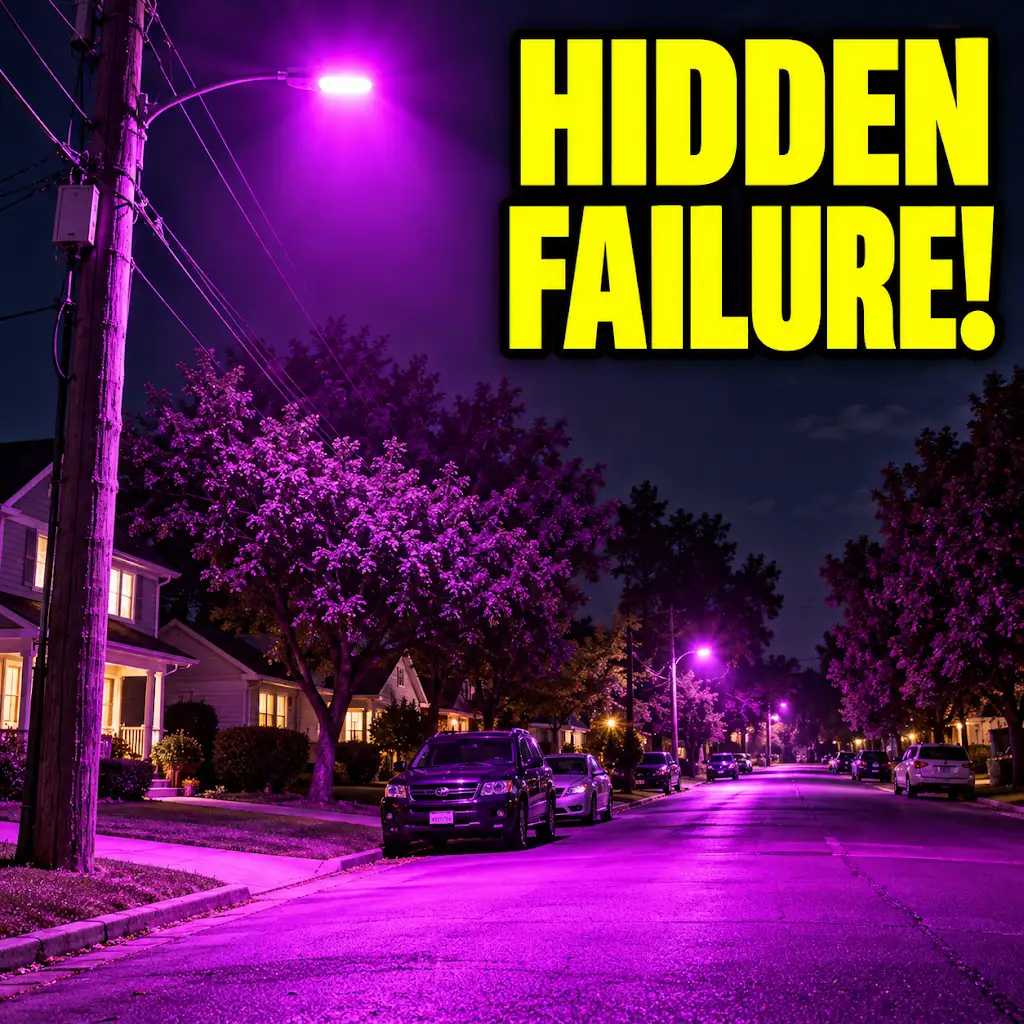
Why The Streetlights Are Turning Purple
FAQs
What is a purple streetlight semiconductor failure?
A purple streetlight semiconductor failure refers to the malfunction or breakdown of the semiconductor component in a purple streetlight, leading to the light not functioning as intended.
What causes semiconductor failures in purple streetlights?
Semiconductor failures in purple streetlights can be caused by various factors such as power surges, overheating, manufacturing defects, or age-related degradation of the semiconductor material.
How can one identify a semiconductor failure in a purple streetlight?
Signs of a semiconductor failure in a purple streetlight include the light not turning on, flickering, emitting a dim light, or displaying unusual colors. A professional inspection is recommended to confirm the issue.
Can a semiconductor failure in a purple streetlight be repaired?
In some cases, a semiconductor failure in a purple streetlight can be repaired by replacing the faulty semiconductor component. However, it is essential to consult a qualified technician for proper diagnosis and repair.
How can semiconductor failures in purple streetlights be prevented?
To prevent semiconductor failures in purple streetlights, regular maintenance, monitoring for voltage fluctuations, ensuring proper ventilation for heat dissipation, and using high-quality semiconductor components can help prolong the lifespan of the streetlights.