The Sealed Sanctuary: How a Pressure Cooker Controls Moisture
The culinary world is a constant dance between heat and moisture, with evaporation playing a significant role in shaping the texture and flavor of our food. While evaporation can be a desirable process in certain cooking methods, such as reducing a sauce or drying herbs, it can also lead to undesirable outcomes like tough meats and dry vegetables. This is where the humble pressure cooker steps in, a marvel of engineering that masterfully controls the evaporation process, transforming what could be a loss of precious liquid into an essential element of faster and more efficient cooking. Understanding how this seemingly simple appliance achieves this feat requires delving into the principles of physics, specifically the interplay of pressure, temperature, and the behavior of water. At its core, a pressure cooker creates a sealed environment, a culinary sanctuary where moisture is not lost but rather harnessed to expedite the cooking process. This sealed nature is the primary architect of its evaporation-preventing capabilities, setting it apart from conventional cooking methods that are inherently open to the atmosphere.
A pressure cooker is designed to create a sealed environment that prevents evaporation, allowing food to cook faster while retaining moisture and flavor. For a deeper understanding of the science behind this cooking method, you can explore the article on Freaky Science, which discusses various cooking techniques and their effects on food. To read more, visit this link.
The Science of Sealing: The Role of the Gasket and Lid
The fundamental mechanism by which a pressure cooker prevents evaporation lies in its design – specifically, the airtight seal created between the pot and its lid. This seal is not a passive feature; it is an active component crucial to the appliance’s function. The most prominent element of this seal is the gasket, typically made of rubber or silicone, that lines the rim of the lid. When the lid is secured, the gasket is compressed against the pot’s rim, forming an impermeable barrier. This barrier’s primary purpose is to prevent any steam, and therefore any water vapor, from escaping the confines of the cooker. Without this seal, the steam generated by heating the liquid inside would simply dissipate into the surrounding air, much like it does in a conventional pot.
The Pressure-Retaining Gasket: A Silent Guardian of Moisture
The gasket is the unsung hero of the pressure cooker’s evaporation-prevention prowess. Its material properties are key. Rubber and silicone gaskets are chosen for their flexibility, heat resistance, and ability to compress effectively. When the lid is locked in place, the gasket deforms slightly, filling any microscopic gaps between the lid and the pot. This compression creates a tight seal that can withstand the increasing internal pressure generated during cooking. Imagine the gasket as a microscopic dam, holding back the rising tide of steam. This is not a rigid, unyielding barrier, but a dynamic one that adapts to the pressure fluctuations within the pot. Even as the internal temperature soars, the gasket remains pliable enough to maintain its sealing integrity, a testament to the material science employed in its design. The careful selection and placement of the gasket ensure that once the cooker is pressurized, the escape route for steam is effectively, and crucially, eliminated. This is the first and most critical step in preventing the loss of precious cooking liquid.
The Locking Mechanism: Ensuring a Complete Enclosure
Beyond the gasket, the lid of a pressure cooker is designed with a robust locking mechanism. This is not merely for aesthetic appeal; it is a functional necessity that guarantees the lid remains firmly in place throughout the entire cooking cycle. These mechanisms vary in design, from simple clamp-down styles to more sophisticated twist-and-lock systems, but their common objective is to apply consistent pressure on the lid, ensuring it presses firmly against the gasket. This consistent pressure is vital for maintaining the integrity of the seal. A loose lid, even with a gasket, would allow steam to escape. The locking mechanism acts as a force multiplier, ensuring that the gasket is compressed to its optimal sealing point and remains so even under the significant internal pressures that develop. Without this secure closure, the pressure buildup, and consequently the evaporation control, would be compromised. The combined action of the gasket and the locking mechanism creates a truly sealed environment, a crucial prerequisite for the pressure cooker’s unique cooking capabilities.
Boiling Point Alchemy: Pressure’s Influence on Water
The primary reason why a pressure cooker cooks food faster and prevents evaporation is its ability to dramatically increase the boiling point of water. In a standard pot open to the atmosphere, water boils at 100 degrees Celsius (212 degrees Fahrenheit) at sea level. This is because the atmospheric pressure pushing down on the water surface is balanced by the vapor pressure of the water. However, a pressure cooker creates a closed environment where steam cannot escape. As the water heats up and begins to produce steam, this steam accumulates within the pot. Since the steam cannot escape, it exerts an outward pressure on the walls of the cooker and on the surface of the liquid. This internal pressure builds up, pushing back against the vapor pressure of the water. To reach boiling point, the water’s vapor pressure must equal the external pressure. In a pressure cooker, this external pressure is significantly higher than atmospheric pressure, meaning the water needs to reach a much higher temperature before it can boil.
Elevated Temperatures for Accelerated Cooking
The consequence of this elevated boiling point is a substantial increase in cooking temperature. A typical stovetop pressure cooker can reach internal temperatures of around 121 degrees Celsius (250 degrees Fahrenheit), and some electric models can go even higher. This higher temperature is the key driver behind faster cooking times. Many chemical reactions that occur during cooking, such as the breakdown of collagen in meat or the softening of vegetables, happen at an accelerated rate at these higher temperatures. Essentially, the pressure cooker is superheating the cooking liquid, allowing it to transfer heat to the food much more efficiently. This increased heat transfer directly impacts how quickly food becomes tender and fully cooked. The sealed environment, by trapping steam and increasing pressure, effectively unlocks a higher thermal energy potential within the cooking vessel. This is not just about retaining moisture; it’s about using that retained moisture at a significantly higher temperature.
The Thermodynamics of Steam Trapping
The relationship between pressure and boiling point is governed by fundamental thermodynamic principles. Water molecules are constantly in motion, and at any given temperature, some molecules will have enough kinetic energy to escape from the liquid phase into the gaseous phase (steam). This escaping tendency is what we perceive as evaporation or boiling. The external pressure acts as a barrier, making it harder for these molecules to escape. In a pressure cooker, the accumulating steam increases this external pressure, forcing more energy onto the water molecules to overcome the barrier and transition into the gaseous state. This results in a higher temperature being required to achieve boiling. The thermodynamic equilibrium shifts, demanding a greater thermal input to reach the point of phase transition. The steam, therefore, becomes a vital component in this thermodynamic balancing act, its confinement directly dictating the temperature at which the cooking process can occur.
The Steam’s Role: A Moist, High-Temperature Medium
Once the pressure cooker has sealed and the internal pressure has risen, the steam that is generated plays a dual role in both preventing evaporation and facilitating cooking. The steam, essentially water in its gaseous state, is now trapped within the confined space. This steam is superheated, meaning it is hotter than its normal boiling point at atmospheric pressure. As the food is submerged in or surrounded by this hot steam and the associated hot liquid, it is subjected to intense heat transfer. Crucially, because the steam cannot escape, the water from which it originates also remains within the cooker. This means that the liquid content in the pot, whether it’s water, broth, or sauce, does not diminish through evaporation. Instead, it remains to surround and permeate the food, contributing to its moisture and flavor.
Direct Heat Transfer and Moisture Infusion
The trapped steam is an exceptionally efficient medium for transferring heat to food. Unlike dry heat cooking methods, where moisture can be lost from the surface of the food, steam penetrates the food, transferring heat rapidly and evenly. This direct contact with hot, moist steam ensures that the food cooks quickly and evenly from all sides. Furthermore, because the steam is generated from the cooking liquid, it carries with it dissolved flavors and aromas. As the steam condenses back into liquid, it reabsorbs these flavor compounds, contributing to a richer and more integrated taste profile in the finished dish. This process is a far cry from the loss of flavor that can occur when liquids evaporate and carry volatile aromatic compounds away from the food. The steam becomes an active participant in the flavor development, not just a byproduct of the cooking process.
Preventing Surface Drying and Promoting Tenderness
In conventional cooking, especially with meats, prolonged exposure to heat can lead to surface drying and toughening as moisture is lost to the atmosphere. The pressure cooker’s sealed environment, with its high concentration of steam, prevents this. The food is constantly bathed in a moist, high-temperature environment, which keeps the surface hydrated. This is particularly beneficial for tougher cuts of meat, as the sustained moisture and heat work together to break down connective tissues more effectively, resulting in a tender and succulent final product. Imagine a piece of meat slowly braising in its own juices, but at an accelerated pace and a higher temperature. This is precisely the environment that a pressure cooker creates, ensuring that moisture is retained and used to the food’s advantage, leading to a more desirable texture.
A pressure cooker is an innovative kitchen appliance that effectively prevents evaporation by creating a sealed environment where steam builds up, increasing the pressure inside. This high pressure raises the boiling point of water, allowing food to cook faster while retaining moisture and flavor. For a deeper understanding of the science behind this cooking method, you can explore a related article that delves into various scientific principles in cooking at Freaky Science. This resource provides fascinating insights into how different cooking techniques work, including the mechanics of pressure cooking.
The Pressure Valve: A Safety Net and Evaporation Controller
| Metric | Description | Value/Effect |
|---|---|---|
| Sealed Environment | Pressure cooker lid creates an airtight seal preventing steam from escaping | Evaporation minimized |
| Increased Pressure | Steam pressure inside cooker rises above atmospheric pressure | Typically 15 psi above atmospheric pressure |
| Boiling Point Elevation | Higher pressure raises boiling point of water inside cooker | Boiling point increases from 100°C to about 121°C |
| Condensation | Steam condenses on cooler surfaces inside lid and returns to food/liquid | Reduces net loss of water by evaporation |
| Steam Release Valve | Regulates pressure by releasing excess steam, preventing evaporation loss | Maintains constant pressure and prevents excessive evaporation |
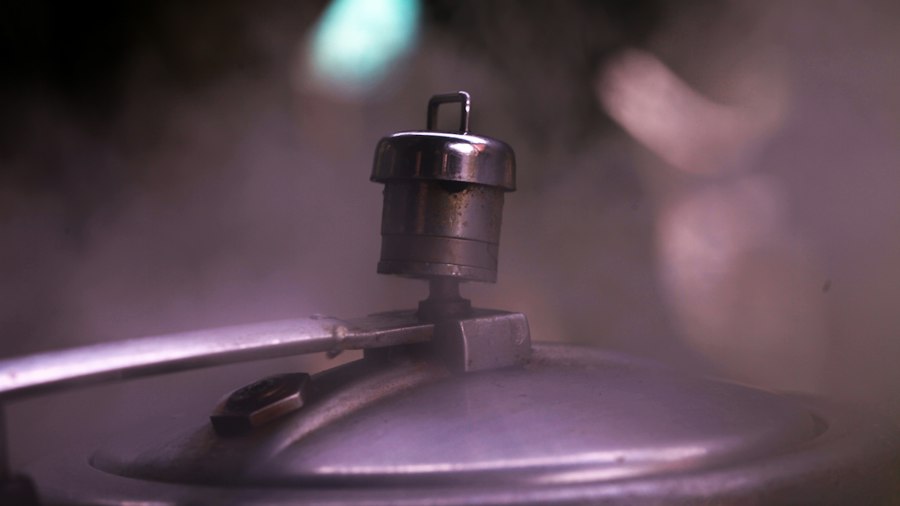
While the primary goal of a pressure cooker is to maintain a sealed environment, it is also equipped with a crucial safety feature: the pressure relief valve. This valve is not designed to allow significant steam escape during normal operation. Instead, it acts as a regulator, releasing small amounts of steam when the internal pressure exceeds a predetermined safe level. This controlled release is essential for preventing the pressure from building to a dangerous point. However, this controlled release also plays a subtle role in managing evaporation. By releasing only excess pressure, the valve ensures that the internal pressure remains within the optimal range for cooking while still minimizing the overall loss of steam.
Maintaining Optimal Cooking Pressure
The pressure relief valve’s primary function is safety, but its operation is intrinsically linked to maintaining the optimal cooking environment. If the pressure were to rise indefinitely, it could become unsafe. The valve’s controlled release of steam prevents this catastrophic outcome. In doing so, it allows the pressure cooker to maintain a consistent, high-pressure environment that is conducive to efficient cooking. The small, intermittent bursts of steam are a sign that the cooker is operating correctly, indicating that the internal pressure is being managed effectively. This managed pressure is the very force that elevates the boiling point and thus prevents significant evaporation. Therefore, the valve, while seemingly a point of potential moisture loss, is actually an integral part of the system that prevents widespread evaporation by ensuring the pressure remains within its intended cooking parameters.
The Difference Between Safety Release and Evaporation
It is important to distinguish the controlled release from the safety valve from the uncontrolled evaporation that occurs in an open pot. In an open pot, steam escapes freely and continuously, leading to a significant loss of liquid and a lower cooking temperature. The pressure relief valve, on the other hand, only activates when the internal pressure becomes excessively high, releasing only a small fraction of the total steam. This minimal release does not significantly reduce the internal pressure or the overall moisture content within the cooker. The vast majority of the steam remains trapped, continuing to heat the food and contribute to its moistness. The brief puff of steam from the valve is a testament to the sealed environment’s effectiveness, indicating that the system is working as intended to keep most of the precious moisture contained.
Benefits Beyond Speed: Flavor and Nutrient Retention
The ability of a pressure cooker to prevent evaporation has far-reaching benefits that extend beyond simply reducing cooking times. The retention of moisture and the high-temperature cooking environment contribute significantly to enhanced flavor and improved nutrient retention. When liquids and the volatile compounds they carry are kept within the cooker, the flavors become more concentrated and integrated into the food. This often results in dishes with a deeper, richer taste profile. Moreover, many vitamins and minerals are water-soluble. In conventional cooking methods where liquids are lost through evaporation, these valuable nutrients can also be lost. The pressure cooker, by keeping liquids contained, helps to preserve these nutrients within the food, leading to more wholesome and nutritious meals.
Concentrated Flavors and Richer Aromas
The sealed environment of a pressure cooker is a boon for flavor development. As mentioned earlier, volatile aromatic compounds present in ingredients are less likely to escape. Instead, they are trapped within the cooker and can reabsorb into the food as steam condenses. This creates a more intense and complex flavor profile. For instance, when cooking a stew or a braise, the slow simmering in an open pot can lead to some loss of aromatic essences. In a pressure cooker, these essences are concentrated, resulting in a more robust and satisfying taste. The flavors meld together more effectively, creating a harmonious culinary experience. This is particularly noticeable in dishes that rely on slow cooking to develop deep flavors, such as curries, chili, and pot roasts.
Maximizing Nutrient Integrity
The preservation of nutrients is another significant advantage of pressure cooking. Water-soluble vitamins, such as Vitamin C and B vitamins, are susceptible to degradation and leaching when exposed to high heat and water in open cooking methods. Since a pressure cooker minimizes the amount of water lost through evaporation and cooks food more quickly at high temperatures, it can help to retain a greater proportion of these heat-sensitive and water-soluble nutrients. While some nutrient loss is inevitable in any cooking process, pressure cooking is often cited as a method that preserves a higher percentage of a food’s original nutritional value compared to methods like boiling in abundant water. This makes it a valuable tool for those seeking to maximize the health benefits of their meals. The contained moisture ensures that these vital compounds remain accessible within the food, rather than being dissipated into the cooking environment.
Why This Water Doesn’t Boil at 100°C
FAQs
How does a pressure cooker prevent evaporation?
A pressure cooker prevents evaporation by creating a sealed environment where steam cannot escape. This increases the pressure inside the cooker, which raises the boiling point of water and allows food to cook faster.
What is the role of the pressure regulator in a pressure cooker?
The pressure regulator in a pressure cooker helps to maintain a constant pressure inside the cooker by releasing excess steam. This ensures that the pressure remains at a safe level and prevents the food from overcooking.
Why is a pressure cooker able to cook food faster than traditional cooking methods?
A pressure cooker cooks food faster than traditional methods because the increased pressure inside the cooker allows water to reach a higher temperature before boiling. This speeds up the cooking process and reduces the overall cooking time.
Can a pressure cooker be used to preserve nutrients in food?
Yes, a pressure cooker can help preserve nutrients in food because the shorter cooking time and lower liquid requirements help to retain more vitamins and minerals. Additionally, the sealed environment prevents nutrients from escaping through evaporation.
Is it safe to use a pressure cooker to cook food?
When used properly and according to the manufacturer’s instructions, a pressure cooker is safe to use for cooking food. It is important to follow safety guidelines, such as releasing pressure before opening the cooker and avoiding overfilling, to prevent accidents.