The phenomenon of matter changing state, such as ice melting into water or water boiling into steam, is a fundamental aspect of physics and chemistry that governs countless natural processes and technological applications. While the absorbed or released energy during these phase transitions is often palpable, a deeper understanding requires delving into the concept of latent heat. Specifically, the latent heat of vaporization is a crucial property that explains the energy involved in transforming a substance from a liquid to a gaseous state. This article aims to demystify this concept, breaking down its core principles, the factors influencing it, and its significant implications.
The Essence of Phase Transitions and Latent Heat
The journey from a solid to a liquid, and then to a gas, is not a smooth, continuous increase in temperature. Instead, at specific points, the temperature plateaus, indicating that energy is being absorbed or released without a corresponding change in temperature. This “hidden” heat energy is known as latent heat. The term “latent” itself signifies something concealed or not immediately apparent, precisely describing how this energy is utilized. During a phase transition, the supplied thermal energy doesn’t increase the kinetic energy of the molecules (which would manifest as a temperature rise) but instead is used to overcome the intermolecular forces holding the substance in its current state.
Understanding Latent Heat in General
Latent heat is broadly categorized into two main types, corresponding to the two primary phase transitions involving solid and liquid states: latent heat of fusion and latent heat of vaporization. The latent heat of fusion is the energy required to change a substance from a solid to a liquid at its melting point, or vice versa. Conversely, the latent heat of vaporization is the energy required to change a substance from a liquid to a gas at its boiling point, or vice versa. Both are extensive properties, meaning they depend on the amount of substance undergoing the transition. For instance, it takes significantly more energy to vaporize a liter of water than a milliliter.
Distinguishing Latent Heat from Sensible Heat
It is vital to differentiate latent heat from sensible heat. Sensible heat is the heat energy that, when absorbed or released, causes a change in the temperature of a substance without a change in its state. This is the type of heat we typically perceive as warming or cooling. When you heat water from 20°C to 80°C, the energy added is sensible heat, increasing the kinetic energy of the water molecules. However, when that water reaches 100°C (at standard atmospheric pressure) and continues to absorb energy, that energy is no longer sensible heat; it becomes latent heat, used to break the bonds holding the water molecules together in the liquid phase and allow them to escape as steam.
Latent heat of vaporization is a crucial concept in thermodynamics, as it describes the amount of energy required to convert a unit mass of a substance from liquid to vapor without a change in temperature. For a deeper understanding of this phenomenon and its applications in various scientific fields, you can explore the related article on the topic at Freaky Science. This resource provides valuable insights into the principles of heat transfer and the role of latent heat in everyday processes.
The Mechanics of Vaporization: Energy at the Molecular Level

Vaporization, the process of a liquid transforming into a gas, is driven by the kinetic energy of the molecules within the liquid. Molecules in a liquid are in constant motion, colliding with each other and possessing a distribution of kinetic energies. While most molecules have enough energy to remain bound within the liquid, a small fraction at the surface possess sufficient kinetic energy to overcome the attractive intermolecular forces and escape into the gaseous phase. This process is known as evaporation.
Intermolecular Forces and Their Role
The strength of intermolecular forces plays a pivotal role in determining the latent heat of vaporization. These forces, such as hydrogen bonding, dipole-dipole interactions, and van der Waals forces, are responsible for holding the liquid molecules together. To transition into a gas, where molecules are much farther apart and interact minimally, these forces must be overcome. Substances with stronger intermolecular forces require more energy to break these bonds and vaporize. For example, water, with its strong hydrogen bonds, has a significantly higher latent heat of vaporization compared to substances like ethanol or diethyl ether, which have weaker intermolecular forces.
The Boiling Point: A Threshold for Vaporization
Boiling is a specific type of vaporization that occurs throughout the bulk of the liquid, not just at the surface, when the vapor pressure of the liquid equals the external pressure. At the boiling point, the entire substance has enough internal energy to overcome intermolecular forces and transition into the gaseous state. The latent heat of vaporization is the energy absorbed per unit mass at the boiling point to achieve this phase change. This energy is used to break the intermolecular bonds and increase the potential energy of the molecules as they move further apart in the gaseous phase.
Quantifying Latent Heat of Vaporization
The latent heat of vaporization is a material-specific property and is typically expressed in units of energy per unit mass, such as joules per kilogram (J/kg) or kilojoules per kilogram (kJ/kg). Alternatively, it can be expressed in energy per mole, such as joules per mole (J/mol) or kilojoules per mole (kJ/mol), especially when dealing with chemical reactions or theoretical calculations.
Formulas and Calculations
The total energy required to vaporize a specific mass of a substance at its boiling point can be calculated using a straightforward formula:
$Q = m \times L_v$
Where:
- $Q$ is the total amount of heat energy absorbed or released during vaporization (in joules or kilojoules).
- $m$ is the mass of the substance being vaporized (in kilograms or grams).
- $L_v$ is the specific latent heat of vaporization of the substance (in J/kg or kJ/kg).
For example, if one wants to calculate the energy needed to vaporize 1 kg of water at 100°C, and the latent heat of vaporization of water is approximately 2260 kJ/kg, then:
$Q = 1 \text{ kg} \times 2260 \text{ kJ/kg} = 2260 \text{ kJ}$
This calculation highlights the substantial amount of energy required for vaporization, which is a direct consequence of the energy needed to overcome the strong intermolecular forces in liquid water.
Factors Influencing Latent Heat of Vaporization
While $L_v$ is generally considered a constant for a given substance at a specific pressure, several factors can influence its value.
Pressure Dependency
The most significant factor influencing the latent heat of vaporization is pressure. As external pressure increases, the boiling point of a liquid also increases. To achieve vaporization at a higher temperature, more energy is required to overcome the increased intermolecular forces that are more strongly influencing the molecules at the higher kinetic energy level. Consequently, the latent heat of vaporization generally decreases slightly as pressure increases. Conversely, at lower pressures (like at high altitudes), the boiling point is lower, and the latent heat of vaporization is slightly higher.
Temperature Effects
While the latent heat of vaporization is defined at the boiling point, its value does change subtly with temperature. As the temperature of the liquid increases, the intermolecular forces become somewhat weaker due to increased molecular motion. This means that slightly less energy is needed to vaporize the liquid at temperatures closer to its critical point, and the latent heat of vaporization will be lower. However, for most practical calculations, the value at the standard boiling point is used.
Purity of the Substance
The presence of impurities can also affect the latent heat of vaporization. Dissolved substances can alter the intermolecular interactions within the liquid, often leading to a change in the boiling point and, consequently, the latent heat of vaporization. For example, adding salt to water raises its boiling point and slightly alters the energy required for vaporization.
Real-World Applications and Implications
The latent heat of vaporization is not merely an abstract scientific concept; it is a fundamental property with profound implications across numerous scientific and technological domains. Its ability to absorb large amounts of energy without a temperature increase makes it indispensable for various processes.
Cooling Mechanisms and Thermodynamics
One of the most widespread applications of latent heat of vaporization is in cooling systems. The process of evaporation is inherently a cooling process. When a liquid evaporates, it absorbs heat from its surroundings. This principle is utilized in:
- Refrigeration and Air Conditioning: Refrigerants undergo cycles of vaporization and condensation. In the evaporator coils, the refrigerant absorbs heat from the interior of the refrigerator or room, vaporizing in the process. This absorbed heat is then released when the refrigerant condenses in the outdoor unit. The high latent heat of vaporization of refrigerants is key to their efficiency in transferring heat.
- Human Sweating: The evaporation of sweat from the skin is the body’s primary mechanism for regulating its temperature. As sweat evaporates, it absorbs a significant amount of heat from the body, thus cooling it down. The high latent heat of vaporization of water makes this a very effective cooling method.
- Evaporative Coolers (Swamp Coolers): These devices work by blowing air over water-soaked pads. As the water evaporates, it cools the air, providing a more energy-efficient cooling solution than traditional air conditioners in dry climates.
Energy Storage and Transfer
The substantial energy absorbed during vaporization and released during condensation makes latent heat valuable for thermal energy storage and transfer.
- Phase Change Materials (PCMs): PCMs are substances that absorb and release large amounts of latent heat during phase transitions. They are being increasingly explored for building insulation and thermal management systems. For instance, PCMs can be incorporated into building materials to absorb solar heat during the day and release it at night, helping to regulate indoor temperatures and reduce energy consumption for heating and cooling.
- Steam as a Heat Transfer Medium: Steam is an excellent medium for transferring heat in industrial processes due to its high latent heat of vaporization. When steam condenses, it releases a large amount of energy, making it very efficient for heating purposes in power plants, chemical factories, and sterilization equipment.
Meteorological Phenomena
Latent heat plays a critical role in weather patterns and atmospheric phenomena.
- Cloud Formation and Precipitation: When water vapor in the atmosphere rises and cools, it condenses into liquid water droplets or ice crystals to form clouds. This condensation process releases latent heat into the atmosphere. This released heat is a significant factor in driving atmospheric circulation and powering weather systems like thunderstorms and hurricanes. The latent heat released during condensation fuels the upward motion of air, creating powerful updrafts.
- Energy Balance of the Earth: The evaporation of water from oceans, lakes, and rivers and its subsequent condensation in the atmosphere are crucial components of the Earth’s energy balance. These processes involve the transport of vast amounts of energy around the globe.
Latent heat of vaporization is a crucial concept in thermodynamics, describing the amount of energy required to transform a substance from a liquid to a gas without changing its temperature. Understanding this phenomenon can be further enhanced by exploring related topics, such as the principles of heat transfer and phase changes. For a deeper dive into these concepts, you can check out this informative article on heat transfer mechanisms, which provides valuable insights into how energy moves through different states of matter.
Conclusion: The Ubiquitous Power of Latent Heat
| Property | Description | Typical Value | Units |
|---|---|---|---|
| Latent Heat of Vaporization | Amount of heat required to convert a unit mass of a liquid into vapor without a temperature change | 2260 | kJ/kg (for water at 100°C) |
| Substance | Water | 2260 | kJ/kg |
| Substance | Ethanol | 841 | kJ/kg |
| Substance | Liquid Nitrogen | 199 | kJ/kg |
| Temperature Dependence | Latent heat decreases as temperature approaches the critical point | Varies | kJ/kg |
| Units | Energy per unit mass | kJ/kg or J/g | Energy/Mass |
The latent heat of vaporization is a fundamental thermodynamic property that governs the energy exchange during the liquid-to-gas phase transition. It is the “hidden” energy that enables substances to transform from one state to another, a process that is both scientifically fascinating and practically indispensable. From the simple act of boiling water to the complex dynamics of weather systems and the efficiency of modern refrigeration, understanding latent heat of vaporization unlocks insights into the fundamental workings of the universe and informs the development of innovative technologies. Its ability to absorb or release significant amounts of energy without altering temperature highlights its crucial role in energy management, cooling, and the very cycles that sustain life on Earth. As we continue to explore and harness energy more efficiently, a solid grasp of latent heat of vaporization will remain paramount.
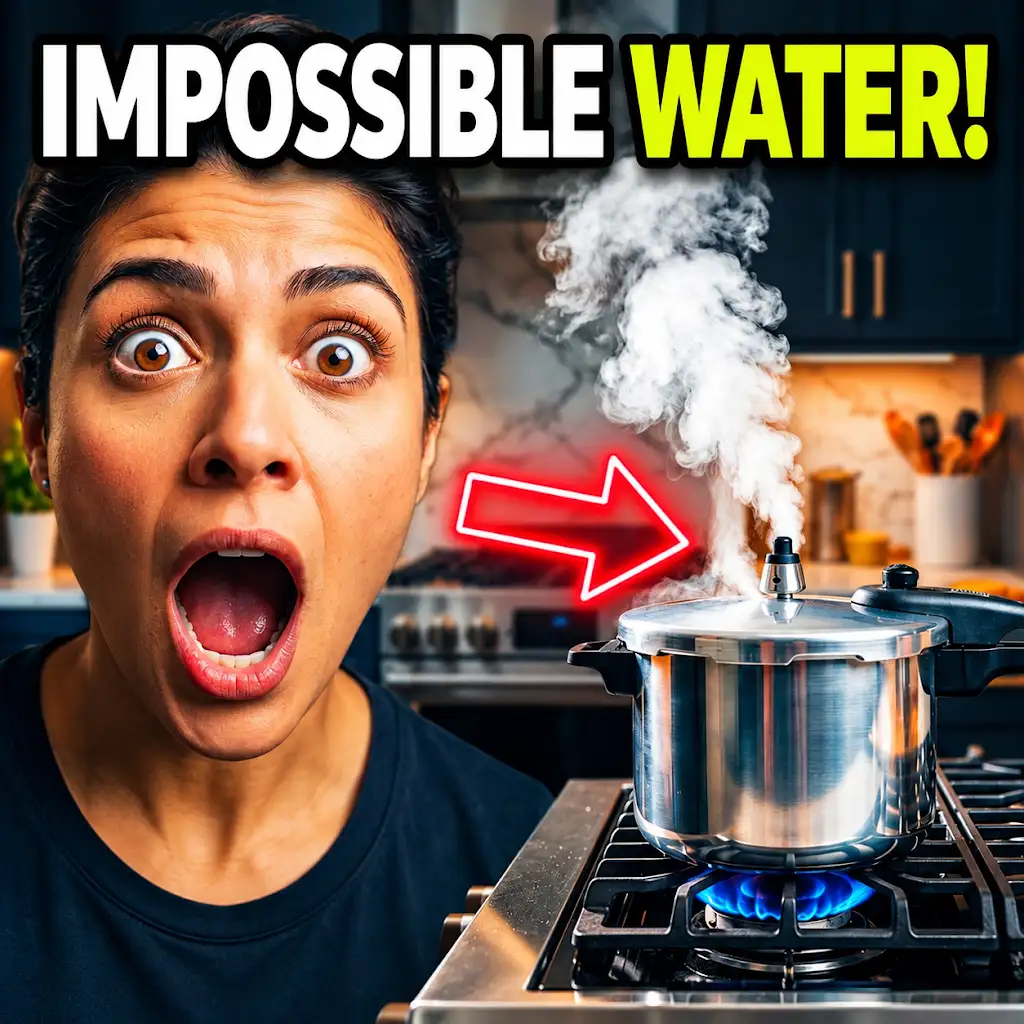
Why This Water Doesn’t Boil at 100°C
FAQs
What is latent heat of vaporization?
Latent heat of vaporization is the amount of heat energy required to change a substance from liquid to gas at its boiling point without changing its temperature.
How is latent heat of vaporization different from specific heat capacity?
Specific heat capacity is the amount of heat energy required to raise the temperature of a substance by 1 degree Celsius, while latent heat of vaporization is the heat energy required to change the state of a substance from liquid to gas at its boiling point.
Why is latent heat of vaporization important in the water cycle?
Latent heat of vaporization plays a crucial role in the water cycle as it is the energy needed for water to evaporate from bodies of water, rise into the atmosphere, condense into clouds, and eventually fall back to the Earth as precipitation.
Does every substance have a specific latent heat of vaporization?
Yes, every substance has a specific latent heat of vaporization, which is unique to that substance and is a characteristic property that helps identify and distinguish different materials.
How is latent heat of vaporization used in everyday life?
Latent heat of vaporization is used in various applications such as in air conditioning systems, cooking processes, and industrial processes like distillation and sterilization, where the conversion of liquids to gases is required.