The Fundamental Limit of Liquid Water
The everyday experience of boiling water is so common it often goes unquestioned. Most people know that water boils at 100 degrees Celsius (212 degrees Fahrenheit) at standard atmospheric pressure. However, the seemingly simple question of why it never exceeds this temperature, even when subjected to more heat, delves into the fundamental principles of thermodynamics and the molecular behavior of water. This seemingly immutable limit is not an arbitrary value but a direct consequence of the energy required to overcome intermolecular forces and transition water from a liquid state to a gaseous state. Understanding this phenomenon requires an exploration of phase transitions, kinetic energy, and the interplay between heat and molecular motion.
The boiling point of a substance is defined as the temperature at which its vapor pressure equals the surrounding atmospheric pressure. At this point, the substance can change from a liquid into a vapor. For water, this critical juncture occurs at 100°C at sea level, where the pressure exerted by the atmosphere is approximately 1 atmosphere (atm) or 101.3 kilopascals (kPa). When heat is applied to water, the molecules within absorb this energy, increasing their kinetic energy. This increased motion causes them to vibrate more vigorously and move faster, colliding with each other more frequently and with greater force. This molecular agitation is the essence of temperature.
Boiling water is a fascinating process, and one common question that arises is why water cannot exceed a temperature of 100°C at standard atmospheric pressure. This phenomenon is due to the fact that once water reaches its boiling point, any additional heat energy supplied goes into converting the liquid into steam rather than increasing its temperature. For a deeper understanding of this concept, you can explore the article on the science of boiling and heat transfer at this link: Freaky Science.
Understanding Vapor Pressure and Atmospheric Pressure
To grasp why boiling occurs at a specific temperature, one must first understand the concepts of vapor pressure and atmospheric pressure, and how they interact. Vapor pressure is the pressure exerted by the vapor of a liquid in equilibrium with its liquid phase in a closed system. As a liquid is heated, more molecules gain enough kinetic energy to escape the liquid’s surface and enter the gaseous phase, forming vapor. This vapor then exerts a pressure. Atmospheric pressure, on the other hand, is the weight of the Earth’s atmosphere pressing down on the surface. It’s a constant force acting on any object exposed to it, including the surface of a body of water.
The Equilibrium Dance: Liquid and Gas
In a closed container, as water heats up, its vapor pressure increases. Initially, the atmospheric pressure is higher than the vapor pressure, effectively keeping the water in its liquid form and preventing significant vaporization. However, as more heat is added, the vapor pressure continues to climb. The boiling point is reached when the vapor pressure of the liquid becomes equal to the external atmospheric pressure. At this point, vapor bubbles can form not just at the surface but also within the bulk of the liquid, as the internal pressure within these bubbles (the vapor pressure) is sufficient to overcome the external pressure and the surface tension of the liquid. This is the visible sign of boiling – the vigorous bubbling.
External Forces Dictating the Threshold
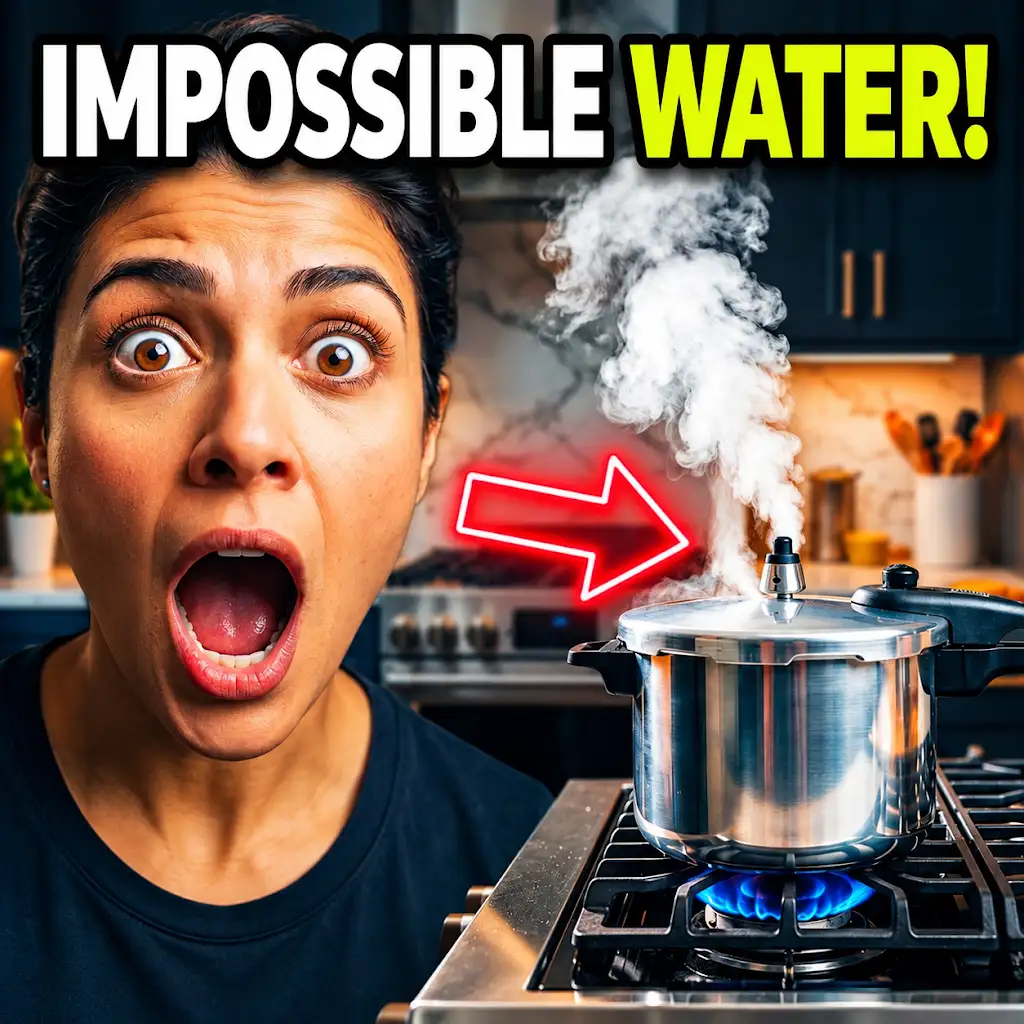
The surrounding atmospheric pressure plays a crucial role in determining the boiling point. If the external pressure is lower, such as at high altitudes, water will boil at a lower temperature because its vapor pressure needs to reach a lesser value to equal the external pressure. Conversely, if the external pressure is increased, such as in a pressure cooker, water will boil at a higher temperature. This is because the vapor pressure must overcome a greater external force to allow bubble formation. Therefore, the 100°C mark is specific to standard atmospheric pressure, and while it’s a widely accepted reference, it’s not an absolute constant for water under all conditions.
The Energy Investment: Overcoming Intermolecular Forces
The reason boiling water doesn’t get hotter than its boiling point is intrinsically linked to how energy is utilized during a phase change. When heat is applied to a substance, that energy can manifest in two primary ways: increasing the kinetic energy of the molecules (raising the temperature) or breaking the bonds that hold the molecules together in their current phase. During boiling, the added energy is predominantly directed towards the latter.
The Role of Hydrogen Bonds in Water
Water molecules are held together by relatively strong intermolecular forces called hydrogen bonds. These bonds, formed between the slightly positive hydrogen atoms of one water molecule and the slightly negative oxygen atom of another, create a cohesive network within the liquid. To transition from liquid water to gaseous steam, these hydrogen bonds must be broken, allowing the molecules to move independently of each other. This process requires a significant amount of energy, known as the latent heat of vaporization.
Latent Heat: The Energy for Transformation
The latent heat of vaporization is the
Why This Water Doesn’t Boil at 100°C
FAQs
Why does water not get hotter than 100°C when boiling?
Water reaches its boiling point at 100°C, and the energy supplied to the water is used to change the water from a liquid to a gas, rather than increasing the temperature beyond 100°C.
What happens to the energy supplied to water when it reaches 100°C?
When water reaches 100°C, the energy supplied is used to break the hydrogen bonds between water molecules, allowing the water to change from a liquid to a gas (steam) without increasing in temperature.
Can the temperature of water increase above 100°C under normal atmospheric pressure?
No, under normal atmospheric pressure, water cannot exist in a liquid state above 100°C. Any additional energy supplied to the water at this point will only cause more water molecules to change into steam.
Why is the boiling point of water considered a constant temperature?
The boiling point of water at 100°C is considered a constant temperature because any additional heat supplied to the water at this point is used to convert the liquid water into steam, rather than increasing the temperature further.
What factors can cause the boiling point of water to change from 100°C?
The boiling point of water can change under different atmospheric pressures. For example, at higher altitudes where the atmospheric pressure is lower, water will boil at a temperature lower than 100°C. Conversely, at higher pressures, the boiling point of water can be higher than 100°C.