
The comforting hiss and the promise of perfectly cooked meals in a fraction of the time make the pressure cooker a beloved kitchen appliance. However, its very efficiency stems from a fundamental principle of physics: the management of internal pressure. This pressure, while essential for rapid cooking, is also the reason why attempting to open a pressure cooker while it’s still pressurized is not only impossible but also incredibly dangerous. Understanding the science behind this safety mechanism is crucial for anyone who wields this powerful cooking tool.
The fundamental operation of a pressure cooker relies on increasing the boiling point of water. In an open pot, water boils at 212°F (100°C) at standard atmospheric pressure. However, inside a sealed pressure cooker, the steam generated by boiling water cannot escape. This trapped steam builds up, increasing the internal pressure. According to physics principles, a higher pressure environment elevates the boiling point of liquids. As the pressure inside the cooker rises, so does the temperature of the water and steam, reaching temperatures as high as 250°F (121°C) or more. This superheated steam is what cooks food much faster and more efficiently than conventional methods. The sealed lid and the locking mechanism are specifically designed to contain this elevated pressure and temperature safely.
The Intrinsic Engineering of Pressure Containment
At the heart of every pressure cooker’s safety lies its robust design, engineered to withstand significant internal force. This design is not merely about holding pressure; it’s about doing so in a controlled and predictable manner, with multiple layers of safeguards to prevent catastrophic failure. The thick, robust construction of the pot itself is the first line of defense. Made from durable materials like stainless steel or anodized aluminum, these pots are built to resist bulging or deforming under stress. The lid, equally critical, is designed to form an airtight seal with the pot. This seal is typically achieved through a gasket or a rubber ring that compresses when the lid is locked into place.
The Critical Role of the Locking Mechanism
The lid of a pressure cooker is not simply placed on top; it is secured with a sophisticated locking mechanism. This mechanism is the primary gatekeeper, preventing any accidental or premature opening. Most modern pressure cookers employ a system of interlocking lugs or a clamping design that engages with corresponding features on the pot’s rim. When the lid is twisted or pushed into its locked position, these lugs firmly engage, creating a seal that is strong enough to contain the high internal pressure. This locking mechanism is a deliberate engineering choice to ensure that the lid cannot be lifted or rotated open by mere force or a slight imbalance. It requires a specific action, often a deliberate twist in a particular direction, to disengage. This physical barrier is paramount to safety, as it directly prevents access to the superheated contents while the cooker is still under operational pressure. The robustness of these locks is tested to ensure they can withstand forces significantly greater than the typical operating pressure of the cooker, providing a substantial margin of safety.
The Pressure Regulator: The Sentinel of Internal Force
Beyond the physical locking of the lid, every pressure cooker is equipped with a pressure regulator, often referred to as a valve or a weight. This component is the silent guardian of the cooker’s internal environment, meticulously managing the pressure and preventing it from exceeding safe limits. Its function is twofold: to allow for the buildup of pressure to the desired cooking temperature and to vent excess steam to maintain that pressure within a safe range.
Types of Pressure Regulators and Their Functionality
Pressure regulators come in various forms, each operating on similar principles of pressure-sensitive release. The most common types include the steam vent valve and the weighted regulator.
The steam vent valve is typically a spring-loaded mechanism. As the internal pressure rises, it exerts force on a spring. When the pressure reaches a predetermined level, the force overcomes the spring’s resistance, and the valve opens slightly, allowing a controlled amount of steam to escape. This escaping steam creates the characteristic hissing sound often associated with pressure cooking. The intermittent release of steam ensures that the pressure remains stable at the optimal level for cooking. If the pressure were to build unchecked, the valve would continue to vent, preventing a dangerous over-pressurization.
Weighted regulators, often seen on older or stovetop models, are simpler in design. They consist of a metal weight that sits on top of a vent pipe. As steam builds up, it pushes against the underside of the weight. When the pressure is sufficient, it lifts the weight slightly, allowing steam to escape from under its edges. The weight is calibrated to a specific pressure, and it will jiggle or lift periodically as steam is released, indicating that the cooker is operating at the correct pressure. Some weighted regulators also have a secondary safety vent, a small hole designed to release steam if the primary vent becomes blocked, providing an additional layer of protection.
Both types of regulators are designed to be integral to the cooker’s operation and are not removable while the cooker is under pressure. They are calibrated to release steam at specific pressure points, ensuring that the internal temperature is maintained at the ideal cooking level without reaching dangerous levels. The very act of them releasing steam is a testament to the pressure building within, and their controlled release is a deliberate function designed to manage that pressure safely.
Understanding the mechanics behind pressure cookers is crucial for safe cooking practices, especially when it comes to the question of why you can’t open a pressure cooker under pressure. When a pressure cooker is sealed and heated, the steam builds up inside, creating high pressure that raises the boiling point of water and cooks food more quickly. Attempting to open the cooker while it is still under pressure can lead to dangerous steam explosions and severe burns. For a deeper exploration of this topic, you can read more in the related article found at Freaky Science.
The Dangerous Science of Unsealing Under Pressure
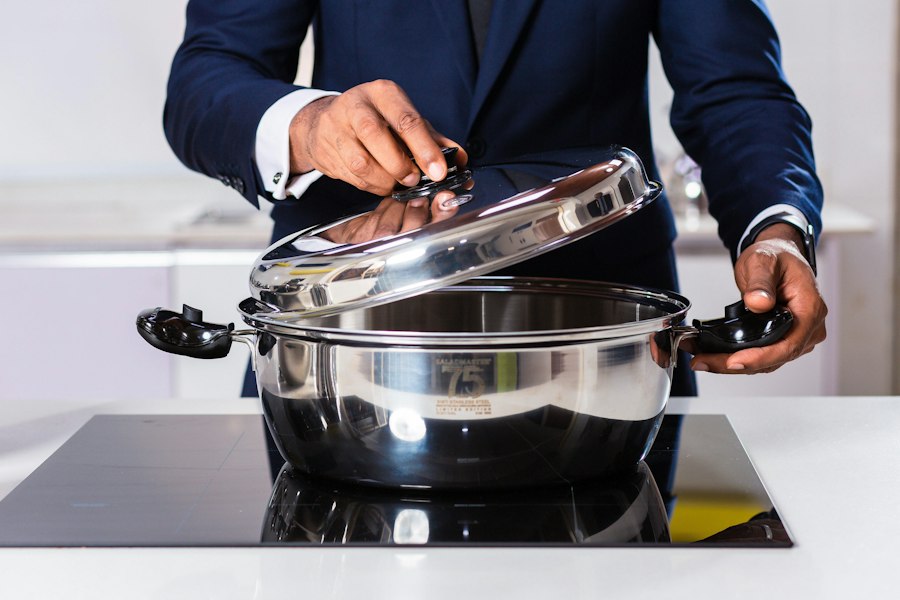
The concept of “opening” a pressure cooker under pressure is fundamentally at odds with the very principles of its operation and the laws of physics. When a pressure cooker is in use, the internal environment is significantly different from the ambient atmosphere. It is a contained system where temperature and pressure are elevated to facilitate rapid cooking. Attempting to breach this contained system prematurely unleashes a potent combination of high-pressure steam and extreme heat, creating a highly volatile and dangerous situation.
The Violent Release of Superheated Steam
The primary hazard of attempting to open a pressure cooker while it is still pressurized stems from the explosive release of superheated steam. Steam at temperatures exceeding the normal boiling point (212°F or 100°C) carries an immense amount of thermal energy. When the seal of a pressure cooker is compromised, even slightly, this stored energy is unleashed rapidly. Imagine a tightly corked bottle of champagne being violently shaken and then uncorked – the rapid expansion of pressurized gas creates a forceful ejection. In the case of a pressure cooker, it’s not just gas but superheated steam. This steam doesn’t just billow out; it explodes outwards with tremendous force.
The force of this expulsion can be powerful enough to dislodge the lid completely and violently, sending it flying. Even if the lid doesn’t detach entirely, the escaping steam can cause severe burns. The steam is significantly hotter than boiling water, and prolonged contact can lead to deep tissue damage and excruciating pain. Furthermore, the sheer volume of steam released can create a scalding cloud that engulfs the surrounding area, posing a risk of burns to anyone in close proximity. The sudden drop in internal pressure can also cause the contents of the cooker to erupt, spewing hot liquids and food with considerable force. This combination of explosive force, extreme heat, and projectile hot food makes any attempt to open a pressurized cooker a recipe for severe injury.
The Impossibility of Manual Override
The very design of a pressure cooker is intended to make it impossible to open while it is still under pressure. This is not a minor inconvenience; it is a critical safety feature. The locking mechanisms, as discussed previously, are engineered to withstand the internal forces generated during operation. Attempting to force the lid open against these robust locks is not only futile but also dangerous. The sheer strength required to overcome the seal and the locking mechanism would be immense.
The pressure inside the cooker acts as a powerful force pushing the lid outwards, and the locking lugs are designed to resist this outward pressure. Any attempt to pry or force the lid would be met with the combined resistance of the mechanical locks and the internal steam pressure. Instead of yielding, the lid or the locking mechanism could potentially fail in an uncontrolled manner. This could involve the snapping of metal components, leading to flying debris, or a sudden, uncontrolled release of pressure that could be even more catastrophic than a controlled steam release. Manufacturers deliberately design these interlocks to be secure, so that users are not tempted or able to bypass the necessary depressurization steps. The mechanisms are often designed to be physically impossible to disengage until the internal pressure has dropped to a safe level.
The Engineered Safety Valves: Beyond Basic Containment
While the primary lid and locking mechanism are the first lines of defense, pressure cooker manufacturers incorporate additional safety features to act as fail-safes. These are designed to address potential scenarios where the main pressure regulating valve might malfunction or become blocked. These secondary safety devices provide critical redundancy, ensuring that the cooker can still vent excess pressure and prevent a dangerous buildup even under adverse conditions.
When using a pressure cooker, it’s crucial to understand the safety mechanisms in place that prevent you from opening it while under pressure. Attempting to do so can lead to dangerous situations, as the steam and pressure can cause hot contents to explode outwards. For a deeper understanding of the science behind pressure cookers and the reasons for these safety features, you can read a related article that explains the principles of pressure cooking and its benefits. This informative piece can be found here.
The Burst Disc: A Last Resort Safety Measure
One of the most crucial secondary safety features is the burst disc, also known as a blow-out plug or rupture disc. This is a small, often metallic plug or a specifically designed area of the lid that is engineered to fail at a pressure significantly higher than the normal operating pressure but still within the structural limits of the cooker. It’s a last-resort safety measure.
The burst disc is typically made of a material with a lower melting or shearing point than the rest of the cooker. If, for any reason, the primary pressure regulator fails to vent steam and the internal pressure continues to climb to dangerously high levels, the pressure will eventually exert enough force on the burst disc to cause it to rupture or be expelled. This controlled failure allows the excess steam to escape rapidly, preventing the cooker from experiencing a catastrophic explosion. While the release of steam from a burst disc might be more vigorous than from the regular regulator, it is a deliberate and designed failure that saves the cooker from complete structural integrity loss. The visual evidence of a burst disc having activated – a missing plug or a visible rupture – serves as a clear indicator that the cooker was subjected to extreme pressure and should be inspected or retired from use.
The Locking Indicator: A Visual Cue for Safe Operation
Many modern pressure cookers include a locking indicator, a small pin or lever that protrudes when the lid is properly locked and the cooker is under pressure. Conversely, this indicator typically retracts or sinks when the internal pressure has dissipated and it is safe to attempt to open the lid. This feature serves as a clear, visual confirmation of the cooker’s internal state.
The locking indicator works by being physically pushed outwards by the steam pressure inside the cooker. As long as there is significant pressure, the indicator remains in its extended position, acting as a physical barrier or a visual warning that the lid is locked and under pressure. Once the pressure drops, the spring mechanism or the absence of internal force allows the indicator to recede. This simple yet effective visual cue prevents users from making the critical mistake of trying to force open a lid that is still under pressure. It provides an unambiguous signal that the cooking cycle is complete and the depressurization process has been successful. Some indicators may also have a secondary function, such as a click or a distinct visual change when the pressure is sufficiently low to attempt opening.
The Crucial Depressurization Process: Patience as a Virtue
The safe operation of a pressure cooker is not just about efficient cooking; it is equally about the deliberate and patient process of depressurization. This phase, often overlooked in the eagerness to serve a meal, is as critical as the cooking itself. Rushing this step is where the most significant safety risks lie. The steam and heat contained within are formidable, and their release must be managed with care.
Natural Release vs. Quick Release: Understanding the Methods
Pressure cookers offer different methods for releasing pressure, each with its own applications and implications for safety. Understanding these methods is key to proper usage.
Natural Release: This is the most straightforward and often the safest method for many recipes. It involves simply removing the pressure cooker from the heat source and allowing the pressure to dissipate on its own over time. As the cooker cools, the steam inside condenses, and the internal pressure gradually drops to zero. This process can take anywhere from 10 to 30 minutes or more, depending on the size of the cooker and the amount of liquid inside. Natural release is ideal for foods that benefit from continued gentle cooking, such as roasts, stews, and tough cuts of meat, as it helps to tenderize them further and prevents them from becoming mushy. It also minimizes the risk of sudden pressure release.
Quick Release: Some recipes, particularly those involving delicate ingredients like vegetables or seafood, require a quicker reduction in pressure and temperature. Most modern pressure cookers have a quick-release mechanism, often a valve on the lid that can be manually opened. When the quick-release valve is activated, it allows steam to vent rapidly from the cooker. This significantly speeds up the cooling process and allows for immediate opening

Why This Water Doesn’t Boil at 100°C
FAQs
1. Why is it dangerous to open a pressure cooker under pressure?
Opening a pressure cooker under pressure can be dangerous because the sudden release of steam and hot contents can cause burns or scalding. The pressure inside the cooker creates a high temperature environment that can lead to serious injuries if not handled properly.
2. Can you manually release the pressure from a pressure cooker before opening it?
Yes, most pressure cookers are equipped with a pressure release valve that allows you to manually release the pressure before opening the cooker. This process helps to safely release the steam and lower the pressure inside the cooker before it is opened.
3. What happens if you try to force open a pressure cooker that is still under pressure?
Attempting to force open a pressure cooker that is still under pressure can result in the contents spewing out forcefully, causing burns and making a mess. It is important to always wait for the pressure to naturally release or manually release it before attempting to open the cooker.
4. How long does it take for the pressure to naturally release from a pressure cooker?
The time it takes for the pressure to naturally release from a pressure cooker can vary depending on the type of cooker and the amount of pressure inside. It can take anywhere from a few minutes to around 20 minutes for the pressure to fully release on its own.
5. Are there any visual indicators that the pressure has been fully released from a pressure cooker?
Yes, most pressure cookers are designed with visual indicators such as a pressure release valve that pops up or a pressure indicator that drops down when the pressure has been fully released. It is important to always check these indicators before attempting to open the cooker.