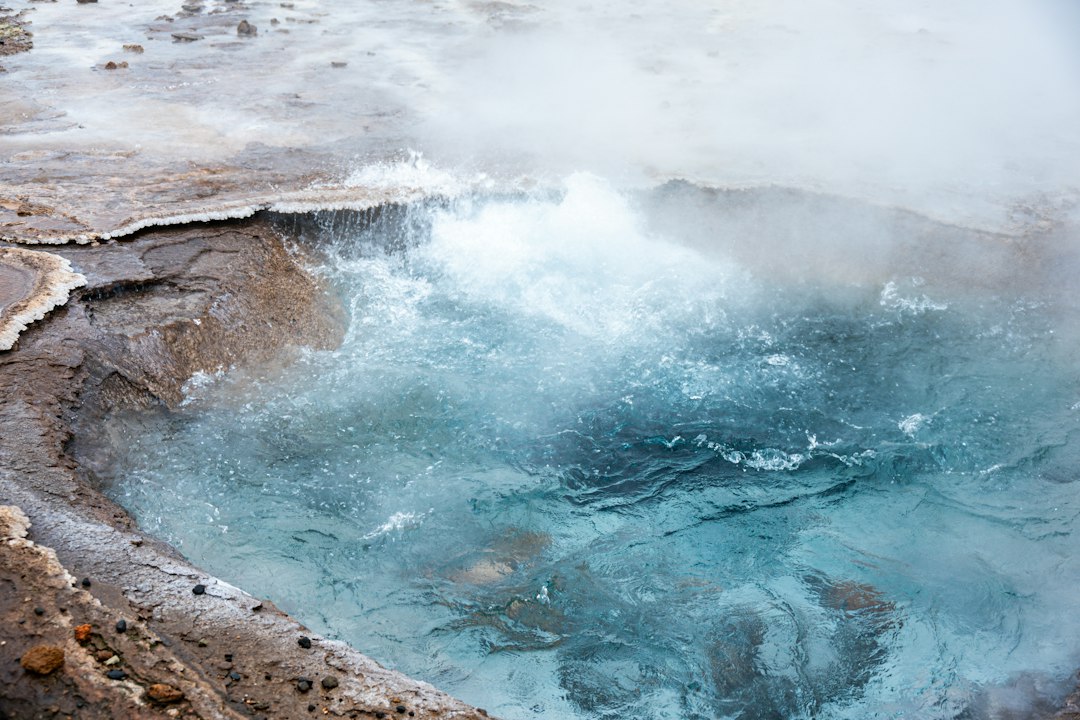
The world at higher altitudes presents a fascinating paradox for those accustomed to the familiar benchmark of water boiling at 100 degrees Celsius. Climbers reaching the summit of Mount Everest, or even those residing in cities like Denver, Colorado, quickly discover that their kettles don’t behave quite the same way. The water within them will reach a vigorous simmer and produce steam, but the thermometer will register a temperature significantly below the hallowed 100°C mark. This phenomenon, while seemingly counterintuitive, is a direct consequence of fundamental principles in physics, specifically the interplay between atmospheric pressure and the energy required for a liquid to transition into a gaseous state. Understanding this requires delving into the nature of boiling, the properties of water, and the forces that govern our planet’s atmosphere.
The Essence of Boiling: A Molecular Perspective
Boiling, at its core, is a phase transition. It is the process by which a liquid transforms into a gas, or vapor, throughout its entire bulk. This is distinct from evaporation, which occurs only at the surface of a liquid and can happen at any temperature. Boiling is characterized by the formation of bubbles of vapor within the liquid, which rise to the surface and escape. For these bubbles to form and grow, the vapor pressure inside them must be equal to or greater than the surrounding pressure exerted by the liquid and the atmosphere.
Vapor Pressure: The Internal Thirst for Gas
Every liquid possesses an intrinsic property known as vapor pressure. This is the pressure exerted by the vapor of a liquid when it is in equilibrium with its liquid phase in a closed system. Imagine a sealed container partially filled with water. Some water molecules, possessing sufficient kinetic energy, will escape from the liquid surface and enter the gaseous phase above. These gas molecules will collide with the walls of the container and with each other, exerting a pressure. Simultaneously, some of these vapor molecules will lose energy and re-enter the liquid phase. Equilibrium is reached when the rate of evaporation equals the rate of condensation. The pressure at this point is the vapor pressure of the liquid at that specific temperature.
The vapor pressure of a liquid is highly dependent on temperature. As the temperature of the liquid increases, the kinetic energy of its molecules also increases. More molecules will have enough energy to overcome the intermolecular forces holding them in the liquid state and escape into the gaseous phase. Consequently, the vapor pressure of a liquid rises with increasing temperature. This is a fundamental relationship; hotter liquids have higher vapor pressures.
Boiling Point: The Pressure Equilibrium
The boiling point of a liquid is defined as the temperature at which its vapor pressure equals the external pressure exerted upon it. When the vapor pressure within the liquid reaches this external pressure, bubbles of vapor can form and expand anywhere within the liquid, not just at the surface. These bubbles, filled with the liquid’s vapor, will rise and burst, releasing the vapor into the atmosphere. This is what we observe as boiling.
At standard atmospheric pressure at sea level, which is approximately 1 atmosphere (atm) or 101.325 kilopascals (kPa), water has a boiling point of 100 degrees Celsius (212 degrees Fahrenheit). This is the commonly known and experienced boiling point for most people. However, this standard value is tied directly to this specific external pressure. Any change in the external pressure will necessitate a change in the boiling point.
At high elevations, the boiling point of water decreases due to lower atmospheric pressure, which can significantly affect cooking and other processes that rely on boiling water. For a deeper understanding of this phenomenon, you can explore the article on Freaky Science that explains the science behind boiling points and atmospheric pressure. To read more about it, visit Freaky Science.
Atmospheric Pressure: The Weight of the Air Above
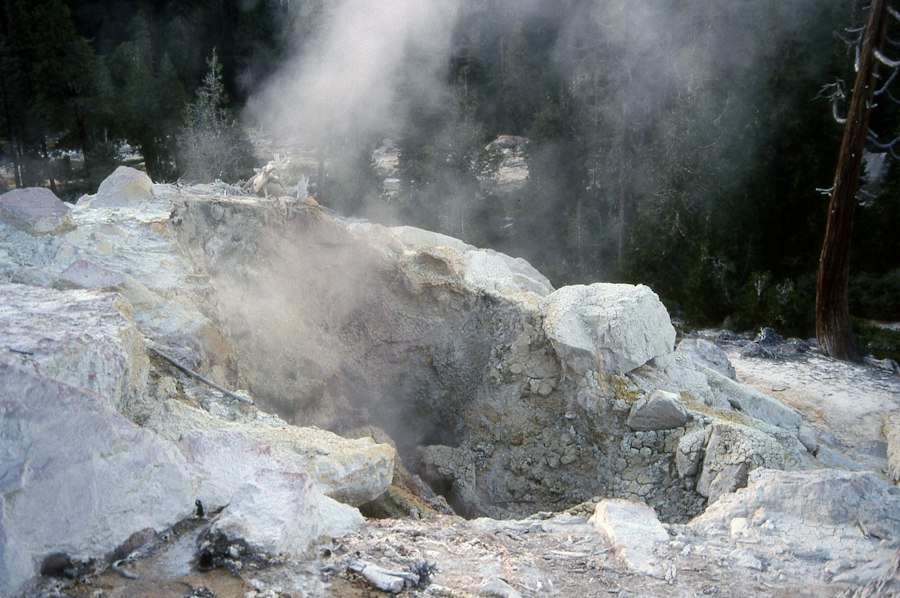
Atmospheric pressure is the force exerted by the weight of the Earth’s atmosphere on any given surface. It is essentially the cumulative weight of all the air molecules above a particular point, pressing down. This pressure is not uniform across the globe and varies significantly with altitude, temperature, and weather patterns.
Altitude’s Influence on Air Density
As one ascends in altitude, the total mass of air above decreases. This means that there are fewer air molecules pressing down. Consequently, atmospheric pressure drops as elevation increases. Think of it like stacking books; the book at the bottom experiences the weight of all the books above it, while a book near the top experiences very little weight. Similarly, at sea level, there is a vast column of air pressing down, creating higher pressure. At high altitudes, this column is shorter and less dense, resulting in lower pressure.
For every increase in altitude, the density of the air also decreases. Air molecules are spread further apart at higher elevations. This reduced density directly translates to lower atmospheric pressure. While the relationship isn’t perfectly linear due to factors like temperature and gravity’s effect on air density, the general trend is clear: higher altitude equals lower atmospheric pressure.
Pressure Variations: Beyond Altitude
While altitude is the primary driver of predictable pressure changes for understanding boiling points at different elevations, it’s worth noting that atmospheric pressure also fluctuates due to meteorological conditions. Weather systems, such as high-pressure areas (associated with clear skies and stable conditions) and low-pressure systems (often bringing clouds and precipitation), can cause variations in pressure even at the same altitude. However, when discussing the consistent difference in boiling points at varying fixed altitudes, the impact of elevation on air density and thus pressure is the dominant factor.
The Interplay: Pressure and Boiling Point
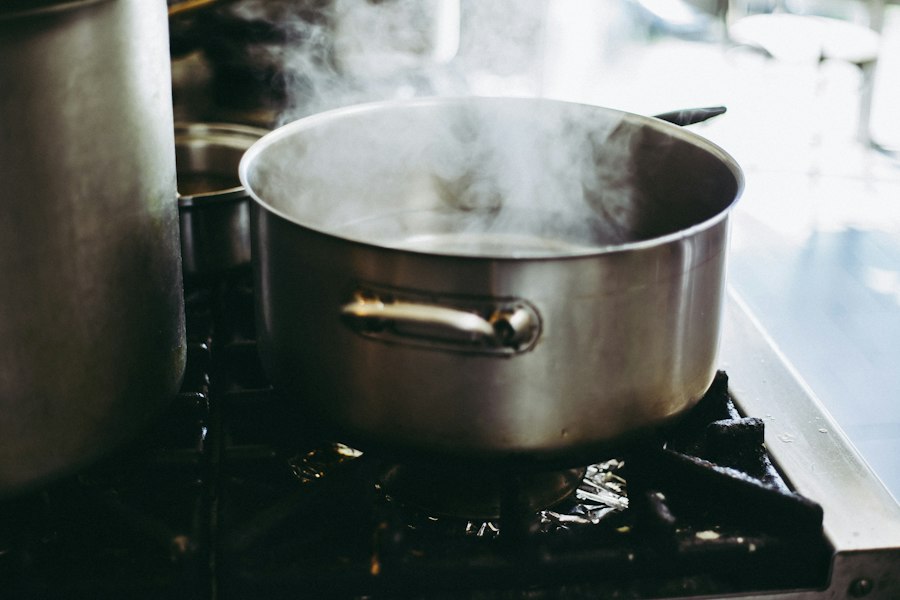
The inverse relationship between atmospheric pressure and boiling point is the key to understanding why water boils below 100°C at high elevations. As atmospheric pressure decreases with increasing altitude, the point at which water’s vapor pressure equals this external pressure is reached at a lower temperature.
At high elevations, the atmospheric pressure is lower than at sea level, which causes water to boil at temperatures below 100 degrees Celsius. This phenomenon can significantly affect cooking times and methods in mountainous regions. For a deeper understanding of the science behind this, you can explore a related article that explains the principles of boiling points and atmospheric pressure. Check it out here for more insights into how elevation impacts boiling water.
Lower Pressure, Lower Energy Requirement
Consider a pot of water at high altitude. The air pressing down on the surface of the water is less forceful than it is at sea level. For the water molecules to escape into the gaseous phase and form bubbles, their vapor pressure needs to match this reduced external pressure. Since the external pressure is lower, the water molecules require less kinetic energy to achieve this pressure balance. Less kinetic energy translates to a lower temperature. Therefore, the water will begin to boil at a temperature below 100°C.
Imagine trying to push a lid off a pot. If you push lightly (low pressure), it takes less force to lift it. If you push hard (high pressure), it takes more force. Similarly, water molecules need to exert a certain internal “push” (vapor pressure) to overcome the external “push” (atmospheric pressure). At high altitudes, the external push is weaker, so the water molecules don’t need to be as energetic (hot) to achieve a successful push.
Quantifying the Change
The reduction in boiling point is quantifiable. For every 300 meters (approximately 984 feet) of elevation gain, the boiling point of water decreases by roughly 1 degree Celsius. This means that at an elevation of 3,000 meters (approximately 9,840 feet), water will boil at around 90°C. At the summit of Mount Everest, which stands at approximately 8,848 meters (29,029 feet), the atmospheric pressure is less than one-third of that at sea level, and water boils at a mere 70°C (158°F). These are significant differences that have practical implications, particularly in cooking.
Practical Implications: Cooking at High Altitudes
The altered boiling point of water at high elevations has tangible
Why This Water Doesn’t Boil at 100°C
FAQs
1. Why does water boil at a lower temperature at high elevations?
Water boils at a lower temperature at high elevations because the atmospheric pressure decreases as altitude increases. This lower pressure reduces the boiling point of water.
2. How does atmospheric pressure affect the boiling point of water?
Atmospheric pressure is the force exerted by the weight of the air above a certain point. As altitude increases, the atmospheric pressure decreases, which in turn lowers the boiling point of water.
3. What is the relationship between boiling point and altitude?
The boiling point of water decreases by about 1 degree Celsius for every 300 meters increase in altitude. This means that at higher elevations, where the atmospheric pressure is lower, water will boil at temperatures below 100 degrees Celsius.
4. How does the lower boiling point of water at high elevations affect cooking?
When water boils at a lower temperature, it takes longer to cook food that requires boiling. This can impact the cooking time and texture of certain foods, as they may not reach the same level of tenderness or doneness as they would at sea level.
5. Are there any benefits to cooking at high elevations with lower boiling points?
Cooking at high elevations with lower boiling points can help retain more nutrients in food, as they are exposed to heat for a shorter period of time. Additionally, some chefs believe that the lower boiling point can enhance the flavors of certain dishes by cooking them more gently.