The Fundamental Physics of Atmospheric Pressure
The air around us, though seemingly intangible, exerts a measurable force known as atmospheric pressure. This pressure is a direct consequence of the weight of the Earth’s atmosphere pressing down on everything. At sea level, this pressure is approximately 1 atmosphere (atm), or 14.7 pounds per square inch (psi). This pressure isn’t uniform, however. As altitude increases, the column of air above a given point becomes shorter, meaning there is less air to exert pressure. Consequently, atmospheric pressure decreases with increasing altitude. This fundamental principle is the bedrock upon which understanding altitude’s impact on cooking, particularly pressure cooking, is built.
The Air’s Weight and Its Varied Distribution
Imagine a colossal blanket of air enveloping our planet. This blanket isn’t of uniform thickness. Near the Earth’s surface, the air molecules are compressed by the weight of all the air above them, leading to higher density and greater pressure. As one ascends, fewer air molecules are present above, and they are less compressed, resulting in lower density and reduced pressure. This gradual thinning of the atmosphere is a continuous process, not a series of discrete steps. Therefore, even a modest increase in altitude can lead to a measurable drop in atmospheric pressure. This phenomenon is not just an abstract scientific concept; it has tangible effects on everyday activities, including the way heat transfers and how liquids behave.
Factors Influencing Atmospheric Pressure Beyond Altitude
While altitude is the primary driver of atmospheric pressure changes relevant to cooking, other meteorological factors can also play a role. Weather systems, for instance, can temporarily influence local atmospheric pressure. High-pressure systems are characterized by descending air, leading to slightly higher surface pressure, while low-pressure systems involve rising air and consequently lower surface pressure. Temperature also plays a part; warmer air is less dense than cooler air, so at the same altitude, a warmer environment might have slightly lower pressure. However, for the purpose of pressure cooking, which is a sustained process over a significant period, the consistent decrease in pressure due to altitude is the dominant factor, with diurnal and synoptic weather variations having a negligible impact on the overall cooking time adjustments.
Altitude plays a significant role in pressure cooking time due to the changes in atmospheric pressure that occur at higher elevations. As altitude increases, the atmospheric pressure decreases, which affects the boiling point of water and, consequently, the cooking process. For a deeper understanding of this phenomenon, you can explore the article on Freaky Science that delves into the science behind altitude and its impact on cooking times. To read more, visit Freaky Science.
How Pressure Cookers Work: Creating a Controlled Environment
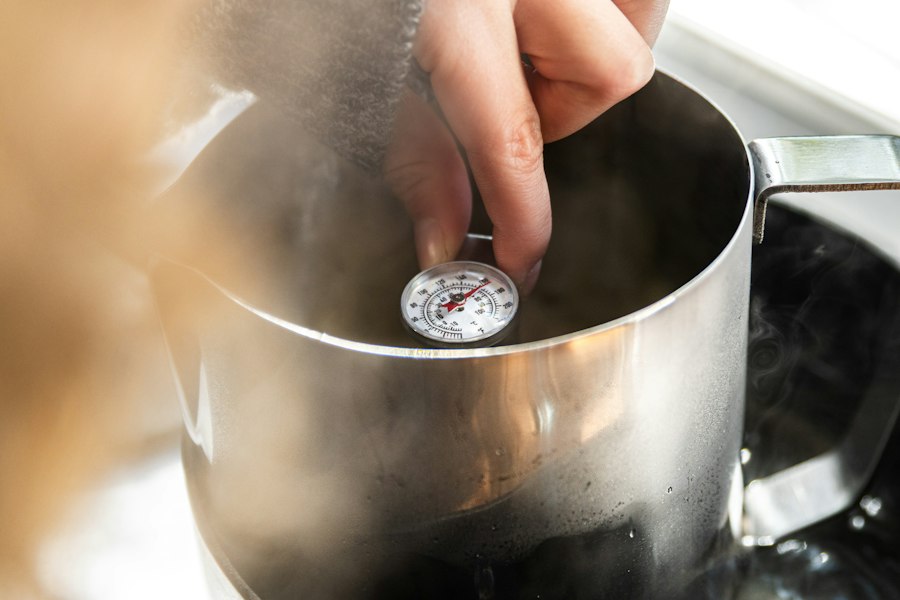
A pressure cooker is essentially a sealed pot designed to trap steam and build up internal pressure. This increased pressure is key to its rapid cooking capabilities. By sealing the lid, the appliance prevents steam from escaping. As the liquid inside heats up and turns to steam, it has nowhere to go but to increase the pressure within the cooker. This elevated pressure has a profound effect on the boiling point of water, which is the central mechanism by which pressure cookers accelerate cooking times.
The Science of Superheated Steam
In an open pot at sea level, water boils at 212°F (100°C). When this water is enclosed within a pressure cooker, the accumulating steam raises the internal pressure. As pressure rises, so does the boiling point of water. A typical stovetop pressure cooker operating at 15 psi above atmospheric pressure will reach internal temperatures of around 250°F (121°C). This significantly higher temperature is what allows food to cook much faster than in conventional methods. The steam, now hotter and more energetic, permeates food more effectively, breaking down tough fibers and tenderizing ingredients at an accelerated rate. This creates a more efficient heat transfer medium compared to mere boiling water at standard atmospheric pressure.
The Role of the Pressure Regulator and Safety Valve
Every pressure cooker is equipped with safety features that are crucial for its operation. The pressure regulator, often a weight or a spring-loaded valve, is designed to release excess steam once a predetermined pressure is reached. This maintains a consistent cooking temperature and prevents the pressure from becoming dangerously high. The safety valve, a secondary mechanism, is a failsafe that will release steam if the primary regulator malfunctions. These components ensure that the pressure cooker operates within safe parameters, allowing the user to achieve the desired cooking effect without compromising safety. The precise calibration of these valves is important, as they are designed to function optimally at specific ambient pressure levels.
Altitude’s Impact on Water’s Boiling Point
The relationship between altitude and the boiling point of water is a direct consequence of atmospheric pressure. As explained, atmospheric pressure decreases with increasing altitude. Since the boiling point of a liquid is the temperature at which its vapor pressure equals the surrounding atmospheric pressure, a lower atmospheric pressure means that water’s vapor pressure can reach this equilibrium at a lower temperature. This phenomenon is not an isolated curiosity; it has practical implications for cooking in higher elevations.
Lower Pressure, Lower Boiling Point: A Simple Equation
At sea level, the atmospheric pressure is sufficient to require water to reach 212°F (100°C) before it can boil and turn into steam. However, as one ascends in altitude, the atmospheric pressure drops. For example, in Denver, Colorado, which is approximately 5,280 feet above sea level, the atmospheric pressure is lower, and water boils at around 202°F (94.4°C). At even higher altitudes, such as in the Andes mountains, water can boil at temperatures well below 200°F (93.3°C). This reduction in boiling point means that ordinary cooking methods, relying on boiling water, will take longer to cook food at higher altitudes because the water is simply not as hot.
The Challenge for Unmodified Pressure Cooking
This lower boiling point at higher altitudes presents a significant challenge for pressure cooking. Pressure cookers are calibrated and designed to function based on the assumption of sea-level atmospheric pressure. When a pressure cooker is used at a high altitude, the ambient atmospheric pressure is already lower. This means that the pressure cooker has to work harder to achieve the target internal pressure relative to the existing lower external pressure. Consequently, the steam inside the cooker, even when it reaches its intended operating pressure, might not be as hot as it would be at sea level. This can lead to undercooked food if cooking times are not adjusted.
Adjusting Pressure Cooking Times for Altitude
The key to successful pressure cooking at high altitudes lies in understanding how the reduced atmospheric pressure affects the cooker’s performance and making appropriate adjustments to cooking times. Since the water inside the cooker will reach a lower boiling point and therefore a lower maximum temperature for a given pressure setting, the cooking process will naturally take longer. Fortunately, there are established guidelines and methods for compensating for this effect.
The Rule of Thumb: Increasing Cooking Time
The most common and practical method for adjusting pressure cooking times for altitude involves a simple percentage increase. While the exact increase can vary depending on the specific altitude and the recipe, a general guideline is to add approximately 5% to 10% of the recommended cooking time for every 1,000 feet above sea level. For instance, if a recipe calls for 30 minutes of cooking at sea level, and you are cooking at an altitude of 5,000 feet, you might increase the cooking time by 25% to 30% (5,000 feet x 5% = 25% or 5,000 feet x 6% = 30%). It is always advisable to consult specific altitude cooking charts or experiment with slightly longer cooking times and check for doneness, especially for more delicate ingredients.
Understanding Pressure Cooker Gauges and Altitude
The pressure gauge on a pressure cooker indicates the pressure above atmospheric pressure. This is a crucial distinction. When a recipe states to cook at 15 psi, it means 15 psi above the ambient atmospheric pressure. At sea level, this equates to a total pressure of approximately 29.7 psi (14.7 psi atmospheric + 15 psi gauge). However, at 5,000 feet, where atmospheric pressure might be around 12.2 psi, reaching a gauge pressure of 15 psi would result in a total internal pressure of only 27.2 psi (12.2 psi atmospheric + 15 psi gauge). This lower total pressure means a lower maximum temperature inside the cooker. Therefore, simply relying on the gauge without considering the ambient pressure can lead to undercooking. This is why extending the cooking time is the primary method of compensation, as it allows the food more time to absorb heat from the less intensely hot steam.
Recipe Modifications and Testing
Beyond simply increasing cooking time, some pressure cooker manufacturers or culinary resources may offer specific altitude adjustments for their recipes. These might involve slight modifications to the amount of liquid or the type of ingredients used, although the primary adjustment remains the increased cooking duration. For those who frequently cook at high altitudes, developing a feel for how their specific pressure cooker performs at their elevation is invaluable. This often involves trial and error, starting with slightly longer cooking times and checking for doneness. It is generally better to slightly overcook than to undercook, as undercooked food can be a food safety concern and is often unpalatable. Keeping notes on successful adjustments for specific recipes can create a valuable personal cookbook for high-altitude pressure cooking.
Altitude plays a significant role in pressure cooking time due to the way atmospheric pressure decreases as elevation increases. At higher altitudes, the boiling point of water is lower, which means that food takes longer to cook to the desired tenderness. This phenomenon can be further explored in a related article that discusses the science behind cooking at different elevations. For more insights on this topic, you can read about it in this interesting article. Understanding these principles can help you adjust your cooking methods for better results when preparing meals at high altitudes.
Practical Considerations and Tips for High-Altitude Pressure Cooking
| Altitude (feet) | Atmospheric Pressure (psi) | Boiling Point of Water (°F) | Effect on Pressure Cooking Time | Recommended Cooking Time Adjustment |
|---|---|---|---|---|
| Sea Level (0) | 14.7 | 212 | Standard pressure and boiling point | Normal cooking time |
| 2,000 | 13.3 | 208 | Lower atmospheric pressure reduces boiling point | Increase cooking time by 5-10% |
| 5,000 | 12.2 | 203 | Further reduced pressure and boiling point | Increase cooking time by 10-15% |
| 8,000 | 11.3 | 198 | Significantly lower boiling point affects cooking | Increase cooking time by 15-20% |
| 10,000 | 10.1 | 194 | Much lower pressure and boiling point | Increase cooking time by 20-25% |
Cooking at high altitudes presents unique challenges that require a nuanced approach, especially when employing specialized cooking techniques like pressure cooking. Beyond the fundamental adjustments to cooking times, several practical considerations can ensure successful and enjoyable meals in thinner air. Understanding these nuances will help alleviate frustration and lead to more consistent results.
Choosing the Right Recipes and Ingredients
Certain ingredients are more forgiving than others when it comes to slight variations in cooking time. Tougher cuts of meat, dried beans, and root vegetables, which benefit most from the intensive cooking power of a pressure cooker, are generally good candidates for high-altitude cooking. Delicate ingredients like fish or certain vegetables might require more careful monitoring or may be better suited to different cooking methods if precise timing is crucial. When adapting recipes, consider the density and moisture content of the ingredients. Foods with higher water content will generally cook faster, but the reduced boiling point at altitude still necessitates an extension of cooking time.
Understanding the Pressure Release Cycle at Altitude
The natural pressure release cycle of a pressure cooker, where the internal pressure gradually dissipates on its own, can also be affected by altitude. While the pressure inside the cooker will still decrease as it cools, the rate at which it happens might be slightly different due to the lower ambient pressure. It is important to always allow the pressure cooker to depressurize fully before attempting to open it. For recipes that require a quick pressure release, it’s advisable to add a little extra cooking time before initiating the release, as the overall cooking process may have taken longer to reach the desired level of tenderness. Paying attention to the specific instructions for pressure release in a recipe and allowing adequate time for depressurization remains paramount, regardless of altitude.
The Importance of Quality Ingredients and Equipment
Even with altitude adjustments, the quality of ingredients and
Why This Water Doesn’t Boil at 100°C
FAQs
1. Why does altitude affect pressure cooking time?
Altitude affects pressure cooking time because as altitude increases, the atmospheric pressure decreases. This lower pressure means that water boils at a lower temperature, which in turn affects the cooking time needed to properly cook food in a pressure cooker.
2. How does altitude impact the cooking process in a pressure cooker?
At higher altitudes, the lower atmospheric pressure causes liquids to evaporate more quickly and foods to cook at lower temperatures. This can result in longer cooking times needed to reach the same level of doneness as at lower altitudes.
3. What adjustments should be made to pressure cooking times at high altitudes?
When pressure cooking at high altitudes, it is recommended to increase the cooking time to compensate for the lower boiling point of water. A general rule of thumb is to increase cooking time by 5% for every 1,000 feet above 2,000 feet of altitude.
4. Can the type of food being cooked affect how altitude impacts pressure cooking time?
Yes, the type of food being cooked can affect how altitude impacts pressure cooking time. Foods that require longer cooking times or are more sensitive to changes in temperature may be more affected by altitude than foods that cook quickly or are more forgiving in terms of cooking time.
5. Are there any other factors besides altitude that can affect pressure cooking time?
Yes, besides altitude, factors such as the size and type of pressure cooker, the amount of food being cooked, and the starting temperature of the ingredients can also affect pressure cooking time. It is important to consider these factors in addition to altitude when determining the appropriate cooking time for a recipe.